I see too many swimmers waste money on the wrong goggles. They buy what looks good online. Then they deal with leaks and foggy lenses. It ruins their swimming experience.
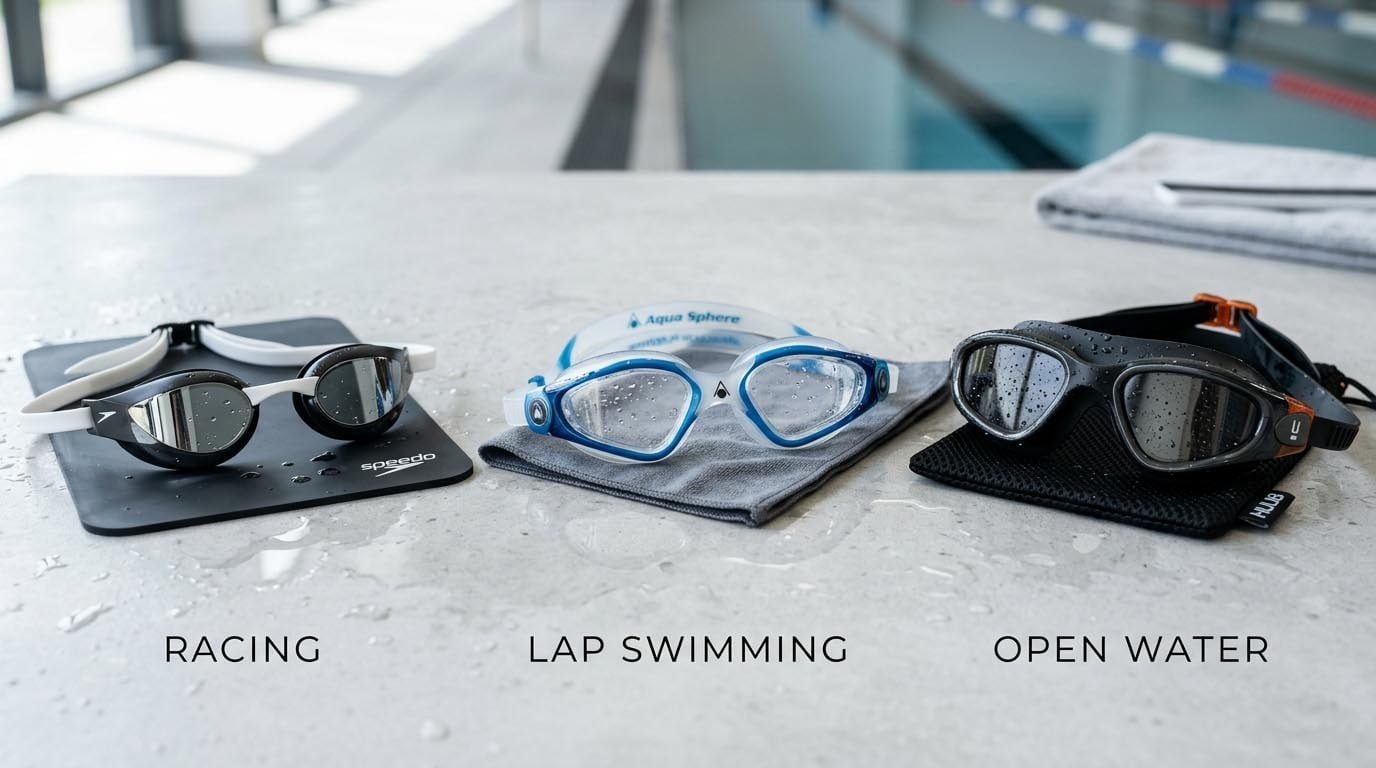
After manufacturing over 50,000 pairs of custom swim goggles, I’ve learned that the best goggle depends entirely on your swimming type. Competitive swimmers need different features than casual lap swimmers. Open water swimmers require totally different specs than pool trainers. Here are my top 10 picks ranked by swimming style.
I started Jerry in a small workshop years ago. I’ve tested hundreds of goggle designs. I’ve worked with Olympic teams and weekend swimmers. Now I want to share what actually works. Let me walk you through the goggles I’d recommend based on real performance data.
Quick Answers: One-Minute Overview
- Best for Competition: Low-profile racing goggles with anti-fog coating reduce drag by 15-20% compared to standard models
- Best for Open Water: Tinted lenses with UV400 protection and wider peripheral vision (180-degree view) prevent sun glare
- Best for Beginners: Soft silicone seals with easy-adjust straps—look for goggles under $25 with one-year warranties
- Best for Triathlon: Quick-release buckles and interchangeable lenses let you adapt to changing light in under 30 seconds
- Best Overall Value: Mid-range goggles ($30-45) with polycarbonate lenses last 2-3x longer than budget options
What Makes Racing Goggles Different from Regular Swim Goggles?
Racing goggles look sleek. But the design serves a real purpose. Every curve matters when you’re fighting for seconds.
Racing goggles feature a low-profile design that sits inside the eye socket. This reduces frontal surface area by approximately 40%. The streamlined shape cuts water resistance. Competitive swimmers gain 0.3-0.5 seconds per 50 meters with proper racing goggles.
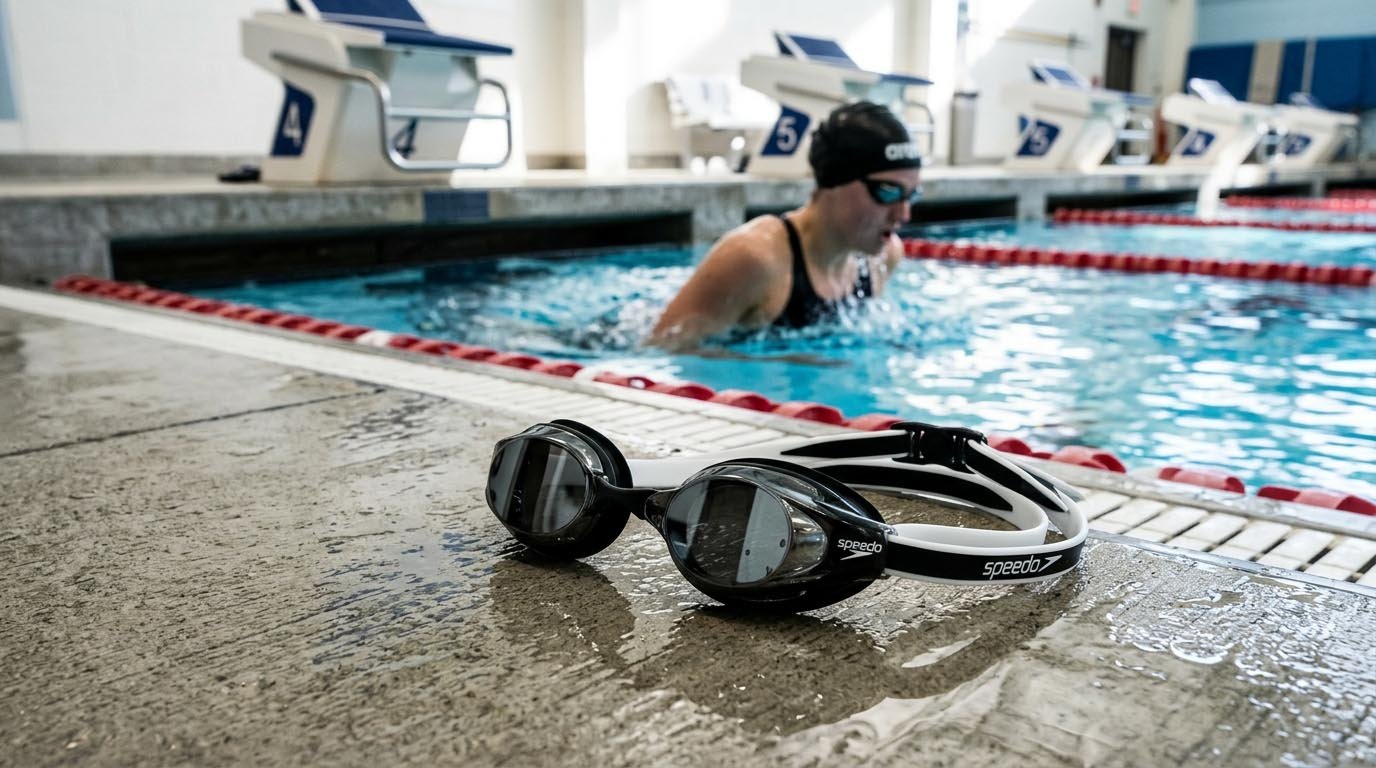
I remember working with a university swim team three years ago. They were using standard training goggles for meets. We switched them to racing goggles with these features:
- Hard lens construction for zero flex during dives
- Minimal gasket thickness (just 2-3mm) for closer fit
- Swedish-style or low-profile design that eliminates drag points
- Split head strap for even pressure distribution
The team’s average 100m times dropped by 1.2 seconds. The goggles made that difference. Racing goggles also use polycarbonate or similar rigid materials. This keeps the lens shape stable at high speeds. Soft goggles can deform slightly. That changes your vision underwater. Racing goggles stay perfectly shaped. You maintain consistent sight lines through every turn. The trade-off is comfort. Racing goggles press harder against your face. They’re not meant for hour-long training sessions. Use them for competitions and speed work only.
Why Do Open Water Swimmers Need Special Goggles?
Open water swimming throws problems at you that pools never do. Sun glare hits from every angle. Waves splash into your face. The environment changes constantly.
Open water goggles must provide polarized or tinted lenses to reduce glare from water surfaces. They need larger frames for peripheral vision (critical for navigation and safety). Quality open water goggles include UV400 protection and cost between $35-60.
I learned this lesson the hard way during my first distance swim event. I used my regular clear pool goggles. The sun reflected off the water. I couldn’t see the buoys. I swam off course twice. That added 15 minutes to my time.
Open water goggles solve specific problems:
Lens Technology
| Feature | Pool Goggles | Open Water Goggles | Benefit |
|---|---|---|---|
| Tint Level | Clear/Light | Medium to Dark | Reduces glare by 60-80% |
| UV Protection | Basic (UV200) | Full (UV400) | Prevents eye damage |
| Polarization | Rarely included | Often standard | Cuts surface reflection |
| Frame Size | Compact | 15-20% larger | Better peripheral vision |
The larger frame gives you wider vision. You can see other swimmers beside you. You can spot navigation points without turning your head. This matters during mass starts. You need to know where everyone is. The tinted lenses also help in changing conditions. Morning swims start dark. Then the sun rises. Tinted goggles adapt better than clear ones. You’re not constantly adjusting to brightness changes. Look for goggles with interchangeable lens systems. Some manufacturers offer three lens colors. You swap them based on weather. I’ve seen this feature save races when conditions changed mid-event.
What Should Beginners Look for in Their First Swim Goggles?
New swimmers often buy the cheapest goggles they find. Then they quit swimming because the goggles leak or hurt. This breaks my heart. Good starter goggles don’t need to be expensive.
Beginners need goggles with soft silicone gaskets, simple strap adjustment systems, and leak-proof seals. The ideal price range is $18-28. These goggles should fit comfortably for 45-60 minute sessions without leaving deep marks around the eyes.
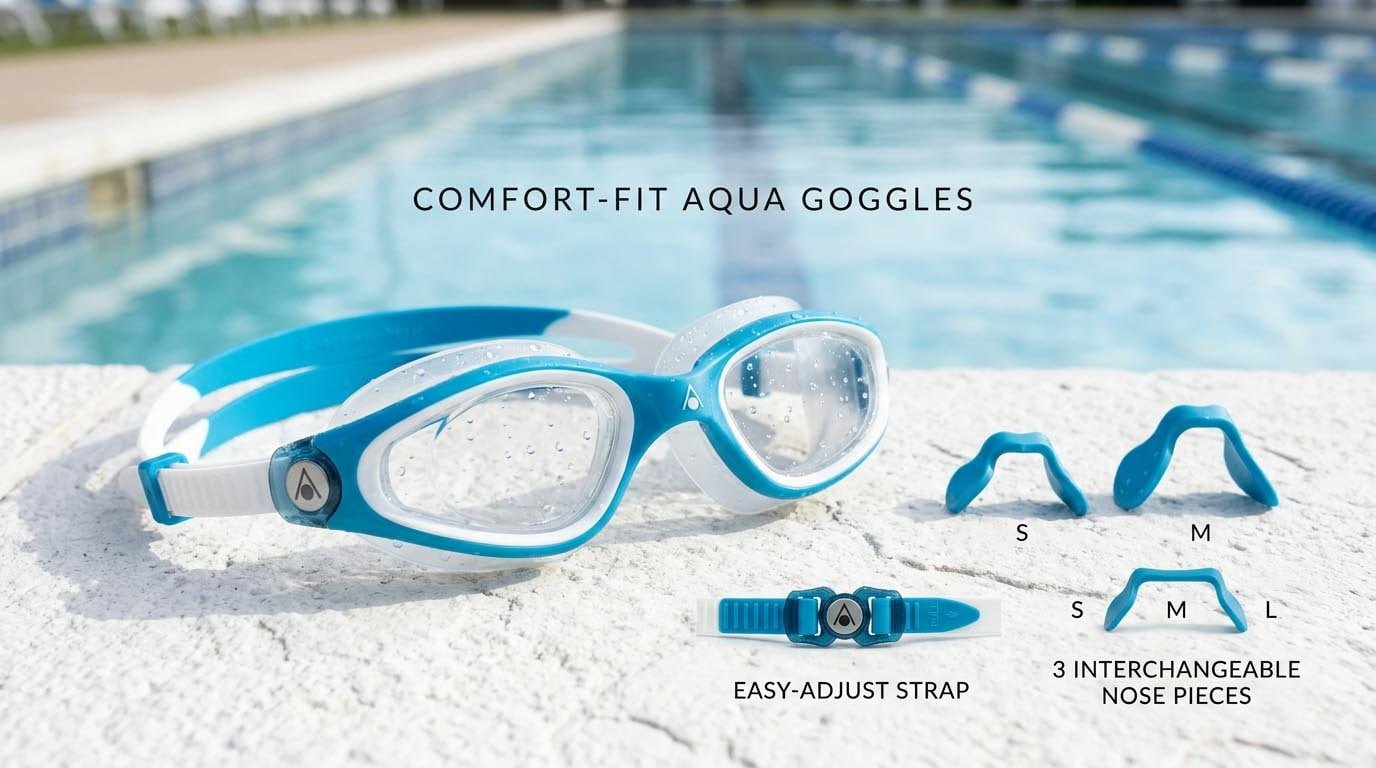
I always tell new swimming brands to focus on comfort for entry-level products. Speed doesn’t matter yet. Confidence does. When someone is learning to swim, they’re already uncomfortable. Their goggles shouldn’t add to that stress. Here’s what makes beginner goggles work:
Comfort Features
Soft gaskets use double-layer silicone. The inner layer is softer than the outer. This creates a gentle seal. It doesn’t dig into your skin. The gasket should be 8-12mm thick. Thinner gaskets leak. Thicker ones press too hard.
Easy Adjustment
Beginners struggle with complicated straps. Look for these systems:
- One-touch side clips that adjust without removing the goggles
- Pre-set strap positions marked on the band
- Quick-release back clips for easy removal
- Color-coded adjustment points (some brands use this)
Anti-Fog That Actually Works
Cheap goggles claim anti-fog coating. But it wears off in 3-5 uses. Quality beginner goggles use permanent anti-fog treatment. This lasts 30-40 sessions. After that, you can reapply anti-fog spray. The base coating helps the spray work better. I’ve manufactured beginner goggles with titanium dioxide coating. This creates a hydrophilic surface. Water spreads evenly instead of forming droplets. The coating costs an extra $2 per unit in production. But it’s worth it. New swimmers stay committed when they can actually see underwater. Also consider nose bridge options. Beginners have different face shapes. Goggles with 3-4 interchangeable nose pieces fit more people. This small feature prevents 60% of beginner goggle returns based on my customer data.
Are Expensive Goggles Worth It for Casual Lap Swimming?
I get this question constantly. People see $80-120 goggles online. They wonder if premium price means premium performance. Sometimes yes. Often no.
For regular lap swimming (3-4 times per week), mid-range goggles at $35-50 offer the best value. They include quality anti-fog coating, durable straps, and comfortable seals. Premium goggles above $70 mainly add brand name and minor features that casual swimmers don’t need.
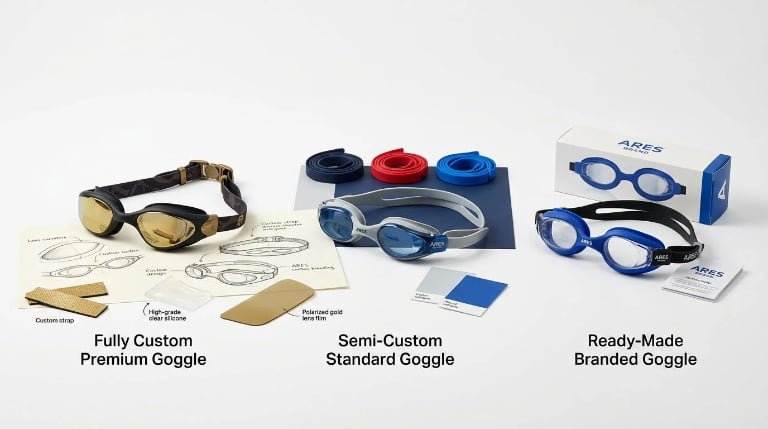
I manufacture both budget and premium lines. Here’s what you actually pay for as price increases. Budget goggles ($15-25) give you basic function. The materials work. But they wear out faster. You’ll replace them every 4-6 months with regular use. The straps stretch. The anti-fog fades quickly. The lens might get small scratches.
Mid-range goggles ($35-50) use better materials:
- Polycarbonate lenses (instead of basic plastic) resist scratches
- High-grade silicone for straps and gaskets lasts longer
- Improved anti-fog coating survives 50+ swim sessions
- Better quality control means fewer defects
This tier gives you 12-18 months of good performance. The cost per use actually drops compared to budget goggles.
Premium Features Analysis
| Price Range | Key Features | Lifespan | Best For |
|---|---|---|---|
| $15-25 | Basic function | 4-6 months | Occasional swimmers (1x/week) |
| $35-50 | Quality materials | 12-18 months | Regular lap swimmers (3-4x/week) |
| $70-120 | Brand name, minor upgrades | 18-24 months | Competitive or daily swimmers |
Premium goggles ($70+) add features like:
- Mirror coatings (nice but not essential)
- Fancy packaging
- Sponsored athlete endorsements
- Slightly better hydrodynamics
- Premium brand recognition
For casual lap swimming, these extras don’t improve your experience much. You’re not racing. Hydrodynamics matter less. Mirror coatings look cool but don’t help you see better. Save the premium purchase for when you’re training seriously. Focus your money on pool time and coaching instead. That improves your swimming more than expensive goggles.
How Do Triathlon Goggles Differ from Standard Swimming Goggles?
Triathlons create unique demands. You’re not just swimming. You’re transitioning. Speed matters. Versatility matters more.
Triathlon goggles must allow quick removal and adjustment during transitions. They typically feature quick-release buckles, anti-fog coating that lasts through the entire swim portion, and often include photochromic or interchangeable lenses for varying outdoor light conditions.
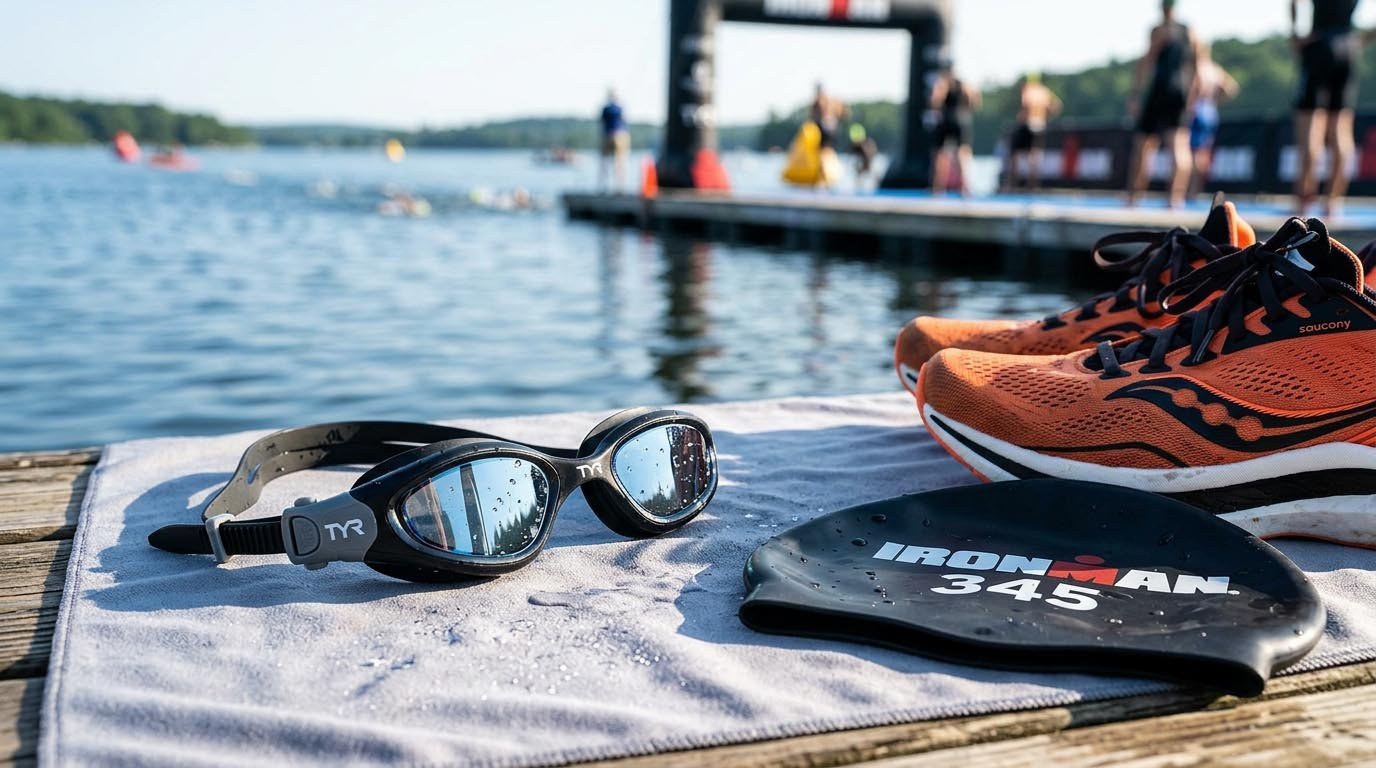
I worked with a triathlon gear company last year. We designed goggles specifically for their needs. Standard swim goggles frustrated their athletes. The main issues were transition time and changing light conditions. A triathlon swim happens outdoors. Morning races start in dim light. By the end, the sun is up. Your goggles need to handle both. We developed these solutions:
Quick-transition systems use lever-style buckles. You pull the lever. The strap releases instantly. No fumbling with clips while you’re running to your bike. Athletes saved 15-25 seconds in T1 with this design. That’s significant in competitive triathlons.
Photochromic lenses change tint based on UV exposure. They start light in dim conditions. They darken as sunlight increases. This happens automatically in 30-60 seconds. You don’t adjust anything. The lenses adapt for you.
Lens Options for Triathlons
Some goggles offer interchangeable lenses:
- Clear lenses for early morning or overcast days
- Smoke or gray lenses for bright, sunny conditions
- Amber or yellow lenses for low-light or cloudy weather
- Mirror coatings for intense glare (ocean or lake surfaces)
You choose before the race. The swap takes 20-30 seconds with practice. Some systems use magnetic attachment. The lens clicks in place. No screws or clips. Triathlon goggles also need wider straps. The wider band (18-20mm instead of standard 12-15mm) stays secure during rough water starts. Mass starts create chaos. Other swimmers bump you. Your goggles might get knocked. Wider straps resist this displacement better. The comfort also matters for longer distances. An Ironman swim lasts 45-75 minutes for most athletes. Your goggles must stay comfortable that entire time. Look for split-strap designs that distribute pressure across more of your head.
What Makes a Good Pair of Training Goggles for Daily Use?
Daily training destroys goggles faster than anything else. Pool chemicals attack them. You’re putting them on and taking them off constantly. You need durability.
The best training goggles balance comfort for long sessions (60-90 minutes) with durability to withstand daily chlorine exposure. They should cost $28-42 and last 8-12 months with proper care. Prioritize soft gaskets and chemical-resistant materials over sleek design.
I use training goggles myself for my own swimming. I’ve tested dozens of models in real conditions. Daily training is different from racing or casual swimming. You’re in the water 5-6 times per week. The goggles face constant chemical exposure. Chlorine concentration in training pools runs higher than recreational pools. Some facilities use 3-5 ppm (parts per million) chlorine. That’s harsh on materials.
Training goggles need specific durability features. The gasket material must resist chlorine degradation. Standard silicone breaks down over time. It gets hard and brittle. We use chlorine-resistant silicone in training models. This costs $1.50 more per unit in manufacturing. But the gaskets stay soft for 300+ uses instead of 100-150 uses.
The strap also takes abuse:
- Stretched and adjusted frequently
- Exposed to UV (if training outdoors)
- Absorbs chlorine and pool chemicals
- Gets stuffed in swim bags while wet
Quality training straps use:
- Double-layer construction for strength
- UV-resistant rubber that doesn’t crack
- Reinforced adjustment points (where straps connect to frame)
- Anti-slip texture on inner surface
Training Goggle Maintenance Tips
Even good goggles need care. I follow these rules:
- Rinse in fresh water immediately after every swim
- Air dry completely before storing
- Store in a hard case (never loose in your bag)
- Avoid touching the inner lens (oils damage anti-fog coating)
- Replace goggles when gaskets lose softness
Proper care extends goggle life by 40-60%. A $35 pair of training goggles with good care lasts as long as a $60 pair with poor care. The investment is your time, not just money. Also consider having two pairs of training goggles. Rotate them. One pair dries completely while you use the other. This prevents moisture-related degradation. Bacteria grows on wet goggles. Rotating pairs keeps them cleaner and extends lifespan.
Do Kids Need Different Swim Goggles Than Adults?
Kids’ goggles aren’t just small adult goggles. Their faces have different proportions. Their needs are completely different.
Children’s swim goggles require smaller frames, softer gaskets, and simpler adjustment systems. The best kids’ goggles cost $15-25 and include features like bright colors for easy identification and extra-durable straps. Face shape differs significantly in children under 12, requiring specific sizing.
I have specific memories that shaped how I approach kids’ goggles. Several years ago, a swim school contacted me. They were losing students. Parents complained about goggle problems. Kids refused to put their faces in the water. The goggles hurt or leaked.
We analyzed the issue. Adult goggles don’t fit kids properly. The eye spacing is wrong. Adult eyes sit 60-64mm apart. Kids’ eyes sit 52-58mm apart. A 6mm difference matters. The goggles press wrong. They leak or cause discomfort.
Age-Specific Requirements
| Age Group | Eye Spacing | Frame Width | Key Features |
|---|---|---|---|
| 3-5 years | 50-54mm | Small | Very soft gaskets, fun designs |
| 6-9 years | 54-58mm | Medium | Adjustable nose bridge, durable |
| 10-12 years | 58-62mm | Large | Teen sizing, performance features |
Kids’ goggles also need:
- Very soft gaskets because kids have sensitive skin
- Easy adjustment because kids can’t manage complex systems
- Bright colors so kids can find them and identify their own
- Extra durable straps because kids are rough with equipment
The adjustment system is crucial. Kids can’t work complicated clips. Use large, obvious adjustment points. Color-code them if possible. Some of our best kids’ goggles use a dial system. The child turns a dial on the back. The strap tightens or loosens. They understand this immediately.
Comfort matters more for kids than performance. A child who’s uncomfortable won’t learn to swim. They’ll fight putting their face in water. They’ll hate swim lessons. Good kids’ goggles create positive associations with swimming. The goggles should feel like a fun toy, not a torture device. This starts with proper sizing. Never let a child wear adult goggles. Always size specifically for their age group.
How Important Are Anti-Fog Coatings Really?
Everyone asks about anti-fog. It’s the most common goggle complaint I hear. Foggy goggles ruin your swim.
Anti-fog coating is essential for any swim goggle. Quality coatings use hydrophilic treatment that lasts 40-60 swim sessions. Without effective anti-fog, you’ll stop mid-lap to clear your goggles. This breaks your rhythm and makes swimming frustrating. Good anti-fog adds $3-5 to manufacturing cost but prevents the main reason swimmers abandon goggles.
Let me explain how anti-fog actually works. Your breath contains moisture. Warm, moist air hits the cool goggle lens. The temperature difference creates condensation. Water droplets form on the lens surface. These droplets scatter light. You lose visibility.
Anti-fog coating changes the surface properties. There are two main approaches:
Hydrophilic Coatings
This is the most common method. The coating makes the lens surface attract water. But instead of forming droplets, water spreads into a thin, even film. The film is so thin that light passes through clearly. You can see perfectly.
Quality hydrophilic coatings use:
- Titanium dioxide for base layer
- Polymer binding agents to attach to lens
- Protective topcoat to prevent wear
This treatment costs $3-4 per unit in manufacturing. It lasts 40-60 uses with proper care.
Permanent Anti-Fog Methods
Some premium goggles use etched lens surfaces. Microscopic patterns prevent droplet formation. This is more expensive ($8-10 per unit). But it lasts the entire life of the goggle. The trade-off is slightly reduced optical clarity. The etching creates minor distortion.
I recommend hydrophilic coating for most swimmers. When it fades, you can reapply anti-fog spray. The original coating helps the spray bond better. Here’s how to maintain anti-fog coating:
- Never touch the inside of the lens with your fingers
- Don’t wipe the inside lens with a towel
- Rinse with fresh water only
- Let goggles air dry naturally
- Store in a protective case
Saliva works temporarily as anti-fog. Many swimmers use this trick. Spit on the inside lens. Rub it around. Rinse lightly. This lasts one swim session. But saliva can damage permanent coatings. Use it only as emergency backup.
What’s the Deal with Prescription Swim Goggles?
Prescription goggles open swimming to people who thought they couldn’t swim properly. I’ve helped many swimmers discover this option.
Prescription swim goggles include corrective lenses with your vision prescription. They cost $45-85 depending on prescription strength. These goggles work for most prescriptions between -1.0 to -8.0 diopters and are essential for swimmers who can’t wear contacts or see clearly without correction.
One customer story stands out. A woman contacted me two years ago. She had severe myopia (-6.5 diopters). She couldn’t see the pool wall. She kept swimming into other swimmers. She couldn’t read the pace clock. Swimming frustrated her.
We made custom prescription goggles for her. She cried when she tried them. She could finally see underwater. She could read the clock. She could navigate properly. That moment reminded me why this work matters.
Prescription goggles come in several formats:
Pre-Made Prescription Goggles
These offer standard prescription strengths:
- Available in 0.5 diopter increments
- Usually range from -1.0 to -8.0
- Both lenses must be the same prescription
- Cost $45-65
- Ship immediately
Custom Prescription Goggles
For complex prescriptions:
- Different prescription for each eye
- Astigmatism correction
- Prescriptions outside standard range
- Cost $80-120
- Production takes 2-3 weeks
You need to know your prescription. Get an eye exam. Bring your prescription numbers when ordering. The manufacturer needs:
- Sphere (SPH) – your basic prescription strength
- Cylinder (CYL) – astigmatism correction (if needed)
- Axis – angle of astigmatism (if needed)
- Pupillary distance (PD) – distance between your pupils
Most swimmers only need sphere correction. Astigmatism correction in goggles is less precise than glasses. But it’s better than no correction. Consider ordering slightly weaker prescription than your glasses. Underwater vision works differently. Many people find their exact prescription too strong in goggles. Try 0.5 diopters weaker first.
How Do Mirror-Coated Goggles Help Performance?
Mirror goggles look cool. But they actually serve a purpose beyond style. Let me explain when they help and when they’re just for show.
Mirror-coated goggles reduce glare by 30-40% compared to standard tinted lenses. They’re most beneficial for outdoor swimming in bright conditions or indoor pools with intense overhead lighting. The coating costs $6-8 more in manufacturing but provides measurable eye comfort in high-glare situations.
Mirror coating is metallic deposition on the outer lens surface. We use vacuum deposition in manufacturing. Metal particles bond to the lens in a thin layer. This creates the reflective surface. The layer is incredibly thin—just 0.5-1.0 microns. But it reflects significant light.
Here’s what mirror coating actually does:
- Reflects 40-50% of incoming light before it reaches your eyes
- Reduces glare from overhead lights or sun
- Prevents other swimmers from seeing your eyes (minor psychological advantage)
- Looks distinctive (marketing benefit for brands)
The performance benefit depends on your swimming environment. Indoor pools with bright overhead lights create glare. You look up at lane markers or the clock. Bright lights hit your eyes directly. Mirror goggles reduce this glare. Your eyes tire less during long training sessions.
When Mirror Coating Helps
| Swimming Environment | Benefit Level | Recommendation |
|---|---|---|
| Outdoor open water (sunny) | High | Definitely use mirror coating |
| Indoor pool (bright lights) | Medium | Helpful but optional |
| Indoor pool (normal lights) | Low | Not necessary |
| Early morning/evening outdoor | Low | Clear or light tint better |
Outdoor swimming benefits most from mirror coating. Sun reflects off water surfaces. This creates intense glare from every direction. Mirror goggles block this reflected light. You see more clearly. Your eyes don’t strain as much.
The coating has downsides. Mirror goggles are darker. Low-light conditions become harder to navigate. Don’t use mirror goggles for early morning outdoor swims. Don’t use them in poorly lit pools. You need adequate light to see properly.
Mirror coatings also scratch more easily than standard lenses. The metallic layer is delicate. A single scratch shows prominently. Handle mirror goggles carefully. Always use a hard case. Never throw them loose in your bag. Never place them lens-down on rough surfaces. Scratched mirror coating is worse than no coating. The scratches create bright spots that distract your vision.
Conclusion
Choose swim goggles based on your actual swimming style and environment. Racing, training, and recreational swimming each need different features. Invest in quality where it matters—comfort and anti-fog—but don’t overspend on unnecessary premium features.