The global swimming goggles market reached $1.23 billion in 2023 and is projected to grow at a CAGR of 6.2% through 2030, driven by rising swimming participation, competitive sports growth, and increasing awareness of eye protection in aquatic environments. For swim brands, sporting goods retailers, and aquatic equipment distributors, selecting the right goggle manufacturer is critical—it determines product quality, innovation capacity, cost structure, and ultimately, customer satisfaction.
Understanding Swimming Goggles Manufacturing Complexity:
Unlike simple fabric products, swimming goggles require multi-disciplinary expertise:
- Optical engineering: Lens curvature, anti-fog coatings, UV protection, prescription lens grinding
- Material science: Silicone molding, polycarbonate lens manufacturing, TPE gasket formulation
- Ergonomic design: Facial seal geometry, strap tension systems, nose bridge adjustability
- Quality control: Leak testing, optical clarity verification, durability testing (chlorine resistance, UV degradation)
Common Sourcing Mistakes by Brand Stage:
-
Startup mistake (0-$500K revenue): Ordering 5,000+ units when you need 500-1,000 units to test retail channels. Result: Warehousing costs eat profit margins.
-
Growth-stage mistake ($500K-$3M revenue): Choosing manufacturers without ISO 9001 or FDA registration when targeting major retailers like Dick’s Sporting Goods or REI. Result: Rejected by procurement teams.
-
Established brand mistake ($3M+ revenue): Prioritizing $0.50 per unit savings over anti-fog coating durability or UV400 certification. Result: High return rates and damaged brand reputation.
Strategic Framework by Brand Stage:
Pre-launch/Startup (0-$500K revenue):
- Priority: MOQ 500-1,000 units, sampling 10-15 days, basic certifications (CE, FDA)
- Budget: $2.50-6.00 per unit for recreational goggles, $4.00-9.00 for competition models
- Timeline: 45-65 days from order to delivery
- Focus on proven designs with moderate customization (logo, color, packaging)
Growth stage ($500K-$3M revenue):
- Priority: MOQ 1,000-3,000 units, ISO 9001 certified, optical testing capabilities
- Budget: $2.00-5.00 for recreational, $3.50-7.50 for competition goggles
- Timeline: 50-75 days with established production schedules
- Implement anti-fog durability testing, UV protection verification, leak-proof QC protocols
Established ($3M+ revenue):
- Priority: Capacity for 5,000-15,000+ units, proprietary lens technology, custom mold development
- Budget: $1.50-4.50 for recreational, $3.00-6.50 for competition at scale
- Timeline: 60-90 days with staggered delivery schedules
- Invest in exclusive mold tooling ($5,000-15,000), custom anti-fog formulations, sustainability materials
This guide analyzes 10 verified swimming goggles manufacturers spanning China, Taiwan, and specialized facilities, from agile low-MOQ specialists to large-scale OEM powerhouses serving global swim brands.
Manufacturer Overview List
1.Jerry Goggle – Specialized swimming goggles OEM with low-MOQ flexibility
2.SAEKO – Taiwanese premium swimming goggles manufacturer
3.Springwhales – Optical sports eyewear specialist
4.Eyeline – Innovative swim training equipment manufacturer
5.AROPEC – Comprehensive watersports equipment manufacturer
6.LEEYONGIN SAFETY – Safety eyewear and swimming goggles producer
7.WAVE – China-based swim equipment manufacturer
8.Yijia Optical – Optical lens and swimming goggles factory
9.F2SSWIM – Full-service swim gear manufacturer
10.Hubo Sports – Integrated sports equipment manufacturer
Top 10 Swimming Goggles Manufacturers in The World
1. Jerry Goggle – Specialized Swimming Goggles OEM with Low-MOQ Flexibility
Introduction:
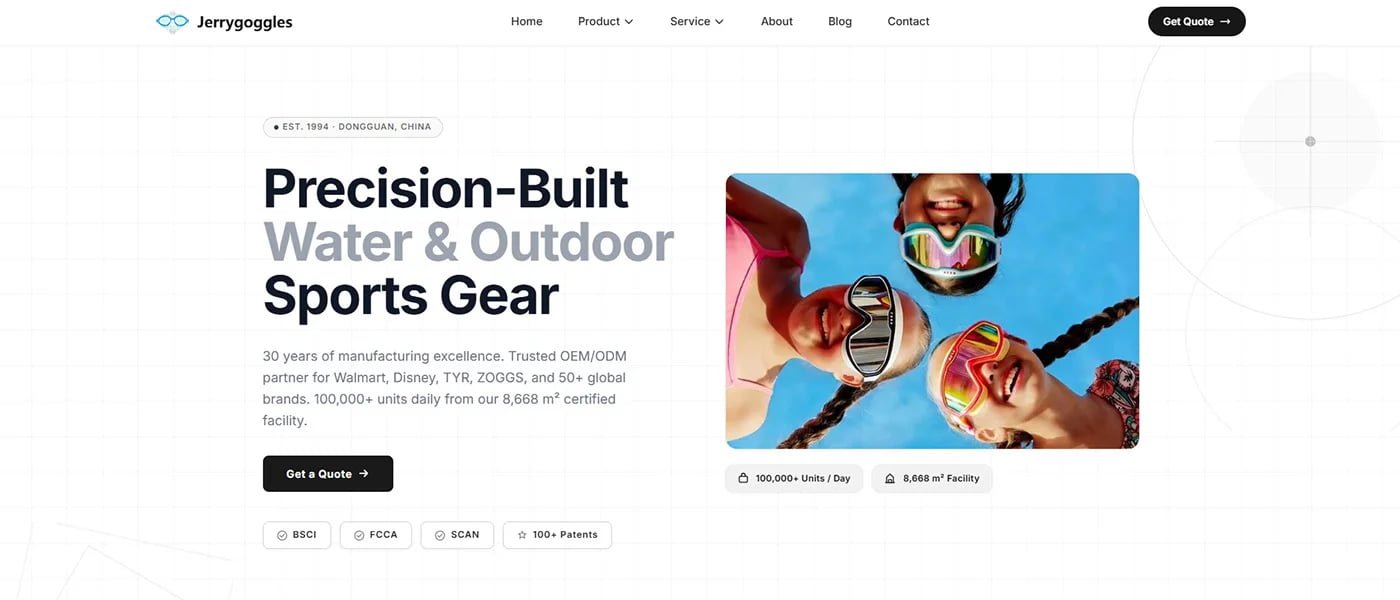
Jerry Goggle has built a reputation as a specialist swimming goggles manufacturer serving emerging and mid-sized swim brands that need flexibility without sacrificing quality. Based in China’s eyewear manufacturing hub, they focus exclusively on aquatic eyewear—swimming goggles, diving masks, and water sports goggles. This specialization means their entire operation—from mold library to quality control protocols—is optimized for aquatic optics.
Their key differentiator is MOQ flexibility starting at 500-1,000 units per model, making them accessible for brands testing new designs or entering niche markets. They maintain a library of 50+ proven goggle molds (recreational, competition, junior, prescription-ready) that brands can customize with colors, lens tints, and branding, dramatically reducing development costs and timelines.
Key Products:
- Competition racing goggles (low-profile, hydrodynamic design, MOQ: 500 units)
- Recreational swim goggles (comfortable seals, wider field of vision, MOQ: 500-1,000 units)
- Junior/kids goggles (smaller facial geometry, fun colors, MOQ: 500 units)
- Prescription swim goggles (diopter range -1.0 to -8.0, MOQ: 1,000 units)
- Anti-fog coating options (standard 30-day, premium 90-day durability)
- Mirrored and UV400 lens treatments
Pros:
- ✅ Low MOQ: 500-1,000 units per model – ideal for niche markets and market testing
- ✅ Fast sampling: 7-10 days for existing molds with custom colors/branding
- ✅ 50+ existing molds – eliminates custom tooling costs (saving $5,000-12,000)
- ✅ Specialization: Entire facility focused on aquatic eyewear, not general plastics
- ✅ Optical testing capabilities: Anti-fog durability, UV protection verification, leak testing
- ✅ Flexible customization: Lens tints, strap colors, logo printing, packaging design
- ✅ Competitive pricing: $2.50-5.50 per unit for recreational, $3.50-7.00 for competition models at moderate volumes
- ✅ Lead time: 45-60 days from order confirmation to shipment
Cons:
- ⚠️ Limited custom mold development: Custom tooling requires 3,000+ unit commitment and $8,000-15,000 mold fee
- ⚠️ Not ideal for ultra-large scale: Max efficient capacity **~10,000 units per
Website: https://jerrygoggles.com/
2. SAEKO – Taiwanese Premium Swimming Goggles Manufacturer
Introduction:
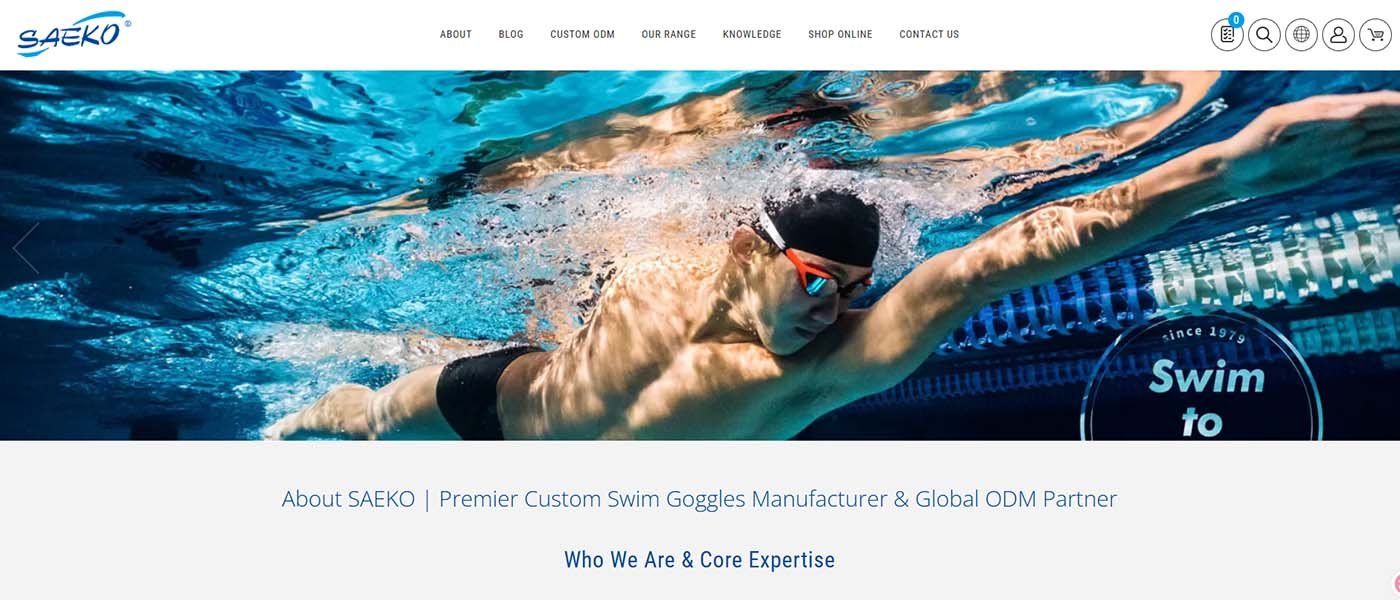
SAEKO represents Taiwan’s high-quality manufacturing tradition applied to swimming goggles and water sports eyewear. Established for 30+ years, they’ve built expertise in premium materials, precision optics, and ergonomic design that positions them as a go-to partner for brands targeting $25-60 retail price points. Taiwan’s manufacturing advantages include stricter quality standards, advanced material sourcing, and better IP protection compared to mainland China.
Key Products:
- Premium competition goggles (Swedish-style and cushioned designs, MOQ: 1,000-2,000 units)
- Open-water swim goggles (wide peripheral vision, photochromic lenses, MOQ: 1,500 units)
- Triathlon goggles (quick-adjust straps, transition-friendly, MOQ: 1,000 units)
- Optical swim goggles (prescription-ready, diopter customization, MOQ: 1,500 units)
- Junior performance goggles (competition-quality for younger swimmers, MOQ: 1,000 units)
- Custom mold development and proprietary designs
Pros:
- ✅ Premium quality standards: Taiwan manufacturing reputation, rigorous QC protocols
- ✅ Technical innovation: 3D facial scanning, advanced anti-fog formulations, photochromic lenses
- ✅ R&D collaboration: Design partnership for brands seeking proprietary features
- ✅ Optical precision: Superior lens clarity, precise curvature for minimal distortion
- ✅ Material quality: Premium liquid silicone, high-grade polycarbonate, UV-stable TPE
- ✅ Certifications: ISO 9001, CE, FDA, typically REACH compliant for EU markets
- ✅ IP protection: Stronger legal framework than mainland China manufacturers
- ✅ English proficiency: Excellent communication with technical teams
Cons:
- ⚠️ Higher MOQ: 1,000-2,000 units per model (not suitable for very small brands)
- ⚠️ Premium pricing: 15-25% higher than comparable mainland China manufacturers
- ⚠️ Lead time: 60-75 days for initial orders (precision takes time)
- ⚠️ Custom mold investment: $10,000-18,000 for proprietary tooling
- ⚠️ Capacity constraints: Not ideal for brands requiring 20,000+ units per model
Website: https://www.saeko.com.tw/
3. Springwhales – Optical Sports Eyewear Specialist
Introduction:
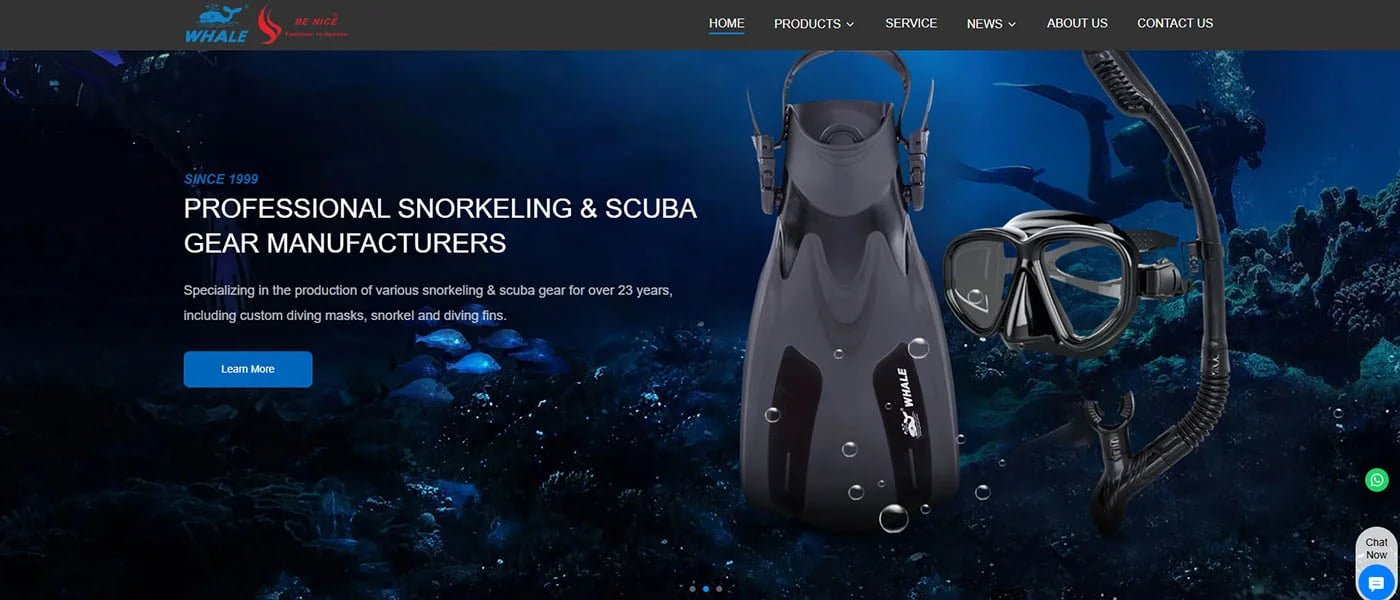
Springwhales operates at the intersection of optical technology and sports equipment, bringing precision lens manufacturing expertise to swimming goggles. Their background in prescription sports eyewear gives them advantages in optical accuracy, complex lens geometries, and multi-focal designs. They serve brands requiring prescription swim goggles, corrective dive masks, or specialized optical features that standard goggle manufacturers cannot execute.
Key Products:
- Prescription swimming goggles (diopter range -1.0 to -10.0, MOQ: 1,000-1,500 units)
- Optical diving masks (prescription and magnification lenses, MOQ: 1,500 units)
- Photochromic swim goggles (light-adaptive lenses for indoor/outdoor, MOQ: 2,000 units)
- Bifocal swim goggles (for masters swimmers reading pace clocks, MOQ: 1,500 units)
- Sports eyewear (transitioning into aquatic applications from cycling/running eyewear)
- Custom lens development (proprietary coatings, tints, optical properties)
Pros:
- ✅ Optical expertise: Precision lens grinding, accurate diopter manufacturing
- ✅ Prescription specialization: Complex multi-focal designs, wide diopter ranges
- ✅ Technical capabilities: Photochromic technology, custom coatings, optical testing
- ✅ Quality optics: Minimal distortion, accurate prescription execution
- ✅ Clean manufacturing: Optical-grade facilities prevent defects in lens production
- ✅ Innovation potential: Can develop proprietary optical technologies for brands
- ✅ Certifications: ISO 9001, optical standards compliance (verification needed)
Cons:
- ⚠️ Higher MOQ for optical products: 1,000-2,000 units (lens grinding setup costs)
- ⚠️ Premium pricing for prescription: $6.50-12.00 per unit reflecting optical complexity
- ⚠️ Longer lead time: 60-80 days (prescription lens manufacturing adds time)
- ⚠️ Niche focus: Less competitive for basic recreational goggles without optical features
- ⚠️ Limited standard goggle library: Strength is custom optical, not stock molds
Website: https://www.springwhales.com/
4. Eyeline – Innovative Swim Training Equipment Manufacturer
Introduction:
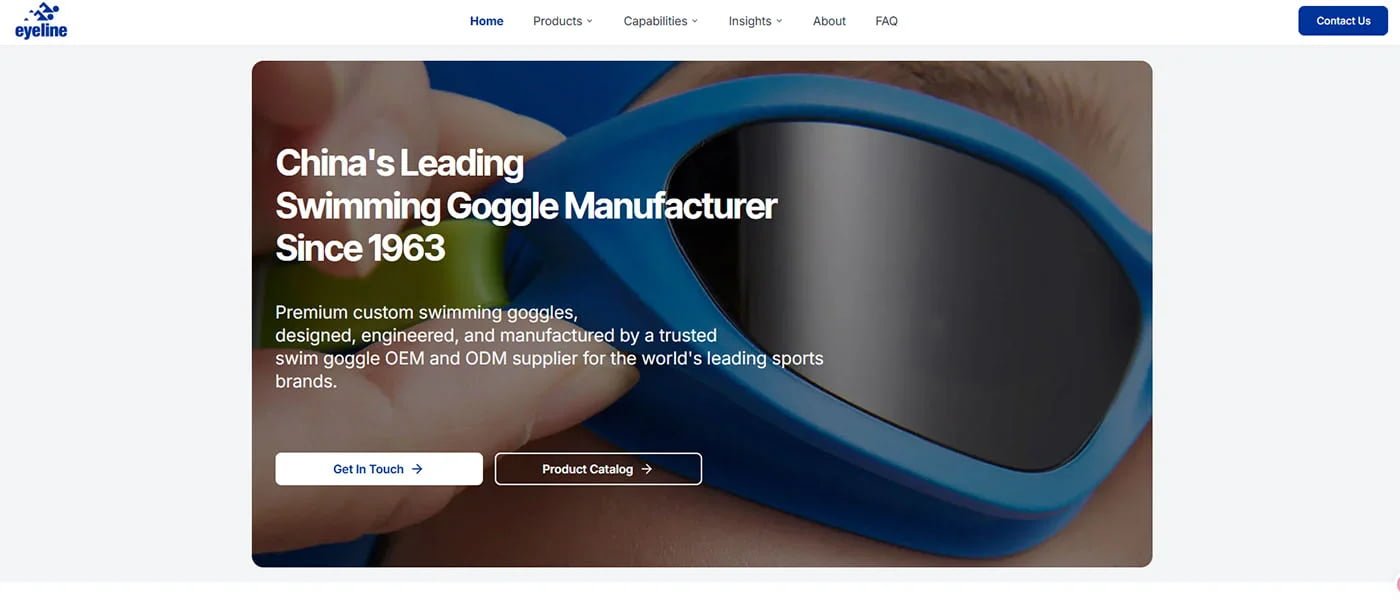
Eyeline has carved a unique position as a swim training equipment innovator that includes goggles designed specifically for technique development and coaching applications. Unlike manufacturers focused purely on competition or recreational goggles, Eyeline develops products that solve specific training problems: goggles with limited vision fields to improve body position awareness, mirror goggles for stroke analysis, and hyperopic (magnifying) goggles for reading pace clocks.
Key Products:
- Training goggles with restricted vision fields (technique improvement, MOQ: 1,000 units)
- Mirror goggles for stroke self-analysis (MOQ: 1,000 units)
- Hyperopic goggles (magnifying lenses for reading pace clocks, MOQ: 1,500 units)
- Standard competition and recreational goggles (MOQ: 500-1,000 units)
- Co-branded training equipment programs
- Custom product development for specific training applications
Pros:
- ✅ Innovation focus: Patented training-specific designs differentiate product lines
- ✅ Niche market expertise: Deep understanding of swim coaching and training needs
- ✅ Moderate MOQ: 500-1,500 units depending on product complexity
- ✅ Co-development partnerships: Open to licensing and collaborative product development
- ✅ US market knowledge: Strong understanding of USA Swimming, YMCA, swim school markets
- ✅ Quality standards: Products designed for frequent pool use (chlorine resistance)
- ✅ Lead time: 50-65 days for standard products
Cons:
- ⚠️ Patent considerations: Some designs may require licensing agreements
- ⚠️ Niche focus: Less competitive for standard commodity goggles
- ⚠️ Custom development: Proprietary designs require longer development cycles (3-6 months)
- ⚠️ Pricing variability: Specialized goggles command premium pricing
- ⚠️ Capacity: Better suited for 5,000-10,000 unit runs than ultra-large scale
Website: https://www.eyelineswim.com/
5. AROPEC – Comprehensive Watersports Equipment Manufacturer
Introduction:
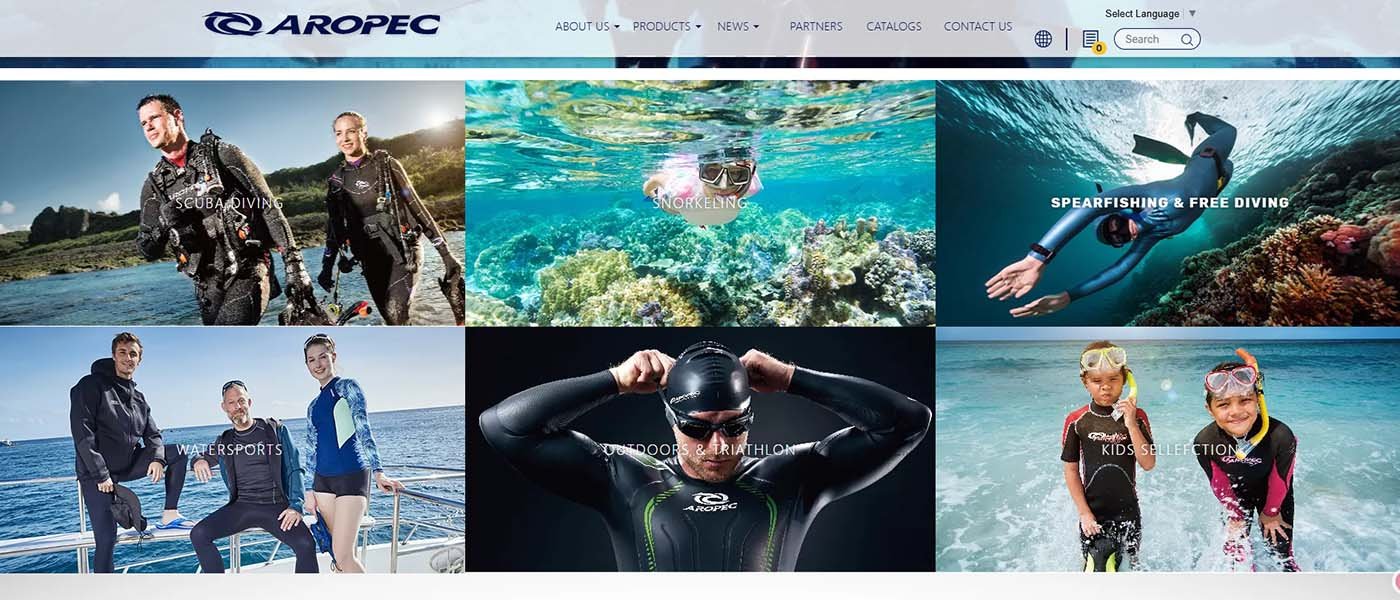
AROPEC is a vertically integrated watersports manufacturer producing everything from wetsuits and diving gear to swim fins and goggles under one roof. This comprehensive capability means swimming goggles are one product line within a larger aquatic equipment portfolio, offering advantages for brands building complete watersports collections. Their scale—40+ years in operation, ISO 9001 certified, exporting to 60+ countries—provides stability and resource depth.
For brands launching or expanding watersports lines, AROPEC offers one-stop sourcing: coordinate swim goggles, diving masks, snorkels, caps, and training equipment from a single partner. This consolidates quality control, reduces logistics complexity, and strengthens negotiating leverage through larger total order values.
Key Products:
- Swimming goggles (recreational, competition, junior, MOQ: 1,000-2,000 units)
- Diving masks and snorkels (full-face, traditional, prescription-ready, MOQ: 1,500-3,000 units)
- Swim training equipment (fins, paddles, kickboards, MOQ varies)
- Wetsuits and thermal protection (neoprene expertise)
- Watersports accessories (bags, mesh gear bags, pool floats)
- Private label programs for complete equipment lines
Pros:
- ✅ One-stop sourcing: Consolidate multiple watersports products with single manufacturer
- ✅ Established stability: 40+ years in business, financial strength, consistent quality
- ✅ Scale advantages: Large operation reduces per-unit costs at volume
- ✅ Comprehensive certifications: ISO 9001, CE, FDA, often REACH and BSCI compliant
- ✅ Global export experience: Familiar with compliance requirements for US, EU, AU markets
- ✅ Production capacity: Can handle 10,000-30,000+ units across product lines
- ✅ Logistics efficiency: Consolidated shipments reduce freight costs per unit
- ✅ R&D resources: In-house design team for product development
Cons:
- ⚠️ Higher MOQ: 1,000-2,000 units per goggle model (scale-optimized production)
- ⚠️ Less flexible for small orders: Not ideal for startups needing <1,000 units
- ⚠️ Goggle specialization: Swimming goggles are one of many product lines (not singular focus)
- ⚠️ Communication layers: Larger organization may have account manager vs. direct production access
- ⚠️ Lead time: 60-80 days reflecting production scheduling across multiple lines
Website: https://www.aropec.com/
6. LEEYONGIN SAFETY – Safety Eyewear and Swimming Goggles Producer
Introduction:
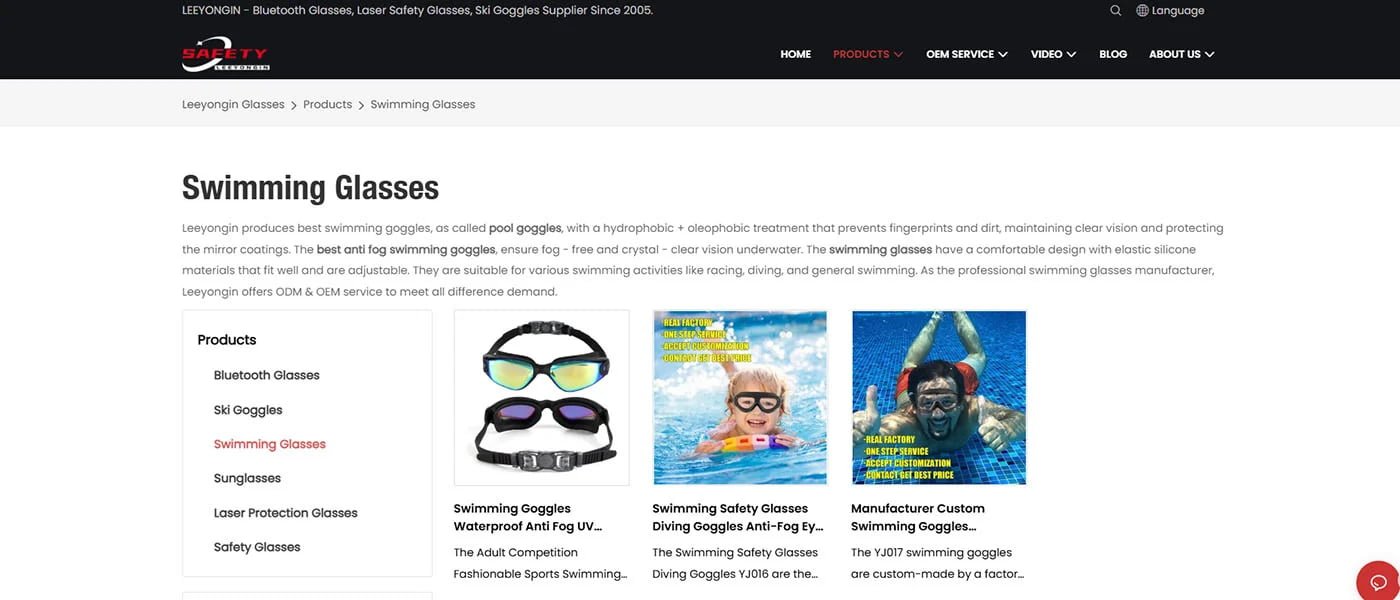
LEEYONGIN SAFETY brings industrial safety eyewear manufacturing expertise to swimming goggles, creating advantages in impact resistance, lens durability, and protective coatings. Their core business—safety glasses, protective goggles, face shields—requires ANSI Z87.1 compliance, impact testing, and UV protection verification. These same quality systems translate well to swimming goggles requiring durable lenses, UV400 protection, and scratch-resistant coatings.
Key Products:
- Recreational swim goggles with impact-resistant lenses (MOQ: 1,000-1,500 units)
- Junior/kids safety goggles (shatterproof lenses, comfortable seals, MOQ: 1,000 units)
- UV400-certified goggles for open-water swimming (MOQ: 1,500 units)
- Safety eyewear (crossover technology applications)
- Protective dive masks (impact-resistant optical-grade lenses, MOQ: 2,000 units)
- Anti-scratch and anti-fog coating applications
Pros:
- ✅ Safety-grade quality: Impact-resistant lenses, ANSI-level testing protocols
- ✅ Durability focus: Scratch-resistant coatings, chemical-resistant materials
- ✅ UV protection expertise: UV400 certification standard across product lines
- ✅ Chlorine resistance: Coatings developed for harsh chemical environments
- ✅ Quality certifications: ISO 9001, CE, FDA, often ANSI Z87.1 (safety eyewear standard)
- ✅ Competitive pricing: $2.50-5.00 per unit for recreational goggles at volume
- ✅ Production capacity: Large-scale safety eyewear facility (50,000+ units/month capacity)
- ✅ MOQ: 1,000-1,500 units – accessible for growing brands
Cons:
- ⚠️ Industrial aesthetic: Design sensibility may lean toward function over fashion
- ⚠️ Limited competition goggle focus: Strength is recreational/safety, not racing hydrodynamics
- ⚠️ Less innovation in swim-specific features: Anti-fog may not match swim-specialist manufacturers
- ⚠️ Communication: English functional but may require clear technical specifications
- ⚠️ Lead time: 55-70 days for initial orders
Website: https://www.leeyonginsafety.com/
7. WAVE – China-Based Swim Equipment Manufacturer
Introduction:
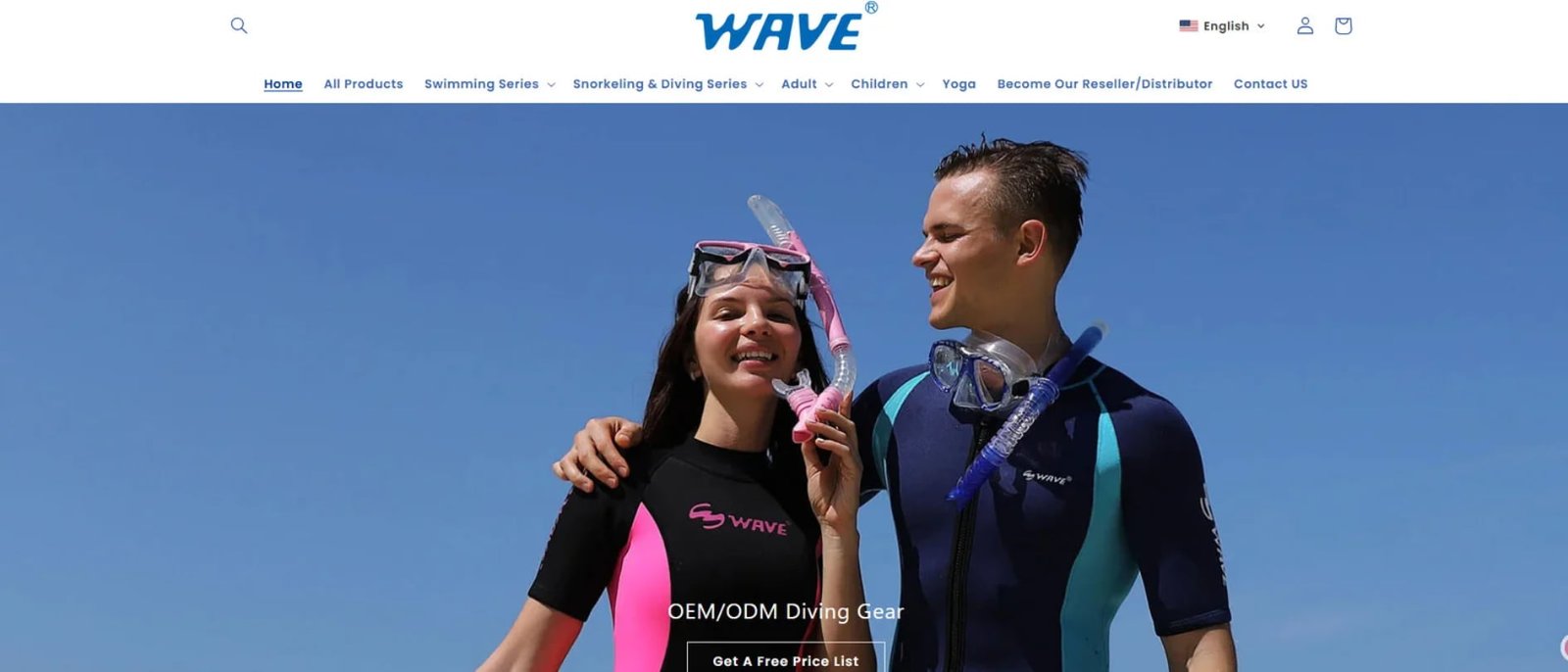
WAVE represents cost-effective Chinese manufacturing for swim equipment with MOQs starting at 500-1,000 units—positioning them well for brands balancing affordability and reasonable quality. They produce a broad range of aquatic products (swim caps, kickboards, training aids, goggles) primarily for mass-market retail, promotional products, and budget-conscious brands targeting $8-20 retail price points.
Key Products:
- Basic recreational goggles (standard designs, multiple colors, MOQ: 500-1,000 units)
- Junior swim goggles (kid-friendly designs, fun colors, MOQ: 500-1,000 units)
- Competition goggles (entry-level racing designs, MOQ: 1,000 units)
- Swim caps (silicone, latex, MOQ: 500-1,000 units)
- Training equipment (kickboards, pull buoys, fins, MOQ varies)
- Promotional goggle programs (large volume, basic customization)
Pros:
- ✅ Low MOQ: 500-1,000 units per model – accessible for startups and test orders
- ✅ Highly competitive pricing: $1.80-3.50 per unit for recreational, $2.50-5.00 for competition
- ✅ Fast production: 40-55 days from order to shipment
- ✅ Multi-product capability: One-stop sourcing for various swim accessories
- ✅ Large capacity: Can scale to 10,000-20,000+ units per model
- ✅ Flexible customization: Logo printing, color variations, basic packaging design
- ✅ Volume discounts: 15-25% savings at 5,000+ total units across products
Cons:
- ⚠️ Basic quality tier: Suitable for mass-market, not premium or competition-focused brands
- ⚠️ Limited innovation: Standard designs without proprietary features
- ⚠️ Anti-fog durability: Typically 15-30 day coating lifespan (shorter than premium manufacturers)
- ⚠️ Quality variability: First order vs. repeat orders may differ without strict quality controls
- ⚠️ Certifications: CE/FDA basic, ISO 9001 and BSCI status need verification
- ⚠️ Communication: Requires clear tech packs and specifications
Website: https://wave-china.com/
8. Yijia Optical – Optical Lens and Swimming Goggles Factory
Introduction:
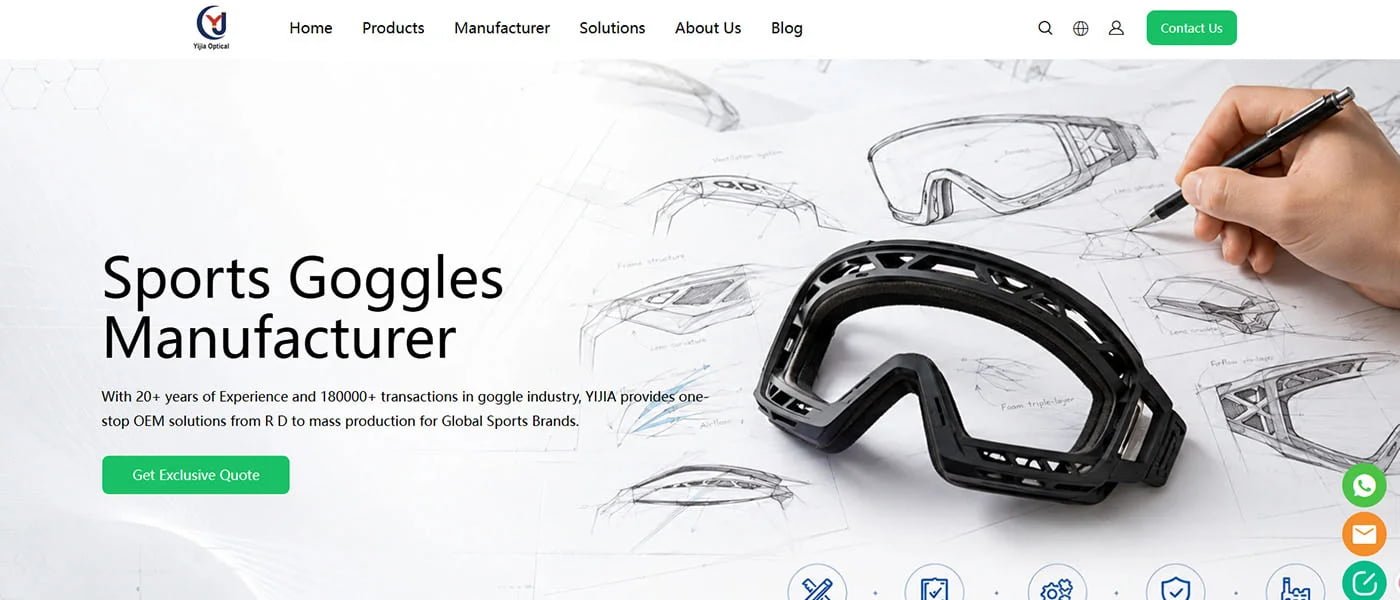
Yijia Optical leverages eyewear lens manufacturing infrastructure for swimming goggles production, similar to Springwhales but with stronger emphasis on mass-market optical products. Their facility includes automated lens cutting, polishing, and coating equipment serving both eyeglass and goggle production lines. This dual capability provides cost advantages in optical precision while maintaining moderate pricing through volume efficiency.
Key Products:
- Prescription swimming goggles (diopter range -1.5 to -8.0, MOQ: 1,000-1,500 units)
- Standard recreational goggles (optical-quality lenses, MOQ: 500-1,000 units)
- Competition goggles with optical precision (MOQ: 1,000 units)
- Reading goggles for pool workouts (magnification +1.0 to +3.0, MOQ: 1,500 units)
- Custom lens tinting and coatings
- Eyewear production (crossover manufacturing capability)
Pros:
- ✅ Optical manufacturing expertise: Precision lens grinding, accurate prescriptions
- ✅ Cost-effective prescription goggles: 20-30% less expensive than Taiwanese optical manufacturers
- ✅ Moderate MOQ: 1,000-1,500 units for prescription products (accessible for growth brands)
- ✅ Optical quality control: Testing equipment for lens accuracy, coating uniformity
- ✅ Wide diopter range: Can manufacture -1.5 to -8.0 diopters accurately
- ✅ Fast sampling: 10-14 days for prescription samples
- ✅ Production efficiency: Automated equipment reduces per-unit optical costs
- ✅ Lead time: 55-70 days for prescription products
Cons:
- ⚠️ Communication: English functional but benefits from detailed optical specifications
- ⚠️ Innovation limited: Focus on proven optical designs, not cutting-edge features
- ⚠️ Quality tier: Good optical accuracy but material quality may not match premium manufacturers
- ⚠️ Certifications: ISO 9001 likely, but FDA registration and REACH compliance need verification
- ⚠️ Anti-fog performance: May not match swim-specialist anti-fog formulations
Website: https://www.yj-optical.com/
9. F2SWIM – Full-Service Swim Gear Manufacturer
Introduction:
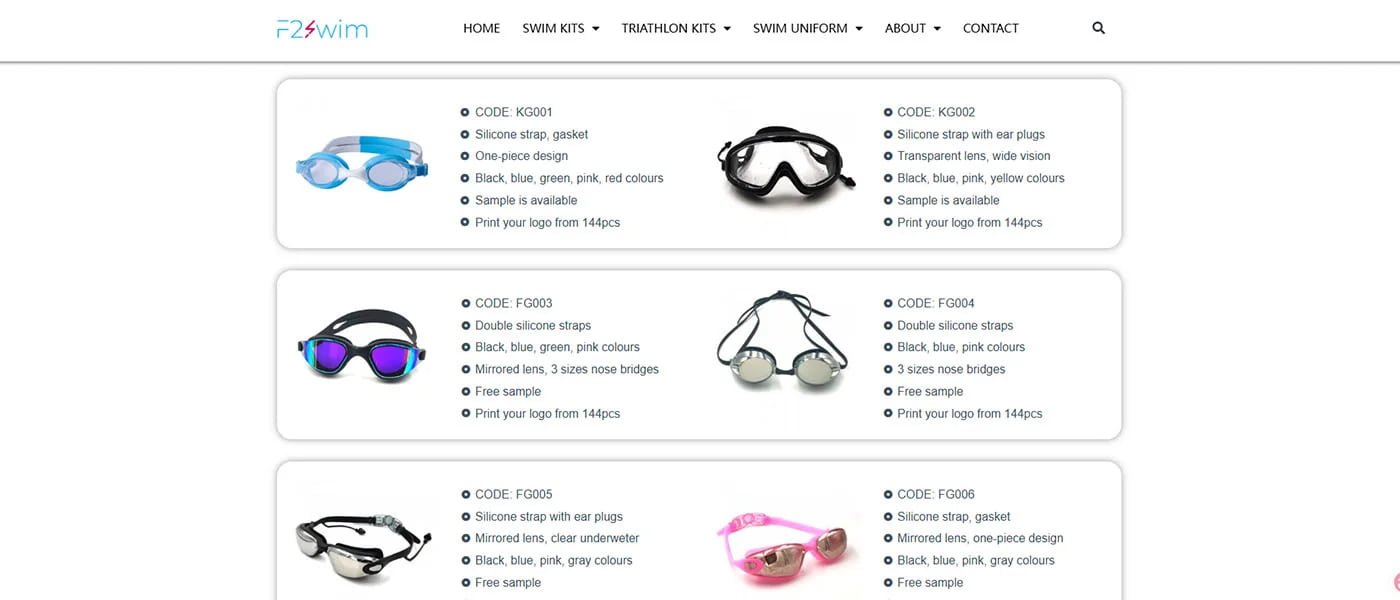
F2SWIM positions itself as a full-service swim equipment partner offering comprehensive product development, manufacturing, and branding services for the global swimming market. They serve brands needing more than just manufacturing—requiring design consultation, package development, marketing support, and turnkey private label programs. Their account management approach guides brands from concept through market launch.
Key Products:
- Private label swim goggles (recreational, competition, junior, MOQ: 1,000-2,000 units)
- Custom-designed goggles with brand-specific features (MOQ: 2,000-3,000 units)
- Swim caps (silicone, latex, racing, MOQ: 1,000-2,000 units)
- Swim bags and gear carriers (MOQ varies)
- Training equipment (fins, snorkels, paddles, MOQ varies)
- Package design and branding services
- Turnkey private label programs
Pros:
- ✅ Full-service approach: Design consultation, branding, packaging, quality control all managed
- ✅ One-stop swim equipment sourcing: Goggles, caps, bags, training aids from single partner
- ✅ Quality focus: ISO 9001 certified with documented QC protocols
- ✅ Account management: Dedicated support through development and production
- ✅ Moderate MOQ: 1,000-2,000 units for standard products
- ✅ Global market experience: Understanding of US, EU, Australian swim market requirements
- ✅ Production capacity: Can handle 10,000-15,000 units per model at scale
- ✅ Lead time: 55-70 days with clear milestone tracking
Cons:
- ⚠️ Higher MOQ for custom designs: 2,000-3,000 units (reflects development investment)
- ⚠️ Premium pricing: Full-service model adds 10-15% vs. basic manufacturers
- ⚠️ Less flexible: Designed for brands committing to full programs, not single test orders
- ⚠️ Customization limitations: Moderate flexibility within their systems/processes
- ⚠️ Capacity constraints: Not ideal for ultra-large brands requiring 30,000+ units per model
Website: https://f2swim.com/
10. Hubo Sports – Integrated Sports Equipment Manufacturer
Introduction:
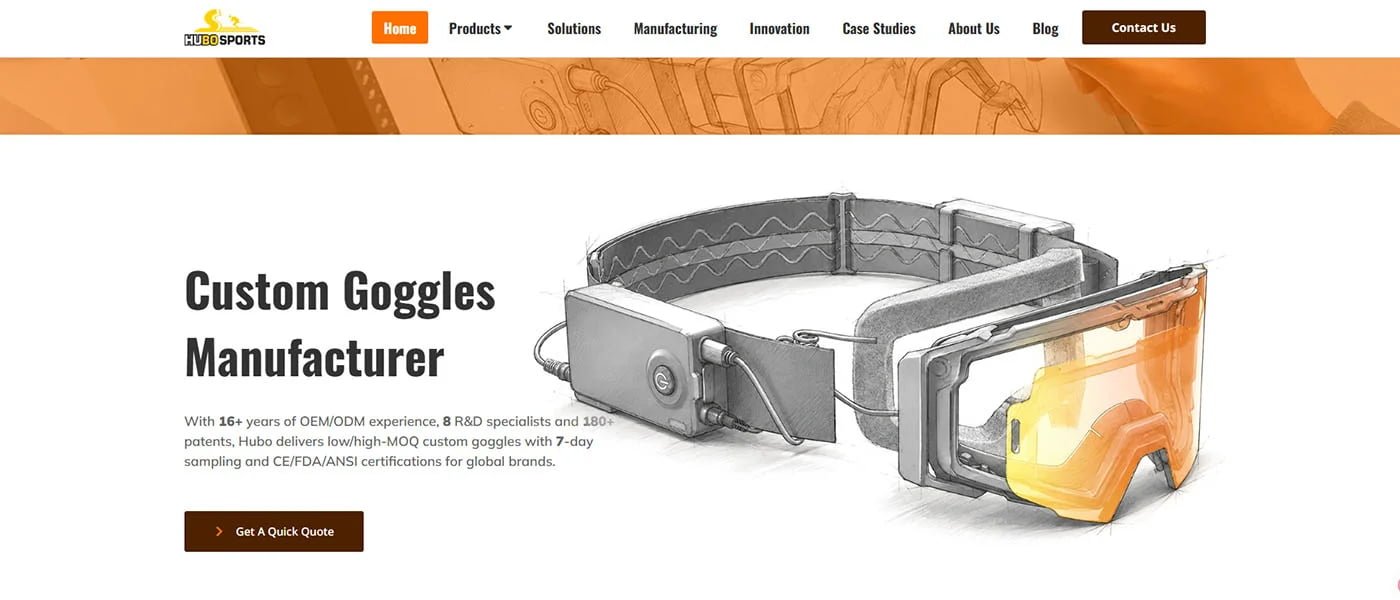
Hubo Sports operates as an integrated sports equipment manufacturer producing multiple sports categories under one roof—swimming equipment, ball sports gear, fitness accessories, and outdoor sports products. This diversification provides financial stability, resource depth, and economies of scale that translate to competitive pricing and production reliability.
Key Products:
- Swimming goggles (recreational, competition, junior, MOQ: 1,000-2,000 units)
- Swim training equipment (kickboards, pull buoys, fins, MOQ varies)
- Sports eyewear (cycling, running, general sports goggles)
- Fitness accessories (resistance bands, yoga equipment, MOQ varies)
- Ball sports equipment (soccer, basketball, volleyball products)
- Private label sports equipment programs
Pros:
- ✅ Competitive pricing: $2.50-4.80 per unit for recreational goggles at moderate volumes
- ✅ Production capacity: Large facility can handle 15,000-25,000 units per goggle model
- ✅ Financial stability: Diversified product lines reduce single-market dependency
- ✅ Scale efficiencies: Lower material costs, better logistics rates through volume
- ✅ Multi-product sourcing: Consolidate swim equipment with fitness/sports accessories
- ✅ ISO 9001 certified with documented quality systems
- ✅ Global export experience: Familiar with compliance for multiple markets
- ✅ Lead time: 55-70 days with reliable scheduling
Cons:
- ⚠️ MOQ: 1,000-2,000 units per model (not suitable for very small brands)
- ⚠️ Goggle specialization: Swimming goggles compete with multiple product lines for resources
- ⚠️ Innovation pace: Solid execution of proven designs, less focus on pioneering features
- ⚠️ Communication layers: Larger organization may have account managers vs. direct production access
- ⚠️ Customization flexibility: Best with moderate customization, not highly complex custom molds
Website: https://hubo-sports.com/
How We Selected These Manufacturers
Selection Methodology:
Our evaluation prioritized manufacturers with verified swimming goggles production capabilities across different specializations, scales, and geographic locations to serve diverse brand needs:
Core Selection Criteria:
-
Verified Goggle Manufacturing: Current production of swimming goggles, diving masks, or aquatic eyewear—not generic plastic products adapted for goggles
-
MOQ Range Diversity: Options from 500 units (startups) to 15,000+ units (established brands) across the list
-
Technical Capabilities: Demonstrated expertise in anti-fog coatings, UV protection, optical precision, leak-proof sealing, ergonomic design
-
Quality Systems: Minimum ISO 9001 certification; preference for CE, FDA, REACH compliance for international markets
-
Specialization Clarity: Understanding whether focus is prescription optics, competition performance, mass-market recreational, training equipment, or comprehensive watersports
-
Geographic Representation: Coverage of China (manufacturing efficiency), Taiwan (premium quality), and specialized facilities with different cost/capability profiles
-
Business Model Transparency: Clear understanding of whether entity operates as specialist goggle factory, optical manufacturer, comprehensive watersports supplier, or multi-category sports equipment manufacturer
What We Excluded:
- Generic plastic manufacturers without specific swimming goggles expertise
- Trading companies posing as manufacturers without factory ownership
- Facilities without optical quality control systems (no lens testing equipment)
- Entities with unverifiable claims or contradictory information across sources
How to Choose the Right Swimming Goggles Manufacturer
For Startup/Pre-Launch Brands (Annual Revenue <$500K):
Priority Checklist:
- [ ] MOQ 500-1,500 units (allows market testing without excessive inventory risk)
- [ ] Sampling under 15 days (critical for iteration speed before launch)
- [ ] Total investment clarity: All-in costs including samples ($30-80 each), production, shipping, duties
- [ ] Basic certifications: CE, FDA minimum (verify current compliance status)
- [ ] Anti-fog durability: Request coating lifespan specifications (minimum 30-day claim)
- [ ] UV protection: UV400 certification for outdoor/open-water models
- [ ] Leak testing: Ask about quality control protocols for waterproof integrity
- [ ] Payment terms: Expect 30-50% deposit, balance before shipping for first orders
Critical Questions to Ask:
-
"How many swimming goggles did you manufacture last year?"
- Verify category experience and scale (minimum 50,000 units annually for reliability)
-
"Can I see production photos of lens molding and gasket assembly?"
- Visual proof of manufacturing capability and facility scale
-
"What is your anti-fog coating durability and how is it tested?"
- Should specify coating type, expected lifespan (30/60/90 days), testing methodology
-
"Do you provide leak testing and UV protection certification?"
- Critical for customer satisfaction and regulatory compliance
-
"What is your exact sampling cost, timeline, and how many revisions are included?"
- Should be $30-80 per sample, 7-15 days, with 1-2 revision rounds
-
"What are your MOQ breaks and pricing at 500, 1,000, and 2,000 units?"
- Understand pricing scale and minimum commitment requirements
-
"What happens if goggles fail leak testing or anti-fog doesn’t perform as specified?"
- Clarify quality guarantee, replacement policy, and defect responsibility
Red Flags:
- ❌ Vague about anti-fog coating specifications ("our coating is very good" without data)
- ❌ No optical testing equipment visible in facility photos
- ❌ Pushing MOQs 3-5x higher than advertised minimums without justification
- ❌ Sampling takes 20+ days (indicates deprioritization of small clients)
- ❌ Cannot explain difference between silicone vs. TPE gasket materials
- ❌ Requires 100% payment upfront for orders over $3,000
- ❌ No photos of actual goggle production (only catalog images)
Recommended from This List:
| Brand Positioning | Primary Choice | Alternative | Expected Investment |
|---|---|---|---|
| Budget recreational ($8-15 retail) | #7 WAVE | #10 Hubo Sports | $2,000-4,000 (500-1,000 units) |
| Mid-tier recreational ($15-25 retail) | #1 Jerry Goggle | #6 LEEYONGIN SAFETY | $3,500-7,000 (500-1,000 units) |
| Competition performance ($25-40 retail) | #1 Jerry Goggle | #4 Eyeline | $5,000-10,000 (1,000 units) |
| Prescription optical ($30-60 retail) | #8 Yijia Optical | #3 Springwhales | $6,000-12,000 (1,000-1,500 units) |
For Growth-Stage Brands ($500K-$3M Revenue):
Priority Checklist:
- [ ] MOQ 1,000-3,000 units per model (cost efficiency without excessive inventory)
- [ ] ISO 9001 certified minimum (required for Target, Dick’s Sporting Goods, REI)
- [ ] Proven goggle portfolio: Request 3-5 brand references in similar market segment
- [ ] Material traceability: Silicone source, polycarbonate lens supplier, coating formulation documentation
- [ ] Formal QC process: Pre-production sample → Inline inspection (leak testing) → AQL 2.5 final inspection
- [ ] Lead time: 50-75 days with clear production schedules and milestone tracking
- [ ] Capacity verification: Can they handle 2x-3x volume growth next year without quality degradation?
- [ ] Anti-fog testing protocol: Documented coating durability testing (minimum 30-day, target 60-90 day)
- [ ] UV protection certification: UV400 standard with lab test reports for outdoor models
Strategic Considerations:
Payment Terms Negotiation:
- Leverage $25,000-100,000 annual volume for better terms
- Negotiate: 30% deposit → 70% against Bill of Lading copy (vs. 50/50 for startups)
- Request net-30 terms after 3 successful orders with consistent quality
Quality Approval Sequence:
Implement formal checkpoints:
- Color approval (if custom colors): Pantone matching, production color chips
- Material approval: Gasket silicone samples, lens clarity verification
- Pre-production sample: From actual production materials (not hand samples)
- Inline inspection: At 30-50% production completion (leak testing, anti-fog application check)
- Final random inspection: AQL 2.5 standard (or stricter AQL 1.5 for premium brands)
- Third-party inspection: Consider SGS, Bureau Veritas, or Intertek for $300-500 per inspection
Anti-Fog Standards Documentation:
- Create master reference samples with acceptable anti-fog performance
- Specify testing protocol: X number of pool sessions at Y temperature with Z chlorine level
- Document failure criteria: Visible fogging within first 5 minutes of use = unacceptable
- Require batch testing reports with each production run
Custom Mold Development Strategy:
If investing in proprietary mold ($8,000-18,000):
- Amortization plan: Spread mold cost over 3,000-5,000 units minimum production commitment
- Ownership clarity: Negotiate mold ownership after agreed production volume
- Design protection: NDA and non-compete clauses for proprietary designs
- Iteration buffer: Budget for 1-2 mold revisions ($2,000-5,000 each) during development
Recommended from This List:
| Brand Strategy | Primary Partner | Secondary/Specialty | Annual Investment |
|---|---|---|---|
| Premium competition focus | #2 SAEKO | #4 Eyeline (training products) | $40,000-100,000 |
| Mid-tier multi-channel | #1 Jerry Goggle | #9 F2SWIM (full line support) | $30,000-75,000 |
| Cost-competitive retail | #7 WAVE | #10 Hubo Sports | $25,000-60,000 |
| Prescription/optical | #3 Springwhales | #8 Yijia Optical | $35,000-80,000 |
| Watersports comprehensive | #5 AROPEC | #9 F2SWIM | $50,000-120,000 |
For Established Brands ($3M+ Revenue):
Decision Framework:
At this scale, swimming goggles manufacturing becomes a strategic competitive advantage requiring:
- Proprietary features (custom molds, exclusive anti-fog formulations, patented designs)
- Vertical quality control (material sourcing through final assembly)
- Dual-sourcing strategy (70% primary, 30% secondary for risk mitigation)
- Sustainability compliance (if brand-relevant: recycled plastics, bio-based materials)
- Annual contracts with volume commitments for 15-25% better pricing
Priority Checklist:
- [ ] Capacity: 5,000-20,000+ units per model with documented production planning
- [ ] Multiple certifications: ISO 9001, CE, FDA, REACH compliance (EU chemical regulations)
- [ ] Proprietary mold investment: Budget $10,000-25,000 per custom mold for brand differentiation
- [ ] Custom anti-fog development: Work with manufacturer R&D on exclusive coating formulations
- [ ] Material traceability: Full documentation from raw material suppliers through finished goods
- [ ] Comprehensive QC: Inline testing, AQL 1.5 final inspection, third-party verification
- [ ] Multi-seasonal delivery: Staggered production schedules coordinated with sales forecasts
- [ ] Financial stability verification: Years in business, facility ownership, client portfolio, insurance coverage
Quality Assurance Infrastructure:
Comprehensive QC Protocol:
- Approved vendor list: Qualified suppliers for silicone, polycarbonate, coatings, packaging
- Material testing: Incoming inspection for hardness (Shore A scale), transparency, chemical resistance
- Color standards: Pantone color chips for all custom colors, ΔE <2.0 tolerance
- Dimensional inspection: First article inspection with ±0.3mm tolerances on critical dimensions
- Leak testing: 100% testing for competition models, AQL 2.5 sampling for recreational
- Anti-fog verification: Batch testing (minimum 10 units per 1,000) with documented performance
- UV protection testing: Lab certification (UV400 standard, test reports with each production)
- Packaging inspection: Correct product/packaging match, barcode accuracy, artwork approval
Testing Standards to Reference:
- ASTM F2809: Standard specification for goggles and masks for use in ice hockey (impact resistance)
- EN 166: European standard for eye protection (optical quality, UV protection)
- ISO 12312-1: Eye and face protection for solar viewing (UV protection methodology)
- ANSI Z87.1: American National Standard for eye protection (if claiming impact resistance)
Cost Structure Optimization:
Strategies for established brands:
- Material prebuy: Lock silicone/polycarbonate prices with 6-12 month advance orders (5-10% savings)
- Consolidated logistics: Full container loads (20′ or 40′ containers) reduce per-unit shipping ($0.20-0.40 savings)
- In-house inspection: Train staff on QC protocols, reducing reliance on third-party inspection (saving $300-500 per inspection)
- Annual contracts: Volume commitments secure 15-25% better pricing vs. spot orders
- Mold amortization: Spread custom tooling costs over 5,000-10,000 units (reducing per-unit cost by $0.80-1.50)
Recommended Partnerships for $3M+ Brands:
Most manufacturers on this list efficiently handle 5,000-15,000 units per model. For true enterprise scale (20,000+ units), you’ll need:
Option A – Portfolio Approach:
- Premium line: #2 SAEKO (5,000-10,000 units – competition/triathlon goggles at $5-9/unit)
- Mid-tier line: #1 Jerry Goggle or #9 F2SWIM (8,000-12,000 units – recreational at $2.50-5/unit)
- Budget line: #7 WAVE or #10 Hubo Sports (10,000-20,000 units – mass-market at $1.80-3.50/unit)
Option B – Specialized Categories:
- Prescription/optical: #3 Springwhales (3,000-5,000 units prescription models)
- Training innovation: #4 Eyeline (2,000-4,000 units specialized training products)
- Watersports package: #5 AROPEC (multi-product: goggles + masks + caps + fins)
Option C – Graduate to Tier-1 OEM:
Beyond this list, consider approaching Tier-1 manufacturers supplying major brands:
- Typically require 30,000-100,000+ unit commitments annually
- Serve Speedo, TYR, Arena, Aqua Sphere (may have exclusivity conflicts)
- Investment: $150,000-500,000+ annually
Swimming Goggles Technical Specifications Guide
Understanding Critical Components:
1. Lens Materials:
| Material | Properties | Cost | Best For |
|---|---|---|---|
| Polycarbonate | Impact-resistant, UV-stable, optical clarity, lightweight | Standard | Competition and recreational goggles (industry standard) |
| Acrylic (PMMA) | Lower cost, less impact-resistant, acceptable clarity | Budget | Mass-market recreational only |
| Tempered Glass | Superior optical clarity, scratch-resistant, heavy | Premium | High-end diving masks (rarely used in swim goggles) |
Key specifications:
- Optical clarity: Minimal distortion across lens curvature
- UV protection: UV400 standard (blocks 99-100% of UVA/UVB up to 400nm)
- Impact resistance: ANSI Z87.1 or EN 166 testing for safety claims
- Thickness: 1.5-2.5mm typical (thicker = more durability, but heavier)
2. Gasket/Seal Materials:
| Material | Properties | Cost | Best For |
|---|---|---|---|
| Liquid Silicone (LSR) | Hypoallergenic, chlorine-resistant, soft, durable, premium feel | High | Premium competition and recreational ($4-9/unit range) |
| TPE (Thermoplastic Elastomer) | Good flexibility, moderate chlorine resistance, cost-effective | Medium | Mid-tier recreational ($2.50-5/unit range) |
| PVC | Budget, less durable, potential allergens, degrades faster | Low | Mass-market only (<$2/unit, avoid for quality brands) |
Critical factors:
- Shore hardness: 20-40 Shore A (softer = more comfortable, but less durable)
- Facial seal geometry: Orbital shape matching human eye socket contours
- Gasket thickness: 3-6mm typical (thicker = more cushion, but larger profile)
- Chlorine resistance: Silicone superior (500+ hours), TPE acceptable (200-300 hours), PVC poor (<100 hours)
3. Anti-Fog Coatings:
Coating Types:
Hydrophilic Coatings (Most Common):
- Mechanism: Absorbs water molecules, spreading them into thin transparent layer
- Durability: 30-90 days depending on formulation quality
- Application: Dip-coating or spray application during manufacturing
- User care: Avoid touching lens interior, rinse gently (extends life)
Hydrophobic Coatings (Specialty):
- Mechanism: Repels water into beads that roll off lens
- Durability: 60-120 days typically (harder coating)
- Application: Often combined with scratch-resistant layer
- Best for: Open-water where water shedding is priority
Nano-Coatings (Premium):
- Mechanism: Molecular-level surface treatment preventing fog and fingerprints
- Durability: 90-180 days claims (verify independently)
- Cost: +$1-3 per unit
- Best for: Premium brands targeting $40-60 retail
Performance benchmarks:
- Entry-level: 30-day durability (15-20 pool sessions)
- Mid-tier: 60-day durability (30-40 pool sessions)
- Premium: 90-day+ durability (50+ pool sessions)
Testing protocol to specify:
- Test environment: Pool water at 78-82°F, 1-3 ppm chlorine
- Test duration: 45-60 minute sessions
- Success criteria: No visible fogging for first 30 minutes of use
- Sample size: 10 units per batch minimum
4. Strap Systems:
Material options:
| Material | Properties | Cost | Best For |
|---|---|---|---|
| Silicone | Chlorine-resistant, durable, premium feel, non-allergenic | +$0.50-1/unit | Premium competition and recreational |
| Latex | Traditional, elastic, moderate durability, potential allergens | Standard | Mid-tier recreational (being phased out) |
| TPE | Budget-friendly, moderate stretch, acceptable durability | -$0.30/unit | Mass-market recreational |
Strap design considerations:
- Single vs. double strap: Double provides better stability (common in competition goggles)
- Adjustment system: Side-adjust (easy) vs. back-adjust (traditional) vs. quick-release
- Width: 10-16mm typical (narrower = racing, wider = recreational comfort)
- Length: 280-380mm unstretched (accommodates head circumferences 52-62cm)
5. Nose Bridge Options:
Fixed Nose Bridge:
- Pros: Simpler manufacturing, lower cost, no loose parts
- Cons: Fits narrow range of facial shapes
- Best for: Mass-market recreational where one size fits most
Interchangeable Nose Bridges:
- Pros: Customizable fit, accommodates diverse facial structures
- Cons: Small parts can be lost, slightly higher cost (+$0.30-0.60/unit)
- Typical offering: 3-5 size options (XS, S, M, L, XL)
- Best for: Competition goggles and premium recreational
One-Piece Flexible Bridge:
- Pros: Self-adjusting to facial shape, no assembly, comfortable
- Cons: May not fit very wide or narrow bridges
- Best for: Junior goggles, training goggles, mid-tier recreational
Conclusion: Building Your Swimming Goggles Manufacturing Partnership
The global swimming goggles market offers manufacturing partners across every price point, specialization, and scale—from 500-unit flexible specialists to 20,000-unit capacity giants. Success requires matching manufacturer capabilities to your brand stage, target market, and strategic differentiation.
Immediate Action Steps:
1. Define Your Sourcing Requirements (30 minutes):
Create a brief covering:
- Target market segment: Competition/recreational/junior/prescription/training
- Retail price point: Determines cost-of-goods budget (aim for 20-30% COGS for DTC, 35-45% for wholesale)
- Volume needs: Realistic first-year sales projections (recommend conservative estimate × 1.5 for buffer)
- Key features: Anti-fog durability, UV protection, prescription capability, unique design elements
- Certifications required: CE/FDA minimum, ISO 9001 for retail, REACH for EU
- Timeline: When inventory is needed (add 60-90 days from today)
- Budget: All-in investment including samples, tooling (if custom), production, shipping, duties
2. Shortlist 2-3 Manufacturers (1 hour):
Use this decision matrix:
| Your Situation | Primary Recommendation | Alternative | Expected Investment |
|---|---|---|---|
| Startup, budget recreational (<$15 retail) | #7 WAVE | #10 Hubo Sports | $2,500-5,000 (500-1,000 units) |
| Startup, mid-tier recreational ($15-25 retail) | #1 Jerry Goggle | #6 LEEYONGIN SAFETY | $4,000-8,000 (500-1,000 units) |
| Startup, competition focus ($25-40 retail) | #1 Jerry Goggle | #4 Eyeline | $5,500-11,000 (1,000 units) |
| Startup, prescription market ($30-60 retail) | #8 Yijia Optical | #3 Springwhales | $7,000-14,000 (1,000-1,500 units) |
| Growth, premium competition | #2 SAEKO | #9 F2SWIM | $15,000-40,000 (2,000-5,000 units) |
| Growth, multi-product watersports | #5 AROPEC | #9 F2SWIM | $25,000-60,000 (multi-category) |
| Established, custom innovation | #2 SAEKO | #3 Springwhales (optical R&D) | $50,000-150,000+ annually |
3. Request Detailed Quotations (2-3 days):
Email template:
Subject: Swimming Goggles Manufacturing Quotation Request – [Your Brand Name]
Hello [Manufacturer Name],
We are [startup/established] swim brand targeting [competition/recreational/junior] market in [US/EU/global]. We’re interested in your manufacturing services for our [season/year] collection.
Target products:
– [Competition/Recreational] goggles: [500/1,000/2,000] units
– Specifications: [UV400/anti-fog duration/silicone gaskets/etc.]
– [Additional products if applicable]
Please provide:
1. MOQ per model and pricing at [500/1,000/2,000] unit breaks
2. Lens and gasket material options with specifications
3. Anti-fog coating durability and testing protocol
4. Sampling cost, timeline, and revision policy
5. Production lead time from order confirmation
6. Payment terms and shipping options (FOB/CIF to [your port])
7. Certifications held (ISO/CE/FDA/REACH)
8. Custom mold development cost (if considering proprietary design)
Please include photos of similar goggles you’ve manufactured and references if available.
Thank you,
[Your Name]
4. Evaluate Through Sampling (10-14 days):
Order 2-3 samples from each shortlisted manufacturer:
Testing protocol:
- Comfort/fit test: Wear for 30-minute pool session – check for pressure points, leak-free seal
- Anti-fog performance: Use in 5-10 pool sessions – document when fogging begins
- UV protection: If outdoor model, verify UV400 claim (request lab report)
- Leak integrity: Press goggles against face without strap – should create suction and seal
- Strap durability: Stretch strap repeatedly – check for degradation or breakage
- Comparison: Benchmark against competitors at your target retail price point (buy 3-4 competitor goggles)
Evaluation scorecard (rate 1-5 for each factor):
- Comfort and fit
- Anti-fog performance
- Leak-proof seal
- Optical clarity
- Material quality
- Strap durability
- Aesthetic appeal
- Value for cost
5. Place Test Order (6-8 weeks):
Start at or near minimum MOQ:
- Document everything: Approved samples, Pantone colors (if custom), anti-fog specifications, UV protection requirements
- Request pre-production sample: From actual production materials before bulk manufacturing
- Specify inspection: AQL 2.5 standard (or stricter AQL 1.5 for premium)
- Consider third-party inspection: $250-400 via SGS/Bureau Veritas for first order peace of mind
- Plan quality testing: Reserve 10-20 units from production for independent anti-fog/UV/leak testing
6. Market Testing Phase (90 days):
Launch strategy:
- DTC website: Test pricing, messaging, customer reviews
- Amazon: Gather reviews, understand search behavior
- Local swim shops: Get retailer feedback, observe customer reactions
- Swim teams/clubs: Provide samples for athlete testing and feedback
Success metrics:
- >70% sell-through in 90 days: Scale to 2-3x volume next order
- 30-70% sell-through: Refine product/marketing before next production
- <30% sell-through: Re-evaluate product-market fit before additional investment
Final Strategic Recommendation:
Don’t prioritize absolute lowest price at the expense of critical features. In swimming goggles:
- Poor anti-fog = 40-60% return rate (destroys profitability)
- Leaking seals = negative reviews (kills brand reputation)
- Cheap gasket materials = skin irritation complaints (liability risk)
Invest in quality where it matters:
- Anti-fog coating: Pay $0.30-0.80 more per unit for 60-90 day durability vs. 30-day budget coating
- Liquid silicone gaskets: Worth $0.50-1.00 premium over TPE for premium positioning
- UV400 certification: Essential $0.15-0.30 per unit for outdoor models
- Third-party testing: $250-400 per inspection prevents $5,000-15,000 defective inventory losses
Manufacturer Selection Summary:
- Best all-around for startups: #1 Jerry Goggle (low MOQ, specialization, competitive pricing)
- Best premium quality: #2 SAEKO (Taiwan precision, innovation, established reputation)
- Best prescription/optical: #3 Springwhales or #8 Yijia Optical (optical expertise, prescription accuracy)
- Best training innovation: #4 Eyeline (patented training products, niche differentiation)
- Best watersports package: #5 AROPEC (one-stop multi-product sourcing, vertical integration)
- Best safety/durability focus: #6 LEEYONGIN SAFETY (impact-resistant, family recreational positioning)
- Best cost efficiency: #7 WAVE (budget-friendly, high volume capability, mass market)
- Best full-service support: #9 F2SWIM (guided development, turnkey programs, account management)
- Best multi-category sports: #10 Hubo Sports (scale advantages, diversified portfolio, logistics efficiency)
Your optimal manufacturer aligns with your current brand stage, target market positioning, volume requirements, and strategic differentiation approach. The right partnership accelerates market entry, ensures quality consistency, and positions you for sustainable growth in the global swimming goggles market.
Disclaimer: Manufacturer information, capabilities, MOQs, pricing, and certifications are based on industry research, public information, and typical market parameters current as of 2025. Always conduct independent verification of manufacturing capabilities, certifications, compliance status, and current pricing before entering production agreements. MOQs, lead times, certifications, and contact information may change—request current documentation directly from manufacturers. Pricing ranges are estimates based on typical market rates for swimming goggles manufacturing and may vary significantly based on material selection, order complexity, customization level, tooling requirements, and order volume. Anti-fog durability, UV protection claims, and leak-proof specifications should be independently tested and verified. This guide provides a strategic sourcing framework and verified starting points for manufacturer evaluation, not endorsements or guarantees of specific manufacturer performance or product quality. Consult with legal and compliance professionals regarding certification requirements for your target markets.