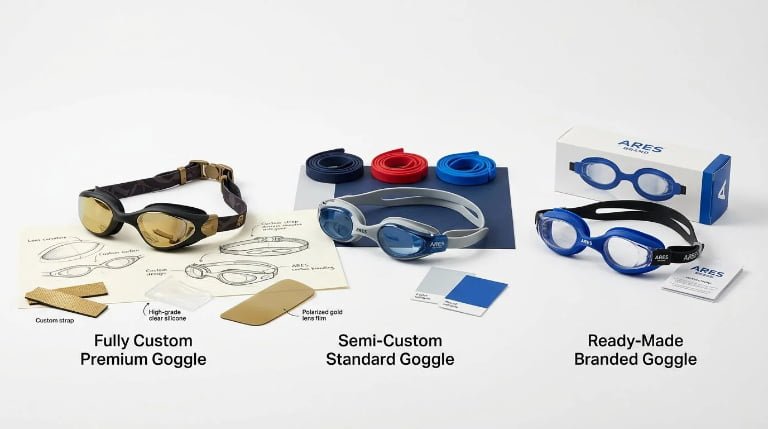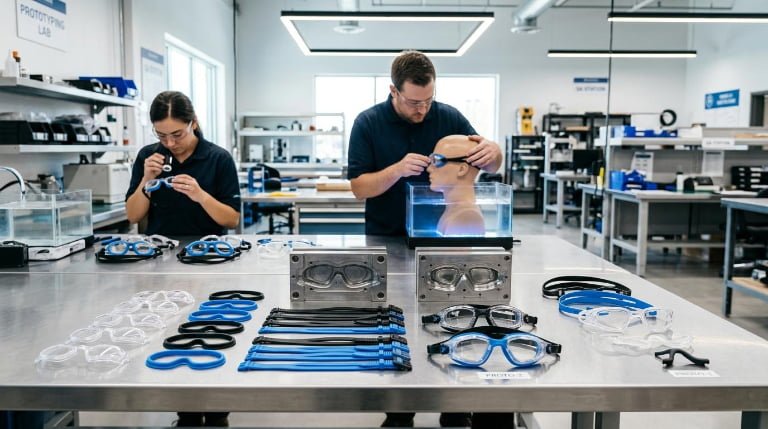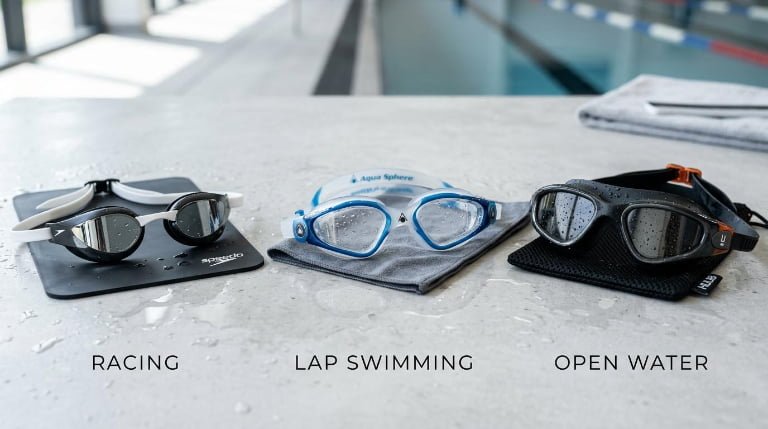
Before ordering swimming goggles in bulk, ask your supplier about fit, materials, anti-fog durability, quality testing, production capacity, compliance, MOQ, tooling, lead time, and payment terms. These questions help you avoid the most common bulk-order failures: leaking goggles, short-lived coatings, delayed production, customs issues, and unexpected costs.
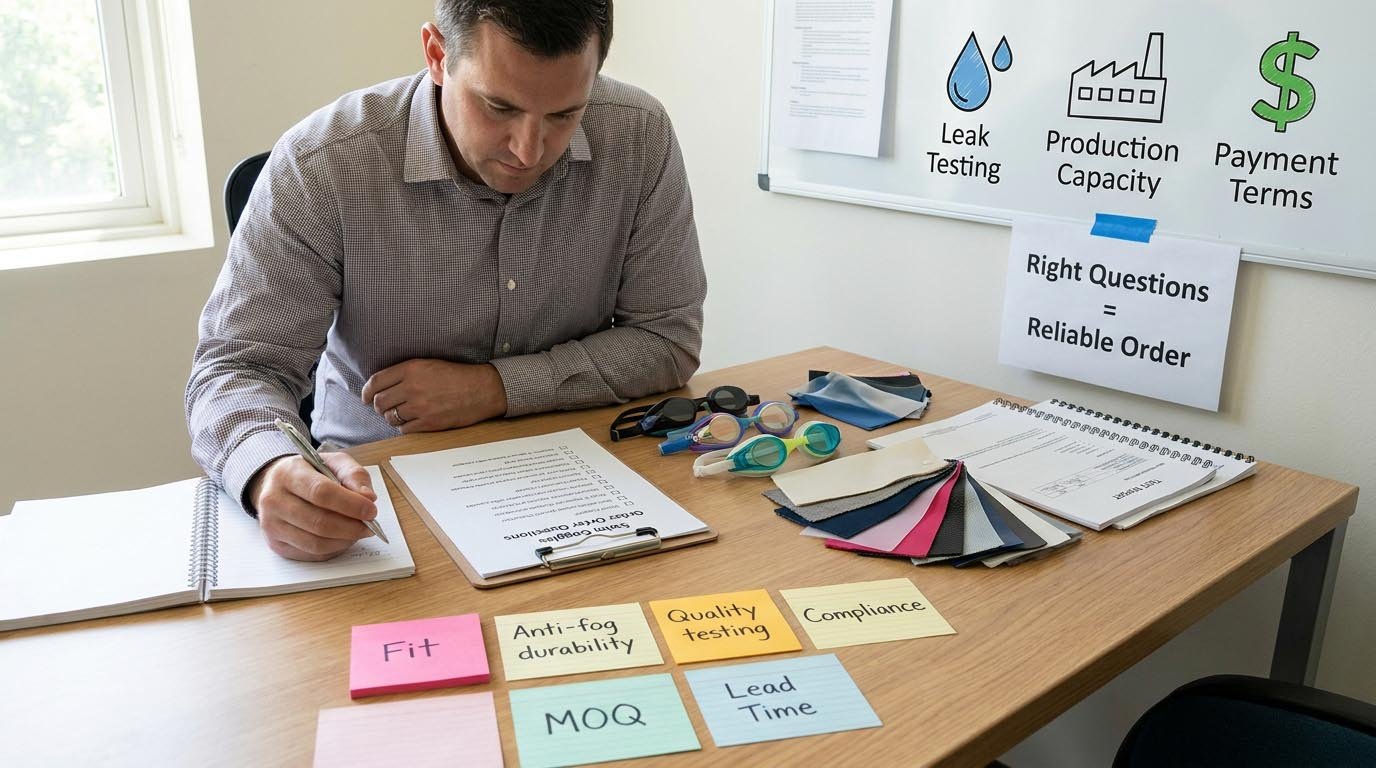
Many buyers focus on price first and only ask technical questions after a problem appears. That is usually too late. A good sample does not guarantee a reliable bulk order, and a low quote does not guarantee a low total cost.
I have spent years managing bulk swim goggles orders at Jerry. In that time, I have seen buyers lose time and money because they approved products without confirming test standards, fit range, material grade, or factory capacity. This guide covers the most important questions to ask before placing a bulk order.
Quick Answers: Bulk Swimming Goggles Order Checklist
1. How long does the anti-fog coating last?
Ask for the coating type, test method, and expected number of uses. Anti-fog durability can vary widely between factories and coating processes.
2. Can the factory handle my order volume during peak season?
Request actual production capacity, current utilization, and lead time during your order window.
3. Do I need tooling for custom swimming goggles?
If you want a new frame, lens shape, or structure, you may need custom tooling, which can add cost and development time.
4. What compliance documents are available for my market?
Ask for current REACH, CPSIA, or retailer-required test reports, depending on where you sell.
5. What is the real total cost beyond unit price?
Confirm MOQ, tooling, samples, packaging, inspection, shipping terms, and payment terms before approval.
Q1. Who Will Wear the Goggles, and Does the Fit Match That User?
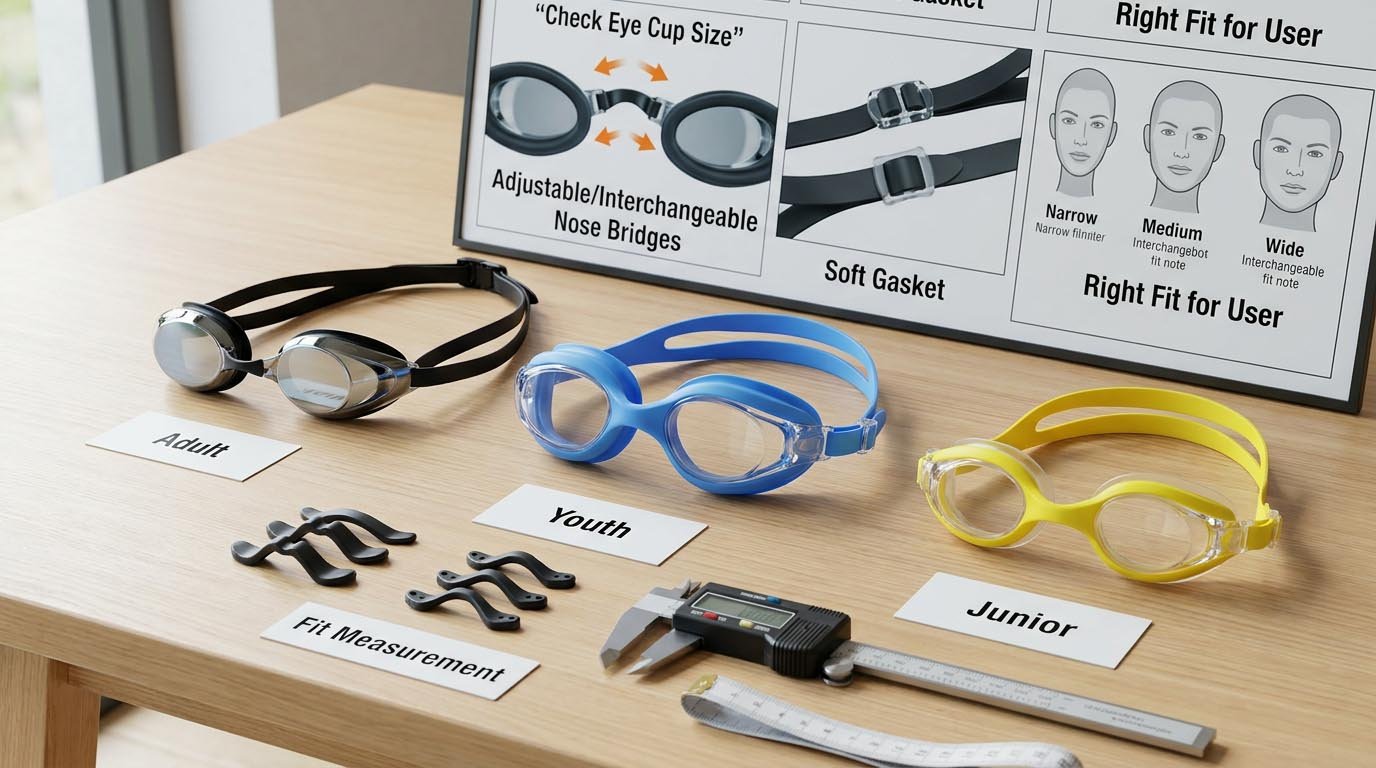
The first question to ask before ordering swimming goggles in bulk is simple: who is the product for?
A swim goggle designed for competitive swimmers is different from one designed for children, fitness swimmers, or casual users. If you do not define the target user early, you may end up buying a model that fits the sample reviewer but not your actual customers.
Ask your supplier:
- Is this model designed for adults, youth, or children?
- Does it fit narrow, medium, or wide face shapes?
- Is it intended for racing, training, leisure, or open-water use?
- What nose bridge options are available?
- Is the bridge fixed, adjustable, or interchangeable?
Why Fit Questions Matter
Many bulk order failures start with poor fit. Goggles may look good and still leak on a large percentage of users if the bridge width, eye cup shape, or gasket geometry is wrong.
What to Check
- Eye cup size
- Nose bridge range
- Strap adjustment range
- Gasket softness
- Junior vs adult sizing
| Fit Component | Racing Goggles | Recreational Goggles | Junior Goggles |
|---|---|---|---|
| Eye cup size | Smaller, low profile | Medium to large | Smaller |
| Gasket feel | Firmer | Softer | Extra soft |
| Nose bridge | Often interchangeable | Adjustable or fixed | Narrower range |
| Strap system | Secure, tighter fit | Easy-adjust comfort fit | Simpler adjustment |
Ask for actual fit dimensions, not just words like "universal" or "one size."
Q2. What Lens, Gasket, and Strap Materials Are Used?
The next question is about materials. The best bulk swimming goggles are not defined only by appearance. They depend on whether the materials are suitable for your target market, price point, and use frequency.
Ask your supplier:
- What lens material is used?
- Is it standard polycarbonate or optical-grade polycarbonate?
- What material is used for the gasket?
- What material is used for the strap?
- Are all skin-contact parts latex-free?
Common Material Choices
- Polycarbonate lenses: the most common option for swimming goggles
- Silicone gaskets: softer, more durable, and better for skin contact
- TPE gaskets: lower-cost alternative, usually less durable
- Silicone straps: preferred for durability and comfort
Why This Matters
Low-grade gasket or strap materials can cause:
- skin irritation
- odor
- yellowing
- cracking
- weaker long-term sealing
If your market includes children, schools, clubs, or retail chains, latex-free and skin-safe materials are especially important.
Ask for:
- material specifications
- test reports
- supplier declarations
- samples from actual production materials
Q3. What Anti-Fog Coating Is Used, and How Long Does It Last?
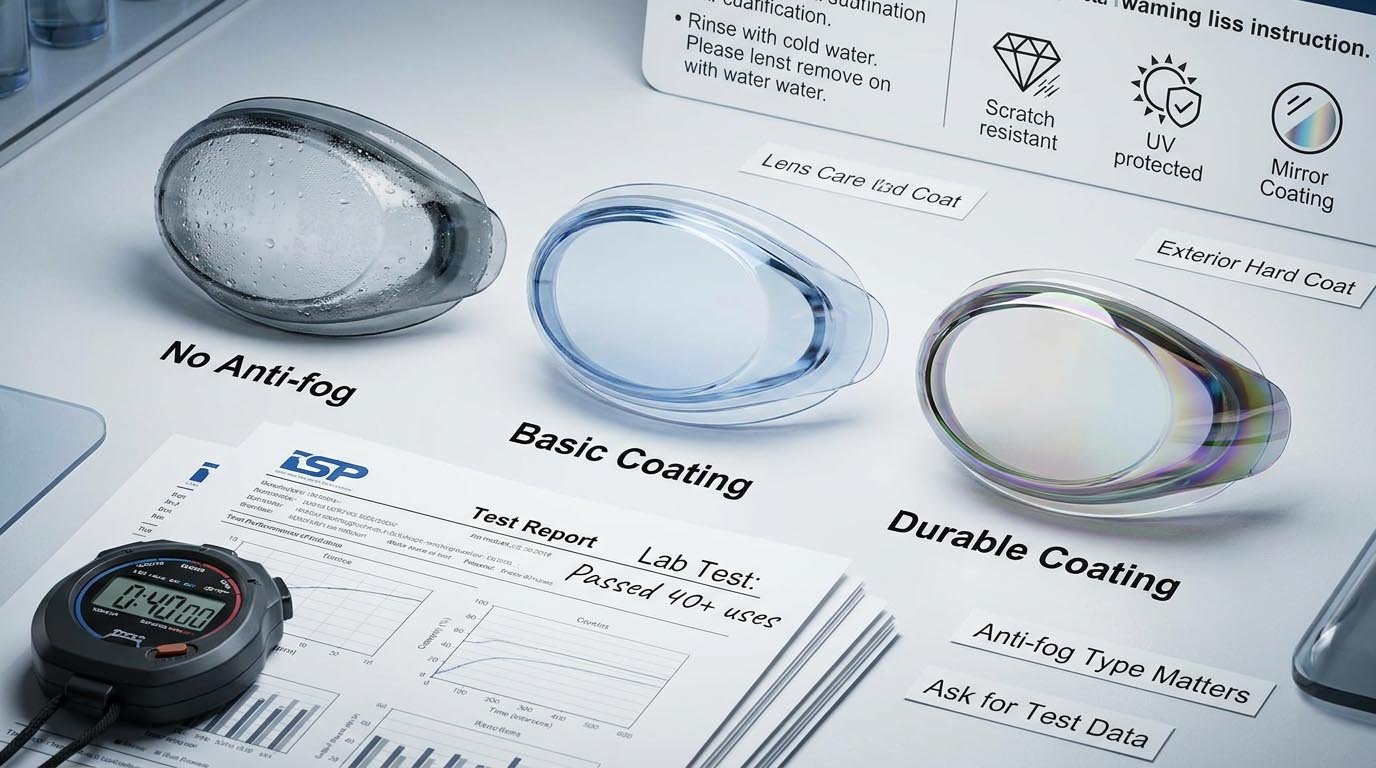
This is one of the most important questions in any bulk swim goggles order.
Many factories say a product has anti-fog coating, but that does not tell you how durable it is. Some coatings perform well for a limited number of uses. Others are more durable but add cost.
Ask your supplier:
- What type of anti-fog coating is used?
- Is it basic chemical coating or a more durable process?
- How is the coating applied?
- What is the expected lifespan under normal use?
- Do you have internal or third-party test data?
Why This Question Matters
Anti-fog complaints are one of the most common reasons for returns. If your product is for casual swimmers, a basic coating may be acceptable. If your users swim several times per week, durability becomes more important.
What Else to Confirm
- Is there a hard coat on the exterior for scratch resistance?
- Is there UV protection for outdoor use?
- Are mirror coatings used on the outside only?
- Are care instructions included to help preserve coating performance?
Do not rely on generic claims like "premium anti-fog." Ask for measurable performance information.
Q4. How Do You Test for Leakage, Optical Quality, and Durability?
Before ordering swimming goggles in bulk, ask how the factory verifies product performance during and after production.
A supplier may send a clean sample, but what matters is whether the same level of quality can be maintained in mass production.
Ask your supplier:
- Do you perform leakage testing?
- How do you inspect lens clarity and distortion?
- Do you test strap strength?
- Do you test gasket compression or long-term sealing performance?
- What defects are checked during final inspection?
Quality Checks That Matter
For swim goggles, common performance checks include:
| Test Area | What to Verify |
|---|---|
| Leakage | Seal integrity after assembly |
| Optical quality | Distortion, haze, visual clarity |
| Strap strength | Resistance to pulling and slipping |
| Surface quality | Scratches, coating defects, cosmetic flaws |
| Assembly accuracy | Nose bridge fit, strap direction, lens alignment |
Extra Question to Ask
Will the factory allow:
- pre-shipment inspection
- third-party inspection
- AQL-based inspection criteria
If a supplier resists inspection, that is a warning sign.
Q5. What Quality Control System Do You Use During Bulk Production?
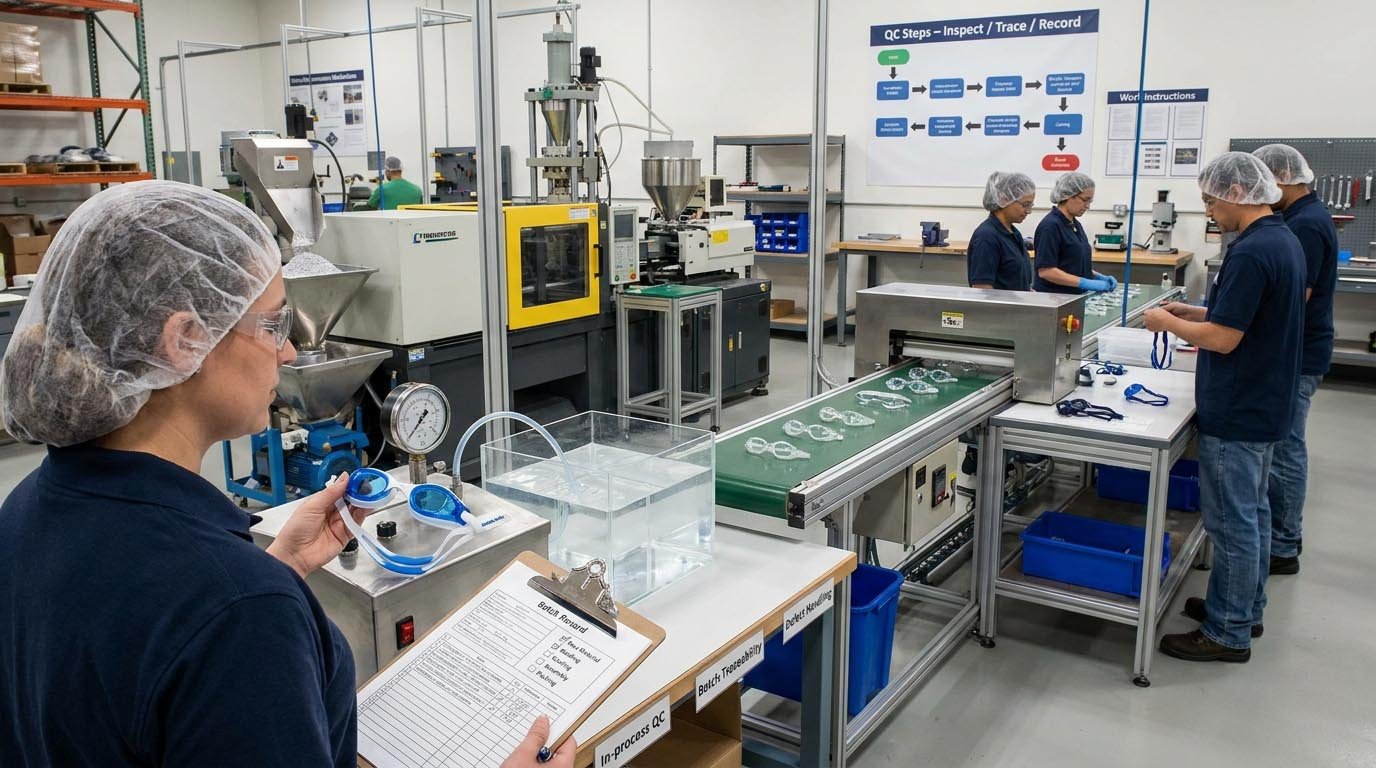
This question is different from testing a finished product. It is about how the supplier controls quality during production.
Ask your swim goggles supplier:
- Do you inspect incoming raw materials?
- Do you check parts after molding?
- Do you inspect after coating?
- Do you verify assembly before packing?
- Do you keep batch traceability records?
Why Process Control Matters
Most mass production defects are easier to prevent than to sort out later. If the factory only inspects finished goods at the end, quality problems may already affect a large portion of the batch.
Good Answers Should Include
- clear in-process checkpoints
- written work instructions
- batch records
- defect handling procedure
- rework or rejection standards
Bulk swim goggles orders are won or lost on consistency, not on one perfect pre-production sample.
Q6. Can the Factory Really Handle My Order Volume and Timeline?
Another critical question before ordering swimming goggles in bulk is whether the supplier can actually deliver your order when you need it.
Ask your supplier:
- What is your monthly production capacity for swim goggles?
- How many active production lines do you have?
- Is coating done in-house or outsourced?
- What is your current production load?
- How do you handle peak season orders?
What You Want to Learn
A supplier may quote a good lead time during a quiet month and then become overloaded when your order enters production. This is especially common before summer, back-to-school, and major retail seasons.
Also Ask
- How long do samples take?
- How long does tooling take, if needed?
- How long does mass production take?
- Do you have backup plans for equipment delays or capacity shortages?
Capacity is not only about machines. It is also about scheduling, labor, subcontractors, and process bottlenecks.
Q7. What Certifications and Compliance Documents Can You Provide?
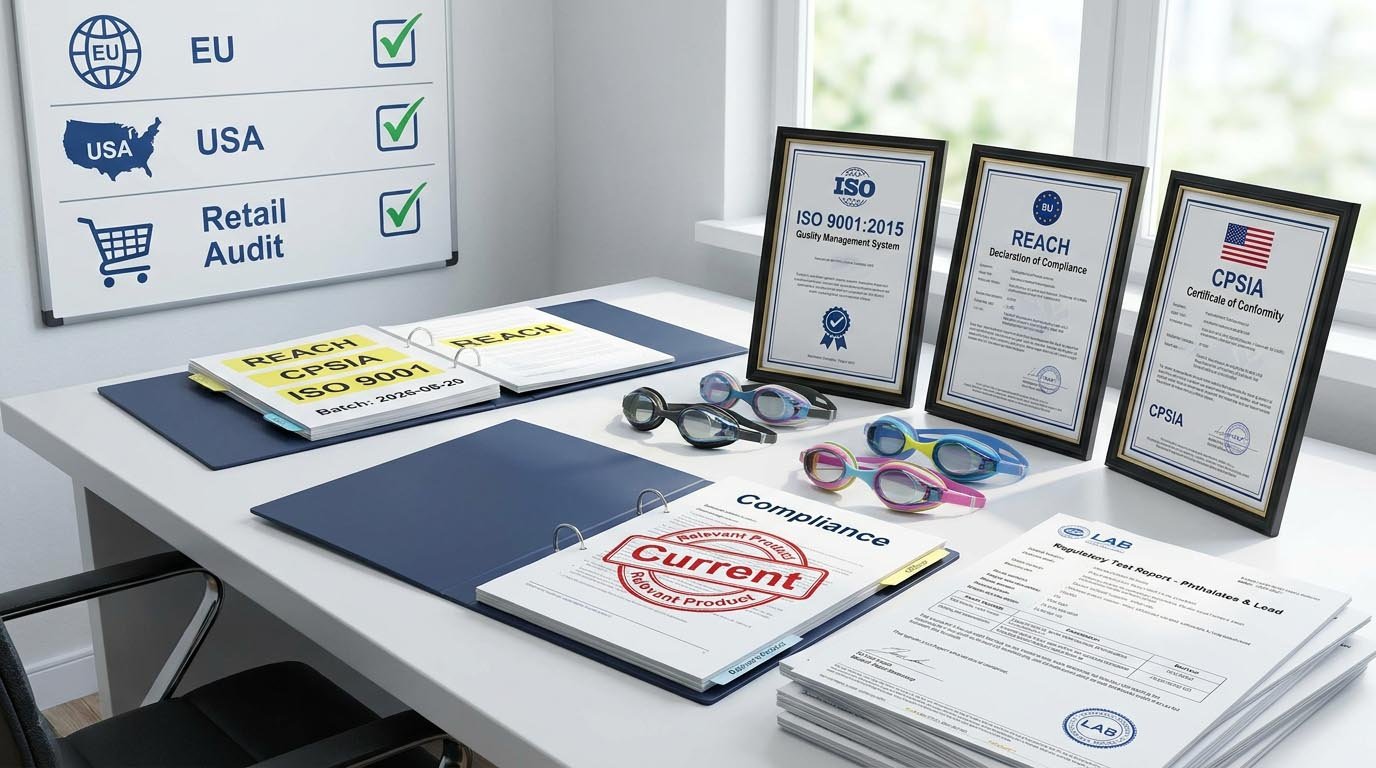
Compliance should be confirmed before production starts, not after your goods are ready to ship.
Ask your supplier:
- Do you have REACH test reports for EU markets?
- Do you have CPSIA-related testing if the product is sold in the US, especially for children?
- Can you provide material declarations?
- Do you have retailer-specific compliance experience?
- Are your reports current and product-relevant?
Why This Question Matters
A certificate from a different product or an expired report may not protect your shipment. If you are selling to chains, platforms, or importers, compliance documents often matter as much as product quality.
Factory Audits May Also Matter
Depending on your channel, buyers may ask for:
- BSCI
- SMETA
- ISO 9001
- other customer-specific audits
Ask for copies early and verify that the factory name and address match the supplier you are dealing with.
Q8. What Is the MOQ, and When Do I Need to Pay for Tooling?
MOQ and tooling are among the most important commercial questions in bulk swimming goggles sourcing.
Ask your supplier:
- What is the MOQ per model?
- What is the MOQ for custom colors, logos, or packaging?
- When does a project require new molds or tooling?
- How much does the tooling cost?
- Is the tooling cost one-time or shared across future orders?
Typical Scenarios
| Project Type | Typical MOQ | Tooling Situation |
|---|---|---|
| Stock model with logo | Lower | Usually no new mold |
| Color or strap customization | Medium | Usually no new mold |
| New frame or lens structure | Higher | New tooling required |
| Full custom product and packaging | Highest | Multiple setup costs possible |
Why This Matters
Buyers often assume a small design change is simple. In reality, a shape change may require new molds, longer lead times, and higher minimum order quantities.
Always ask whether your requested customization affects:
- mold cost
- production speed
- defect risk
- future reorder flexibility
Q9. What Is the Real Total Cost Beyond the Unit Price?
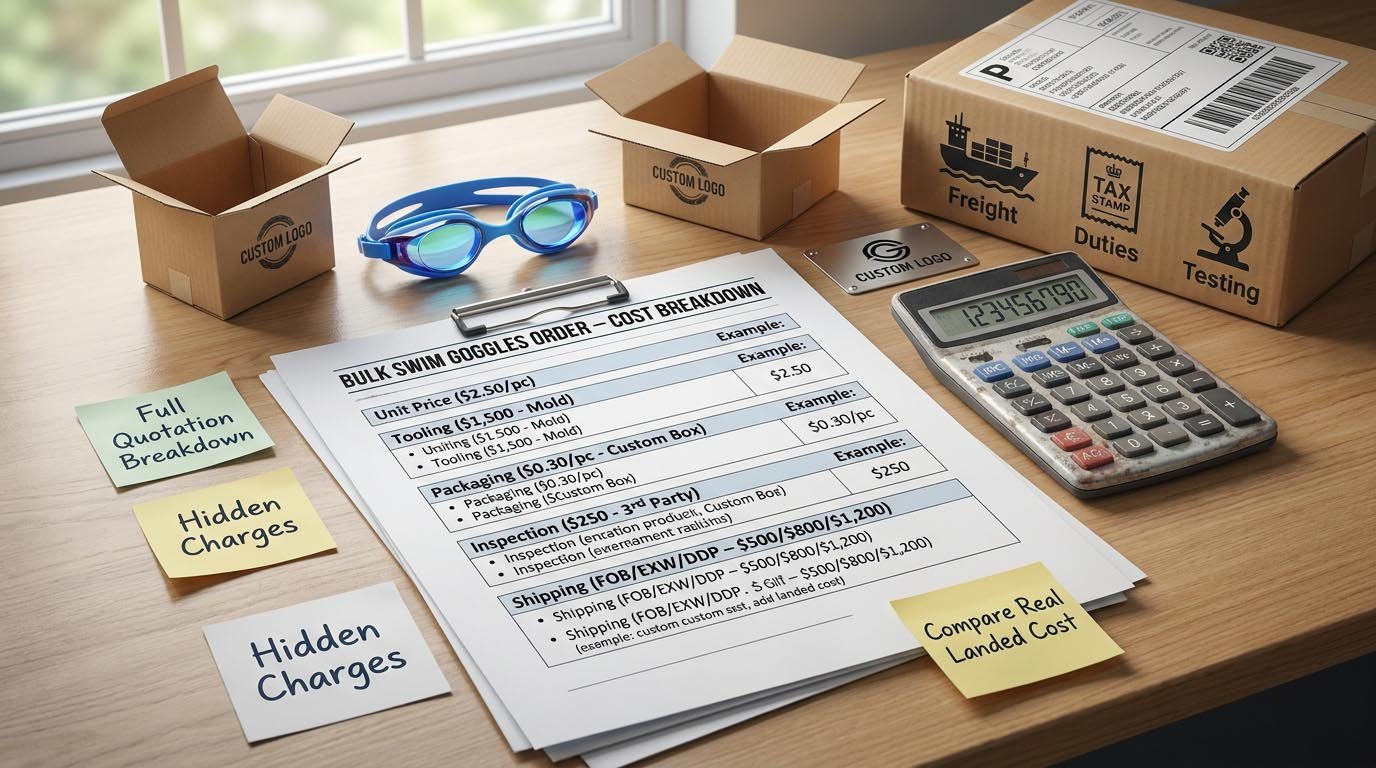
One of the biggest mistakes in bulk orders is focusing only on the per-unit quote.
Ask your supplier:
- What is included in the unit price?
- Are there charges for samples?
- Is there a fee for logo setup or printing plates?
- What does custom packaging cost?
- Are testing or inspection fees included?
- What shipping term is being quoted: EXW, FOB, CIF, or DDP?
Cost Areas Buyers Often Miss
- tooling
- sample charges
- packaging development
- third-party inspection
- freight
- duties
- compliance testing
- rework reserve for defects
Best Practice
Ask for a full quotation that separates:
- product cost
- setup/tooling cost
- packaging cost
- test/inspection cost
- shipping term
This helps you compare suppliers fairly and estimate your true landed cost.
Q10. What Are the Lead Time, Payment Terms, and IP Terms?
The final group of questions should cover timing, cash flow, and ownership.
Ask your supplier:
- What is the lead time for samples?
- What is the lead time for tooling, if needed?
- What is the lead time for bulk production?
- What are the payment terms?
- Who owns the tooling if I pay for it?
- Can you sign an NDA or NNN agreement for custom projects?
Why These Questions Matter
A project can fail even if the product itself is fine. Delays, unclear payment schedules, or disputes over tooling ownership can create major problems for buyers.
Common Terms to Clarify
- 30% deposit / 70% before shipment
- timing of final inspection before balance payment
- ownership of custom molds
- exclusivity for custom designs
- storage and maintenance of tooling
If you are developing private label or custom swimming goggles, these questions are essential.
Bulk Swimming Goggles Supplier Checklist
Before you place a bulk order, make sure you have clear answers to these questions:
- Who is the target user, and what fit range does the model cover?
- What materials are used for lenses, gaskets, and straps?
- What anti-fog coating is used, and how long does it last?
- How are leakage, optical quality, and durability tested?
- What quality control system is used during bulk production?
- Can the factory really support your order volume and delivery window?
- What compliance reports are available for your sales market?
- What are the MOQ and tooling implications of customization?
- What is the real total cost beyond the quoted unit price?
- What are the lead time, payment terms, and tooling ownership terms?
FAQ: Ordering Swimming Goggles in Bulk
What is the most important question to ask before ordering swimming goggles in bulk?
The most important question is whether the product matches your target user in fit, materials, and expected performance. Many failures start with a mismatch between product design and customer use.
How do I avoid anti-fog complaints in bulk swim goggles orders?
Ask for coating type, durability expectations, and test data. Also make sure product care instructions match the coating used.
Should I always choose silicone gaskets for swimming goggles?
For most mid-range and premium products, silicone is the safer choice for comfort, durability, and skin contact.
Do I need third-party inspection before shipment?
In most cases, yes. A third-party inspection adds cost, but it can reduce the risk of receiving a batch with preventable defects.
What is a normal MOQ for bulk swimming goggles?
It depends on the level of customization. Stock models with simple branding usually have lower MOQs than fully custom designs.
Conclusion
If you want to order swimming goggles in bulk successfully, do not start with price alone. Start with the right questions. Confirm fit, materials, anti-fog durability, testing methods, factory capacity, compliance, MOQ, total cost, and ownership terms before production begins. That is how you reduce returns, avoid delays, and build a product your customers will trust.
Need Help With a Bulk Swimming Goggles Project?
If you are comparing suppliers or preparing a private label or custom swim goggles order, it helps to review the project before tooling and production start. A clear specification sheet and supplier checklist can prevent expensive mistakes later.