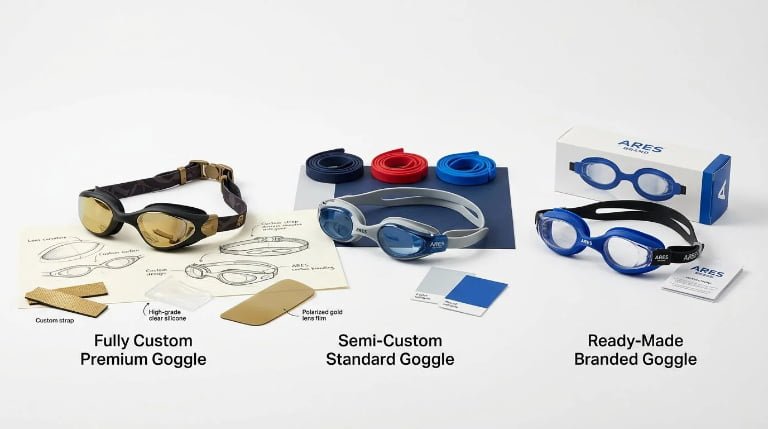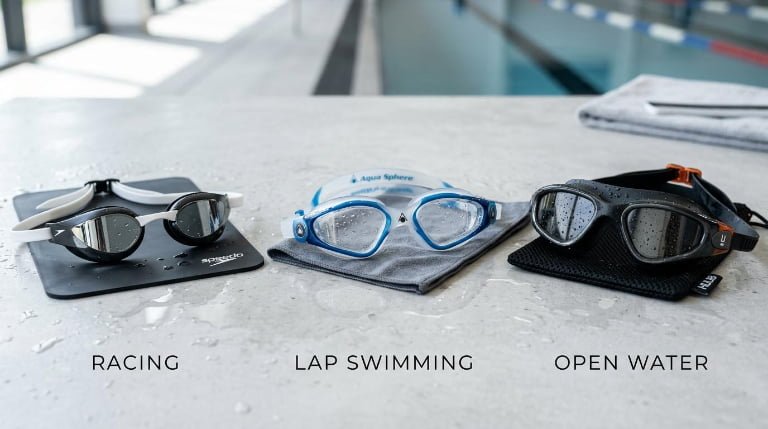
The best children’s swimming goggles should be safe, comfortable, easy to adjust, and suitable for the child’s face shape and swimming environment. Before buying, parents should focus on five basics: material safety information, proper seal fit, soft gasket comfort, lens visibility, and realistic anti-fog performance.
Many children’s goggles look attractive on the shelf, but design alone does not prevent leaks, pressure marks, fogging, or strap frustration. A good pair of kids’ swim goggles should help children see clearly, feel comfortable in the water, and build confidence during lessons, play, or regular training.
This guide explains how to choose children’s swimming goggles, what features matter most, and how to avoid common buying mistakes.
Quick Answers: How to Choose Children’s Swimming Goggles
What should parents check first when buying children’s swimming goggles?
Start with fit and comfort. Even safe materials and clear lenses will not help if the goggles leak, feel too tight, or slip during swimming.
Are all silicone swim goggles safe for children?
Not automatically. Parents should check for clear product information, relevant compliance details, and trusted brand labeling. Materials should feel smooth, have no strong chemical odor, and be suitable for children’s skin.
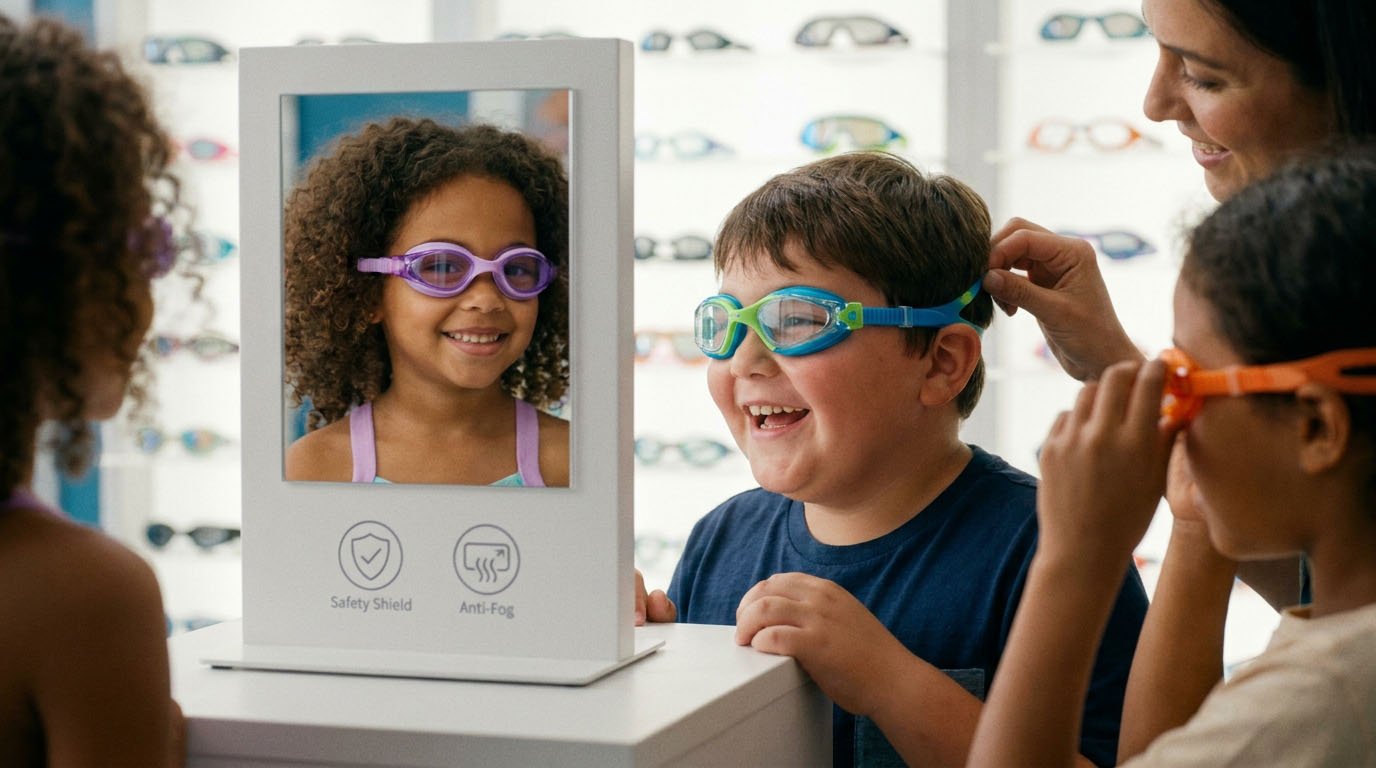
How do I know if swim goggles fit my child?
A simple test is to press the goggles gently against the face without using the strap. If the seal holds briefly, the fit is usually more promising than a pair that drops away immediately.
Does anti-fog coating on kids’ goggles last forever?
No. Anti-fog coating wears down with use, cleaning, and contact with the inner lens. Some products last longer than others, but no anti-fog treatment is truly permanent.
Do children need UV protection in swim goggles?
UV protection is most useful for outdoor swimming, including outdoor pools, beaches, and open water. For indoor swimming, it is less important.
What Makes Children’s Swimming Goggles Good?
A good pair of children’s swim goggles should combine:
- Soft and skin-friendly materials
- A secure but comfortable seal
- Easy strap adjustment
- Clear lenses with suitable tint
- Reliable visibility in the intended environment
- Practical durability for regular use
The right choice depends on the child’s age, face shape, swimming frequency, and where the goggles will be used.
1. Safety and Materials: What Parents Should Look For
Safety comes first in any children’s product. The area around the eyes is sensitive, so material quality matters.
Which materials are commonly used in children’s swimming goggles?
Most children’s swim goggles use:
- Silicone for gaskets and straps
- Polycarbonate for lenses
- Plastic frames or buckles for structure and adjustment
These materials can perform well when made to appropriate quality standards, but not all grades are equal.
How to check material quality
Parents can look for a few practical signs:
| What to Check | What to Look For | Warning Signs |
|---|---|---|
| Product labeling | Clear material and compliance information | Vague packaging or missing basic details |
| Smell | Little to no strong odor | Strong chemical or plastic smell |
| Surface feel | Smooth and even texture | Sticky, rough, or oily feel |
| Edges and finish | Rounded, clean construction | Sharp edges or poor finishing |
What to avoid in children’s goggles
Avoid products that show obvious quality problems such as:
- Rough or sharp plastic edges near the eyes
- Very hard contact surfaces
- Poorly attached decorative parts
- Flaking coatings
- Weak or unreliable strap connections
For parents buying online, it helps to choose brands or sellers that provide clear product details, age guidance, and return support in case the fit is wrong.
2. Fit and Sizing: Why Children’s Goggles Leak So Often
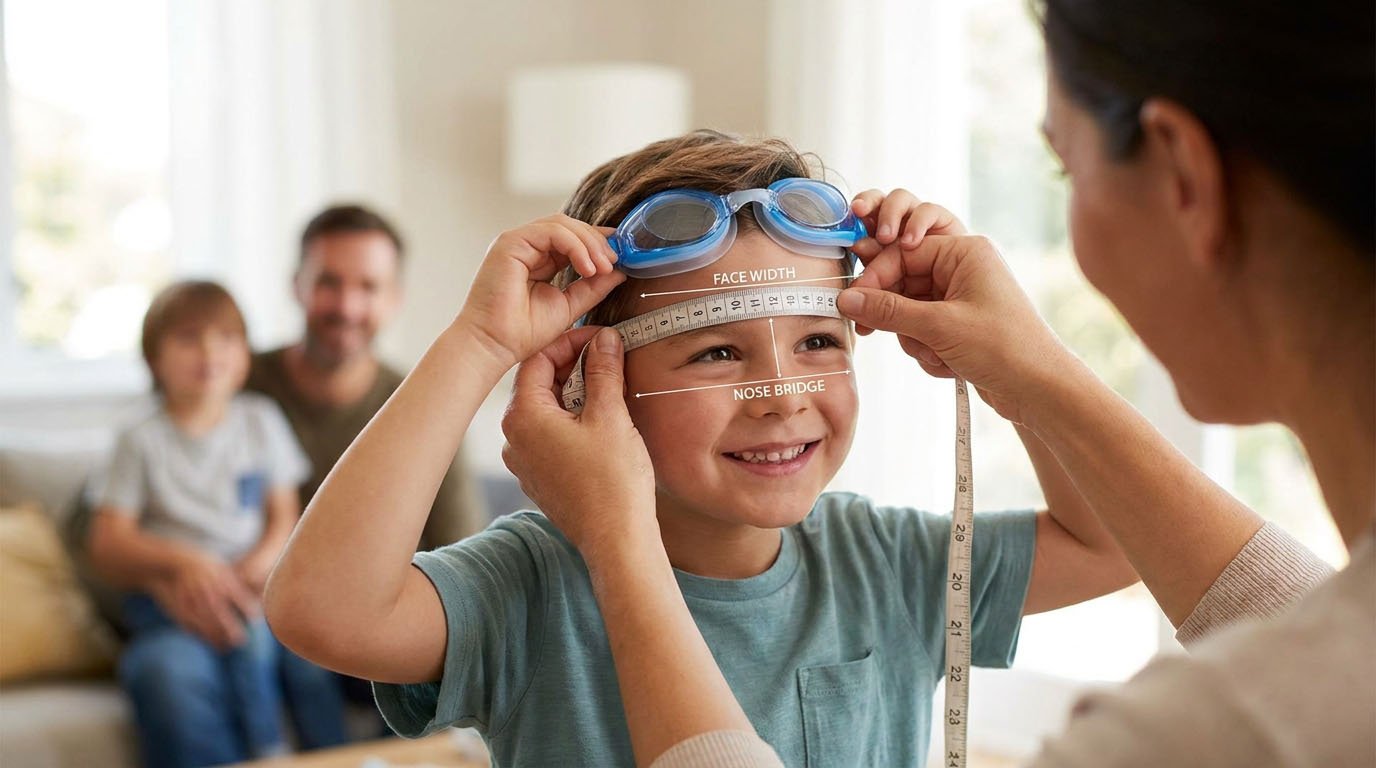
Poor fit is one of the most common reasons children’s swimming goggles fail. Many leaks happen not because the goggles are defective, but because the shape does not match the child’s face.
Why adult sizing logic does not work for kids
Children’s faces vary widely by:
- Age
- Nose bridge width
- Eye socket shape
- Cheekbone structure
- Head size
A one-size-fits-all design often works poorly across broad age ranges.
What kind of sizing information is useful?
Helpful sizing guidance may include:
- Age range
- Face width range
- Adjustable nose bridge options
- Notes for narrow or wide face shapes
A brand that offers some form of age-appropriate sizing or fit guidance is usually more reliable than one that provides no sizing support at all.
Simple fit test before buying
One of the easiest ways to check fit is the seal test:
- Place the goggles gently over the child’s eyes without using the strap.
- Press lightly.
- Release and see whether the goggles stay in place briefly.
If they hold for a moment, the seal shape may be suitable. If they fall away immediately, another shape or size may fit better.
Common signs of poor fit
Look for these warning signs:
- Water leaks quickly during use
- Deep marks appear after very short wear
- The child complains of pain around the eyes
- The goggles require extreme tightening to stay on
- The nose bridge feels too narrow or too wide
3. Nose Bridge and Face Shape: Small Detail, Big Difference
The nose bridge is often overlooked, but it strongly affects how children’s goggles fit.
Why nose bridge design matters
If the bridge is too narrow:
- The goggles may pinch
- The gasket may not sit evenly
- The child may feel pressure between the eyes
If the bridge is too wide:
- The eye cups may sit too far apart
- The seal may break more easily
- Leaks become more likely
Adjustable vs fixed nose bridge
| Type | Benefit | Best For |
|---|---|---|
| Fixed nose bridge | Simpler and lower cost | Children whose face shape matches the design well |
| Adjustable or interchangeable bridge | Better fit flexibility | Growing children, online buying, broader user ranges |
For children whose face shape falls between standard sizes, adjustable bridge options can make a noticeable difference.
4. Lenses and Visibility: Clear Vision Matters for Safety
Children swim more confidently when they can see clearly. Lens quality affects comfort, orientation, and safety in the water.
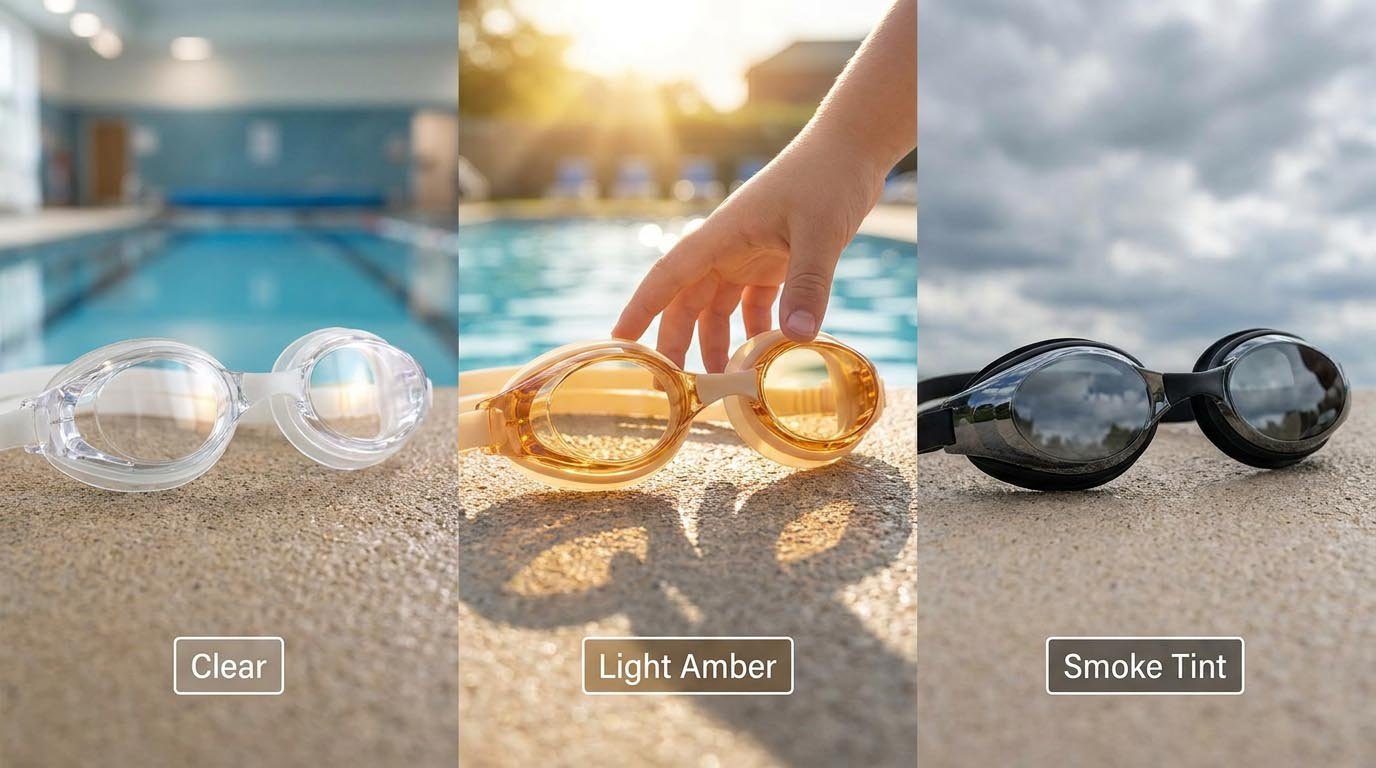
What lens type is best for children’s swimming goggles?
The best lens depends on where the goggles are used.
| Swimming Environment | Best Lens Type | Why It Helps |
|---|---|---|
| Indoor pool | Clear or light tint | Allows more light in |
| Outdoor pool | Smoke, mirror, or darker tint | Helps reduce glare |
| Cloudy outdoor conditions | Light amber or similar contrast tint | Can improve visibility in lower light |
| Open water | Glare-reducing lens options | Helps with bright reflections |
Why lens clarity matters
Good lens quality helps children:
- See instructors and other swimmers
- Notice pool walls and lane lines
- Feel less anxious underwater
- Enjoy swimming for longer
Poor lenses may create:
- Cloudy vision
- Fast scratching
- Distortion at the edges
- Dark visibility in the wrong environment
Should children’s goggles have wide field of view?
A wider field of view can help children feel more aware of their surroundings, especially during lessons or group swimming. Very bulky frames or poor lens design may limit side visibility.
5. Anti-Fog Performance: What Parents Should Realistically Expect
Anti-fog is one of the most important features in kids’ swim goggles, but it is also one of the most misunderstood.
Does anti-fog coating really work?
Yes, but only to a point. Anti-fog treatments can reduce fogging and improve underwater visibility, especially when the goggles are new. However, the coating gradually weakens with:
- Repeated use
- Chlorine or salt exposure
- Rubbing the inside of the lens
- Poor storage habits
How long does anti-fog last?
There is no single lifespan for anti-fog coating. It varies by:
- Product quality
- Coating process
- Use frequency
- Care habits
Some entry-level products may lose performance relatively quickly, while better-quality models usually last longer. What matters most is that parents treat anti-fog as a consumable feature, not a permanent one.
How to make anti-fog last longer
To help extend anti-fog performance:
- Do not touch the inner lens surface
- Rinse gently with fresh water after swimming
- Let the goggles air dry
- Avoid wiping the inside with towels or tissues
- Store in a protective case when possible
6. UV Protection: Do Kids Need It?
UV protection matters most when children swim outdoors.
When UV protection is useful
UV-protective lenses are helpful for:
- Outdoor pools
- Beach trips
- Summer camps
- Open-water activities
- Long periods in bright sunlight
When it matters less
For indoor pools, UV protection is generally less important than:
- Fit
- Comfort
- Lens clarity
- Anti-fog performance
Parents choosing goggles mainly for indoor lessons should usually prioritize seal and comfort first.
7. Comfort Features: Gaskets, Straps and Easy Adjustment
A pair of goggles can have a good seal and still feel uncomfortable. For children, comfort is often what determines whether they actually want to wear the goggles.
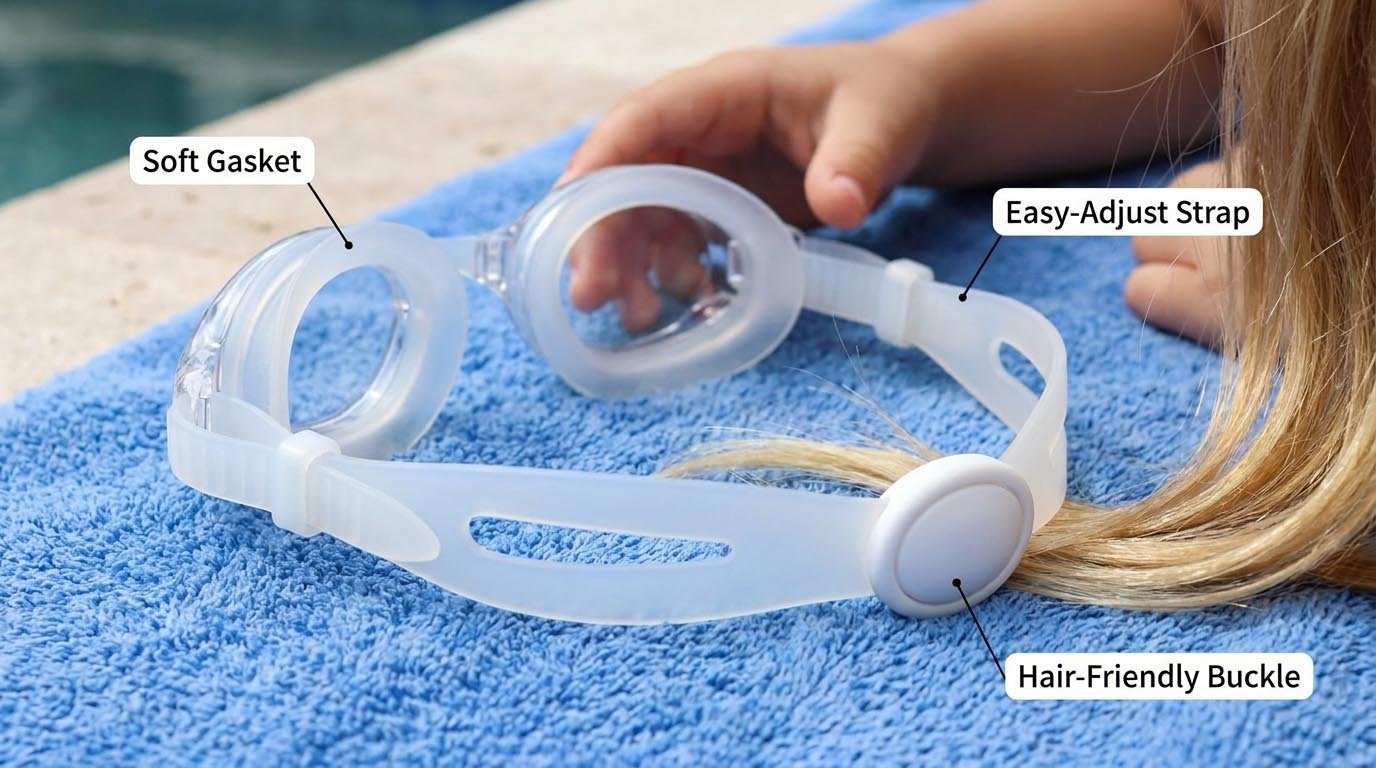
What makes children’s swimming goggles comfortable?
The most important comfort features are usually:
- Soft gaskets
- Smooth contact surfaces
- Balanced pressure around the eyes
- Easy strap adjustment
- Stable fit without over-tightening
Why gasket softness matters
Gaskets that are too hard may cause:
- Red marks
- Pain around the eyes
- Complaints after short use
- Pressure that makes children resist wearing goggles
A softer gasket usually feels better, especially for beginners or younger children.
Single gasket vs double-seal design
| Gasket Type | Main Benefit | Best For |
|---|---|---|
| Single gasket | Simpler, lower cost | Light recreational use |
| Double-seal design | Better comfort and leak control | Regular swimming, lessons, more sensitive users |
Why strap design matters
Good straps should:
- Stay in place during movement
- Be easy for parents to adjust
- Avoid painful pressure on the back of the head
- Work well with different hair types and swim caps
Split straps often provide better stability than a simple narrow single band.
Hair-friendly buckle design
Some children with long hair dislike goggles because the strap or buckle catches and pulls their hair. Smooth buckle edges and child-friendly adjustment systems can improve the experience significantly.
8. Durability: How Long Should Children’s Swim Goggles Last?
Children’s goggles do not need to last forever, but they should survive normal use without failing too quickly.
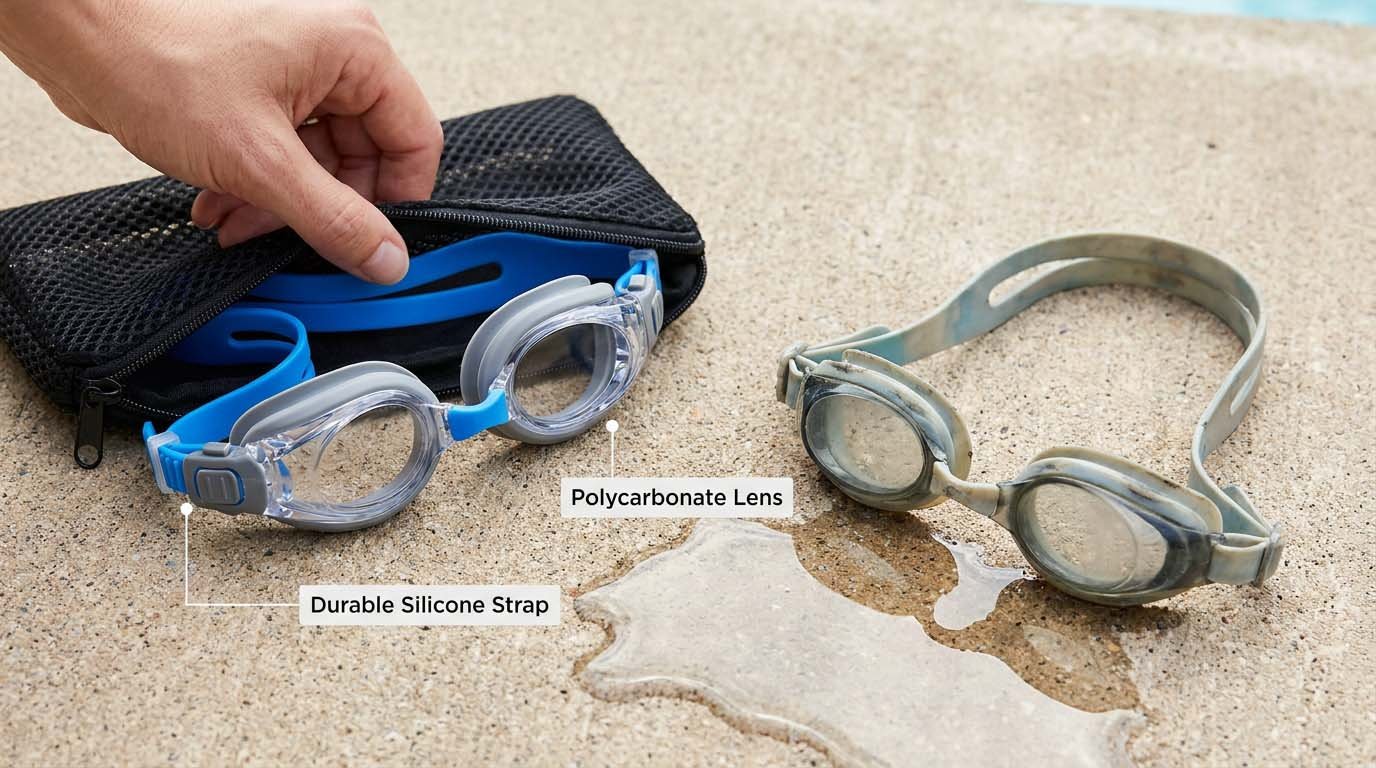
What affects durability most?
The main factors include:
- Lens material quality
- Strap elasticity
- Gasket resistance to pool chemicals
- Buckle strength
- Storage and care habits
Which materials are usually better for durability?
- Polycarbonate lenses are commonly preferred for impact resistance and clarity
- Silicone straps and gaskets usually last longer than lower-grade alternatives in repeated swimming use
How chlorine and salt water affect goggles
Pool chemicals and salt water can gradually weaken:
- Gasket softness
- Strap elasticity
- Lens coatings
- Buckle movement
Children who swim often may wear out goggles faster than occasional swimmers, even with the same product.
9. Care Tips: How to Make Children’s Goggles Last Longer
Proper care helps extend both comfort and performance.
Best care tips for kids’ swim goggles
- Rinse with fresh water after use
- Let them air dry naturally
- Avoid rubbing the inside lens surface
- Store in a case instead of a wet bag
- Do not leave goggles under direct heat for long periods
When should goggles be replaced?
It may be time to replace children’s swim goggles when:
- The seal no longer works well
- The strap loses tension
- The gasket becomes cracked or deformed
- The lens becomes too scratched to see clearly
- Anti-fog performance is gone and the goggles are no longer comfortable to use
- The child’s face shape has changed with growth
For children who swim frequently, replacement may be needed sooner than for occasional swimmers.
Common Mistakes Parents Make When Buying Children’s Swimming Goggles
1. Choosing by design only
Cartoons and bright colors are fun, but they do not guarantee good fit or comfort.
2. Ignoring face shape
Even a well-made goggle may leak if the seal shape does not match the child’s face.
3. Tightening the strap too much
Over-tightening often causes discomfort without solving the real fit problem.
4. Expecting anti-fog to last forever
Anti-fog performance naturally fades over time.
5. Buying one pair for every situation without thinking about lens type
Indoor and outdoor swimming may need different tints for the best visibility.
FAQ: Children’s Swimming Goggles
How do I know if children’s swimming goggles fit properly?
Use a simple suction or seal test without the strap. If the goggles stay in place briefly with a light press, the fit is usually better than a pair that does not hold at all.
Are silicone swim goggles safe for children?
Many silicone goggles are suitable for children, but parents should still check material information, product quality, and seller transparency. Smooth, odor-light materials are generally more reassuring than products with strong chemical smell or poor finishing.
Do kids need anti-fog swim goggles?
Yes, anti-fog can be very helpful for children because foggy lenses can be distracting and uncomfortable. However, parents should understand that anti-fog coating fades with time.
Do children need UV protection in swimming goggles?
UV protection is most useful for outdoor swimming. For indoor pool use, fit and comfort are usually the higher priorities.
What lens color is best for children’s swim goggles?
Clear or lightly tinted lenses are usually best for indoor pools. Darker or mirrored lenses are often better for bright outdoor use.
How often should children’s swim goggles be replaced?
It depends on swimming frequency, care, and product quality. Replace them when they start leaking consistently, feel uncomfortable, or no longer provide clear vision.
Why do children’s swim goggles leave marks around the eyes?
Light marks are common after swimming, but deep or painful marks may mean the goggles are too tight, too small, or too hard at the gasket.
Final Thoughts
Choosing children’s swimming goggles is mainly about finding the right balance of safety, fit, comfort, lens visibility, and durability. The best pair is not always the one with the most attractive design or the longest feature list. It is the pair that fits the child well, feels comfortable in the water, and works for the intended swimming environment.
For most parents, the smartest buying approach is simple:
- Check material and product information
- Test the seal and overall fit
- Choose the right lens type for indoor or outdoor use
- Expect anti-fog to wear down over time
- Prioritize comfort and easy adjustment
A well-chosen pair of kids’ swim goggles can make swimming lessons easier, reduce complaints, and help children feel more confident in the water.