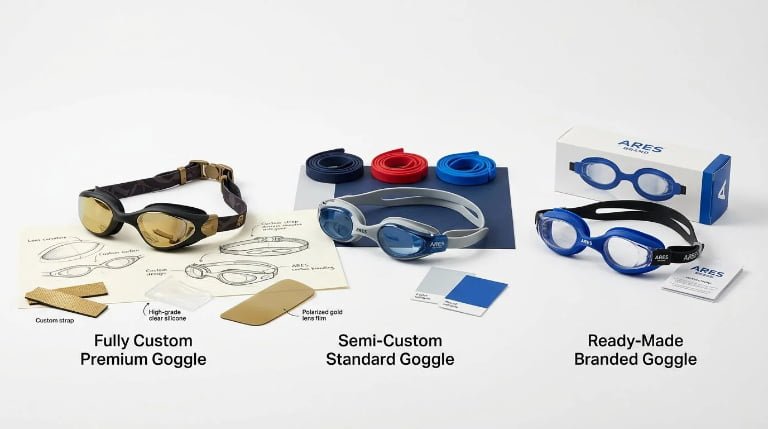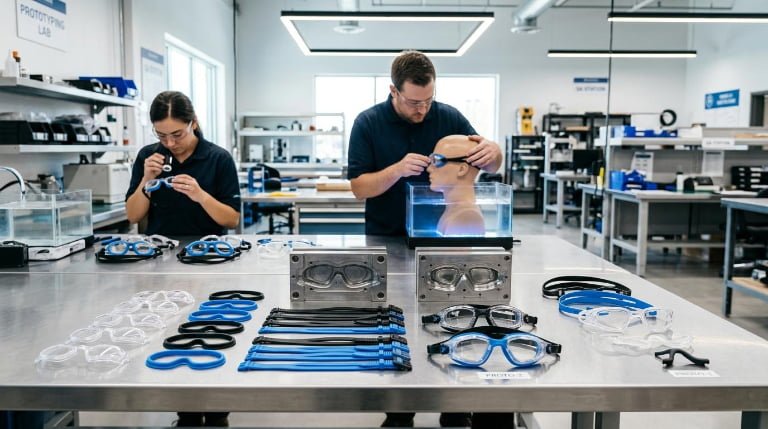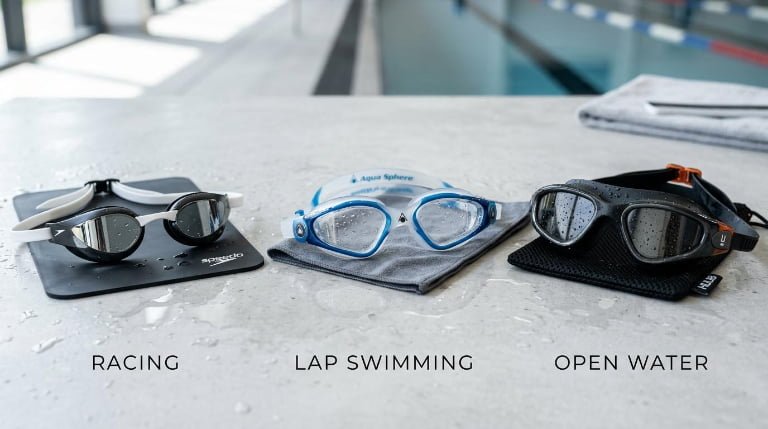
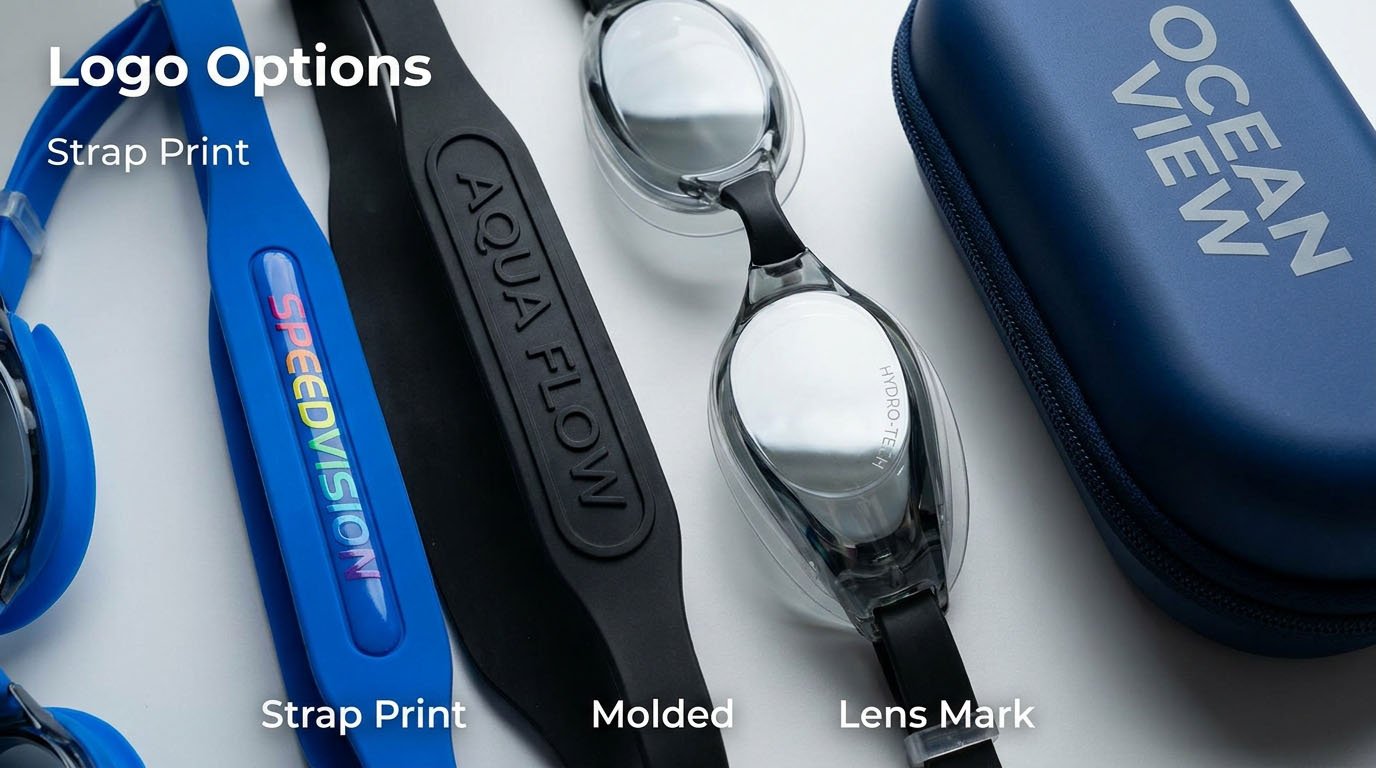
Custom logo swimming goggles can be branded through strap printing, lens exterior marking, side clip logos, molded logo details, and branded cases. The best option depends on logo placement, material type, order quantity, color complexity, chlorine resistance, UV exposure, and budget.
For most buyers, the biggest mistake is choosing a logo method before checking whether it matches the product material, MOQ, and durability needs. A full-color heat transfer may look attractive, but it is not always the best choice for high-chlorine use. An embossed strap logo may look premium, but it usually requires higher tooling cost and larger order volume.
This guide explains how to add a logo to swimming goggles, including logo placement, printing methods, raised and molded effects, color matching, durability, and minimum order requirements.
Quick Answers: Custom Logo Swimming Goggles
Where can a logo be placed on swimming goggles?
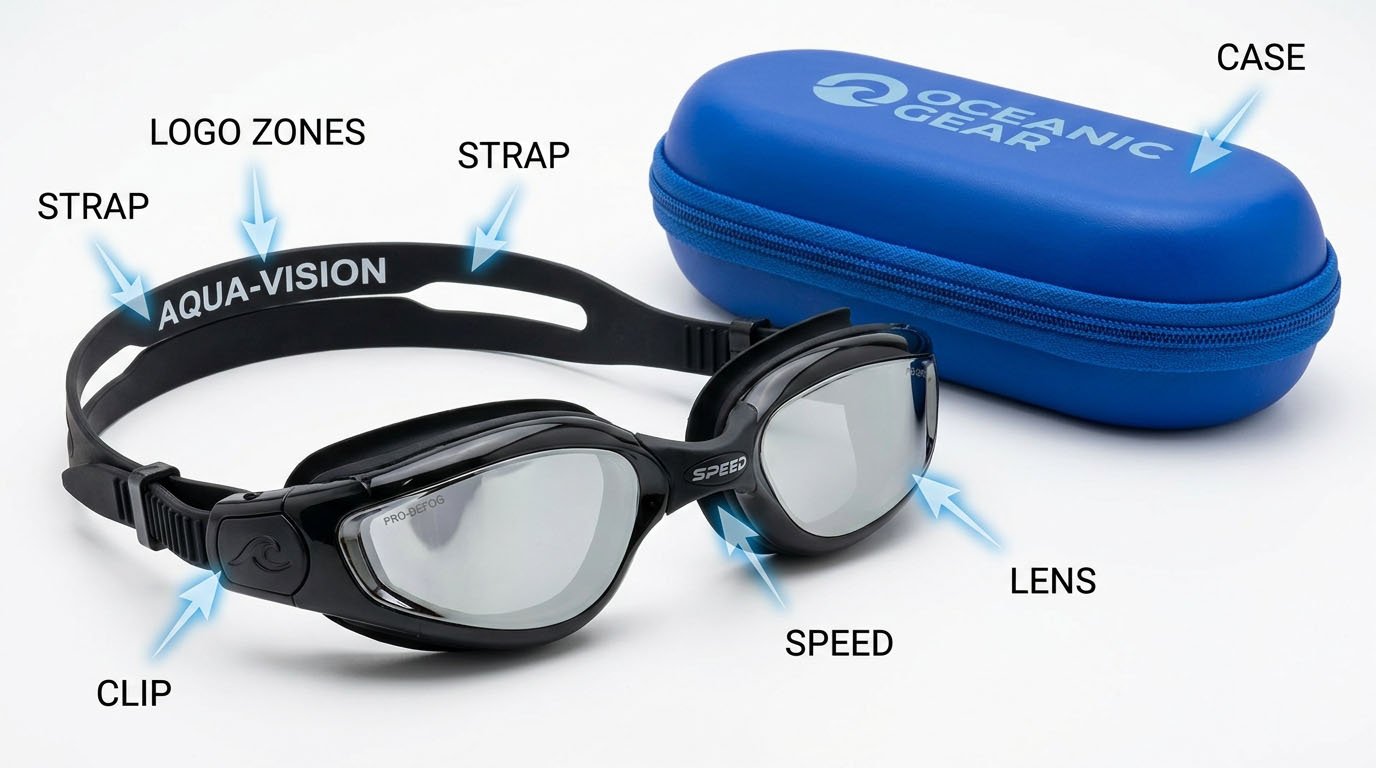
The most common logo positions are the strap, side clips, lens exterior, nose bridge, and goggle case. The strap is usually the easiest and most reliable area for branding.
What is the cheapest logo method for swim goggles?
Silk screen printing is usually the lowest-cost option for simple solid-color logos, but it often requires higher MOQ and works best on suitable flat areas.
What logo method is best for small orders?
For smaller quantities, heat transfer is often the most practical choice because it supports lower MOQ and more complex graphics.
What logo method lasts longest in chlorine?
Embossed, debossed, over-molded, or laser-marked logos usually last longer than printed graphics. Among printed methods, pad printing is often preferred for better durability.
Can full-color logos be printed on swimming goggles?
Yes, but full-color artwork is usually more suitable for heat transfer or certain pad-printing applications, depending on the material and logo area.
Custom Logo Swimming Goggles at a Glance
The table below shows the most common logo customization methods for swimming goggles.
| Method | Best For | Common Placement | MOQ Level | Color Capability | Durability |
|---|---|---|---|---|---|
| Silk Screen Printing | Simple one-color logos | Strap, some cases | Higher | Solid colors | Good |
| Pad Printing | Small to medium logos on curved parts | Strap, clips, lens exterior | Medium | 1-3 colors | Good |
| Heat Transfer | Full-color graphics and small orders | Strap, case | Lower | Multi-color/full color | Moderate |
| Laser Marking | Permanent monochrome branding | Metal clips, some hard parts | Flexible | No color | Very high |
| Emboss/Deboss | Premium permanent strap branding | Silicone strap | Higher | Limited | Very high |
| Over-molding | Raised multi-material branding | Clips, nose bridge, some straps | Higher | Structural color contrast | Very high |
| Badge Application | Decorative 3D brand effect | Strap or case | Medium | Flexible | Moderate to good |
Where Can You Put a Logo on Swimming Goggles?
Logo placement is one of the first decisions in any swimming goggles logo customization project. Not every visible surface is equally suitable for printing or molded branding.
1. Strap logo printing
The swim goggle strap is the most common branding area because it is highly visible and usually offers the best compatibility with printing methods. It works especially well for:
- Brand wordmarks
- Team names
- Club logos
- Event branding
- Simple icons
Why strap branding works well:
- Large visible area
- Good compatibility with silicone printing
- Lower rejection risk
- Suitable for most custom logo projects
2. Side clip logo area
Side clips can hold small logos if the component shape allows enough flat or gently curved space. This option is usually best for:
- Short brand initials
- Small icons
- Secondary branding details
This area is more limited than the strap and may not suit detailed artwork.
3. Lens exterior logo marking
Some brands ask for logos on the lens itself. This is possible in some cases, but it depends on:
- Lens material
- Anti-fog structure
- Mirror coating
- Print area size
- Required durability
Lens exterior logos should be planned carefully because coating zones can affect adhesion and long-term appearance.
4. Nose bridge branding
The nose bridge usually has very limited space, so it is better suited for:
- Small symbols
- Short initials
- Minimal branding
This is rarely the main logo position.
5. Goggle case branding
If the product includes a case, the case often provides the largest and easiest branding area. This is especially useful for:
- Retail packaging presentation
- Club or team sets
- Premium product lines
- Gift or event programs
Best Logo Placement by Use Case
Different buyers usually need different logo strategies.
| Buyer Type | Best Placement | Why |
|---|---|---|
| Swim Clubs and Teams | Strap | Visible, cost-effective, easy for logos or team names |
| Small Trial Orders | Strap or Case | Easier low-MOQ branding options |
| Retail Brands | Strap + Case | Stronger shelf presentation |
| Premium Racing Products | Strap + Side Clip or Molded Detail | More refined branding appearance |
| Event or Promotional Orders | Strap | Fastest and most practical option |
Printing Methods for Swimming Goggles by Material
The best logo method depends heavily on the material being customized.
Silicone straps
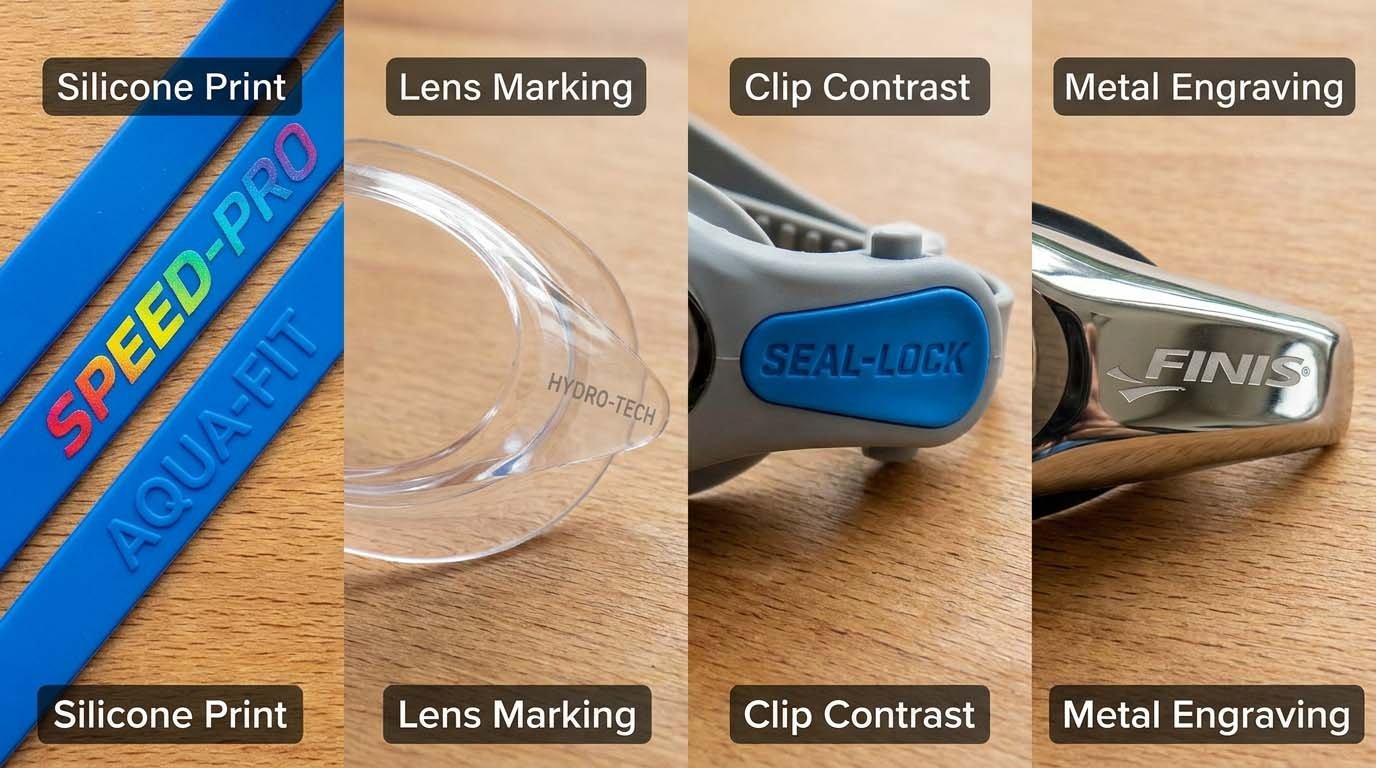
Silicone is the most common material for swim goggle straps and one of the easiest to customize. Typical options include:
- Pad printing
- Silk screen printing
- Heat transfer
- Embossing or debossing
Silicone is usually the most flexible branding surface for OEM and private label swim goggles.
Polycarbonate lenses
Polycarbonate lenses have more restrictions than straps. Common options may include:
- Pad printing with compatible ink
- Laser marking in certain applications
Because lenses are part of the visual function of the product, branding on the lens should be approached more carefully than on straps.
TPR or TPE clips and soft components
Soft clips or side parts may support:
- Pad printing
- Molded color contrast
- Over-molding in some custom projects
Feasibility depends on shape and compound formulation.
Metal clips or trim parts
If the goggles include metal branding parts or clips, laser engraving is often the most durable option. It creates permanent monochrome marking rather than colored graphics.
Swim Goggle Logo Printing Methods Explained
Pad printing on swimming goggles
Pad printing is one of the most common ways to print logos on swimming goggles. It works well for curved surfaces and is often used on:
- Silicone straps
- Side clips
- Some lens exterior applications
Best for:
- 1-3 color logos
- Medium order quantities
- Good balance of cost and durability
Silk screen printing on swim straps
Silk screen printing is usually best for simple artwork and larger runs. It is often chosen when the design is:
- Single color
- Bold and simple
- Suitable for a more regular print area
Best for:
- Lower unit cost at larger volume
- Basic logos and wordmarks
- Simple custom club goggles
Heat transfer for custom swim goggles
Heat transfer is useful when the logo includes:
- Full-color graphics
- Gradients
- Detailed patterns
- Smaller order quantities
Best for:
- Lower MOQ projects
- Promotional runs
- Event goggles
- Complex artwork
The trade-off is that heat transfer may not be the best choice for long-term heavy chlorine exposure compared with some other methods.
Laser marking and engraving
Laser marking creates a permanent logo by changing the surface appearance of the material. It is commonly used for:
- Metal parts
- Hard plastic trim in some cases
- Permanent monochrome branding
Best for:
- Very high durability
- Premium minimal branding
- Logos that do not require color
Raised and Molded Logo Effects: Emboss, Deboss, Over-Mold and Badges
Some brands want a more premium 3D effect rather than a printed logo.
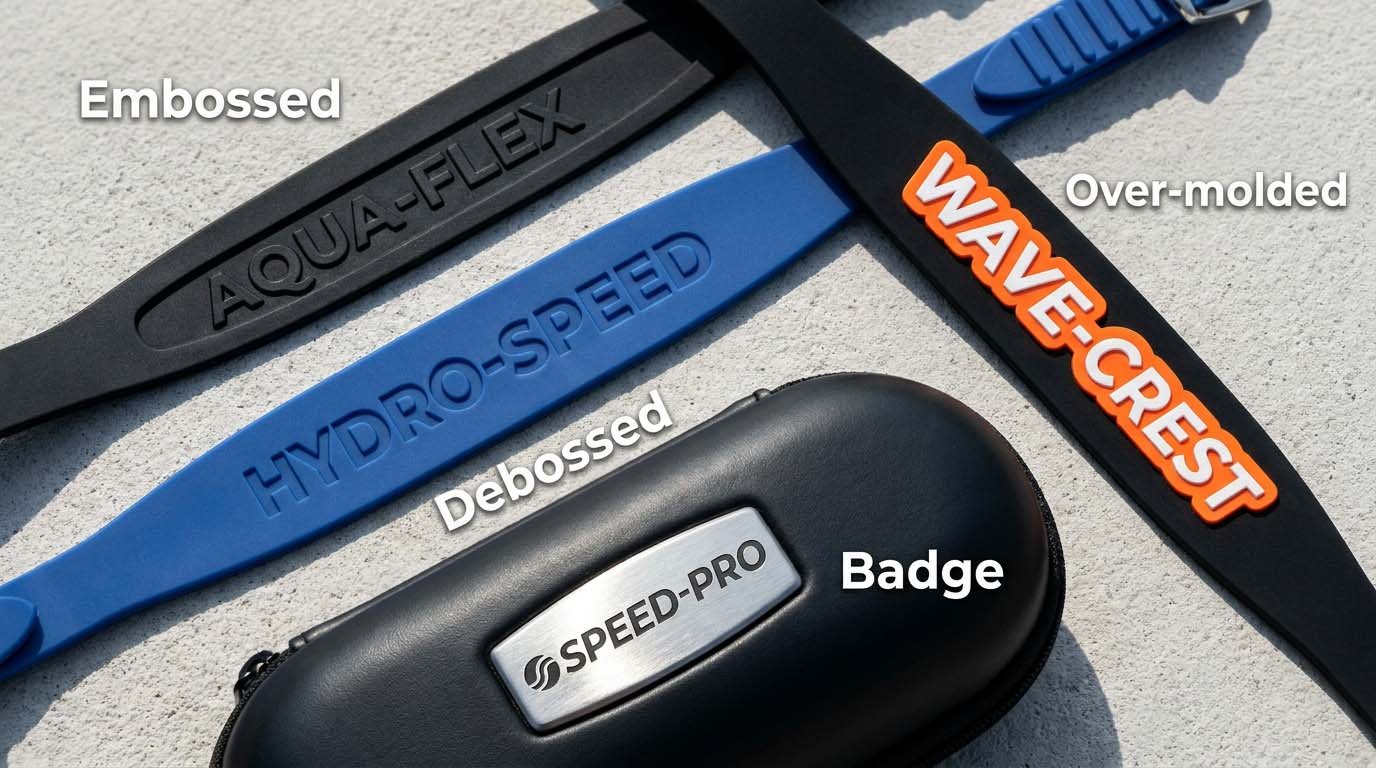
Embossed logos on swim straps
An embossed logo rises above the strap surface and becomes part of the material itself. This is one of the most durable branding choices.
Best for:
- Premium swim goggles
- Long-term use
- Large volume custom orders
Debossed logos
A debossed logo is recessed into the material instead of raised. It creates a more subtle visual effect and can work well for minimalist branding.
Over-molded logos
Over-molding uses a second material or color to create a built-in logo effect. This usually requires more advanced tooling and larger order quantities.
Best for:
- Premium branded swim goggles
- Structural color contrast
- Long-term product lines
Applied badges
Some projects use silicone, PVC, or metal badges attached to the strap or case. This can be useful when buyers want a 3D decorative effect without redesigning the entire molded structure.
Color Matching and Finish Options for Swim Goggle Logos
Brand buyers often want exact visual consistency, but logo color on swim goggles depends on the material and decoration method.
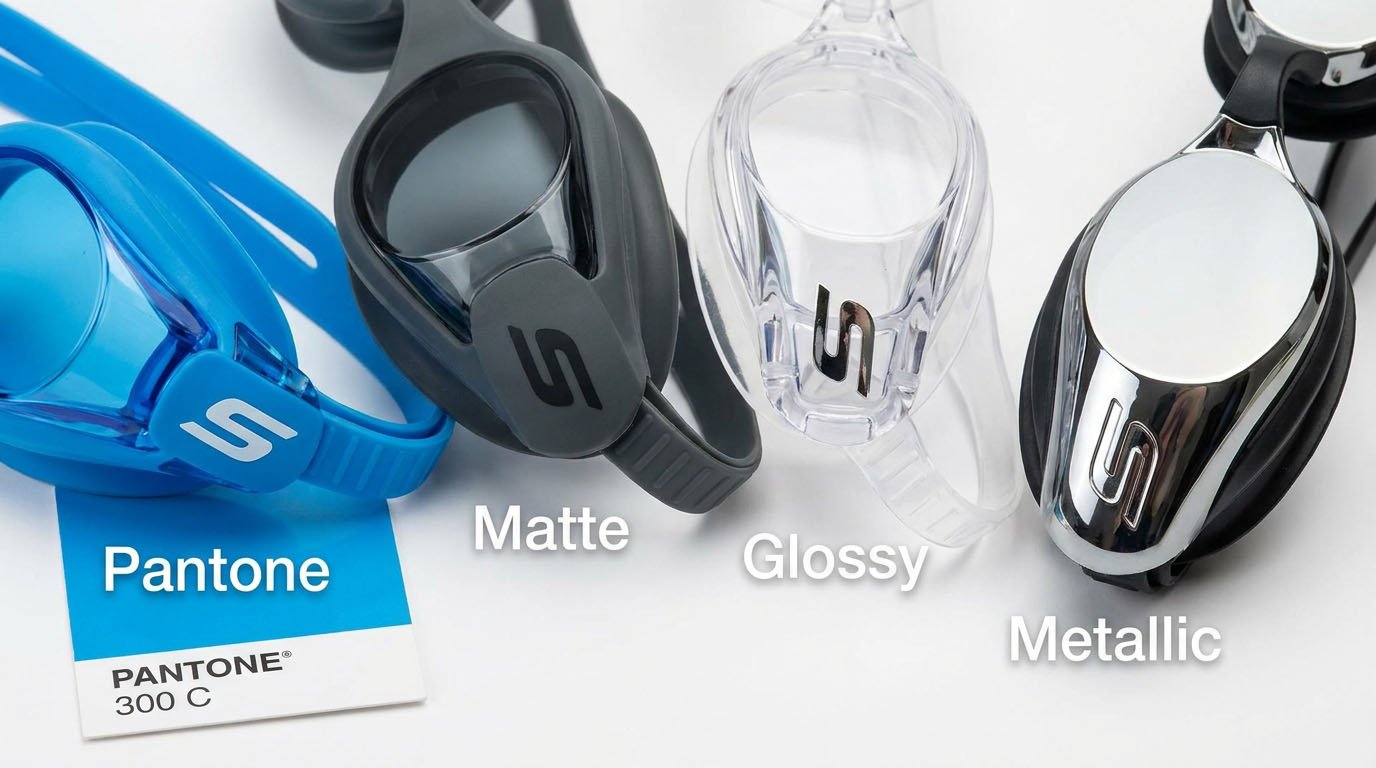
Pantone matching
Many factories can work toward Pantone color matching, but exact results may vary depending on:
- Silicone base color
- Ink chemistry
- Surface texture
- Print method
- Material transparency
Color approval samples are usually recommended before bulk production.
Standard, matte and glossy finishes
Most projects choose from:
- Standard finish
- Matte finish
- Gloss finish
Each finish affects how visible the logo appears under different lighting conditions.
Metallic logo finishes
Metallic finishes can help create a more premium look, but they may involve:
- Higher decoration cost
- More variation in appearance
- Different durability performance compared with standard inks
Mirror-safe branding considerations
For mirror-coated swimming goggles, logo design should account for the coated area. Not all printing methods are equally suitable on reflective lens surfaces.
Durability: Chlorine Resistance, UV Exposure and Anti-Fog Compatibility
Durability is one of the most important factors in custom branded swimming goggles, especially for frequent swimmers, clubs, and training programs.
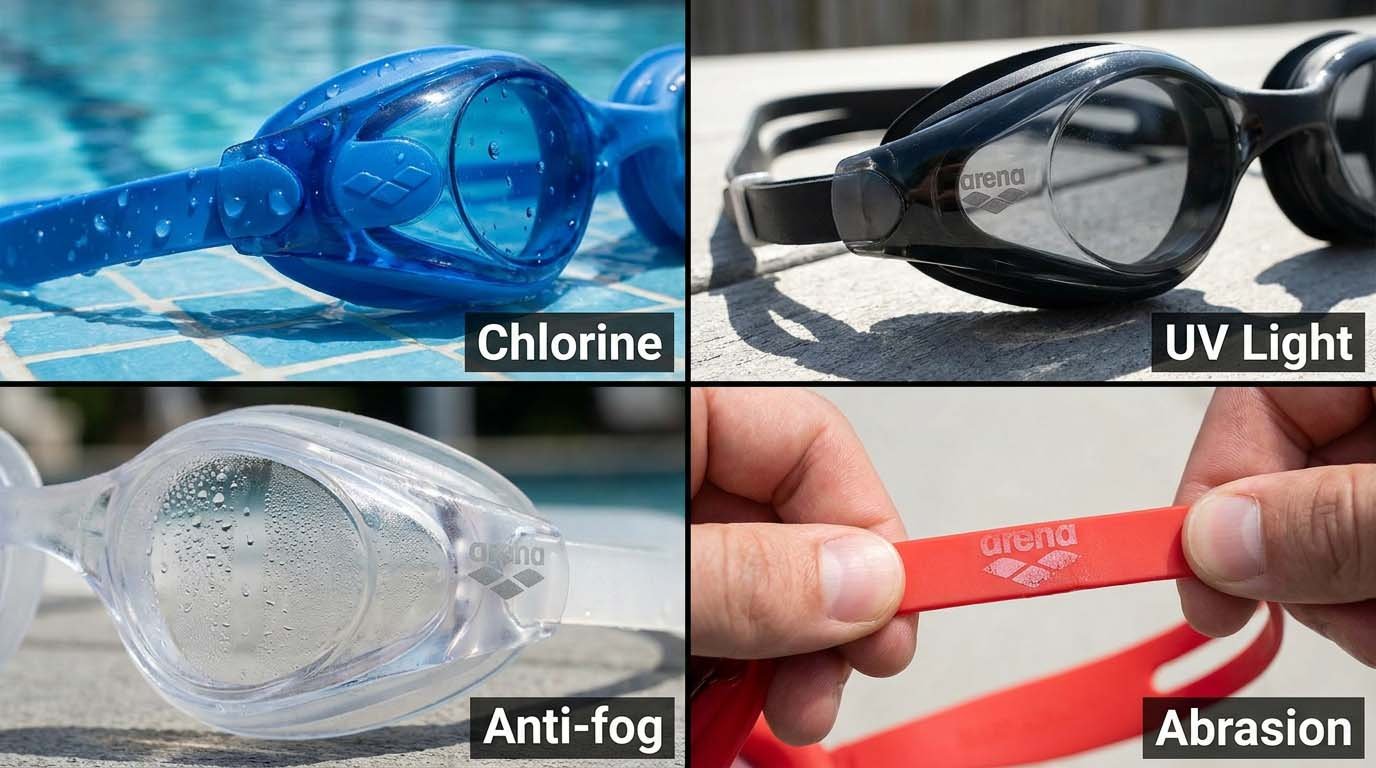
Chlorine resistance
Chlorinated water can gradually reduce logo performance, especially with lower-durability printing methods. In general:
- Molded logos last longer than printed ones
- Laser marking is highly durable on compatible parts
- Pad printing is often preferred over lower-end decorative options for repeated pool use
UV resistance
For outdoor swimming, triathlon, and beach use, UV exposure matters as much as pool chemicals. Some decoration methods fade faster in strong sunlight, so outdoor use should be discussed before selecting the logo process.
Anti-fog compatibility
If branding is planned on or near the lens, anti-fog treatment must be considered. Some inks and coating systems are less compatible than others. This is one reason strap branding is often safer and easier than lens branding.
Abrasion and rubbing
Swim goggles are frequently handled, stretched, rinsed, and packed into bags. Buyers should consider whether the logo will be exposed to:
- Finger rubbing
- Case friction
- Towel contact
- Repeated strap stretching
MOQ for Custom Logo Swimming Goggles
Minimum order quantity depends on the branding method, the product structure, and the type of customization required.
| Logo Method | Typical MOQ Trend | Notes |
|---|---|---|
| Heat Transfer | Lower | Best for smaller custom runs |
| Pad Printing | Medium | Common choice for standard OEM branding |
| Silk Screen Printing | Higher | More suitable for larger simple-logo orders |
| Emboss/Deboss | Higher | Requires tooling modification |
| Over-molding | Higher | Usually tied to custom mold development |
| Laser Marking | Flexible | Depends on part and setup requirements |
In general:
- Lower MOQ methods usually cost more per unit
- Permanent or molded branding usually requires larger volume
- Simple printed logos are often the easiest entry option for first orders
How to Choose the Best Logo Method for Swimming Goggles
Choose pad printing if:
- The logo has 1-3 colors
- The order is a standard OEM quantity
- Good durability is required
- The logo is going on a strap or curved hard part
Choose silk screen if:
- The artwork is simple
- The order volume is higher
- The buyer wants a lower unit decoration cost
- The printing area suits screen application
Choose heat transfer if:
- The logo is full color or detailed
- The order is relatively small
- The project is promotional, seasonal, or for testing the market
Choose emboss or deboss if:
- The brand wants a premium molded look
- Long-term durability matters
- Order volume justifies mold investment
Choose over-molding if:
- The project is a serious custom product line
- The brand wants permanent structural branding
- Tooling budget and MOQ are sufficient
Choose laser marking if:
- The part is compatible
- The brand wants a permanent minimalist logo
- Color is not required
Common Mistakes in Swimming Goggles Logo Customization
1. Choosing a logo method before checking MOQ
A decoration method that looks ideal on paper may not make sense at the target order quantity.
2. Printing on the wrong area
Lens branding, small clip logos, or inner contact surfaces may create avoidable quality issues.
3. Expecting exact Pantone results on every material
Color appearance can shift based on surface type and print method.
4. Using complex artwork on very small parts
Tiny text and highly detailed logos usually do not perform well on narrow or curved components.
5. Ignoring chlorine and UV exposure
A logo that looks fine in samples may fade too fast in real use if the wrong process is chosen.
6. Forgetting anti-fog compatibility
Lens decoration must be evaluated together with lens coating and performance requirements.
7. Choosing embossed or over-molded branding for very small orders
Premium structural branding usually needs higher order volume and tooling investment.
Final Thoughts
The best custom logo swimming goggles project is not the one with the most decoration options. It is the one where logo placement, printing method, durability expectations, and MOQ all match the actual product and budget.
For most buyers, the safest starting point is simple:
- Put the main logo on the strap
- Choose a decoration method based on order quantity
- Match logo complexity to the available print area
- Confirm chlorine, UV, and anti-fog compatibility before approval
If a project needs stronger retail presentation, branding can then expand to side clips, molded details, or branded cases.
Supplier Checklist for Custom Branded Swimming Goggles
Before placing an order, ask the factory:
- Which logo methods are compatible with my goggle materials?
- What is the best logo placement for my artwork?
- What MOQ applies to each branding method?
- Which method offers the best chlorine resistance?
- Can you provide Pantone matching samples?
- Is my logo compatible with mirror coating or anti-fog treatment?
- Do embossed or over-molded options require new tooling?
- Can you show sample photos for similar projects?
- What is included in the logo setup cost?
- What decoration method do you recommend for my budget and order size?
Clear answers to these questions will help buyers choose the right swimming goggles logo customization method before development and sampling begin.