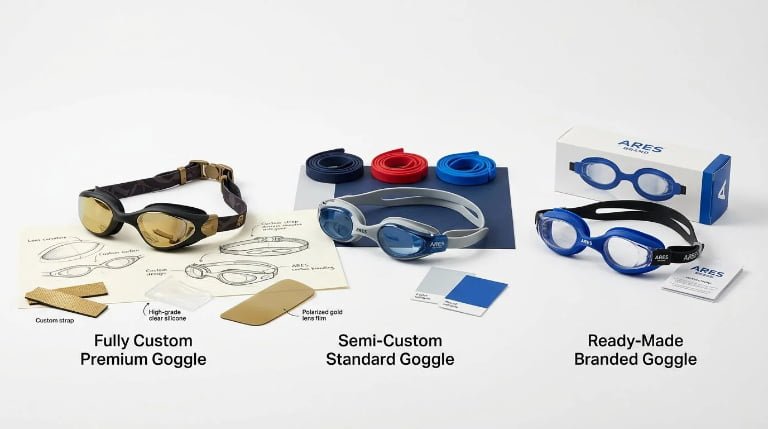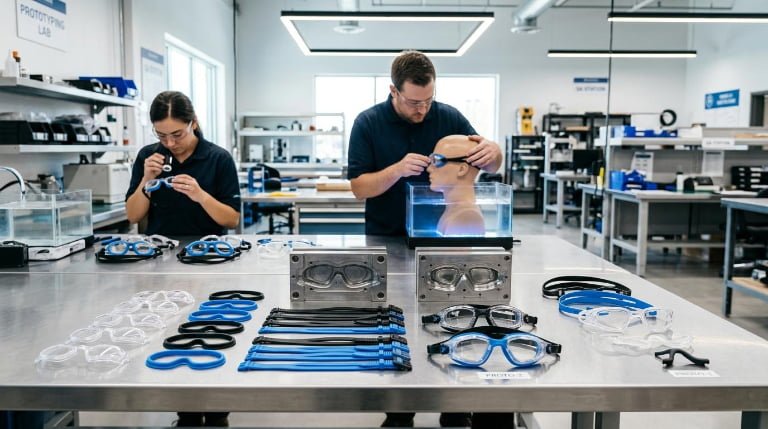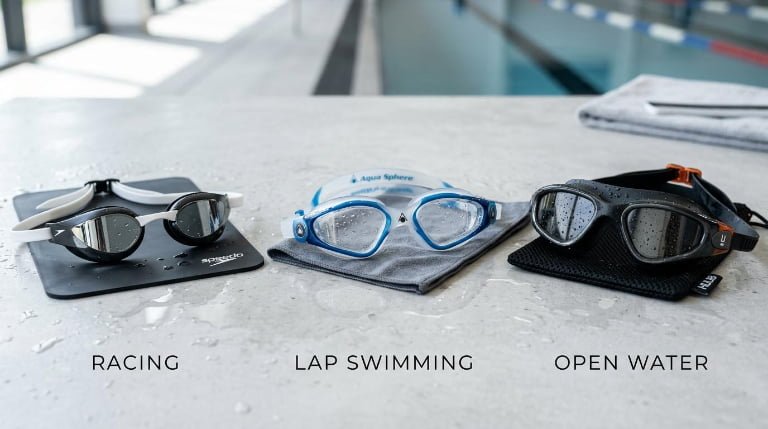
Custom swimming goggles lead time usually ranges from 45 to 120 days, depending on whether the project uses existing molds or new tooling, how many sample rounds are needed, how quickly materials, colors, logos, and packaging are finalized, and whether shipment goes by air or sea freight.
For most buyers, the biggest delays do not come from factory production alone. They usually come from sample revisions, late specification changes, packaging decisions, production slot availability, and shipping timelines. That is why understanding the full process from sampling to delivery is more useful than looking at mass production time by itself.
This guide explains the full custom swim goggles production timeline, including sampling, pre-production preparation, pilot builds, mass production, quality control, and shipping.
Quick Answers: Custom Swim Goggles Lead Time
How long do custom swimming goggles take?
Most custom swimming goggle projects take 70 to 90 days from confirmed specification to final delivery. Faster projects may finish in around 45 to 55 days if they use existing molds, require minimal revisions, and ship by air.
How long does swim goggle sampling take?
Sampling usually takes 7 to 21 days, depending on whether the project uses existing molds, mold modifications, or new tooling.
Why is there a gap between sample approval and mass production?
After sample approval, factories still need time for design-for-manufacturing review, production tooling preparation, material purchasing, color confirmation, and line scheduling.
How long does mass production take for custom swim goggles?
Mass production usually takes 15 to 25 days for standard custom orders, depending on order quantity, decoration complexity, and packaging requirements.
How long does shipping take from China?
Shipping time depends on the transport method. Air freight is much faster, while ocean freight is more economical but takes much longer overall.
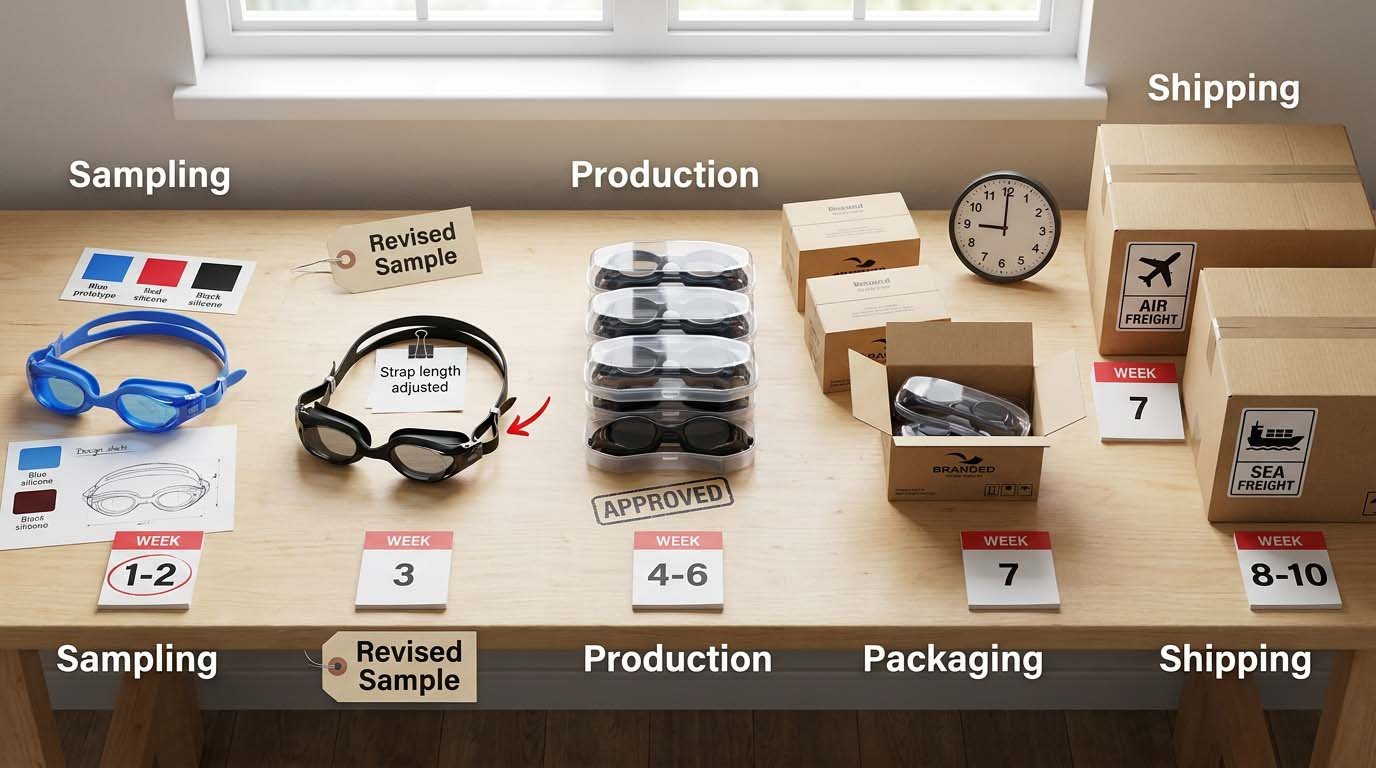
Custom Swim Goggles Timeline at a Glance
The table below shows a typical custom swimming goggles timeline from sampling to delivery.
| Stage | Typical Time | Main Activities |
|---|---|---|
| Requirement Confirmation | 2-5 days | Confirm specs, logo, materials, colors, packaging, target market |
| Sampling | 7-21 days | Visual sample, functional sample, or validation sample |
| Pre-Production Preparation | 10-20 days | DFM review, tooling prep, fixtures, material and color purchase |
| Pilot Build and PPS Approval | 5-10 days | Trial run, pre-production sample approval, optional testing |
| Mass Production | 15-25 days | Injection, assembly, logo application, coating, packaging |
| Final QC and Booking | 2-5 days | Inspection, shipment booking, export preparation |
| Shipping and Customs | 5-50 days | Air or sea freight, customs clearance, inland delivery |
What Affects Custom Swimming Goggles Lead Time?
Before looking at each stage, it helps to understand the main factors that affect custom swim goggles production time.
1. Existing molds vs new tooling
Projects using existing molds are usually much faster than projects requiring new tool development.
2. Sample revision cycles
Each new round of sample changes adds time, especially if fit, materials, or logo placement need adjustment.
3. Material and color confirmation
Custom colors, special coatings, and non-standard materials often extend purchasing time.
4. Packaging complexity
Bulk packing is faster than retail-ready packaging with boxes, inserts, labels, and display components.
5. Production slot availability
Lead time depends on season and line loading. Peak seasons often increase waiting time before mass production begins.
6. Shipping method
Air freight shortens delivery time significantly, while sea freight requires a longer planning window.
Sampling Phase for Custom Swimming Goggles
Sampling is the first major step in the custom swimming goggles timeline. It is also one of the most important because it helps confirm product appearance, fit, sealing, materials, and logo execution before mass production begins.
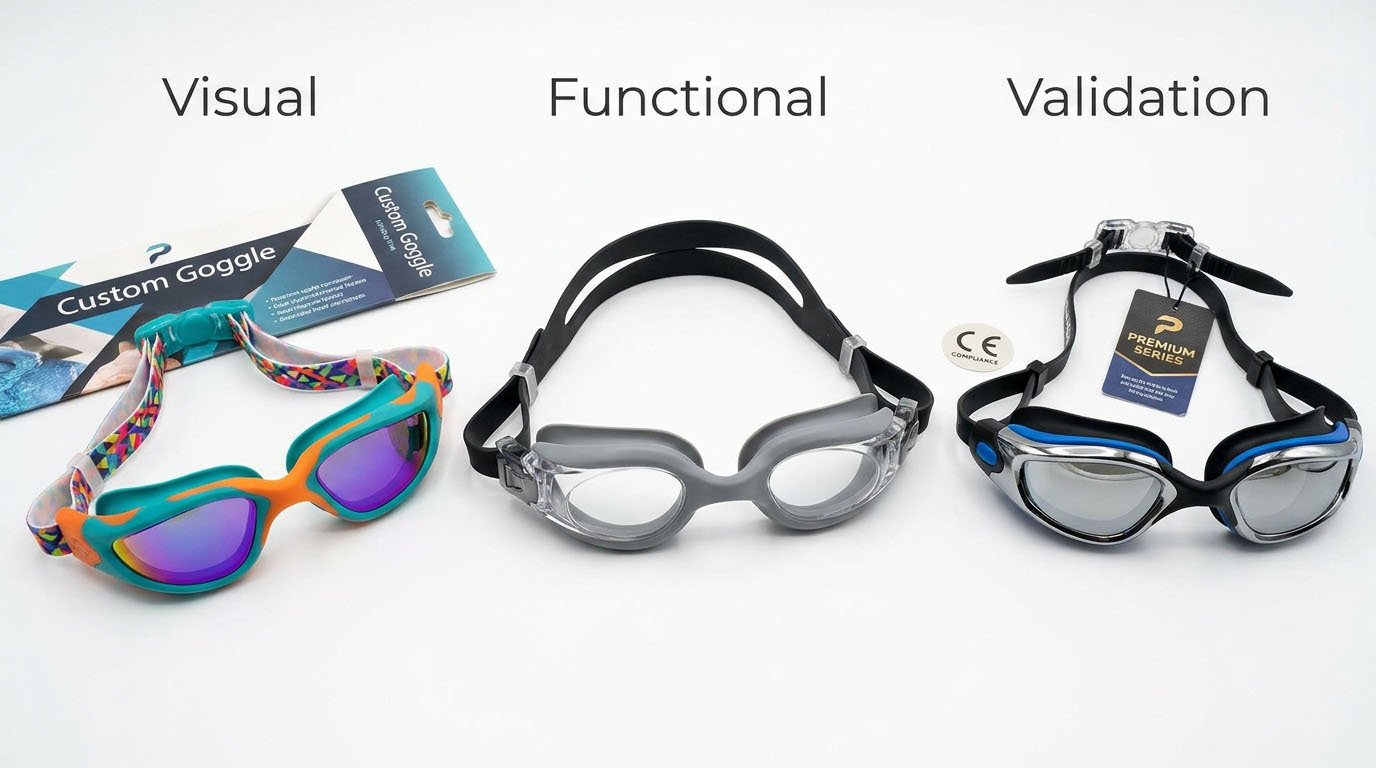
Visual samples
A visual sample focuses mainly on appearance. It may be used to review:
- Color direction
- Strap design
- Logo placement
- Lens tint
- Packaging concept
Visual samples are useful when buyers need a quick design confirmation, but they are not always suitable for full wear testing.
Functional samples
A functional sample is intended to be wearable and closer to the final product. It helps evaluate:
- Fit and comfort
- Sealing performance
- Strap adjustment
- Lens clarity
- Overall user experience
For many buyers, this is the most practical sampling stage before moving forward.
Validation samples
A validation sample is the most production-like sample level. It is typically used when the project requires:
- Final material verification
- Production-spec components
- More complete performance review
- Retail or compliance preparation
This option is more relevant for demanding launches or larger-volume projects.
Sampling time by project type
| Sample Path | Typical Time | Best For |
|---|---|---|
| [Existing Mold Sample | 7-10 days](https://evokpoly.com/feeds/blog/injection-molding-lead-time) | Faster projects with limited structural changes |
| Modified Mold Sample | 10-15 days | Projects with moderate customization |
| [New Tooling Sample | 15-21 days](https://orbit.mit.edu/knowledgebase/articles/206442713-how-long-does-it-take-to-get-an-injection-molded-part-made) | Fully custom goggle design development |
Existing Mold vs New Tooling Timeline
One of the biggest decisions affecting custom swim goggles lead time is whether the project can use an existing mold or requires a new one.
Existing mold projects
Using an existing mold is usually the fastest route. It works best when the buyer only needs changes such as:
- Strap color
- Lens color
- Logo printing
- Packaging customization
This option reduces development time because the basic structure is already proven.
Modified mold projects
Some projects need adjustments to an existing mold, such as:
- Nose bridge changes
- Lens curve changes
- Minor clip changes
- Small branding area adjustments
This can offer a balance between speed and customization.
New tooling projects
New tooling is required when the product needs a unique structure, such as:
- New frame geometry
- New sealing profile
- Proprietary side clip design
- Custom-fit architecture
This path offers the most design freedom, but it also adds the most time.
Pre-Production Preparation: DFM, Tooling and Material Purchase
After sample approval, the project usually enters pre-production preparation. Many buyers assume mass production starts immediately, but this stage is necessary to prepare the order correctly.
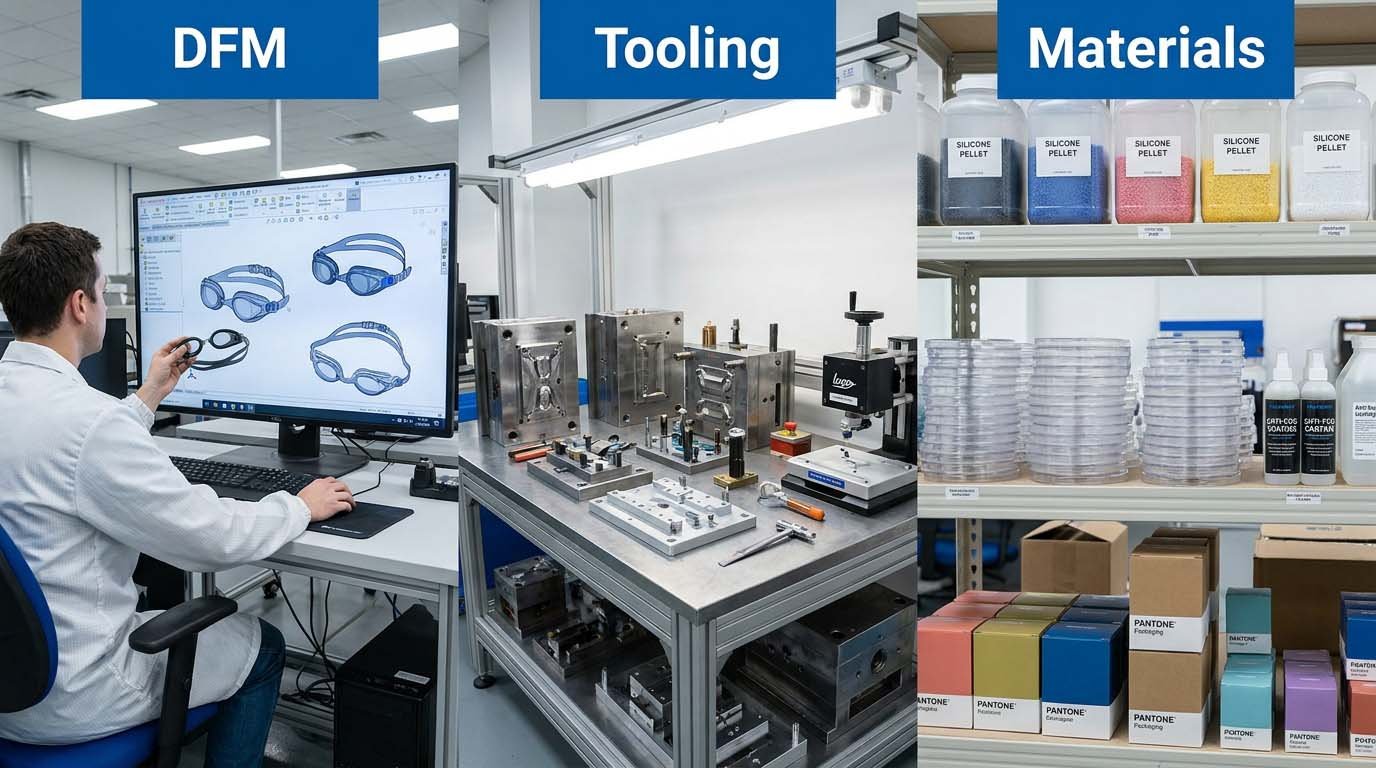
Design for manufacturability review
A design for manufacturability review checks whether the approved sample design can run efficiently and consistently in production. This may involve small adjustments that improve:
- Mold release
- Part consistency
- Yield rate
- Assembly efficiency
- Seal stability
Tooling and fixtures
Production tooling may differ from sample tooling. The factory may need to prepare:
- Production cavity layout
- Assembly fixtures
- Positioning jigs
- Logo alignment tools
- Coating and curing setups
Material and color purchasing
Factories also need time to secure:
- Silicone materials
- Polycarbonate for lenses
- Anti-fog or mirror coating materials
- Ink or transfer films
- Packaging materials
Projects with custom Pantone colors or retail packaging usually require longer preparation than standard bulk orders.
Pilot Production, PPS Approval and Testing
Before full production begins, many factories run a pilot build or trial run. This stage helps confirm that the approved design performs correctly in real manufacturing conditions.
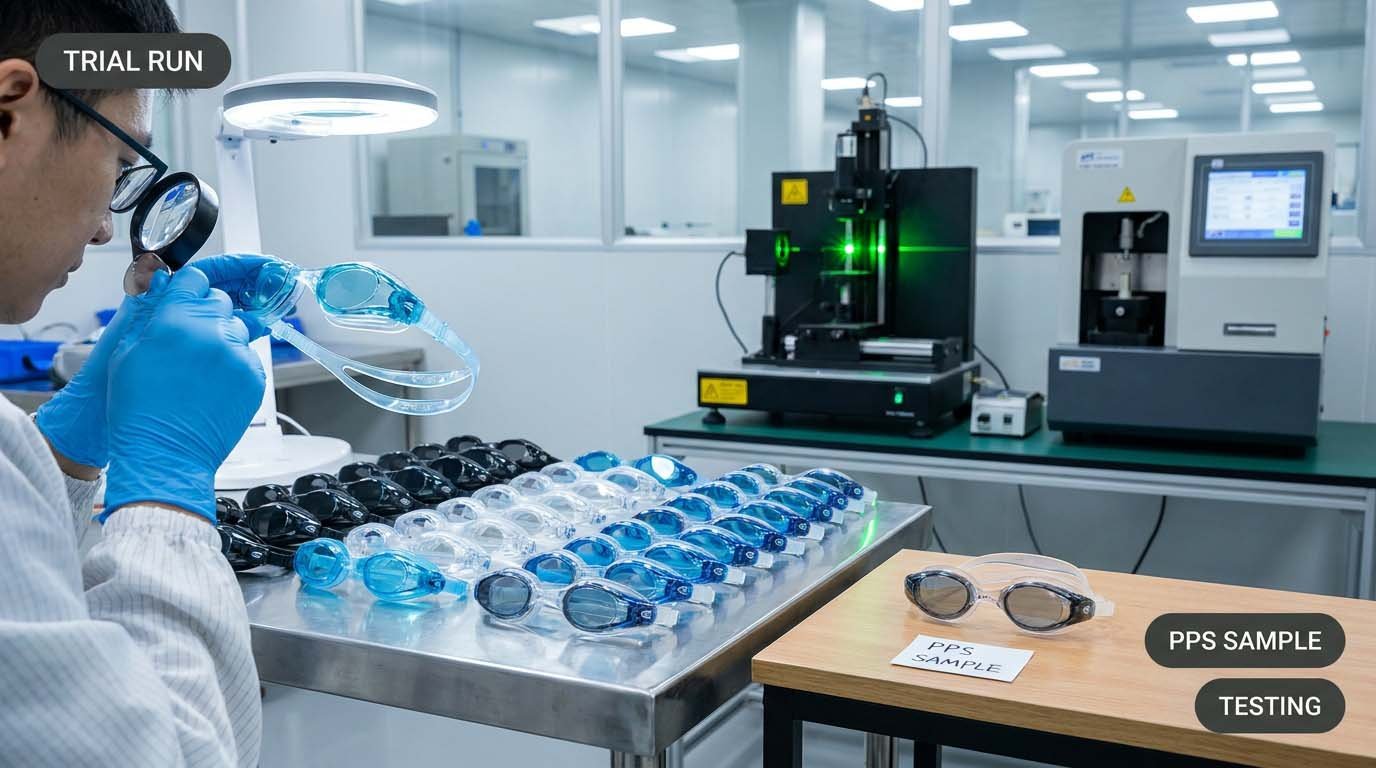
Trial runs
Trial runs help verify:
- Molding consistency
- Assembly stability
- Logo placement accuracy
- Coating performance
- Basic yield and defect control
Pre-production sample approval
A pre-production sample, often called PPS, is usually taken from the pilot run. Buyers review it to confirm that production output matches the approved sample direction.
This is one of the most important checkpoints because it helps catch issues before mass production scales up.
Optional third-party testing
Some projects need product testing before or during production, especially when selling through regulated or premium retail channels. Testing may involve:
- Optical performance
- Basic impact or safety requirements
- Material or chemical compliance
- Labeling support documents
Testing requirements vary by market, so this should be considered early in the project timeline.
Mass Production Time for Custom Swimming Goggles
After pilot approval, the order moves into mass production. This stage includes component molding, assembly, decoration, coating, inspection, and packing.
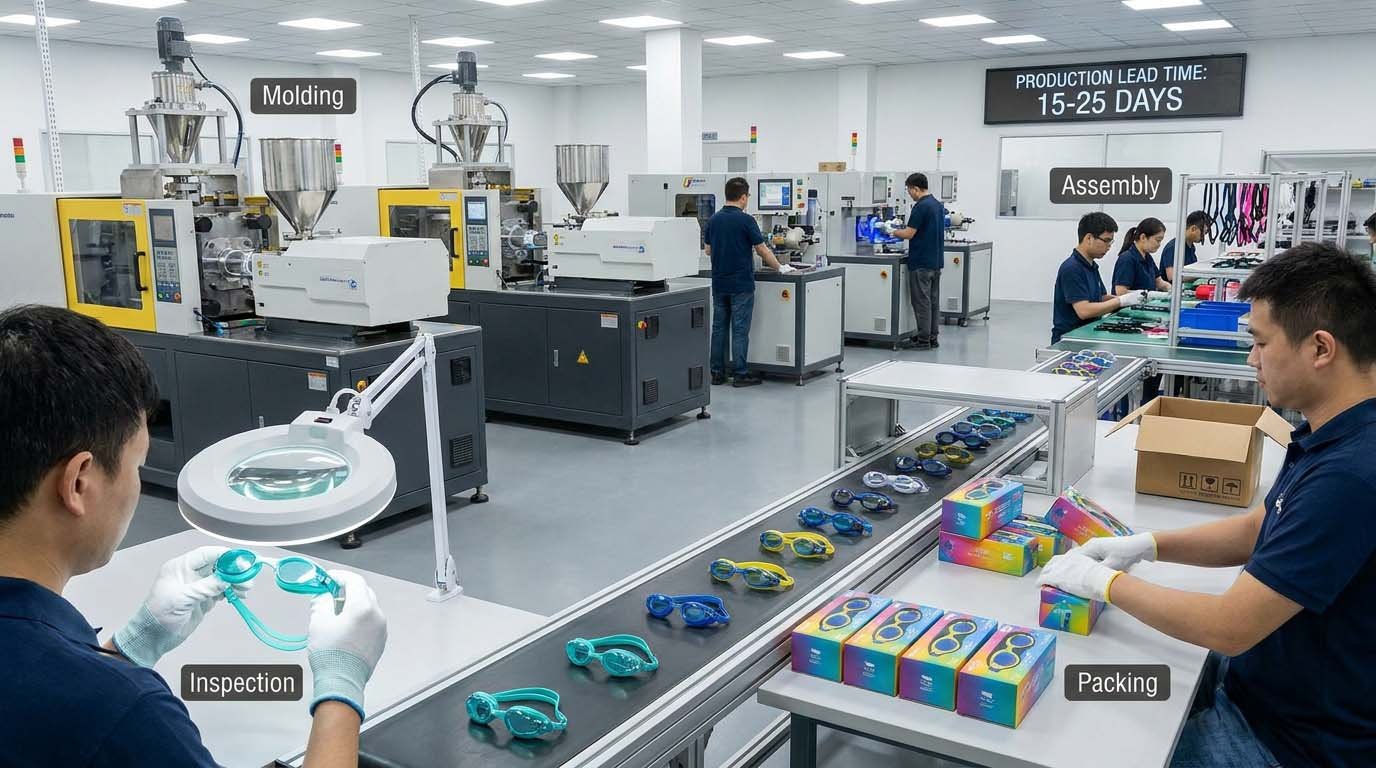
Typical production time
Mass production for custom swimming goggles usually takes 15 to 25 days, depending on:
- Order quantity
- Product complexity
- Number of colors
- Logo method
- Coating process
- Packaging type
What happens during mass production?
This stage may include:
- Lens molding
- Strap production
- Frame and gasket assembly
- Anti-fog or mirror coating
- Logo printing or molded branding
- Product cleaning
- Packaging preparation
- Carton packing
What can slow production down?
Production may take longer if the project includes:
- Multiple decoration methods
- Complex color combinations
- Over-molded details
- Retail display packaging
- Special inspection requirements
- Peak-season scheduling pressure
Quality Control During Custom Swim Goggle Production
Quality control is part of the production timeline, not a separate afterthought. It helps reduce defects and shipment delays.
In-process inspection
During production, factories usually inspect key checkpoints such as:
- Part dimensions
- Visual appearance
- Strap assembly
- Lens clarity
- Seal function
- Logo position
- Color consistency
Final inspection
Before shipment, a final inspection usually checks:
- Product appearance
- Functional sealing
- Strap strength
- Packaging accuracy
- Labeling and carton details
- Quantity confirmation
For many buyers, final inspection approval is the last release point before shipping.
Packaging Timeline for Custom Swimming Goggles
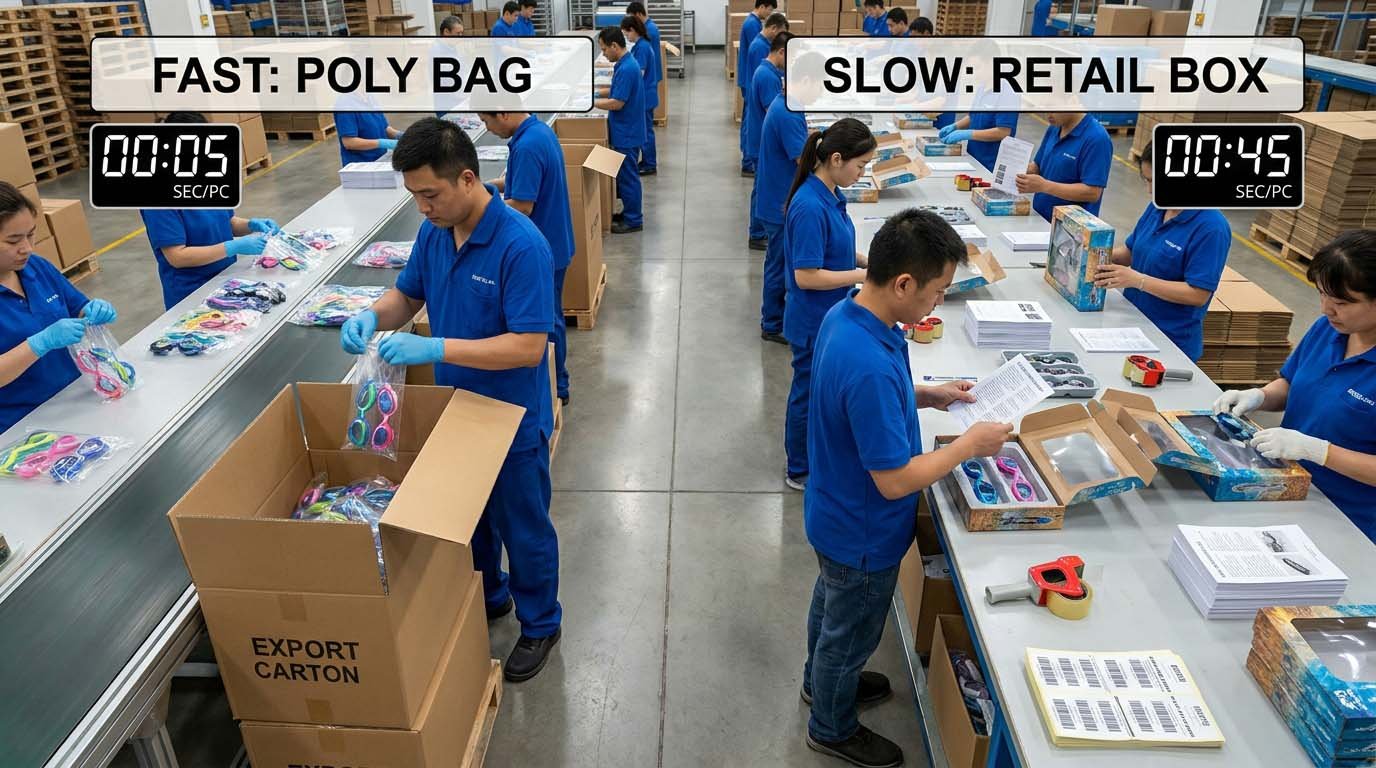
Packaging can be a hidden source of delay in the custom swimming goggles delivery timeline, especially when the product needs retail-ready presentation.
Faster packaging options
The fastest packaging formats are usually:
- Poly bag
- Header card
- Basic insert
- Standard export carton
Slower packaging options
Retail packaging often adds time because it may require:
- Printed boxes
- Plastic windows
- Instruction sheets
- Barcode labels
- Compliance marks
- Custom die lines
- Manual box assembly
If packaging artwork is not finalized early, it can delay the whole shipment even if the goggles themselves are already finished.
Shipping Time: Ocean Freight vs Air Freight
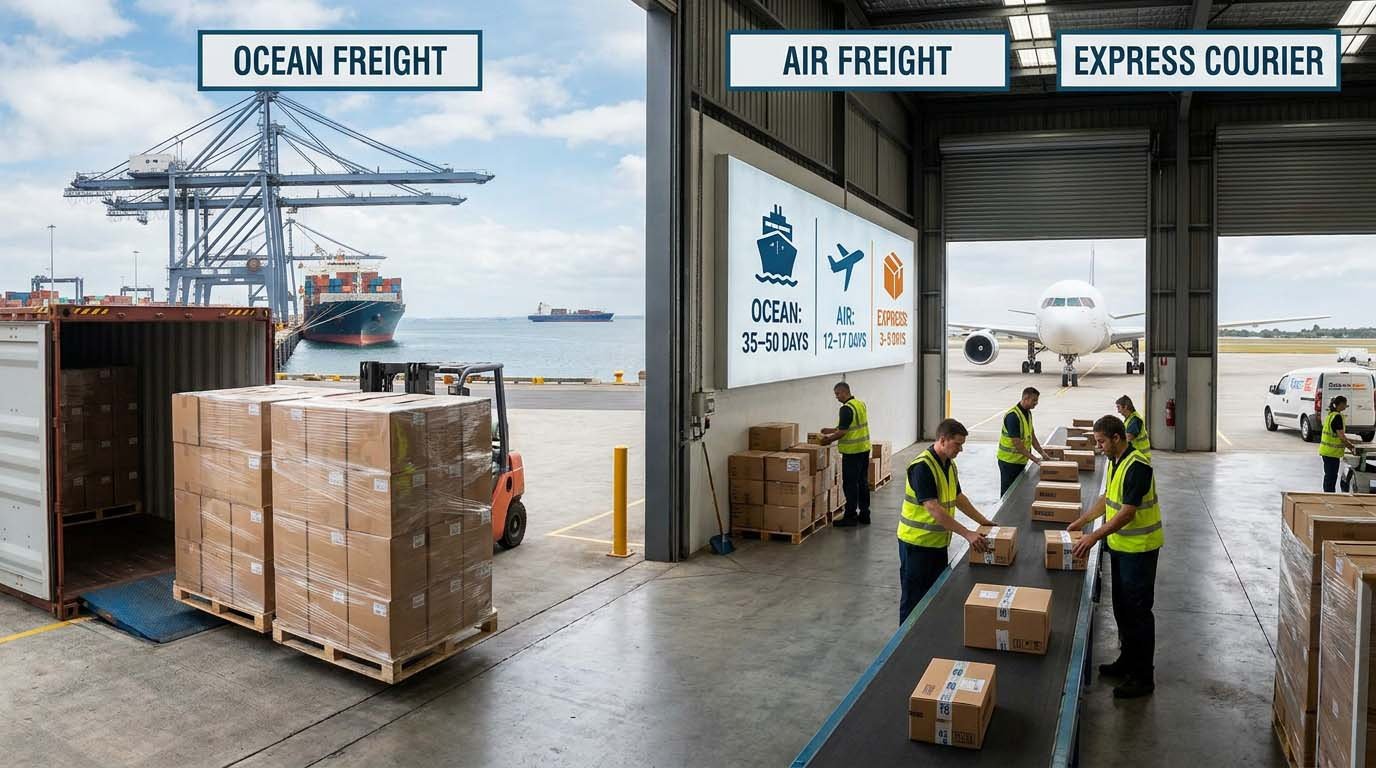
Shipping is often the longest part of the total custom swim goggles lead time, especially for overseas orders.
Ocean freight
Ocean freight is usually the most economical option for larger orders, but total shipping time is much longer. Buyers should also account for:
- Port handling
- Export booking
- Customs clearance
- Inland delivery
- Seasonal congestion
Air freight
Air freight is much faster and may be worth considering for:
- Urgent launches
- Small-volume projects
- Promotional deadlines
- Late-season replenishment
Shipping comparison table
| Shipping Method | Typical Total Time | Best For |
|---|---|---|
| Ocean Freight | 35-50 days | Standard large-volume orders |
| Air Freight | 12-17 days | Urgent orders or smaller shipments |
| Express Courier | 3-5 days | Samples or very small replenishment |
How to Reduce Custom Swimming Goggles Lead Time
Buyers who want faster delivery should focus on decisions that actually reduce project time.
Use existing molds when possible
This is one of the fastest ways to shorten development time.
Finalize specs early
Confirm these items before or during sampling:
- Materials
- Colors
- Logo file and placement
- Packaging structure
- Target market requirements
Minimize revision rounds
Late changes to fit, materials, or decoration can delay every downstream stage.
Keep packaging simple
Standard export packaging is much faster than custom retail presentation.
Approve samples quickly
Internal approval delays often add more time than the factory process itself.
Book faster shipping for urgent launches
Air freight can reduce overall delivery time significantly when deadlines are tight.
Common Causes of Delay in Custom Swim Goggle Orders
Even well-planned projects can slow down if key decisions are made too late.
Delayed sample feedback
If the buyer takes too long to review samples, the production window may shift.
Color or logo changes after approval
Changes made after material ordering often force rework and rescheduling.
Packaging artwork not ready
Custom boxes and inserts can hold up shipment even when the product is finished.
New compliance or testing requirements
Late-stage market compliance requests may extend lead time.
Peak-season factory loading
Busy seasons can delay production start dates.
Shipping and customs issues
Incomplete paperwork, missed bookings, or customs inspections may extend delivery time.
Best Timeline Strategy by Buyer Type
| Buyer Type | Best Timeline Strategy |
|---|---|
| First-Time Brand | Use existing molds, functional samples, simple packaging |
| E-commerce Seller | Focus on fast sampling, standard packaging, flexible air freight option |
| Retail Brand | Plan longer lead time for packaging, compliance, and validation |
| Club or Team Order | Keep logo method simple and avoid structural changes |
| Premium Product Launch | Allow extra time for tooling, testing, and retail presentation |
Final Thoughts
The real custom swimming goggles lead time is not just the factory production period. It includes sampling, approvals, material preparation, pilot runs, packaging, shipping, and customs clearance.
For most buyers, the best way to keep the project on schedule is to:
- Choose the right mold path early
- Confirm materials and colors during sampling
- Avoid late packaging changes
- Approve samples quickly
- Match the shipping method to the deadline
A well-planned project can move much faster than a project with repeated revisions, even if both use the same factory.
Supplier Checklist: Questions to Ask About Lead Time
Before placing a custom order, ask the supplier:
- What is the estimated lead time from sample approval to shipment?
- Does this timeline use existing molds or require new tooling?
- How long will sampling take for my project type?
- Can material purchasing start during sampling?
- What packaging lead time should I plan for?
- How long is mass production for my quantity?
- What is the expected shipping time to my market?
- What delays usually affect this product category?
- What decisions do I need to make now to avoid timeline extension?
- Can you provide a stage-by-stage production schedule?
These questions help buyers evaluate a supplier more clearly and plan a more realistic custom swim goggles delivery timeline.