The best swimming goggles for kids are the ones that seal comfortably, match the child’s main swimming environment, and are easy to adjust without frustration. When choosing kids swimming goggles, parents should focus on fit, gasket softness, lens type, comfort, and ease of use rather than brand marketing alone.
A pair of swim goggles can look great on the shelf and still leak, pinch, fog quickly, or end up unused in a drawer. In most cases, the problem is not the logo or price. It is whether the goggles match the child’s face shape, eye spacing, nose bridge, and swimming routine.
This guide explains how to choose swimming goggles for kids, including how to check fit, which safety features matter, what lens color to choose, how to avoid leaks, and when to replace them.
Quick Answers: Kids Swimming Goggles
What are the best swimming goggles for kids?
The best kids swim goggles are usually the ones with a soft gasket, reliable seal, simple strap adjustment, and lens tint matched to indoor or outdoor use.
How do I know if swim goggles fit my child?
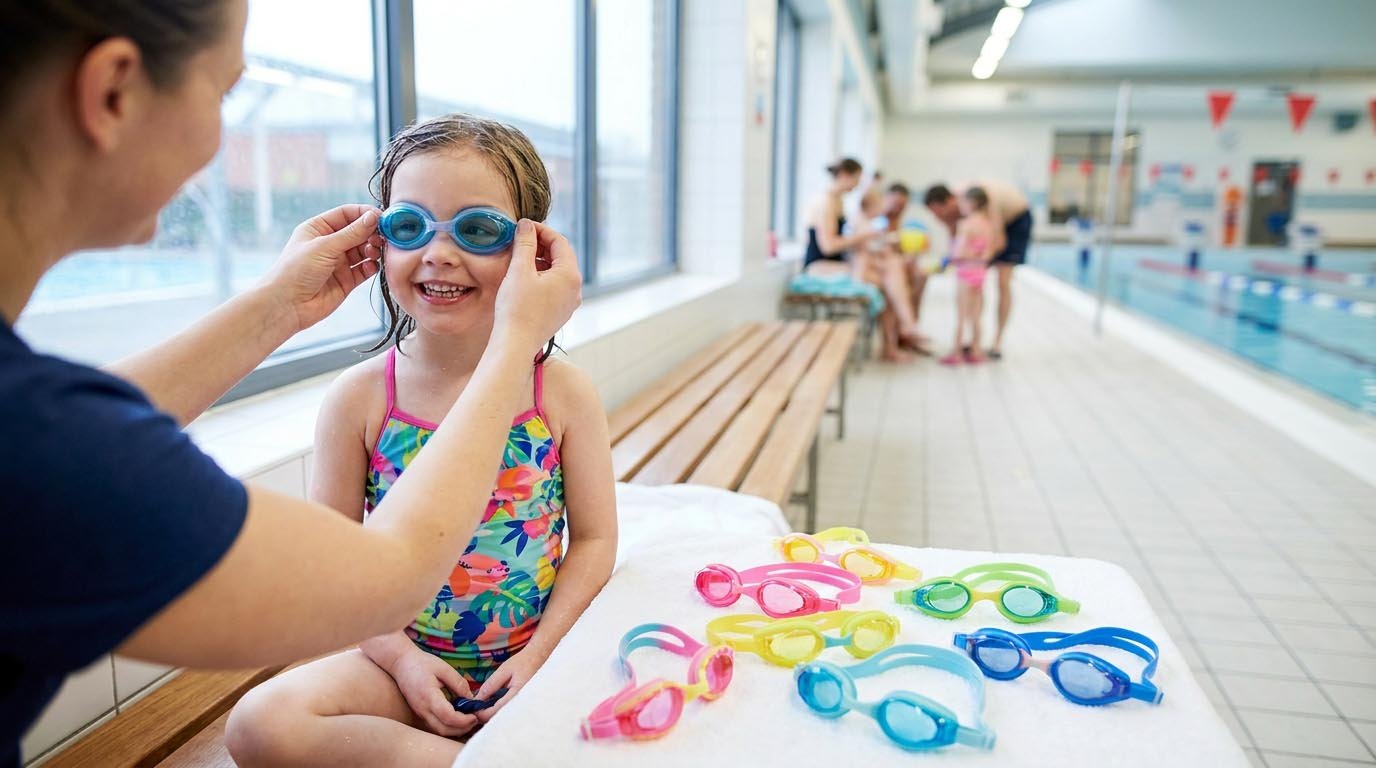
Use a suction test. Press the goggles gently to the face without the strap. If they stay in place for a few seconds, the seal is more likely to work in the water.
What lens color is best for kids swim goggles?
Clear lenses are usually best for indoor pools. Smoke or blue lenses are better for outdoor swimming in bright light.
Are anti-fog kids swim goggles worth it?
Yes, but anti-fog performance usually wears down over time. Most coatings are helpful at first but do not last forever.
How long do kids swimming goggles last?
With regular use, most kids swim goggles last around 6 to 12 months before fit, anti-fog performance, or strap elasticity becomes a problem.
Kids Swimming Goggles Buying Guide at a Glance
| Need | Best Choice |
|---|---|
| Indoor swim lessons | Clear lens, soft gasket, easy buckle |
| Outdoor pool use | UV protection, smoke or blue lens |
| Beginner swimmer | Double-seal gasket, soft frame, simple strap |
| Sensitive skin | Silicone gasket and smooth contact surface |
| Older child | Adjustable nose bridge and easy self-adjustment |
| Frequent swimmer | Better anti-fog care and protective storage case |
How to Choose the Right Fit for Kids Swimming Goggles
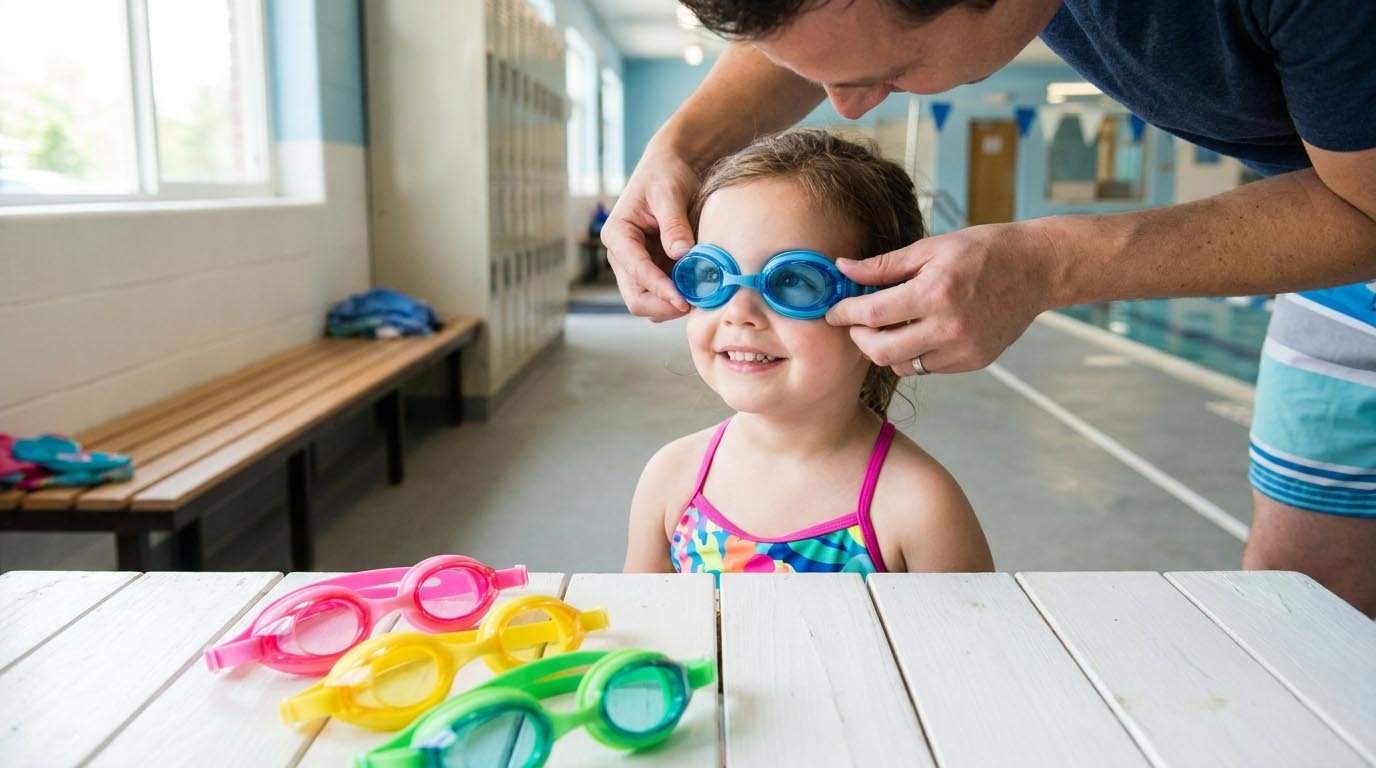
Fit is the most important factor when choosing swimming goggles for kids. A low-cost pair that seals properly is usually better than an expensive pair that leaks or pinches.
Why fit matters more than brand
Kids often reject goggles because of:
- leaking
- painful pressure around the eyes
- nose bridge discomfort
- straps that are hard to adjust
- lenses that sit in the wrong position
A poor fit can make children dislike swim lessons even if the goggles are marketed as premium.
Use the suction test
The easiest way to check fit is the suction test.
How to do it:
- place the goggles gently over the child’s eyes
- do not use the strap
- press lightly and release
- see whether the goggles stay in place for a few seconds
If they fall off immediately, the seal is likely poor. If they stay on briefly, the gasket shape is more likely to match the child’s face.
Other fit checks parents should use
Besides the suction test, check:
- eye alignment: the lenses should sit centered over the eyes
- nose bridge fit: no visible gap or obvious pinching
- gasket contact: even contact around the eye area
- comfort during movement: the goggles should not shift too much when the child turns the head
Signs the goggles do not fit
A pair of kids swim goggles may not fit properly if:
- they leave sharp red marks quickly
- water leaks in during normal swimming
- the child says the bridge hurts
- the strap must be tightened too much to stop leaks
- the lenses sit too wide or too close together
Kids Swim Goggles Size Guide by Age
Age labels can help as a starting point, but they should not be the only factor. Face shape and eye spacing matter more than packaging age ranges.
| Age | Typical Fit Suggestion | What to Check Most Carefully |
|---|---|---|
| 3-5 years | Small kids frame | Soft gasket, narrow bridge, easy strap |
| 5-8 years | Standard kids fit | Seal, eye alignment, comfort |
| 8-12 years | Large kids or youth fit | Nose bridge spacing, self-adjustment, tension |
| 12+ years | Youth or small adult fit | Seal quality and lens position |
Why age ranges can be misleading
Two children of the same age may have very different:
- face width
- nose bridge height
- eye spacing
- sensitivity to pressure
For this reason, parents should treat age labels as a rough guide only.
Adjustable nose bridges can help
Some children’s swim goggles come with:
- interchangeable nose bridges
- flexible bridge sections
- youth sizing between child and adult models
These features can improve fit if the child falls between standard size ranges.
What Safety Features Should Kids Swimming Goggles Have?
When choosing the best swimming goggles for kids, safety matters more than extra styling or marketing claims.
Soft and skin-friendly gasket material
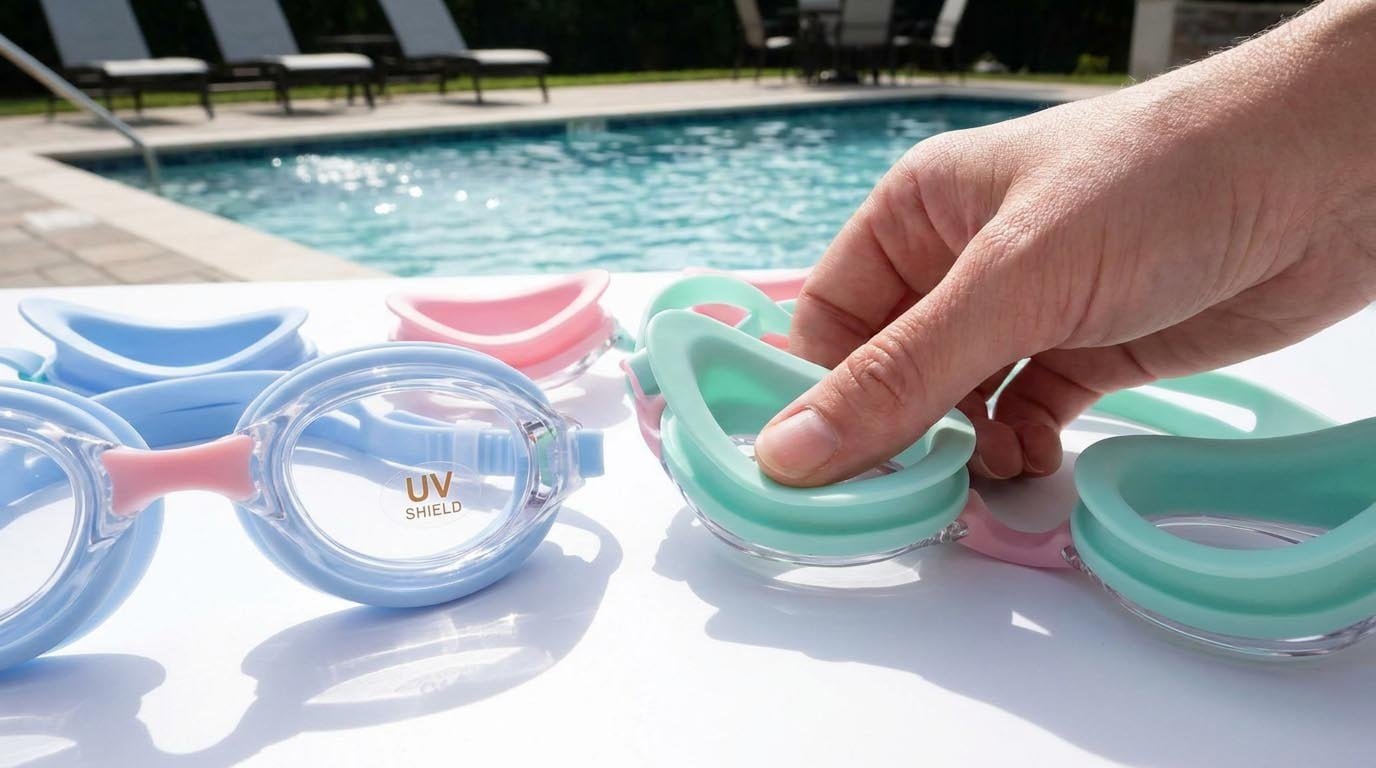
The gasket touches the skin directly, so it should feel soft and comfortable.
Common choices include:
- silicone: softer, more flexible, often preferred for comfort
- TPR or similar materials: lower cost, sometimes firmer in feel
For children with sensitive skin, a softer silicone gasket is often a better choice.
Shatter-resistant lenses
Most good kids swim goggles use polycarbonate lenses, which are lighter and more impact resistant than basic acrylic alternatives.
Parents should look for:
- polycarbonate lens material
- child-safe design
- sturdy frame construction
UV protection for outdoor swimming
If the goggles will be used in outdoor pools, at the beach, or in strong sun, UV protection is useful.
Look for:
- UV protection
- UV400 if specified
- clear labeling for outdoor use
For indoor-only swim lessons, lens tint and UV protection are usually less important than fit and comfort.
Which Lens Color Is Best for Kids Swim Goggles?
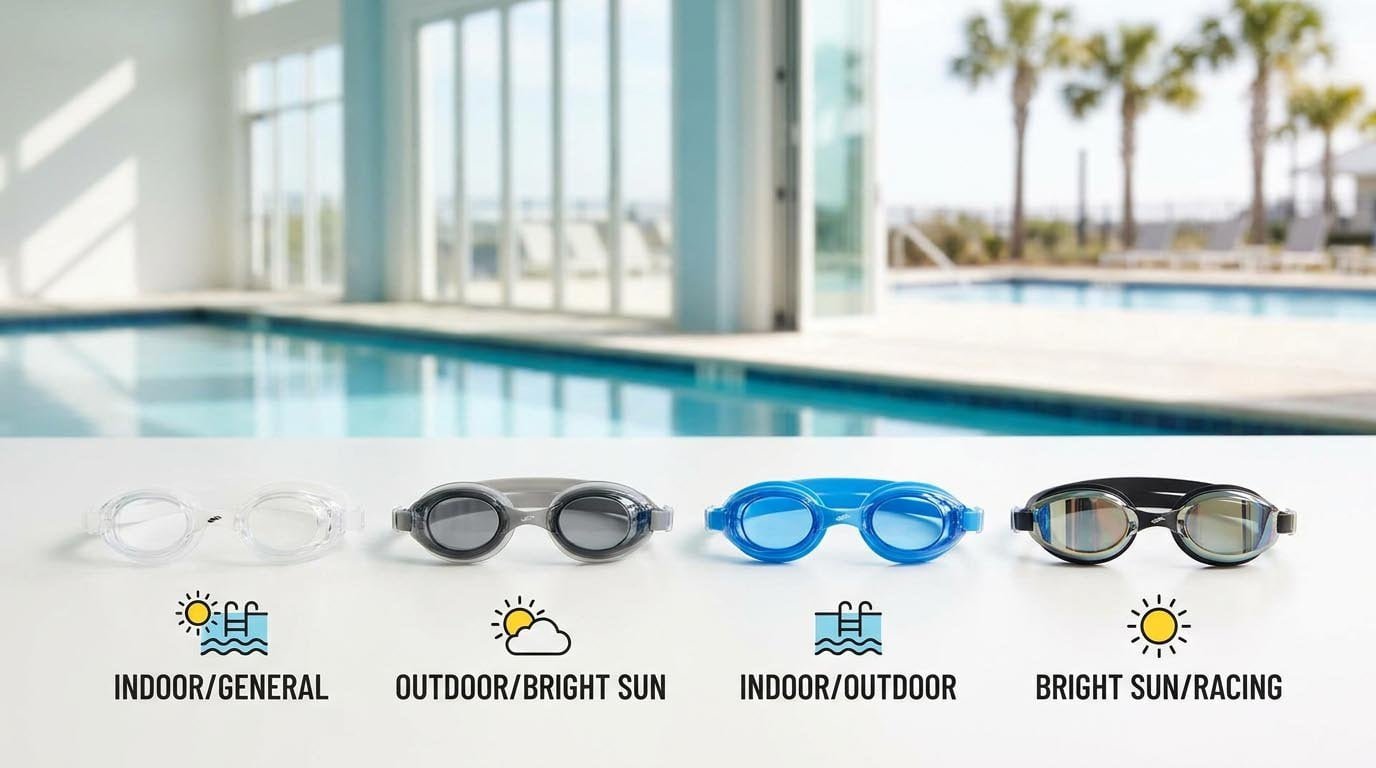
Lens color affects comfort more than performance for most children. The best option depends mainly on where the goggles will be used.
Clear lenses
Best for:
- indoor pools
- low-light environments
- swim lessons
- younger or beginner swimmers
Why parents choose them:
- brightest view
- easy to see pool floor and instructor
- simple all-purpose choice for indoor use
Smoke or gray lenses
Best for:
- bright outdoor pools
- sunny summer swimming
- reducing glare without strong color shift
Blue lenses
Best for:
- outdoor use with moderate brightness
- families who want some glare reduction without a very dark lens
Mirror lenses
Best for:
- very bright sun
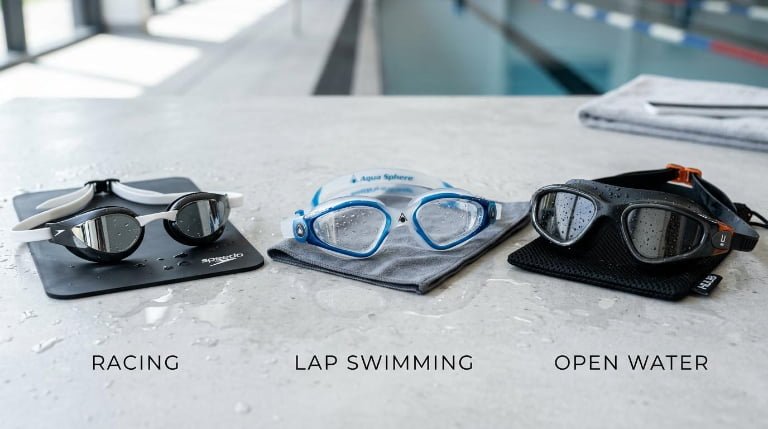
- open water
- outdoor competition
For most beginner swimmers, mirror lenses are not necessary. They can reduce brightness well, but they are usually more useful for older children swimming in intense outdoor light.
How to Choose Comfortable and Leak-Free Swim Goggles for Kids
Comfort and leak resistance are closely connected. If goggles only seal when tightened too much, the child will probably dislike wearing them.
Choose soft gaskets
Soft gaskets help:
- spread pressure more evenly
- reduce red marks
- improve comfort during longer swim sessions
Double-seal vs single-seal design
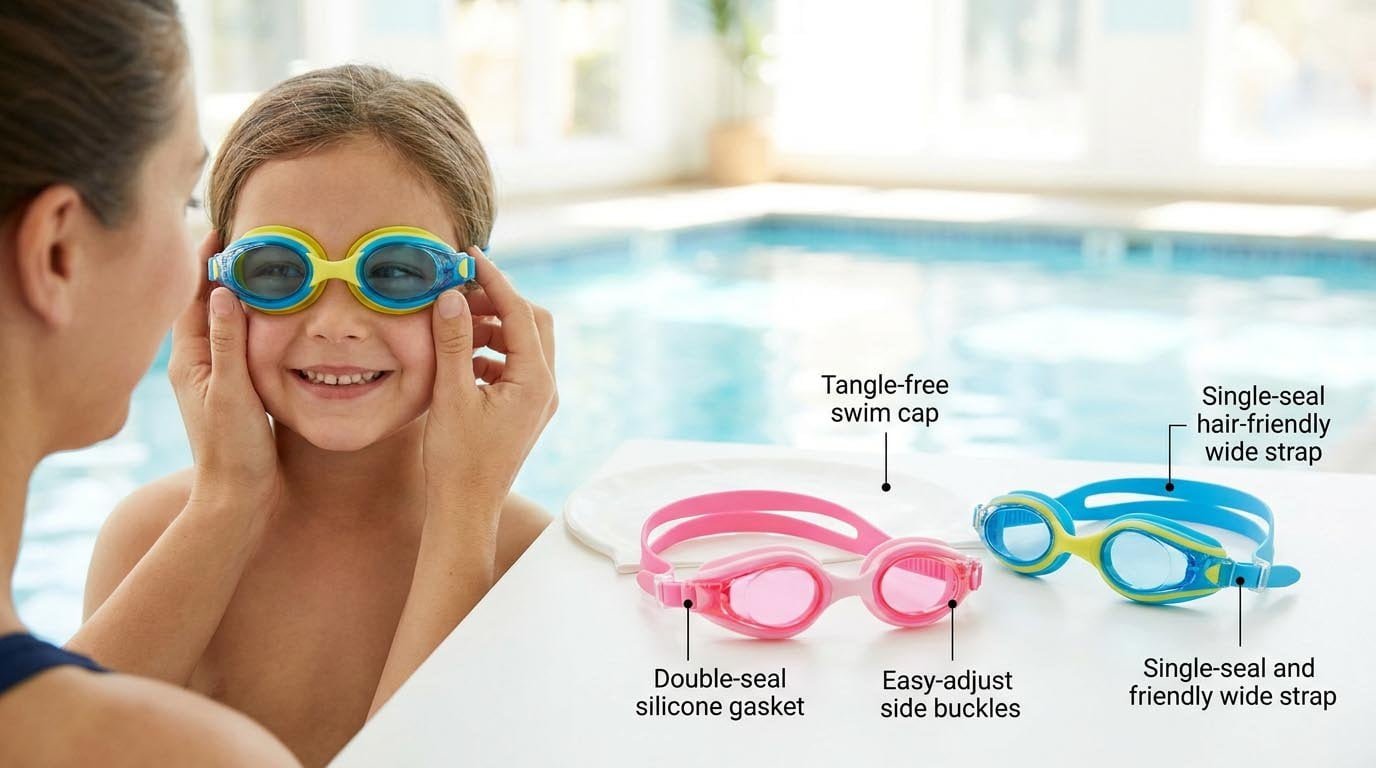
Some kids swimming goggles use a double-seal gasket, while others use a single-seal design.
- Double-seal styles often feel more forgiving and are helpful for beginners
- Single-seal styles can work well too, but may require more precise fit and strap adjustment
Easy strap adjustment matters
Children are more likely to use goggles correctly if they can adjust them with less help.
Look for:
- simple side buckles
- smooth adjustment system
- balanced strap tension
- easy tightening and loosening
Hair-friendly design
If your child has long hair, avoid buckles or strap parts that easily catch hair.
Helpful features include:
- smooth buckle surfaces
- rounded strap edges
- compatibility with a swim cap
How Tight Should Kids Swim Goggles Be?
This is one of the most common parent questions.
The right tightness
Kids swim goggles should be secure but not painful. The strap should help hold the seal in place, not force the goggles into the face.
Signs the strap is too tight
- strong red marks around the eyes
- child complains of pain quickly
- eye area looks compressed
- headaches or discomfort after swimming
Signs the strap is too loose
- goggles shift during push-off or head movement
- water enters during normal swimming
- the seal breaks easily
The best fit usually comes from a good gasket shape first, then light strap tension second.
Are Anti-Fog Kids Swim Goggles Worth It?
Most children benefit from anti-fog lenses, especially in lessons and recreational swimming. However, parents should know that anti-fog does not last forever.
What anti-fog does
Anti-fog coating helps reduce condensation on the inside of the lens, making it easier for children to see clearly underwater and during lessons.
Why anti-fog fades over time
Anti-fog performance usually wears down because of:
- repeated exposure to water and pool chemicals
- touching or rubbing the inside of the lens
- heat and storage conditions
- normal wear over time
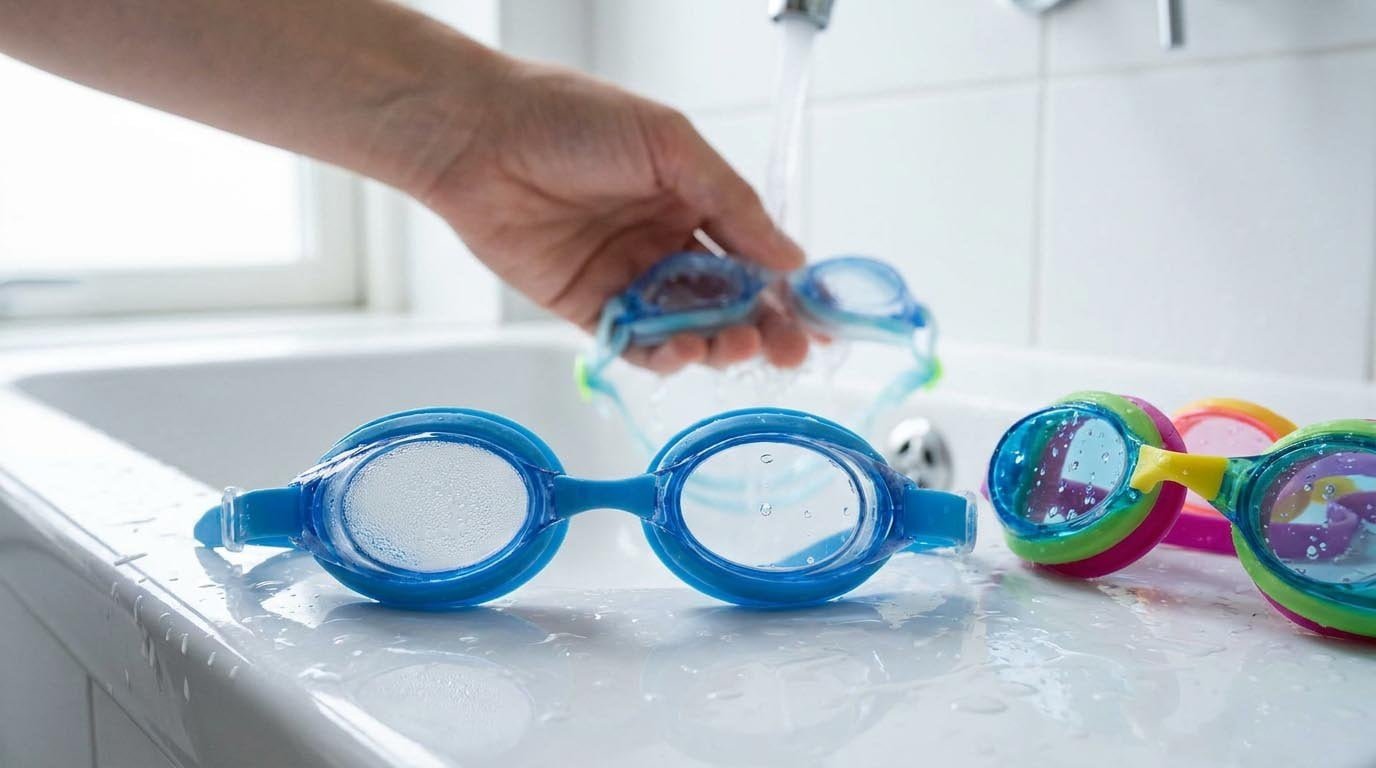
How to make anti-fog last longer
Parents should:
- rinse goggles with clean cool water
- avoid rubbing the inside lens
- air dry them gently
- store them away from heat and direct sunlight
For many families, anti-fog is useful, but it should be treated as a consumable feature rather than a permanent one.
How Long Do Kids Swimming Goggles Last?
Most kids swimming goggles last around 6 to 12 months with regular use. The exact lifespan depends on frequency of swimming, storage habits, and how rough the child is with the goggles.
Common reasons kids swim goggles need replacement
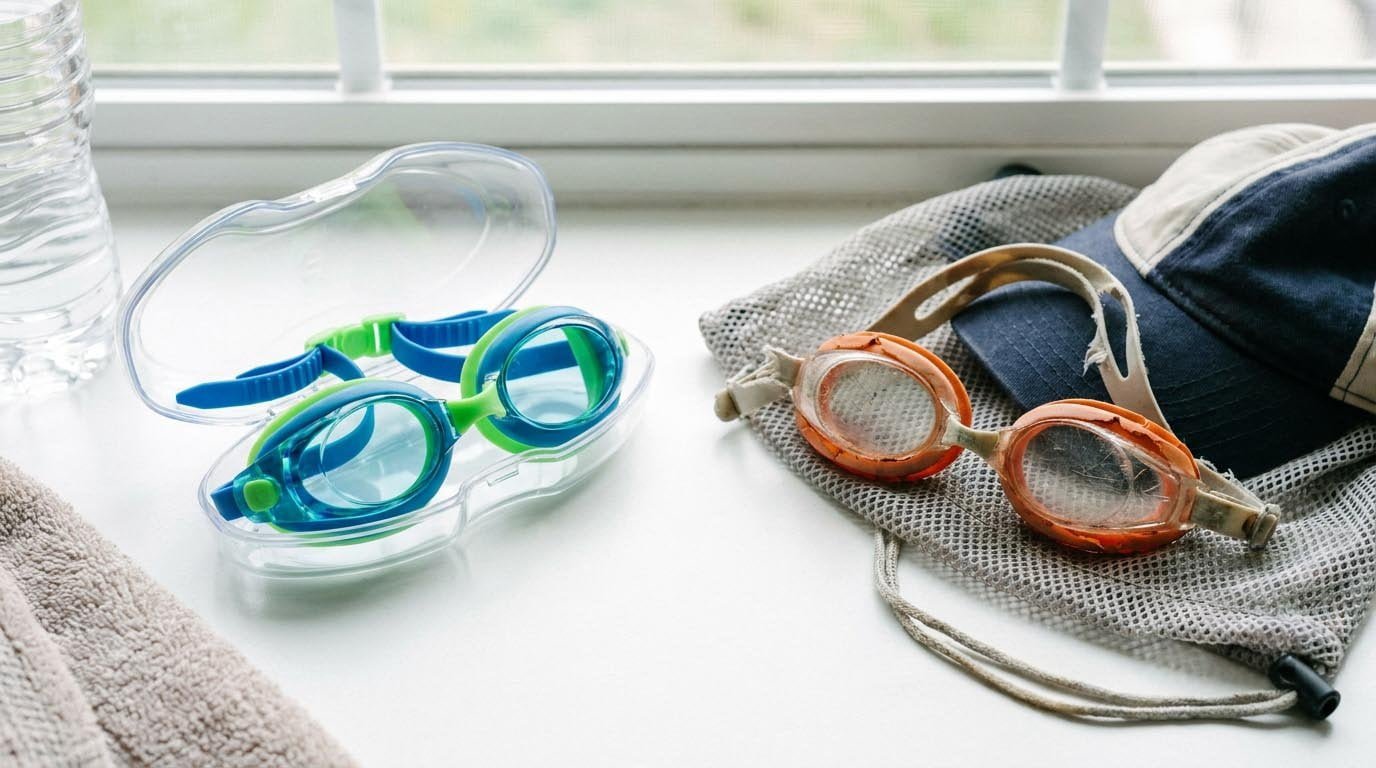
- anti-fog no longer works well
- strap becomes loose or overstretched
- gasket becomes stiff, cracked, or damaged
- lenses get heavily scratched
- goggles leak even though they used to fit
How to make swim goggles last longer
To extend lifespan:
- rinse after use
- let them dry before storage
- keep them out of hot cars
- use a protective case if possible
- avoid tossing them loose into crowded swim bags
When to replace swim goggles
Parents should replace goggles if:
- leaks continue even after proper adjustment
- the gasket is torn
- the strap no longer holds tension
- visibility is poor because of scratches or constant fogging
How to Choose Kids Swim Goggles by Use Scenario
Different children need different features depending on how they swim.
Best kids swim goggles for beginners
Choose:
- soft gasket
- clear lens
- simple buckle system
- comfortable wider seal
Best kids swim goggles for indoor swim lessons
Choose:
- clear lens
- anti-fog
- easy fit
- comfortable nose bridge
Best kids swim goggles for outdoor pools
Choose:
- UV protection
- smoke or blue lens
- good seal in bright light
Best kids swim goggles for sensitive skin
Choose:
- silicone gasket
- smooth contact areas
- softer frame feel
Best kids swim goggles for older children
Choose:
- better self-adjustment
- youth fit
- more stable strap system
- optional adjustable nose bridge
Final Thoughts
Choosing the best swimming goggles for kids comes down to a few practical checks: fit, comfort, lens type, safety, and ease of adjustment.
Parents do not need to overcomplicate the process. Start with the suction test, make sure the goggles sit comfortably around the eyes, choose the right lens color for indoor or outdoor use, and avoid designs that are difficult for children to manage on their own.
In most cases, the best kids swimming goggles are not the most expensive pair. They are the pair your child will actually wear without leaking, pinching, or causing frustration.