Every year, I see new swim brands make the same mistake: they assume goggles are a simple product.
On the surface, they are small, lightweight, and easy to ship. That part is true. But launching a swim goggle brand in the U.S. is usually more complicated than first-time founders expect. Fit problems lead to returns. Anti-fog performance gets overpromised. Packaging affects freight cost more than people realize. Kids’ products bring extra compliance work. And many brands spend too much on molds before they have validated demand.
If you want to build a swim goggle brand in the USA, the safest path is usually this: choose one target customer, start with a narrow product line, work with a factory that already understands swim eyewear, confirm your testing and labeling requirements before production, and price the business around landed cost rather than factory cost.
For most small launches, a practical startup budget is $25,000-$50,000, and a realistic timeline is 6-9 months.
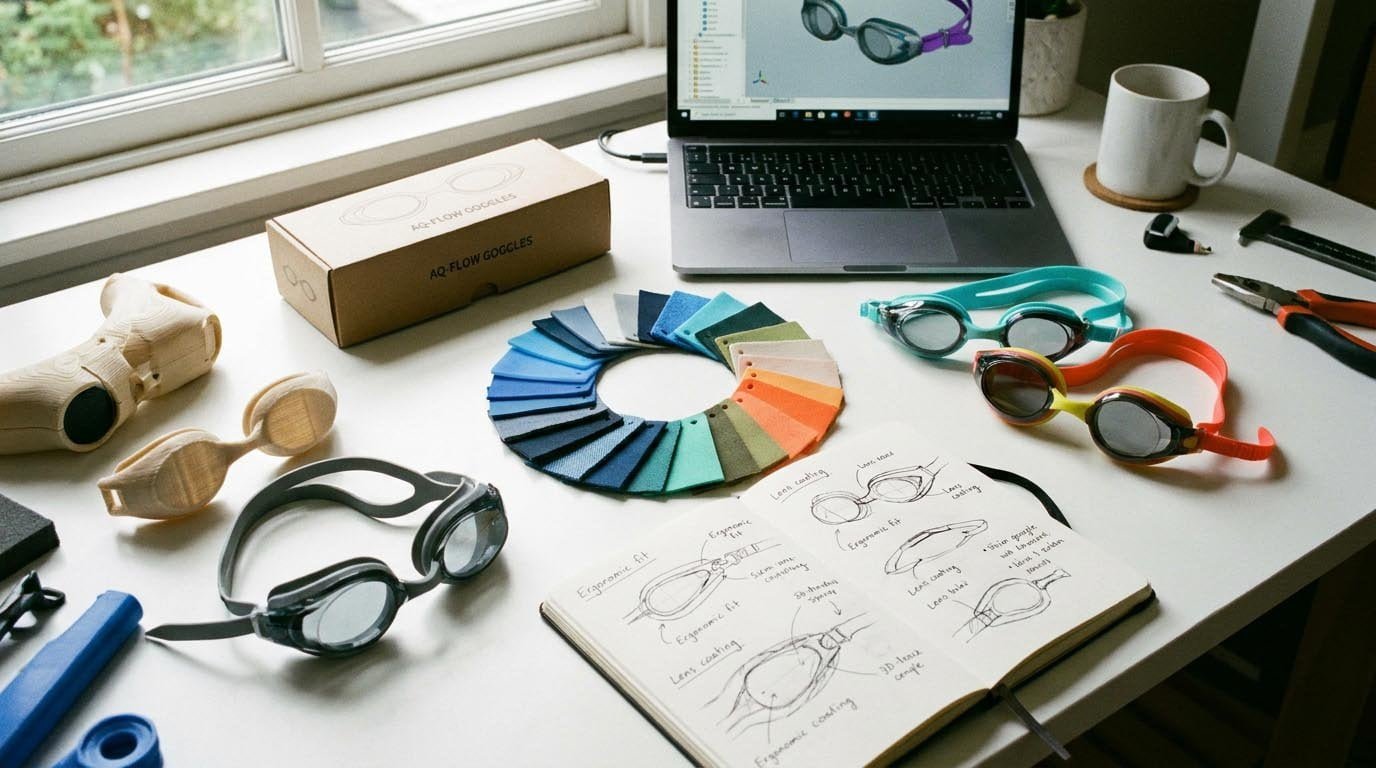
This guide is written from a product development and sourcing perspective. The numbers here are not universal rules. They are typical working ranges for early-stage OEM/ODM projects, especially for founders building private label or semi-custom swim goggles for the U.S. market.
Quick Summary
If you only need the short version, here it is:
- Best launch approach: start with 1-3 core models, not a full collection
- Typical starting MOQ: from 300 pieces for private label, around 600 pieces for custom-color projects, while deeper OEM/ODM projects are quoted individually.
- Startup budget: usually $25,000-$50,000
- Time to launch: usually 6-9 months
- Best first channels: your own website, small Amazon test, swim clubs, and specialty retailers later
- Biggest risk areas: fit inconsistency, weak anti-fog performance, overbuilding SKUs, and ignoring compliance details
- Best advice for first-time founders: avoid full custom molds unless you already have strong demand or committed distribution
Why Most New Swim Goggle Brands Struggle
The market is not impossible, but it is less forgiving than it looks.
What usually hurts new brands is not one catastrophic error. It is a chain of smaller decisions:
- too many colors at launch
- the wrong target segment
- choosing a supplier based only on price
- approving samples too quickly
- spending on packaging before fixing fit
- pricing based on factory quote instead of all-in landed cost
- assuming U.S. compliance is just a formality
One issue I have seen more than once is this: a founder develops a product that looks strong in renderings and first samples, but once it reaches real swimmers, the strap adjustment feels awkward, the seal only works for a narrow face shape, and the anti-fog starts fading faster than expected. None of those issues look dramatic on paper. Together, they kill repeat purchase.
That is why the early decisions matter more than the branding language.
1. Start With One Clear Customer, Not “All Swimmers”
The swim market looks broad from the outside, but in practice, buyers are very different.
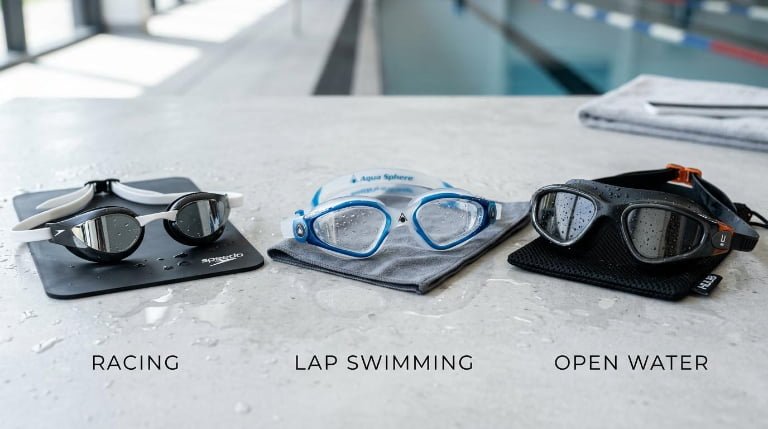
A competitive swimmer buying training goggles is not shopping the same way as a parent buying for a 9-year-old. A triathlete cares about different lens performance than a lap swimmer in an indoor pool. And a casual fitness swimmer may choose comfort over almost every other feature.

The best early-stage swim goggle brands usually serve one clear segment first.
Common starting segments include:
- competitive swimmers
- fitness swimmers
- triathletes
- open water swimmers
- kids and learn-to-swim families
- prescription users
What Changes by Segment
Your segment affects almost everything:
| Segment | What Matters Most | Common Price Range | Notes |
|---|---|---|---|
| Competitive swimmers | stable fit, low profile, anti-fog | mid to premium | often buy multiple pairs per year |
| Fitness swimmers | comfort, leak resistance, durability | low to mid | broader market, more comfort-driven |
| Triathletes | visibility, outdoor lens options, versatility | mid to premium | open water and pool crossover |
| Kids | soft fit, easy adjustment, appearance | entry to mid | parents buy, kids influence adoption |
| Open water swimmers | UV, field of view, mirror/photochromic options | mid to premium | more niche, often higher AOV |
If this is your first launch, I would generally recommend choosing one of two paths:
- Comfort-first training goggles for adults
- A focused niche where the positioning is clearer, such as open water or kids
What I would not recommend for most first launches is trying to serve competitive swimmers, kids, and casual fitness users all at once. That usually creates a weak product line and messy messaging.
A Simple Positioning Test
Before developing anything, try answering these three questions in one sentence:
- Who is this for?
- What problem does it solve better than common alternatives?
- Why should someone trust a new brand?
If you cannot answer those clearly, the market will not answer them for you.
2. Keep the First Product Line Small
Founders often think a bigger line looks more legitimate. In reality, a bigger line usually just means more risk.
Every new SKU adds:
- more MOQ exposure
- more packaging decisions
- more quality control complexity
- more forecasting pressure
- more capital tied up in inventory
A small launch almost always performs better operationally than an overbuilt one.
For most first-time founders, a sensible structure is:
- 1 hero training model
- 1 performance-oriented model
- optional: 1 specialized model, only if it strongly supports your positioning
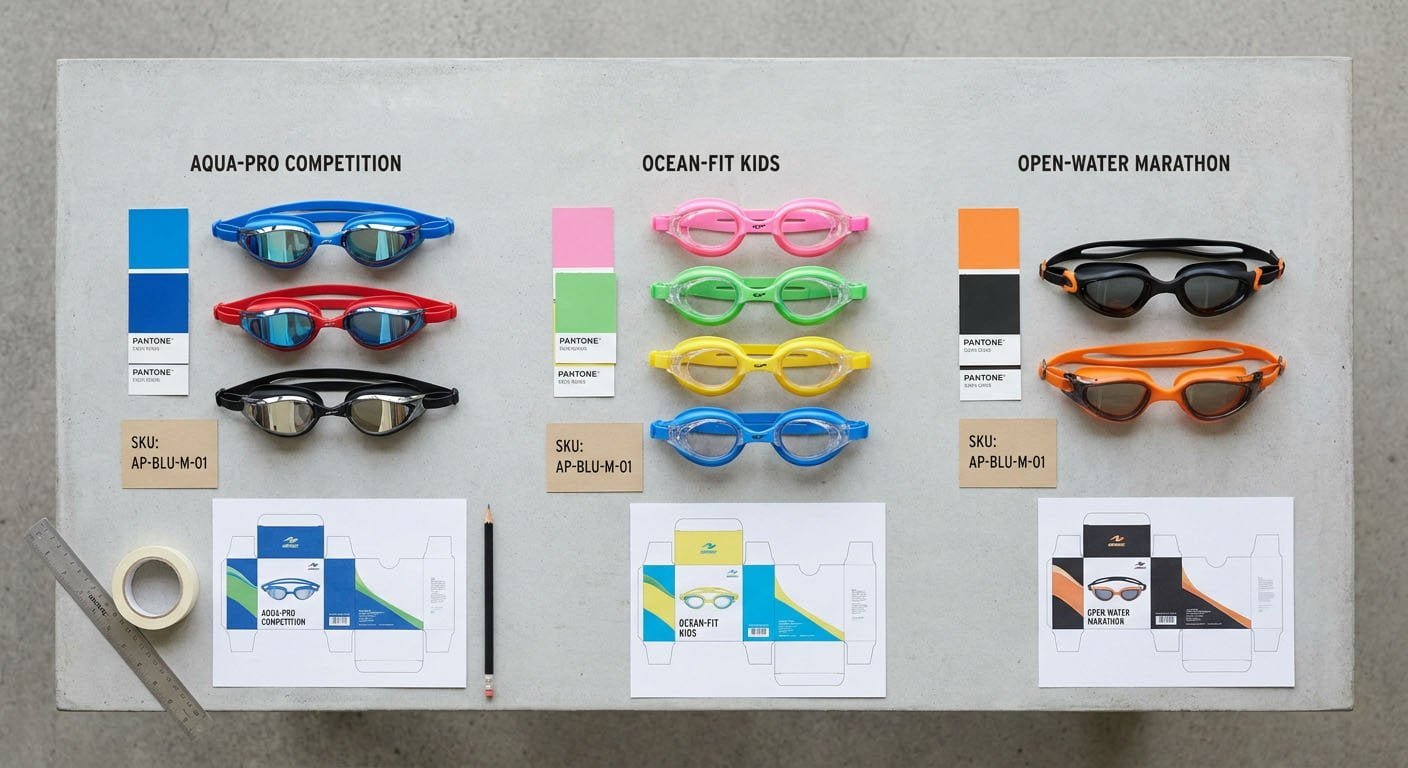
Recommended Launch Structure
Model 1: Training Goggle
This is usually the safest first model.
Typical priorities:
- soft gasket
- comfortable seal
- simple adjustment
- consistent lens clarity
- reliable anti-fog
- practical color options
Typical retail range:
$25-$40
This is the type of product most brands rely on for steady volume.
Model 2: Performance / Racing-Inspired Goggle
This can help define your brand technically, even if it sells in lower volume.
Typical priorities:
- lower profile
- stronger hold under dives and turns
- reduced drag
- smaller gasket footprint
- cleaner, more technical appearance
Typical retail range:
$35-$50
Model 3: Specialized Goggle
Only add this if it supports your core audience.
Examples:
- kids
- open water
- prescription
- extra-wide fit
- premium outdoor lens model
Typical retail range:
$15-$75+, depending on category
My Advice on First Launch SKUs
If your budget is under $30,000, I would be cautious about launching more than 2 models.
If your budget is under $15,000, I would seriously consider starting with one private label or lightly customized hero product and using that to validate demand before investing in tooling.
A surprising number of first-time founders spend too much money trying to look established instead of trying to become established.
3. Product Features That Matter More Than Founders Expect
People new to the category often focus on visible features first: lens color, mirror finish, or packaging.
But swimmers usually judge goggles on a smaller set of practical outcomes:
- Do they leak?
- Are they comfortable after 30-60 minutes?
- Do they fog too quickly?
- Are they easy to adjust?
- Do they hold position off the wall and during turns?
- Do they feel cheap after a few weeks in chlorine?
Those are the questions that matter.
Fit Is the Hard Part
The biggest product challenge in swim goggles is not appearance. It is fit across enough face shapes.
A sample can feel great on the founder and still perform badly in the market. That is why sample testing should include multiple users if possible.
In real projects, one of the most common problems is a gasket that looks soft and premium in hand, but compresses unevenly on actual faces. The product may pass a desk review and still generate leak complaints after launch.
If you can, test samples on:
- male and female swimmers
- narrower and wider face shapes
- at least one stronger pusher off walls and turns
- both short and longer sessions
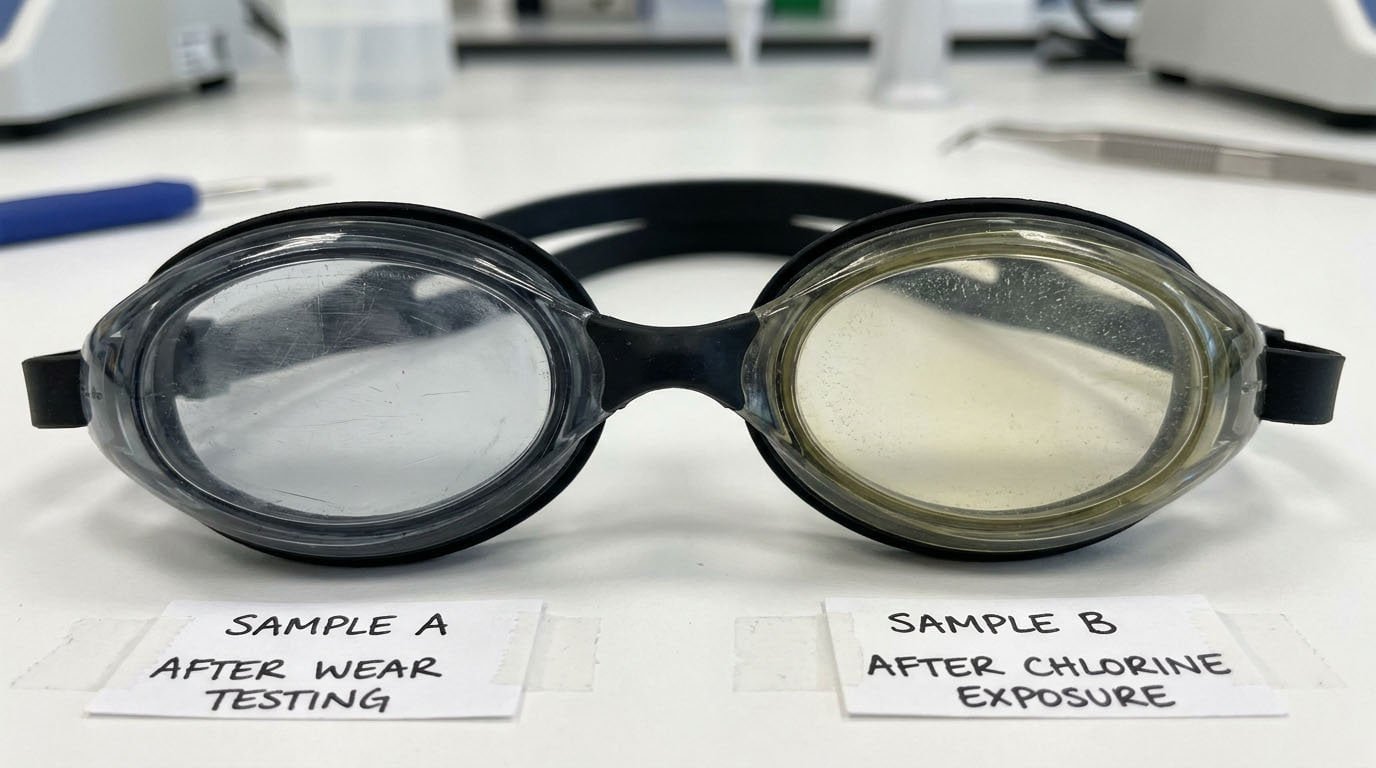
Anti-Fog Is a Sales Point and a Return Risk
Anti-fog is one of the easiest promises to make and one of the easiest ways to disappoint customers.
A lot of founders ask for “the best anti-fog” without defining what that means. In practice, anti-fog performance varies by:
- coating method
- lens handling during assembly
- packaging protection
- user care instructions
- chlorine exposure
- rubbing or wiping inside the lens
In our experience, anti-fog complaints are one of the most common early return triggers on new swim goggle launches. Sometimes the issue is the coating itself. Other times, the product is fine, but the customer was never told how easily anti-fog can be damaged by touching the inside of the lens.
That is why the product page and insert card matter almost as much as the coating.
Start With Reliable Features, Not Every Feature
Useful options may include:
- mirror coating
- UV protection
- premium anti-fog
- interchangeable nose bridges
- protective case
- wider field of view
But not every product needs all of them.
If you are launching a mainstream training goggle, I would prioritize:
- fit
- comfort
- anti-fog reliability
- adjustment ease
- durability
Fancy features do not rescue a weak seal.
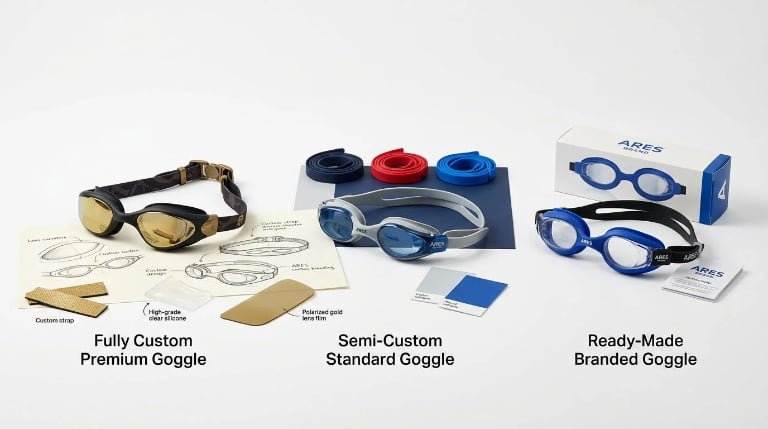
4. Sourcing: Private Label, Semi-Custom, or Full Custom?
This is where many founders either save themselves or bury themselves.
There are three common sourcing paths.
Option A: Private Label
You choose an existing factory design and customize logo, packaging, and maybe color.
Best for:
- smaller budgets
- faster launch
- lower development risk
- market testing
Weakness:
- less unique product
Option B: Semi-Custom OEM
You modify an existing design with:
- custom colors
- strap details
- lens options
- packaging
- moderate structural changes
Best for:
- brands that want differentiation without full mold risk
Option C: Full Custom / ODM
You develop a more original frame, gasket, bridge, or lens system.
Best for:
- larger budgets
- stronger product clarity
- long-term brand building
Weakness:
- higher cost
- longer lead time
- more sample rounds
- more risk if demand is unproven
For most first launches, semi-custom is the best balance.
I generally would not advise a first-time founder to invest in full custom molds unless:
- they already know the segment well,
- they have real budget,
- and they have a clear reason the product needs unique tooling.
Too often, full custom is a vanity move. Founders think it proves they are serious. In reality, it often just locks money into a design the market has not validated.
5. How to Find a Good Swim Goggle Manufacturer
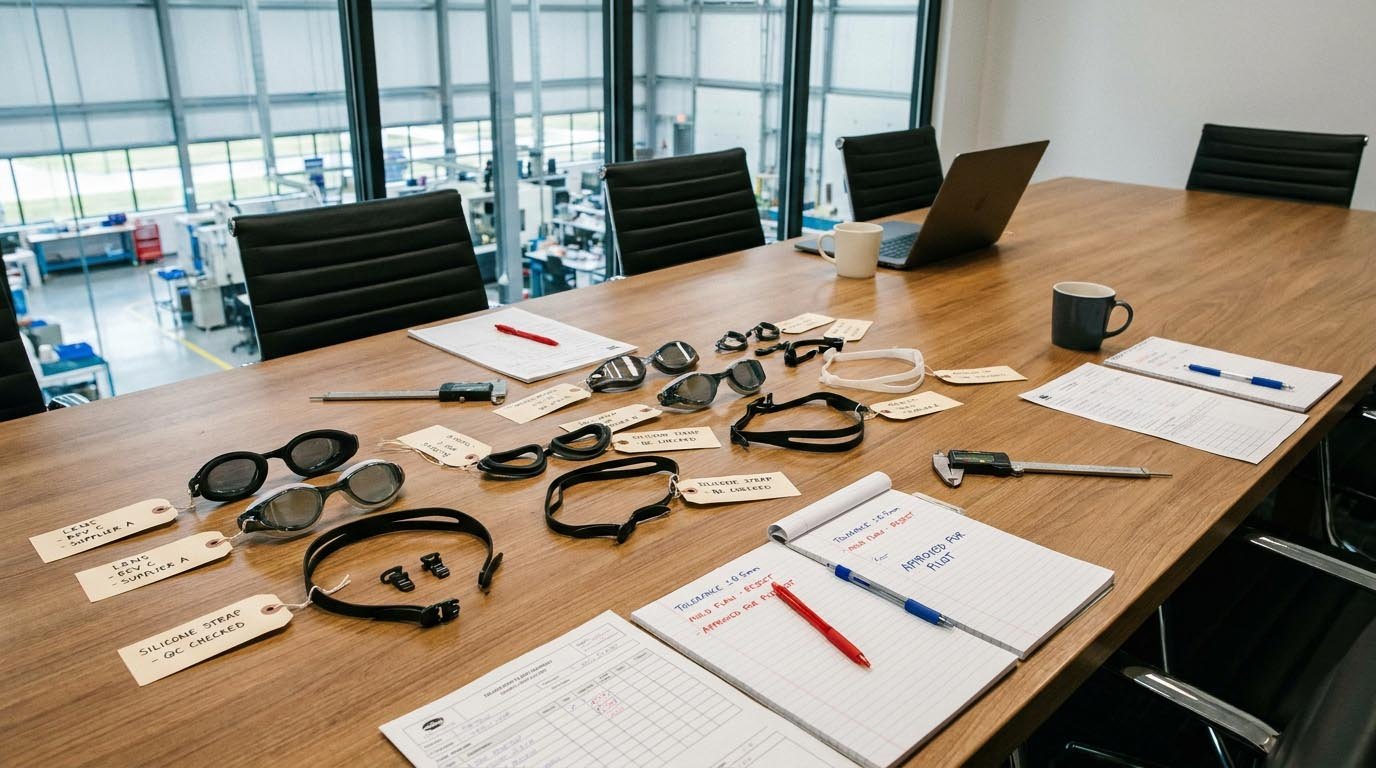
There are many suppliers who can make goggles. Fewer can make them consistently well.
A lower quote does not help if:
- fit drifts across production
- coatings are inconsistent
- packaging quality is poor
- communication is slow
- defects are discovered after shipment
Where Most Production Happens
Most swim goggle manufacturing capacity is concentrated in Asia, especially in:
- China
- Taiwan
That is not only about labor cost. It is also about supply chain density. Lens suppliers, silicone part suppliers, strap components, packaging vendors, and coating partners are often geographically close to the final assembler.
That ecosystem matters.
What to Ask in Initial Supplier Screening
Build a shortlist of 8-10 factories, then narrow to 3-4 serious candidates.
Ask for:
- product catalog
- MOQ by model
- customization options
- sample policy
- production lead time
- export markets
- quality certifications
- experience with swim or sports eyewear
- packaging support
Then order samples.
What to Check in Samples
Do not judge only by appearance. Check:
- lens finish
- seal consistency
- softness of gasket
- strap elasticity
- bridge comfort
- smell of materials
- packaging protection
- logo print quality
One issue I have seen more than once is that the strap feels acceptable in dry handling but loses confidence after repeated chlorine exposure. You will not catch that from a five-minute desk inspection.
If possible, test samples in water over several sessions.
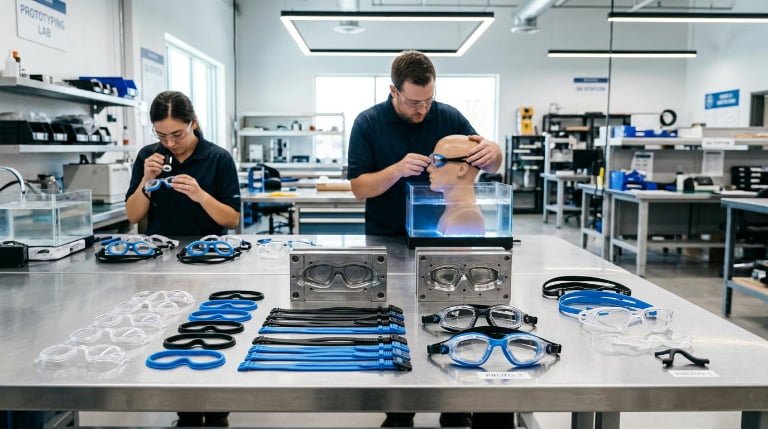
Sample Process I Recommend
For a custom or semi-custom project, plan for:
- initial sample
- revised sample
- pre-production sample
- packaging approval sample
That may feel slow, but it is cheaper than receiving an entire batch that is wrong in small but expensive ways.
Typical Commercial Terms
Common starting terms are:
- 30% deposit
- 70% before shipment
Typical MOQ for custom swim goggles is often:
- 500-1,000 units per model or color, depending on product and supplier
Typical lead time after approval is often:
- 45-75 days for production
- plus freight time
These are planning ranges, not fixed rules.
6. Materials, Lens Options, and Packaging Decisions
Common Lens Options
Founders usually choose among:
- clear lenses
- smoke lenses
- mirrored lenses
- outdoor / UV-oriented lenses
- premium anti-fog treatments
- photochromic lenses in higher-end categories
For many early launches, the smartest lens strategy is simple:
- one clear or smoke option for indoor training
- one mirrored or outdoor option if your audience needs it
Too many lens variants make inventory harder than people expect.
Gasket and Strap Choices
Softness matters, but so does resilience.
A gasket that feels very soft in hand may not always perform better in use if it deforms too easily. Likewise, a strap that looks premium in first inspection can still underperform after pool exposure.
This is one reason I generally prefer testing real use over relying on factory descriptions like “premium silicone.”
Packaging: Where Founders Overspend
Packaging should support the product, not consume the budget.
Options usually include:
- polybag
- simple carton
- retail display pack
- case-included premium set
What new brands often miss is that bulkier packaging affects:
- international freight
- warehouse storage
- fulfillment cost
- Amazon FBA dimensions
- damage rates
If your main channel is DTC, compact packaging usually makes more sense than a large retail clamshell.
I have seen founders spend weeks refining box finishes while still approving a product with average fit. That is backwards. The goggle matters more than the unboxing moment.
7. U.S. Compliance: What You Actually Need to Check
This is where blog posts often become too simplistic.
There is no single universal certification that covers every swim goggle sold in the U.S. Requirements depend on:
- intended user
- age grading
- material composition
- claims
- packaging
- sales channel
- retailer requirements
So the right way to approach compliance is not to search for one magic certificate. It is to build a checklist around your actual product.
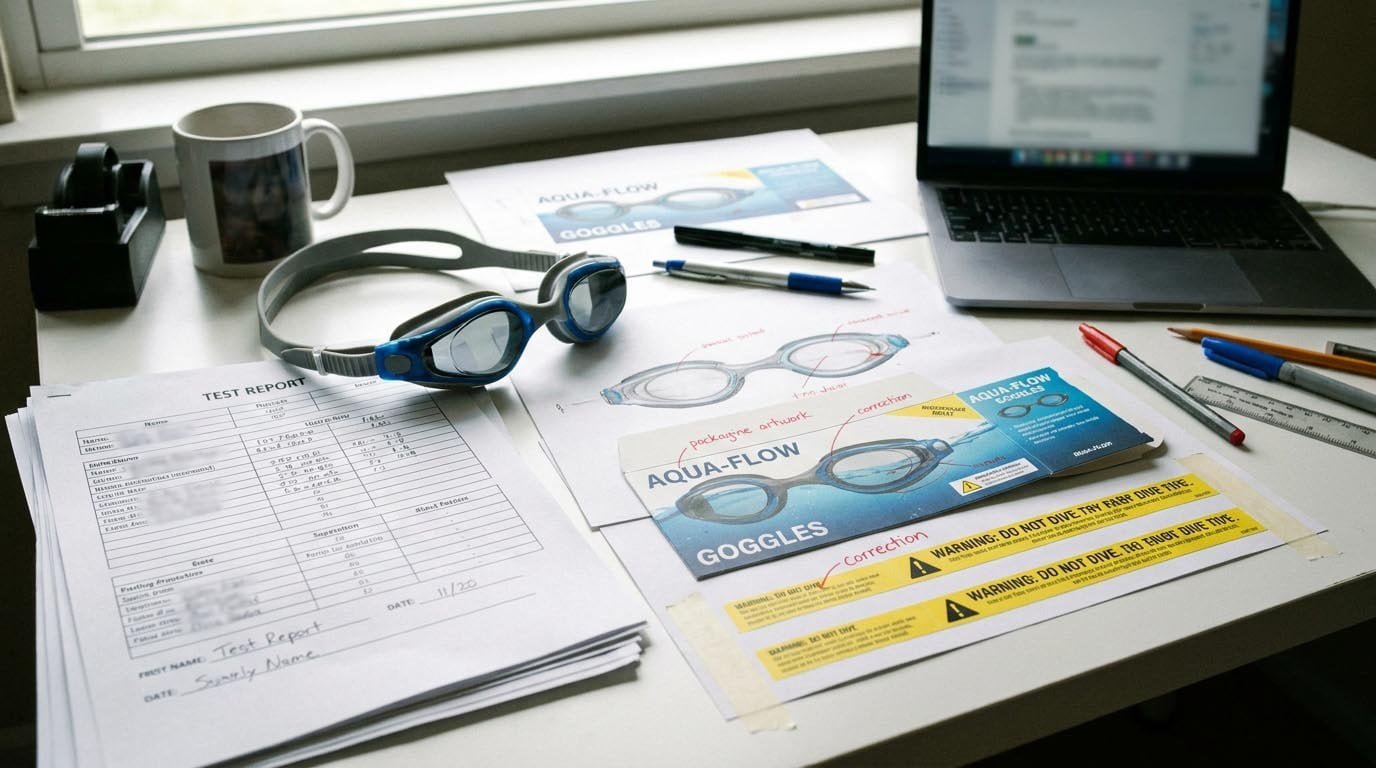
Key Areas to Review
1. General product safety
You want to confirm the product is reasonably safe for intended use, including:
- lens integrity
- material suitability
- workmanship
- absence of obvious hazards
- appropriate warnings and instructions where needed
2. Kids’ products
If your goggles are intended primarily for children 12 and under, extra obligations may apply under U.S. children’s product rules. These often involve:
- lead limits
- phthalate limits
- tracking labels
- testing and certification steps
This is one reason kids’ goggles can look simple commercially but become more complicated operationally.
3. California Proposition 65
If you plan to sell in California, or through retailers that ask for Prop 65 review, your materials and packaging may need additional screening.
4. Retailer-specific requirements
Many retailers and marketplaces have their own compliance documentation expectations, even beyond the legal minimum founders assume.
5. Claims and wording
Be very careful with health, safety, or medical-style claims. If you are selling prescription goggles or describing therapeutic benefits, get professional guidance before launch.
Best Practical Advice on Compliance
Before mass production, send the following to a qualified lab or compliance consultant:
- product description
- target age grade
- bill of materials
- packaging artwork
- warnings/instructions
- intended claims
- target channels
Ask them what testing and documentation are appropriate for that exact product.
That is far safer than following generic blog advice, including this article.
8. Quality Control: Do Not Rely Only on the Factory
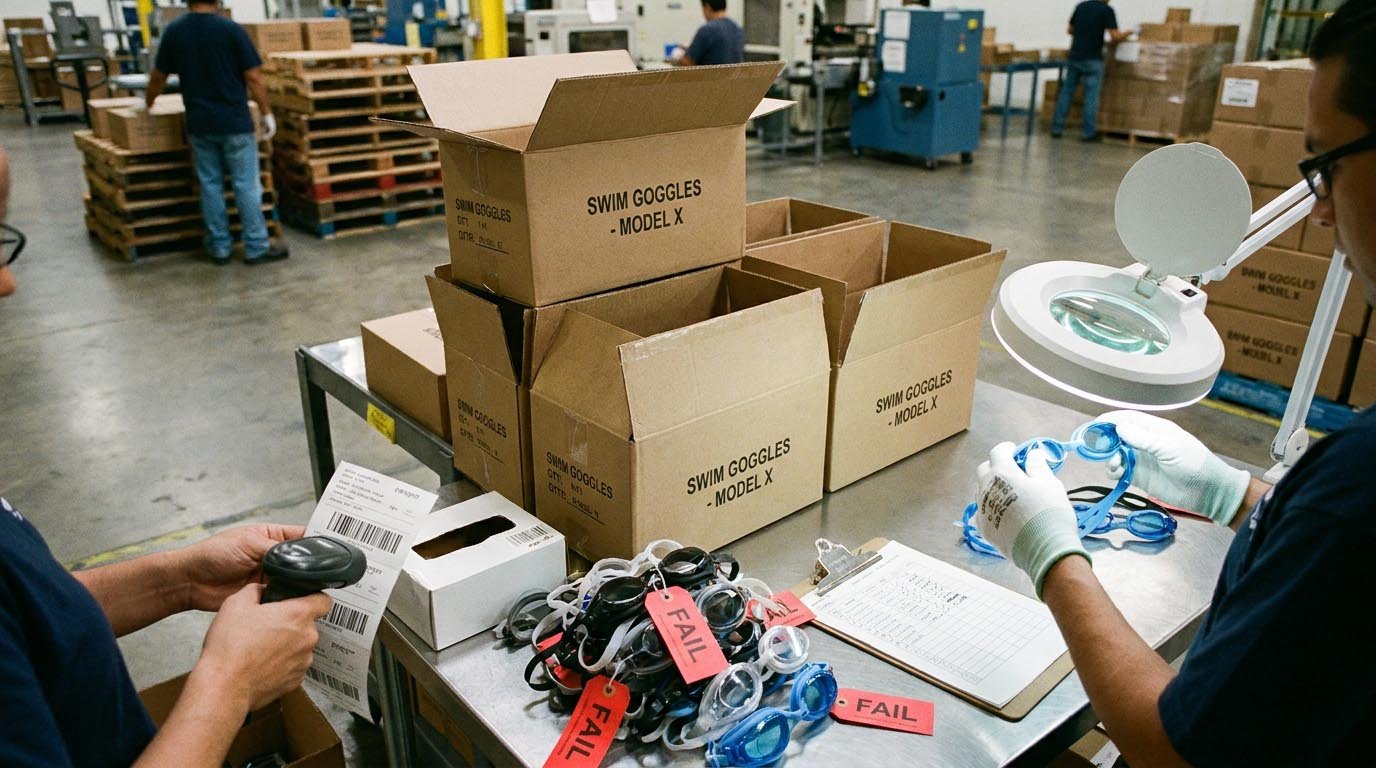
Even good suppliers can miss details.
For swim goggles, small deviations matter:
- wrong lens tint
- weak logo print
- gasket inconsistency
- scratches from packaging
- anti-fog contamination during assembly
- incorrect barcode placement
- mixed carton quantities
The product may still look “mostly right” and still cause major selling problems.
QC Process I Recommend
Pre-production approval
Confirm:
- final sample
- color standard
- lens tint
- packaging
- insert card
- barcode
- carton marks
During production inspection
A mid-production inspection can catch problems before everything is finished.
Pre-shipment inspection
Before final payment, check:
- quantity
- workmanship
- packaging accuracy
- assortment
- carton labeling
A third-party inspection is usually much cheaper than solving a full batch problem after arrival.
9. Pricing: Build From Landed Cost, Not Factory Quote
This is one of the biggest financial mistakes new founders make.
They get a factory quote, add a markup, and assume the business works. But the true cost includes much more:
- tooling amortization
- freight
- duty
- packaging
- warehousing
- fulfillment
- marketplace fees
- customer service
- returns
- ad spend
- replacement units
A goggle that looks cheap ex-factory may not be cheap once fully landed and sold.
A Simple Pricing Reality Check
If your unit cost is attractive but your return rate is high, you still lose.
If your product margin looks healthy but your customer acquisition cost is too high, you still lose.
If your retail price works on your website but leaves no room for wholesale, you may limit future channel expansion.
Typical Pricing Logic
Many early-stage DTC brands aim for:
- 3.5x-5x landed cost as a starting pricing framework
Wholesale often requires:
- enough margin for your brand
- plus enough margin for the retailer
There is no perfect universal multiplier, but if your pricing only works when everything goes right, it probably is not safe enough.
10. Best Sales Channels for a New Swim Goggle Brand
You do not need every channel at launch.
In fact, trying to build DTC, Amazon, wholesale, and team sales all at once often spreads a small brand too thin.
Best Starting Options
Your own website
Good for:
- brand control
- higher gross margin
- direct customer feedback
- better storytelling
Small Amazon test
Good for:
- demand validation
- search-based traffic
- review building
But I would be careful about scaling Amazon too early if your product still has unresolved fit or packaging issues. Amazon returns and review damage can expose weak execution quickly.
Swim clubs and teams
Good for:
- trust
- product feedback
- word-of-mouth
- repeat local visibility
Specialty swim retailers
Good for:
- credibility
- access to serious users
- better product education
My Usual Recommendation
For most new brands:
- launch on your own site
- gather real reviews and feedback
- test Amazon carefully
- approach swim retailers after you have some traction
That sequence usually gives you better control.
11. A Sample First-Year Launch Scenario
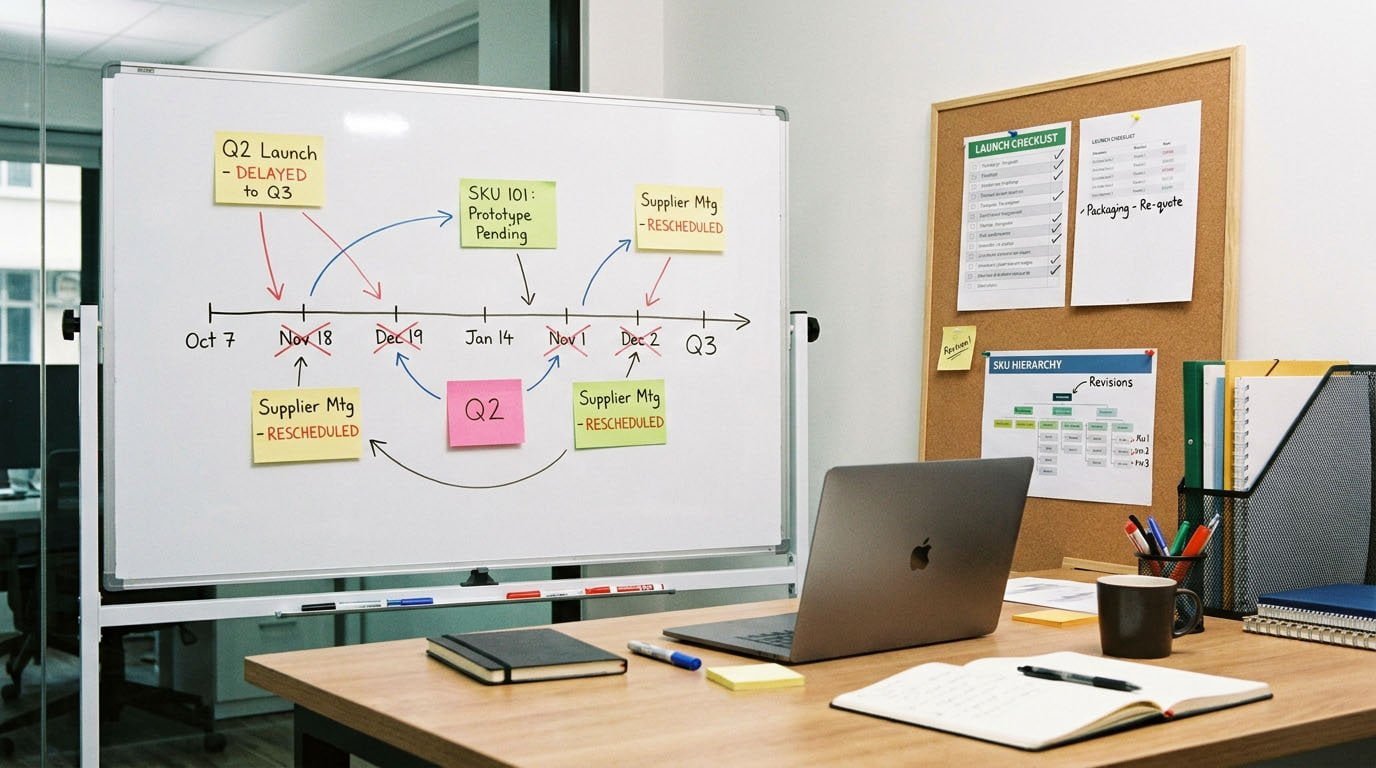
To make this more concrete, here is the kind of entry-level launch structure I would consider reasonable for a new brand.
Example: Small DTC-Focused Launch
Target: adult training swimmers
Line: 2 models
Model A: comfort-focused training goggle
Model B: lower-profile performance model
Initial order plan:
- 500 units of Model A across 2 colorways
- 500 units of Model B across 1-2 colorways
Development approach:
- semi-custom based on factory base models
- custom logo
- custom packaging
- upgraded anti-fog option
- included protective case only on premium model
Budget structure:
- samples and revisions
- packaging artwork
- moderate testing
- pre-shipment inspection
- ocean freight
- basic launch ad budget
- photo/video content for website
Main risks:
- ordering too many color variants
- overspending on packaging
- weak fit testing before production
- unrealistic ad efficiency assumptions
This kind of launch is not glamorous, but it is practical. Practical launches survive longer.
12. Timeline: How Long Does It Really Take?
Most founders underestimate the calendar.
A realistic timeline often looks like this:
| Phase | Typical Duration |
|---|---|
| market research and positioning | 2-4 weeks |
| supplier outreach and screening | 2-4 weeks |
| sampling and revisions | 4-8 weeks |
| packaging development | 2-4 weeks |
| testing and compliance review | 2-6 weeks |
| bulk production | 6-10 weeks |
| ocean shipping and import processing | 4-8 weeks |
| launch prep | 2-4 weeks |
So yes, 6-9 months is a practical expectation.
It can be faster, but fast launches usually cost more or take more risk.
13. How Much Capital Should You Prepare?
A workable first launch often lands around $25,000-$50,000, depending on:
- number of models
- packaging complexity
- testing needs
- shipping mode
- launch channel
- degree of customization
Example Budget Ranges
| Item | Typical Range |
|---|---|
| samples and revisions | $500-$2,500 |
| tooling / customization | $3,000-$8,000+ |
| first inventory | $8,000-$20,000+ |
| packaging | $1,000-$4,000 |
| testing and inspection | $1,500-$6,000+ |
| freight and customs | $2,000-$6,000 |
| website and creative assets | $1,000-$5,000 |
| launch marketing | $3,000-$10,000 |
| contingency | $3,000-$8,000 |
These are planning ranges based on typical small-scale projects. Your actual numbers may be lower for private label or higher for full custom development.
FAQ
Can I launch with 300 units??
Yes, selected existing swimming goggle models can support private-label or logo-customization projects starting from around 300 pieces. Custom-color or deeper development requires a higher commitment.
Should I start with custom molds?
Usually no, unless you already have demand, funding, and a clear product reason that justifies unique tooling.
Is kids’ swim eyewear a good opportunity?
Yes, but it often comes with more compliance complexity than new founders expect.
What causes the most returns?
In many cases:
- poor fit
- leaking
- anti-fog disappointment
- weak strap performance
- mismatch between product promise and actual use experience
Should I include a protective case?
It can improve perceived value and reduce scratches, especially in premium lines. But it also adds cost and packaging bulk.
How long until the business is profitable?
That depends heavily on your channel mix, marketing efficiency, and reorder performance. Many first-year brands focus more on validation and repeat purchase than immediate profit.
Final Thoughts
A swim goggle brand can absolutely be built in the U.S. market, but it rewards founders who stay disciplined.
If I had to reduce the whole process to a few practical rules, they would be these:
- choose one customer first
- start with fewer SKUs
- do more fit testing than you think you need
- do not overpromise anti-fog
- verify compliance before production
- price from landed cost, not factory quote
- avoid spending big on molds before demand is proven
That approach may not be the most exciting one, but it is usually the most survivable.
About the Author
[Your Name / Company Name] works with swim product development, sourcing, and OEM/ODM manufacturing projects. This article is based on practical experience with sampling, supplier evaluation, packaging, quality control, and export preparation for swim accessories.
If you publish this article on a company site, replace this section with a real author bio, company background, and links to your contact page or product pages.
Need Help With Swim Goggle OEM or Private Label Development?
If you are planning to launch a swim goggle brand and want help with:
- supplier selection
- sampling
- packaging
- MOQ planning
- quality control
- production lead time
contact us to discuss your project.