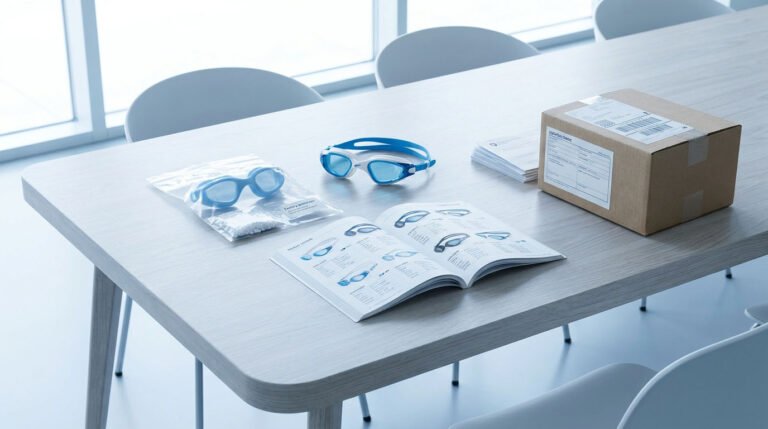
Sourcing bulk custom swim goggles can look simple at first. You send the same request to several factories, receive a few quotations, compare prices, and choose the lowest one.
In reality, this approach often creates more problems than it solves.
Two swimming goggles that look almost identical in photos may use different lens materials, anti-fog treatments, silicone grades, packaging, logo methods, or quality-control standards. One supplier may quote a basic standard model, while another includes upgraded coatings, custom colors, retail packaging, and additional inspection.
That is why the lowest quotation is not always the lowest-cost option.
The best way to compare bulk custom swim goggles is to first define your target market, product specifications, customization requirements, order quantity, packaging, and delivery expectations. Then ask every supplier to quote against the same configuration.
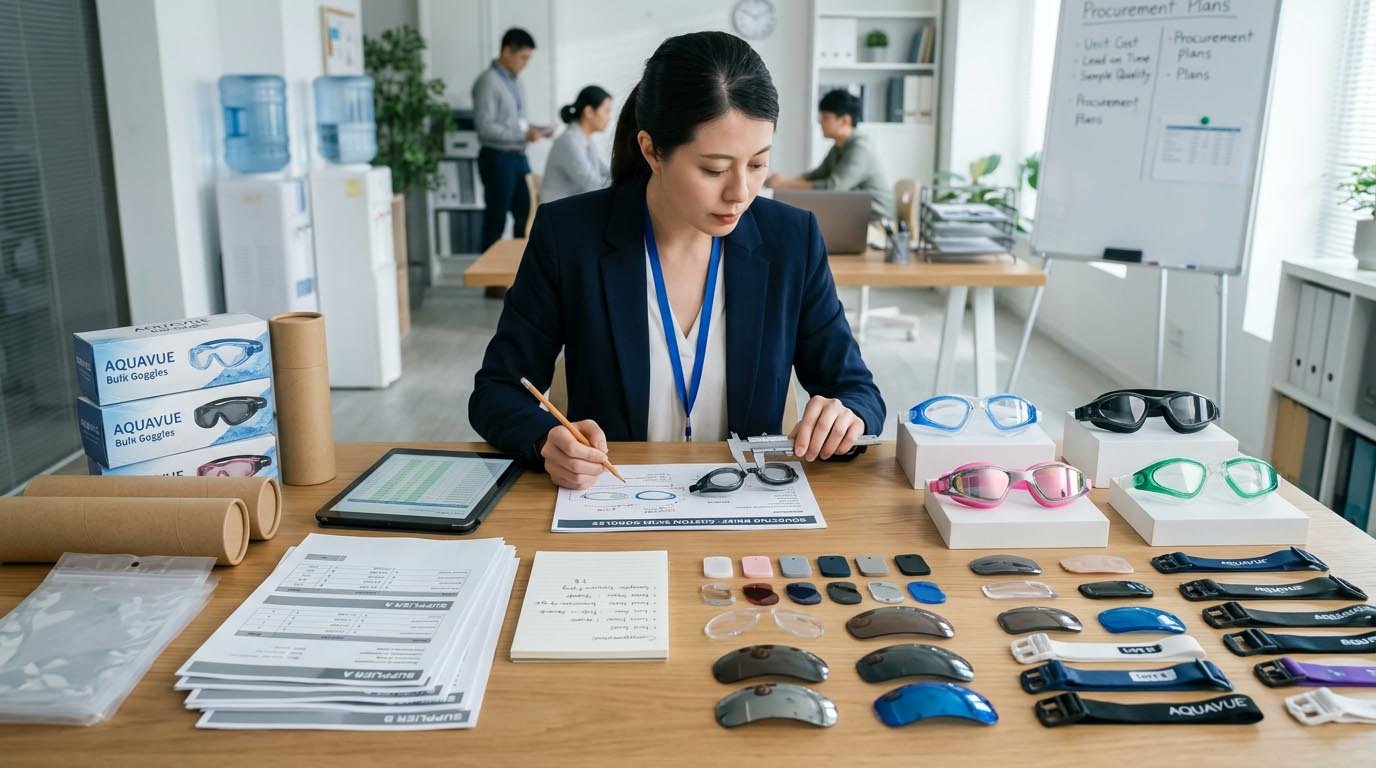
At Jerry, we work with international brands, importers, wholesalers, retailers, and private-label businesses developing custom swimming goggles and other water sports products. From our experience, most sourcing problems start before production begins.
They usually start with an unclear product brief.
This guide explains how to compare swimming goggle specifications, MOQ, pricing, customization, manufacturing capability, quality control, and lead times before placing a bulk order.
Quick Answers: Bulk Custom Swim Goggles at a Glance
If you are preparing to source custom swimming goggles, these are the most important points to understand first.
| Question | What You Should Know |
|---|---|
| What should I do before asking for a quote? | Define your target customer, product type, quantity, customization, packaging, and destination. |
| Are higher specifications always better? | No. Specifications should match your target market and retail price. |
| Why do factory quotations vary so much? | Suppliers may be quoting different materials, coatings, packaging, branding methods, or trade terms. |
| What affects MOQ? | Product model, custom colors, logo method, packaging, components, and whether new molds are required. |
| What affects unit price? | Materials, lens treatments, silicone parts, branding, packaging, quantity, tooling, and commercial terms. |
| What affects production time? | Sampling, mold development, materials, customization, coating, packaging, approval speed, and order size. |
| Should I order samples first? | Yes. Samples help confirm fit, appearance, materials, branding, and performance before mass production. |
| Existing mold or custom mold? | Existing molds reduce development time and cost. New molds provide greater product differentiation. |
What Should You Compare When Sourcing Bulk Custom Swim Goggles?
Many buyers start by asking:
What is your best price?
For a manufacturer, that question is difficult to answer accurately without more information.
A swimming goggle is not one standard product. The final cost depends on the construction, materials, lens treatment, silicone components, colors, logo application, packaging, quantity, and required testing.
Before comparing suppliers, make sure they are quoting the same product.
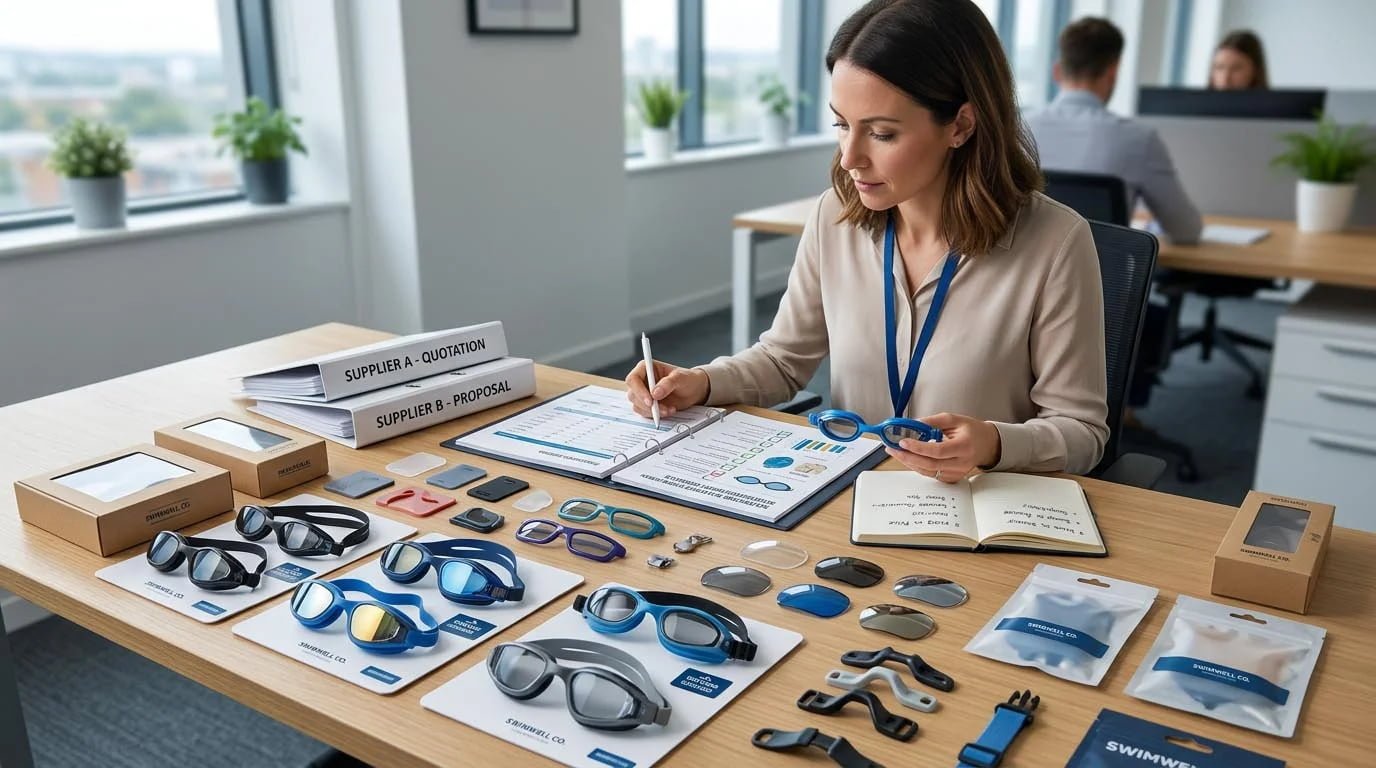
Start With a Clear Product Brief
A useful sourcing brief should answer questions such as:
- Who will use the goggles?
- Are they for racing, training, recreational swimming, open-water swimming, or children?
- What is your expected retail price?
- What sales channel will you use?
- What lens features do you need?
- Do you need anti-fog or UV protection?
- What frame or gasket material do you prefer?
- Do you need custom Pantone colors?
- Where should your logo appear?
- Do you need custom retail packaging?
- What quantity are you planning?
- Which country will the order ship to?
- When do you need the goods?
The clearer the brief, the easier it becomes to receive comparable quotations.
Normalize Every Supplier Quote
Before deciding that Supplier A is cheaper than Supplier B, compare these factors.
| Factor | Confirm Before Comparing |
|---|---|
| Product model | Same construction and design |
| Lens | Same material and treatment |
| Gasket | Same material and softness level |
| Strap | Same material and construction |
| Anti-fog | Same coating requirement |
| UV protection | Same performance requirement |
| Colors | Same standard or custom colors |
| Logo | Same application method |
| Packaging | Same packaging configuration |
| Quantity | Same order volume |
| Quality requirements | Same testing and inspection scope |
| Trade terms | EXW, FOB, DDP, or another agreed basis |
| Destination | Same shipping destination |
When all of these are aligned, the quotation becomes meaningful.
Which Swim Goggle Specifications Actually Matter?
One of the most common sourcing mistakes is assuming that the highest technical specification is automatically the best specification.
It is not.
The right specification depends on the customer who will eventually wear the goggles.
A competitive swimmer, a triathlete, a recreational swimmer, and a child learning to swim have very different requirements.
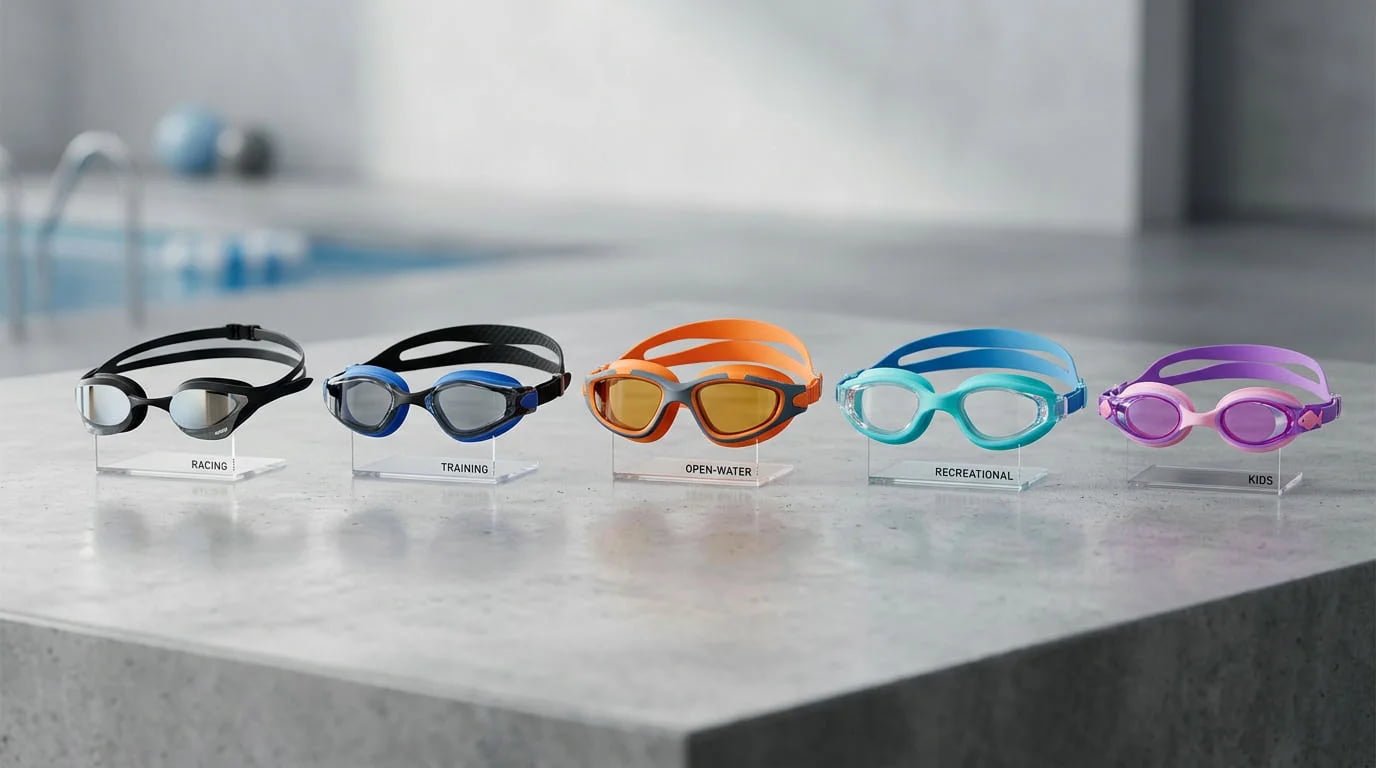
Racing Swim Goggles
Competition-oriented swimming goggles usually prioritize:
- Low-profile design
- Reduced water resistance
- Secure facial seal
- Stable straps
- Lightweight construction
- Clear underwater vision
- Adjustable nose bridges
- Secure fit during dives and turns
For these products, fit and hydrodynamic design may matter more than thick cushioning.
Training and Fitness Swim Goggles
Training goggles normally need to balance:
- Comfort
- Durability
- Anti-fog performance
- Easy adjustment
- Consistent sealing
- Long-session wearability
These goggles may be used several times per week, so comfort and reliability are especially important.
Open-Water and Triathlon Goggles
Open-water users may prioritize:
- Wider field of vision
- UV protection
- Glare reduction
- Mirrored or polarized lens options
- Comfortable seals
- Secure straps
- Visibility in changing outdoor conditions
A specification that works perfectly in an indoor swimming pool may not be ideal for open water.
Kids’ Swimming Goggles
Children’s swimming goggles often require additional attention to:
- Soft materials
- Comfortable seals
- Easy strap adjustment
- Flexible construction
- Impact resistance
- Skin-friendly materials
- Bright colors
- Age-appropriate sizing
The goal is not only performance.
Comfort and ease of use can be equally important.
Swim Goggle Specification Comparison
| Goggle Type | Main Priority | Common Design Focus |
|---|---|---|
| Racing | Speed and secure fit | Low-profile frame, secure straps |
| Training | Comfort and durability | Anti-fog, soft seal, adjustment |
| Open Water | Visibility and outdoor protection | Wide lens, UV, glare reduction |
| Recreational | Ease of use | Comfort, affordability |
| Kids | Safety and comfort | Soft materials, flexible design |
Which Lens Options Should You Consider?
The lens is one of the most important components of a swimming goggle.
Different lens options affect visibility, appearance, performance, cost, and target market positioning.
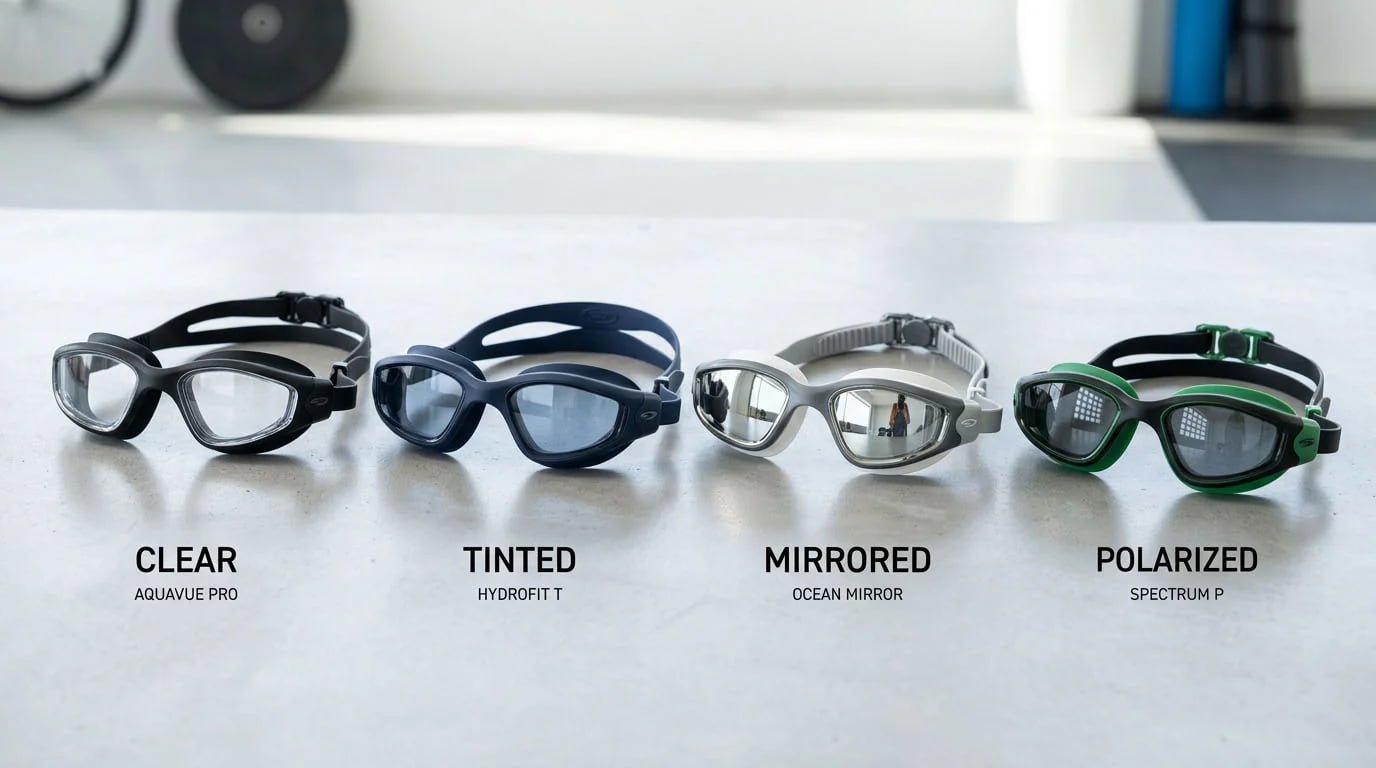
Clear Lenses
Clear lenses are commonly used for:
- Indoor pools
- Low-light environments
- Swim schools
- General training
They provide natural visibility without significantly reducing incoming light.
Tinted Lenses
Tinted lenses may be suitable for:
- Bright pools
- Outdoor use
- Recreational swimming
They can reduce brightness while maintaining reasonable visibility.
Mirrored Lenses
Mirrored lenses provide a more premium and performance-oriented appearance.
They are commonly considered for:
- Racing
- Outdoor swimming
- Competitive product lines
- Fashion-focused collections
The appearance of the mirror coating can also become part of the brand identity.
Polarized Lenses
Polarized lenses are often considered for outdoor swimming because they can help reduce surface glare.
They are particularly relevant to:
- Open-water swimmers
- Triathletes
- Outdoor training
- Premium swimming collections
UV Protection
UV protection becomes more important when the goggles are designed for outdoor use.
When evaluating UV-related claims, buyers should ask suppliers how the performance is tested rather than relying only on marketing language.
How Important Is Anti-Fog Performance?
Anti-fog is one of the most frequently requested swimming goggle features.
But not every anti-fog treatment is identical.
The coating formula, application process, curing process, lens preparation, storage, packaging, and use conditions can all influence actual performance.
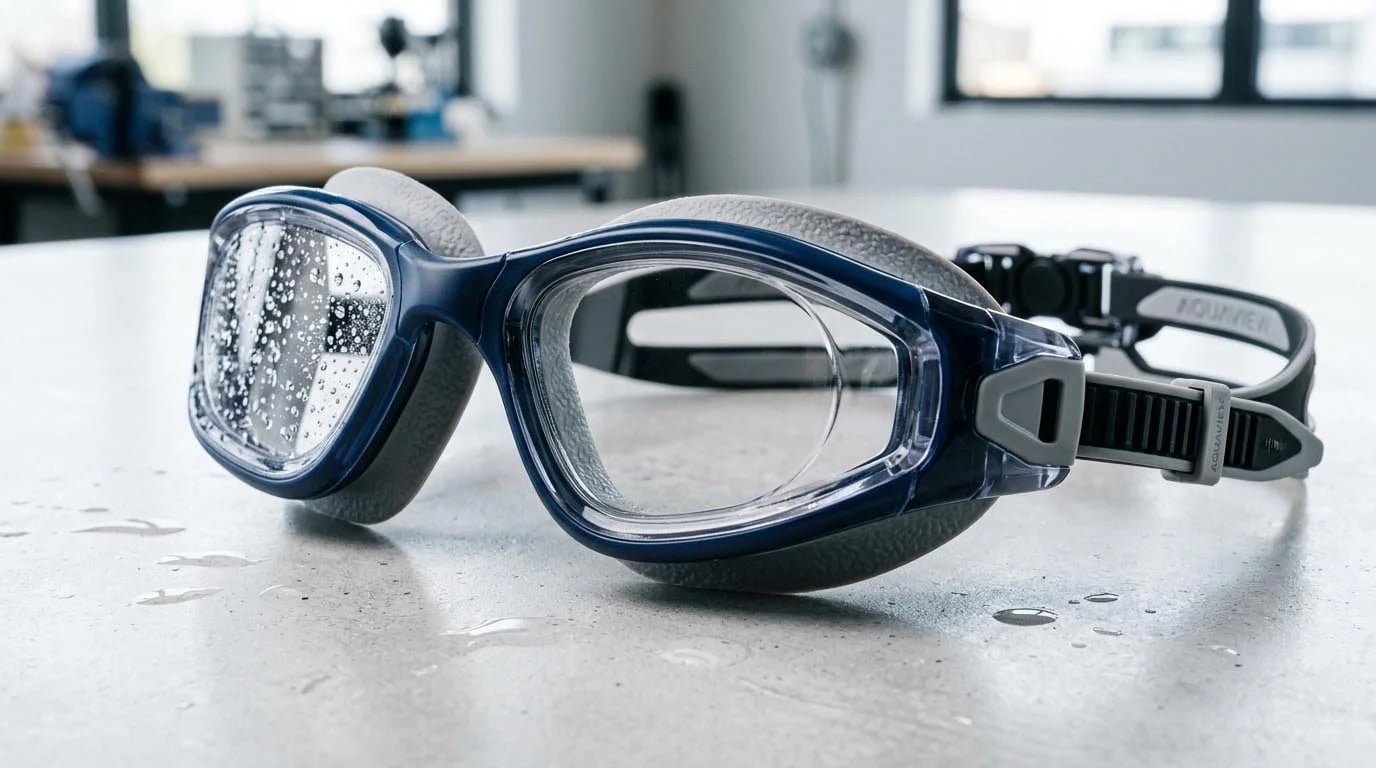
When comparing suppliers, ask:
- How is the anti-fog treatment applied?
- Is the process completed in-house?
- How is coating consistency controlled?
- How is performance tested?
- Are production samples tested before shipment?
- Are there special care instructions for the end customer?
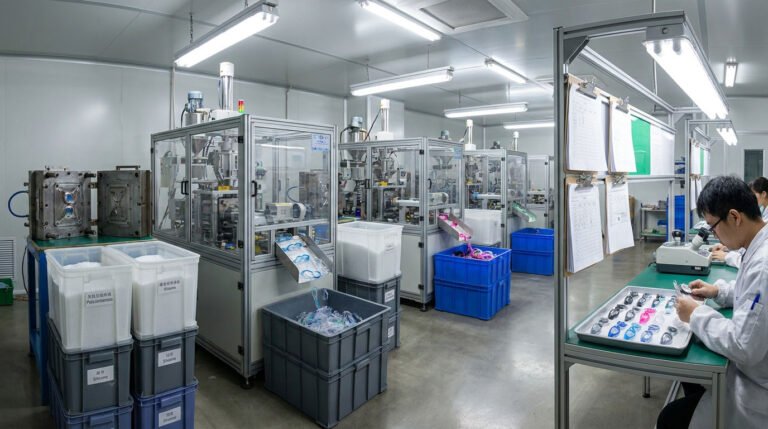
Jerry has in-house capabilities covering areas such as injection molding, silicone manufacturing, assembly, and anti-fog treatment, which allows more manufacturing stages to be coordinated under one production system.
For buyers, this can make communication and quality consistency easier than managing multiple disconnected subcontractors.
Strap, Gasket, and Frame Materials Matter Too
Buyers often focus heavily on the lens and overlook the parts that actually touch the swimmer’s face.
Comfort problems usually come from poor fit, hard materials, unstable straps, or inconsistent sealing rather than from the lens itself.
Gasket
The gasket influences:
- Facial comfort
- Water sealing
- Pressure around the eyes
- Fit across different face shapes
Strap
The strap affects:
- Fit stability
- Adjustment
- Comfort
- Durability
Single-strap and split-strap structures may suit different product categories.
Frame Construction
Frames can range from relatively rigid racing structures to softer integrated designs intended for comfort.
The correct choice depends on your customer.
How Does MOQ Work for Custom Swimming Goggles?
MOQ is rarely just one fixed number.
A buyer may see a standard product offered at one MOQ and then discover that the requirement changes after asking for:
- Custom Pantone colors
- Custom logos
- Custom packaging
- Special lens treatments
- Custom silicone components
- New molds
This is normal in manufacturing.
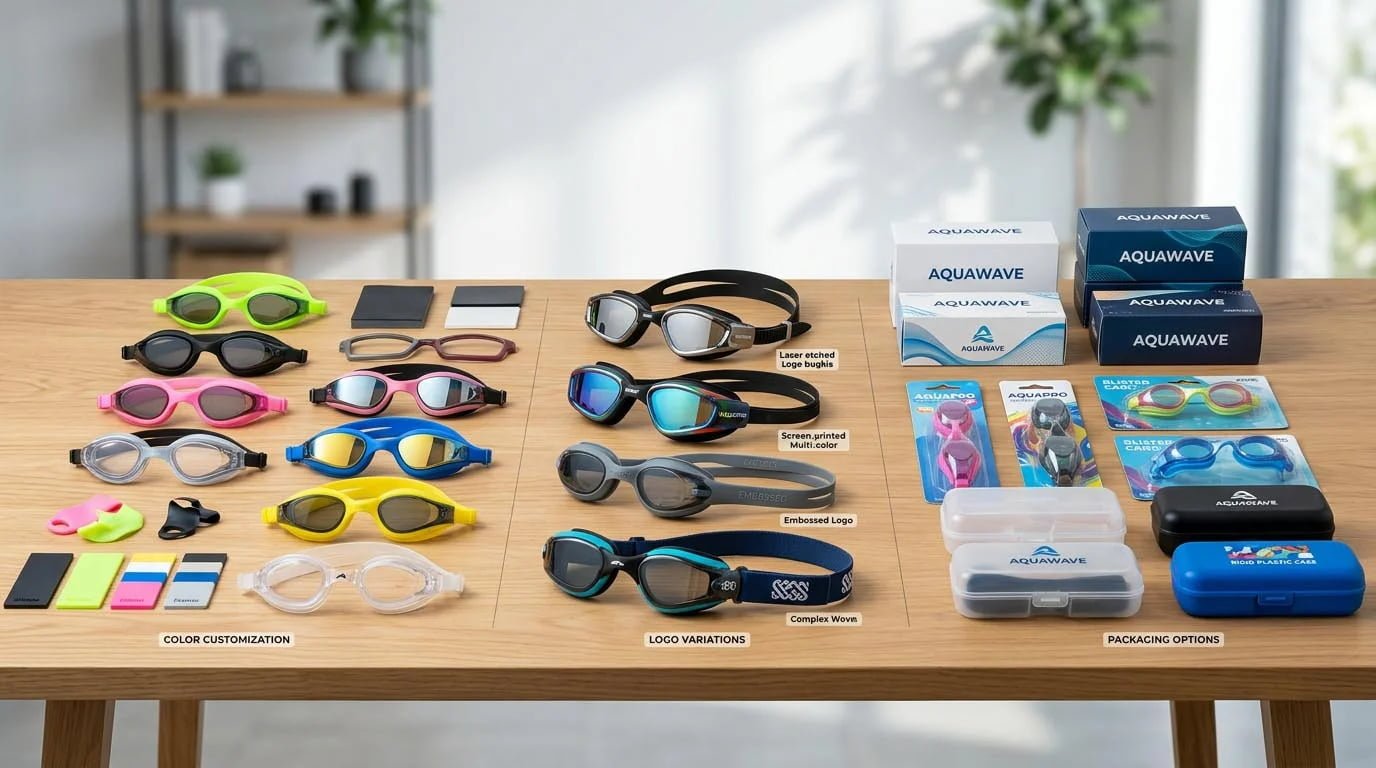
Why Custom Colors Affect MOQ
A special color may require:
- Custom color matching
- Material preparation
- Machine cleaning or setup
- Minimum material batches
- Production consistency checks
Therefore, splitting one small order into many colors can increase complexity.
Why Logo Method Affects MOQ
Different logo methods have different production requirements.
Depending on the product design, branding may involve methods such as:
- Pad printing
- Screen printing
- Printed lens branding
- Strap branding
- Molded logos
- Packaging branding
A simple printed logo usually requires less development than a custom molded component.
Why Packaging Can Increase MOQ
Sometimes the swimming goggles themselves can be produced at a relatively flexible quantity, while the packaging supplier requires a larger print run.
Examples include:
- Printed boxes
- Blister cards
- Retail inserts
- Custom cases
- Branded sleeves
This is why buyers should ask separately about:
product MOQ and packaging MOQ.
They are not always the same.
Existing Mold vs Custom Mold: Which Is Better?
This is an important decision for private-label brands.
Existing Mold
Using an existing model normally offers:
- Faster sampling
- Lower development cost
- Lower project risk
- Easier market testing
- Faster entry into production
You can still differentiate the product through:
- Colors
- Lens treatments
- Logo
- Strap design
- Packaging
- Accessories
For startups or new product lines, this can be a practical first step.
Custom Mold
A custom mold becomes more relevant when you want:
- A unique frame shape
- Proprietary lens geometry
- Original gasket structure
- Unique strap connection
- Stronger product differentiation
- Patentable design elements
- A product competitors cannot easily copy from a standard catalog
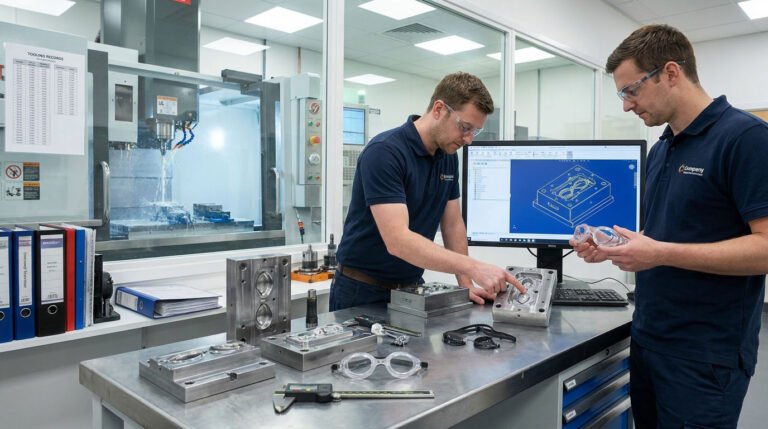
Jerry has in-house mold development and manufacturing capabilities, allowing OEM/ODM swimming goggle projects to move from product design and prototype development into tooling and mass production.
The trade-off is that custom development requires more time, engineering work, sampling, and investment than choosing an existing model.
How Should You Compare Custom Swim Goggle Pricing?
The biggest mistake is comparing only unit price.
Suppose one supplier gives you a lower quotation.
Before assuming that supplier is cheaper, ask what is included.
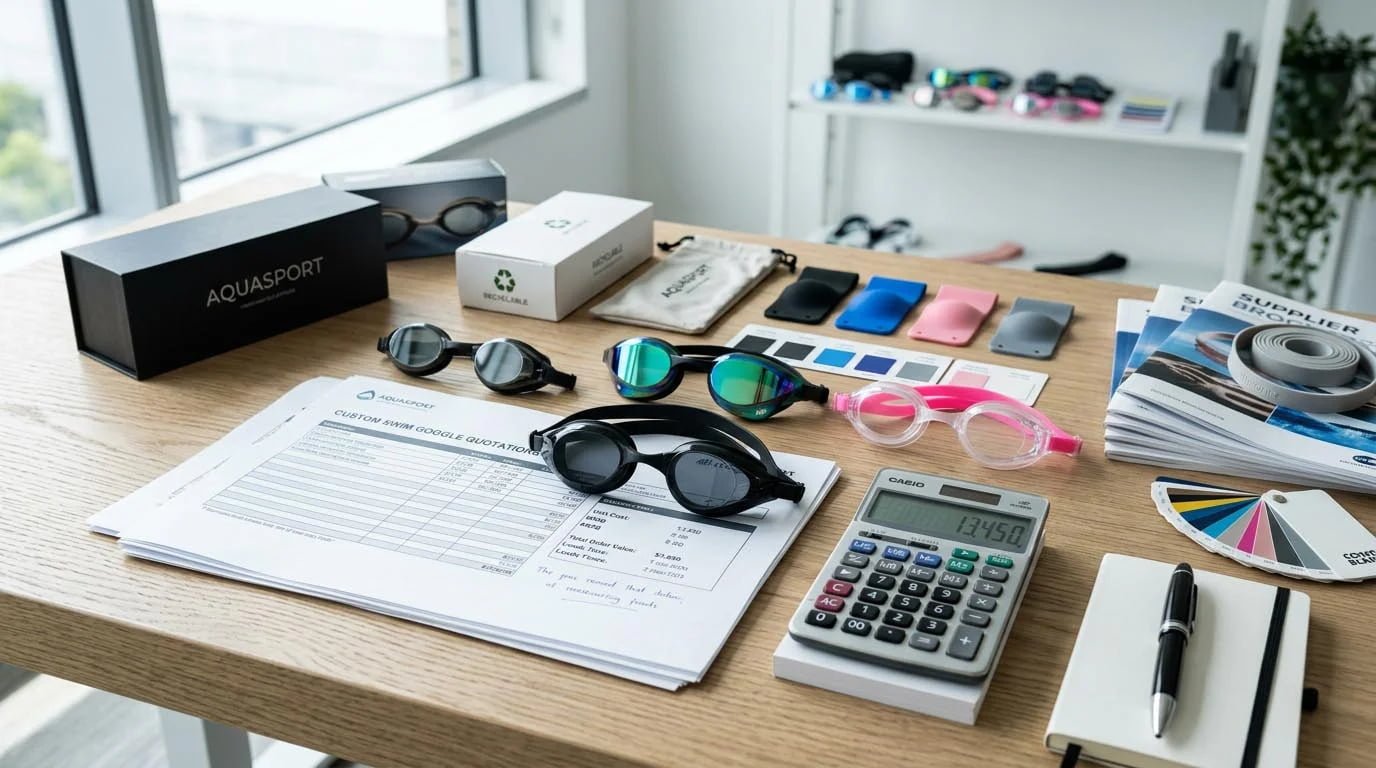
A complete quotation may include several cost areas.
| Cost Area | What to Confirm |
|---|---|
| Product | Exact model and materials |
| Lens | Material and coating |
| Anti-fog | Treatment type |
| Silicone parts | Material and color |
| Logo | Method and positions |
| Tooling | New mold or setup charges |
| Packaging | Standard or custom |
| Testing | Required performance checks |
| Inspection | Factory or third-party QC |
| Freight | Included or excluded |
| Trade terms | EXW, FOB, DDP, etc. |
Unit Price vs Total Project Cost
A lower unit price does not always mean a lower total sourcing cost.
Your total project may include:
**Product cost
- tooling
- logo setup
- custom packaging
- samples
- testing
- inspection
- freight
- import costs**
For larger programs, even small differences in specification can significantly affect the final budget.
Ask for a Structured Quotation
Instead of sending:
Please give me your best price.
A better RFQ would say:
We need a training swimming goggle for adults with polycarbonate lenses, anti-fog treatment, UV protection, soft silicone gasket and strap, two custom colors, logo on the strap, custom retail packaging, and an initial order quantity of X units. Please quote the product, logo, packaging, tooling if required, sample cost, lead time, and FOB terms separately.
This makes it much easier to compare suppliers fairly.
What Factors Affect Custom Swim Goggle Lead Time?
When suppliers discuss lead time, buyers need to know exactly what the clock includes.
Production does not necessarily begin on the day you send an inquiry.
A custom order may go through several stages.
Typical Development and Production Flow
1. Product Requirement Confirmation
The supplier confirms:
- Product type
- Specifications
- Colors
- Quantity
- Branding
- Packaging
- Testing
- Delivery requirements
2. Design and Engineering Review
For ODM or custom mold projects, engineers review product feasibility.
3. Mold Development
If new tooling is required, mold development takes place before final samples can be produced.
4. Prototype or Sample Production
During sample development and prototyping, buyers can confirm:
- Fit
- Materials
- Color
- Lens appearance
- Logo
- Packaging
- Overall quality
before moving into mass production.
5. Sample Approval
Mass production should normally begin after the key product details have been confirmed.
6. Material Preparation
The factory prepares lenses, silicone materials, pigments, packaging, and other components.
7. Injection Molding and Component Production
Depending on the design, different parts are molded or processed separately.
8. Lens Treatment
Processes may include:
- Anti-fog treatment
- UV-related treatment
- Tinting
- Mirror finishing
- Other required surface processes
9. Silicone Production
Gaskets and straps are manufactured according to the approved specification.
10. Branding
Logos and customized visual elements are applied.
11. Assembly
The separate components are assembled into finished swimming goggles.
12. Quality Control
Products are inspected and tested according to the agreed quality requirements.
13. Packaging
Approved finished goods are packed into standard or customized packaging.
14. Shipment
After final inspection and packaging, the finished order enters the shipping and delivery stage according to the agreed freight method, destination, and commercial terms.
What Usually Causes Production Delays?
Not every delay comes from the factory production line.
Common causes can include:
- Slow sample approval
- Repeated design revisions
- Late packaging artwork
- Custom color changes
- New mold modifications
- Material availability
- Special coating requirements
- Packaging supplier schedules
- Failed QC requiring correction
- Shipping or customs delays
This is why brands should plan backward from the expected product launch date.
Allowing reasonable time for sample review and revisions is usually safer than planning around the shortest possible production estimate.
How Should You Evaluate a Swimming Goggles Manufacturer?
Price and product samples matter, but they are not the only things buyers should examine.
A good manufacturing partner should also have the systems needed to reproduce the approved sample consistently at scale.
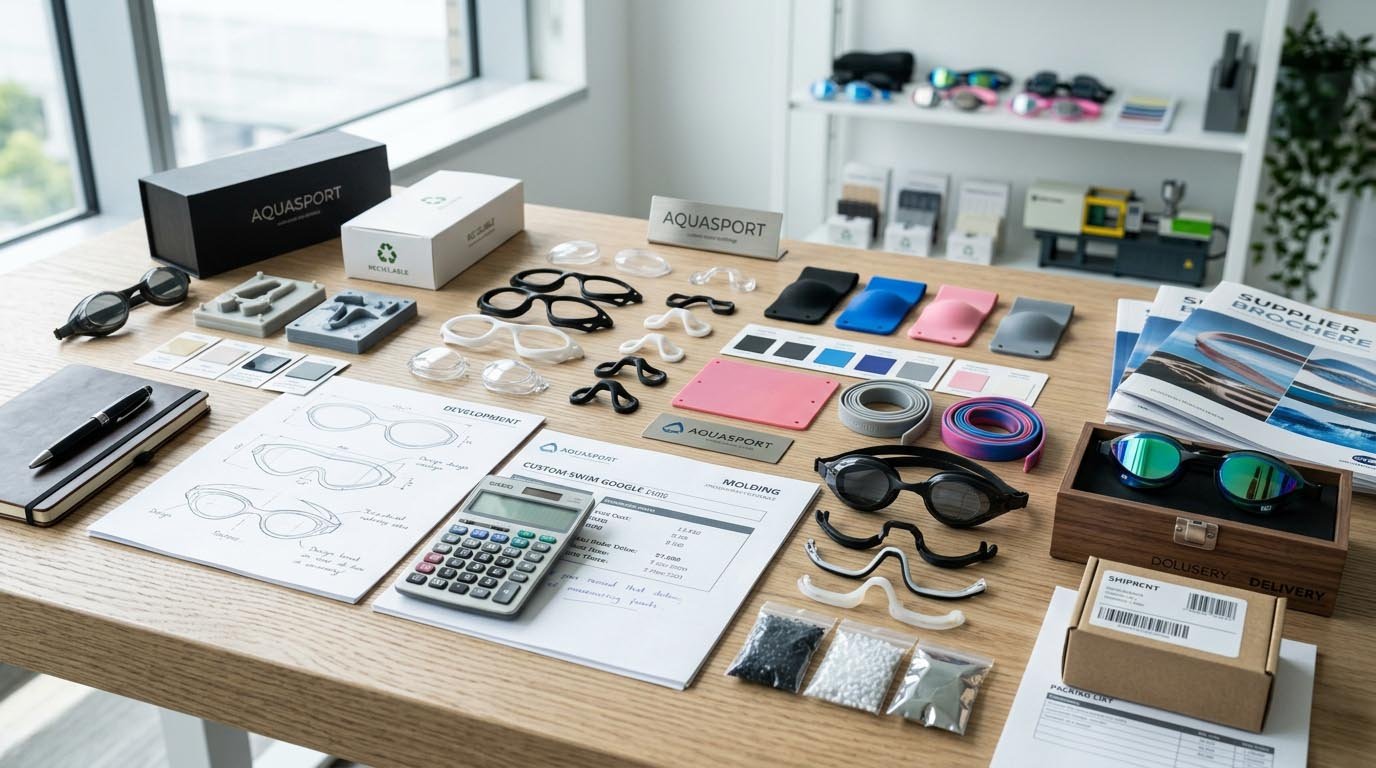
Here are several areas worth checking.
1. Manufacturing Experience
Ask how long the supplier has manufactured sports or swimming products.
Experience becomes especially valuable when the project involves:
- Silicone components
- Optical parts
- Anti-fog treatments
- Injection molding
- Custom tooling
- Large production runs
Jerry has 30 years of experience in sports gear and more than 20 years of factory manufacturing experience.
2. In-House Manufacturing Capability
Ask which production stages are performed internally.
Jerry’s integrated capabilities include:
- Product development
- R&D
- Mold making
- Injection molding
- Silicone manufacturing
- Anti-fog treatment
- Assembly
- Quality control
Greater in-house integration can help reduce coordination problems between multiple suppliers.
3. Production Capacity
Capacity becomes important when your business grows.
Jerry operates an 8,668 m² manufacturing facility with 56 production machines and daily capacity exceeding 100,000 units.
Large-scale capacity does not only matter for large retailers.
It also gives growing brands more confidence that a supplier can support future expansion.
4. Certifications and Factory Compliance
Factory certifications can be especially important for:
- Retail chains
- International brands
- Importers
- Corporate procurement teams
Jerry’s factory holds certifications including:
- BSCI
- FCCA
- SCAN
Buyers should still confirm which certificates, reports, or product-specific tests are relevant to their own country and sales channel.
5. Product Development Capability
ODM capability becomes important when you want more than a catalog product.
Evaluate whether the manufacturer can support:
- Design development
- Prototype sampling
- Material selection
- Color development
- Mold engineering
- Performance improvement
- Packaging development
Jerry holds more than 100 patented technologies and designs covering different areas of sports and outdoor products.
6. Quality Control
Ask what happens before the finished products are shipped.
A complete quality assurance process may include:
- Incoming material inspection
- In-process inspection
- Visual inspection
- Assembly checks
- Color consistency checks
- Durability checks
- Anti-fog performance checks
- Impact-related testing
- Comfort evaluation
- Final inspection
The important point is not simply whether the factory says it has QC.
You should understand what is checked, when it is checked, and how problems are handled.
What Quality Tests Should You Discuss With a Supplier?
Different markets and product categories may require different testing.
Therefore, buyers should avoid assuming that one universal test package fits every product.
Depending on your design and target market, you may discuss areas such as:
Anti-Fog Performance
Check whether the lens remains usable under expected swimming conditions.
Impact Resistance
Evaluate whether the lens and frame construction meet the required safety expectations.
Strap Durability
Check whether repeated stretching and adjustment affect performance.
Seal and Leakage
Evaluate how the goggles perform when worn correctly.
Color Consistency
This becomes particularly important for custom Pantone colors and branded product collections.
Comfort
Fit, gasket softness, strap pressure, and nose bridge design all affect user experience.
Packaging Inspection
Retail packaging should also be checked for printing, barcode, labeling, and assembly accuracy.
Private Label vs Full OEM/ODM Swimming Goggles
Not every brand needs a completely original product.
For brands that want a faster route to market, private-label swimming goggles can provide a practical starting point using proven products with customized branding, colors, and packaging.
There are several levels of customization.
Level 1: Existing Product + Logo
Best for:
- Fast market entry
- Smaller product launches
- Market testing
Customization may include logo and packaging.
Level 2: Existing Product + Custom Colors
This adds stronger brand differentiation through:
- Custom frame colors
- Silicone colors
- Strap colors
- Lens appearance
- Packaging
Level 3: Existing Platform + Modified Components
Brands may adjust selected components or design elements while using an established product platform.
Level 4: Full Custom OEM/ODM Product
This may include:
- Original industrial design
- New molds
- Custom lens geometry
- Custom frame
- Custom gasket
- Custom straps
- Proprietary appearance
- Custom packaging
This route normally offers the strongest differentiation but requires the greatest development commitment.
How Can Startups Reduce Sourcing Risk?
A new brand does not always need to begin with the most complicated product.
One practical approach is:
Phase 1: Select an existing proven model.
Phase 2: Customize colors and logo.
Phase 3: Develop branded packaging.
Phase 4: Gather customer feedback.
Phase 5: Create a more customized product once sales are validated.
This approach reduces early development risk while still allowing the brand to build a recognizable product identity.
How Can Established Brands Approach Custom Development?
Established brands often have different priorities.
They may already know:
- Their target retail price
- Their customer profile
- Their product positioning
- Their preferred fit
- Their packaging requirements
- Their annual volume
For these buyers, OEM/ODM development can focus more heavily on:
- Proprietary design
- Performance differentiation
- Exclusive molds
- Custom materials
- Improved comfort
- Patentable features
- Manufacturing efficiency
Jerry’s integrated mold development, injection molding, silicone production, anti-fog processing, and assembly capabilities are especially relevant to this type of project.
Bulk Custom Swim Goggles Supplier Comparison Checklist
Before choosing a supplier, use a checklist like this.
| Category | Questions to Ask |
|---|---|
| Factory | Are you the manufacturer or a trading company? |
| Experience | How long have you produced swimming goggles? |
| Product | Which models fit my target market? |
| Lens | Which lens materials and treatments are available? |
| Anti-fog | How is the coating applied and tested? |
| Silicone | Which materials are available for gasket and strap? |
| Colors | Can you match custom colors? |
| Branding | Which logo methods are available? |
| Mold | Can you develop custom tooling? |
| MOQ | Which customization options change the MOQ? |
| Packaging | What standard and custom options are available? |
| Sampling | How does the approval process work? |
| QC | Which inspections are performed? |
| Certification | Which factory and product documents are available? |
| Capacity | Can the factory support future volume growth? |
| Lead time | What stages are included in the quoted timeline? |
| Shipping | Which trade terms are offered? |
Frequently Asked Questions About Bulk Custom Swim Goggles
What is the MOQ for custom swimming goggles?
There is no single MOQ that applies to every project.
MOQ depends on factors such as:
- Product model
- Existing or new mold
- Custom colors
- Logo method
- Lens treatment
- Silicone components
- Packaging
- Number of colorways
Ask the supplier to break the MOQ down by customization option.
Can I put my logo on swimming goggles?
Yes.
Depending on the product structure, logos may be applied to areas such as:
- Strap
- Lens
- Frame
- Packaging
- Case
The best method depends on the material, design, quantity, and desired appearance.
Can swimming goggles be made in custom Pantone colors?
In many cases, yes.
However, custom color development can affect MOQ, sampling, production setup, and lead time.
Always approve physical samples when precise brand-color matching is important.
Can I create my own swimming goggle mold?
Yes, if the manufacturer has tooling and development capabilities.
A custom mold is useful when you want a more original product instead of customizing an existing catalog model.
Are samples necessary before mass production?
For customized products, samples are strongly recommended.
They help confirm:
- Fit
- Materials
- Color
- Branding
- Lens appearance
- Packaging
- Construction
Skipping sample approval can increase production risk.
Why do swimming goggle quotations vary so much between suppliers?
The quotations may not be based on the same configuration.
Differences may come from:
- Lens quality
- Anti-fog treatment
- Silicone grade
- Packaging
- Branding
- Inspection
- Testing
- Quantity
- Trade terms
- Tooling
Normalize the specifications first, then compare price.
Should I choose the supplier with the lowest unit price?
Not automatically.
A better decision considers:
- Product consistency
- Manufacturing capability
- Communication
- Quality control
- Customization
- Lead time
- Compliance
- Capacity
- Total project cost
What information should I send when requesting a quote?
Ideally include:
- Product type
- Target customer
- Quantity
- Target market
- Required lens
- Anti-fog requirements
- Colors
- Logo
- Packaging
- Custom mold requirements
- Destination country
- Target delivery date
This allows the manufacturer to give a much more useful quotation.
Conclusion
Sourcing bulk custom swim goggles is not simply a search for the lowest factory price.
The real goal is to find a manufacturing solution that fits your:
- Target customer
- Product positioning
- Specifications
- Budget
- Order quantity
- Branding
- Packaging
- Quality expectations
- Delivery schedule
Start with a clear product brief.
Then ask every supplier to quote against the same configuration.
Compare the lens, anti-fog treatment, silicone components, customization, MOQ, packaging, tooling, quality-control system, lead time, and commercial terms together.
That gives you a much clearer picture than comparing unit price alone.
With 30 years of sports gear experience, more than 20 years of factory manufacturing expertise, integrated mold development, injection molding, silicone manufacturing, anti-fog treatment, assembly, and quality control, Jerry supports OEM, ODM, and private-label swimming goggle programs for brands, distributors, retailers, and importers worldwide.
If you are developing a new swimming goggle collection, request a custom swim goggle quotation and send us your target market, product concept, quantity, branding requirements, and packaging expectations.
Our team can help you evaluate the most practical route—from an existing private-label model to a fully customized OEM/ODM swimming goggle project.