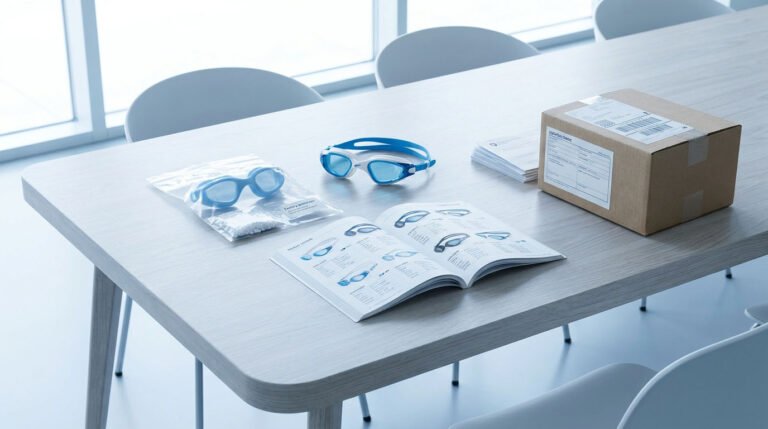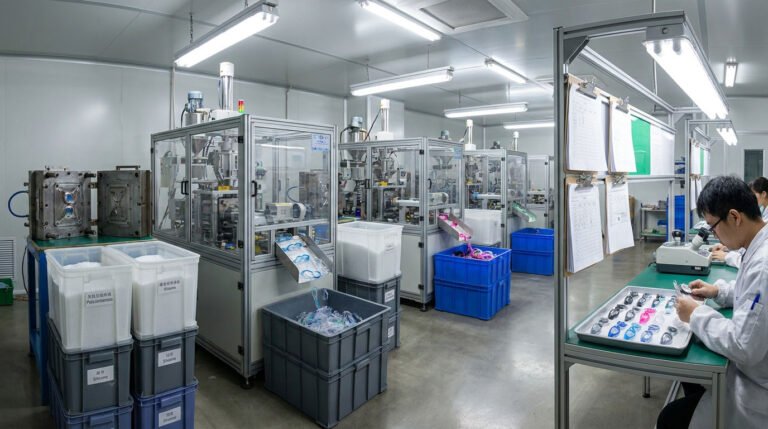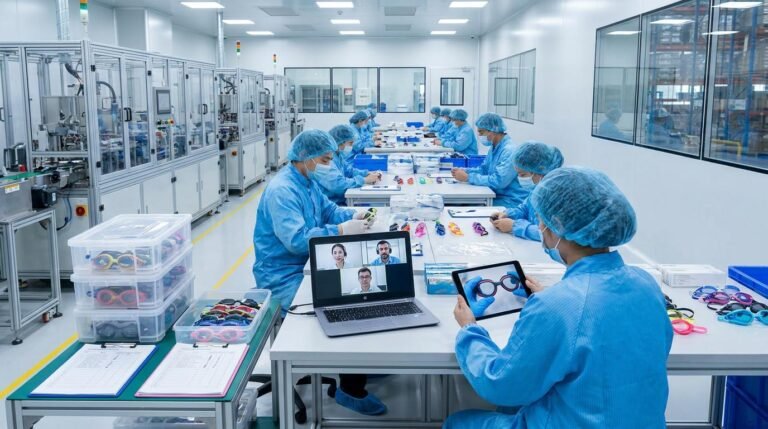
A swimming goggle manufacturer may claim to make molds in-house, but CNC machines, workshop photos, and a factory tour do not prove that your custom tooling will actually be manufactured there.
Some factories design molds internally but outsource cavity machining, optical polishing, or specialized tooling operations. Outsourcing is not necessarily a problem. The real risk is an undisclosed process that leaves buyers uncertain about engineering responsibility, revisions, and tooling control.
To verify in-house mold making, trace one real tooling project through CAD design, CAM programming, machining records, mold assembly, trial samples, and engineering modifications. Match project identifiers, dates, personnel, and physical tooling. Confirm which operations are performed internally and which are subcontracted.
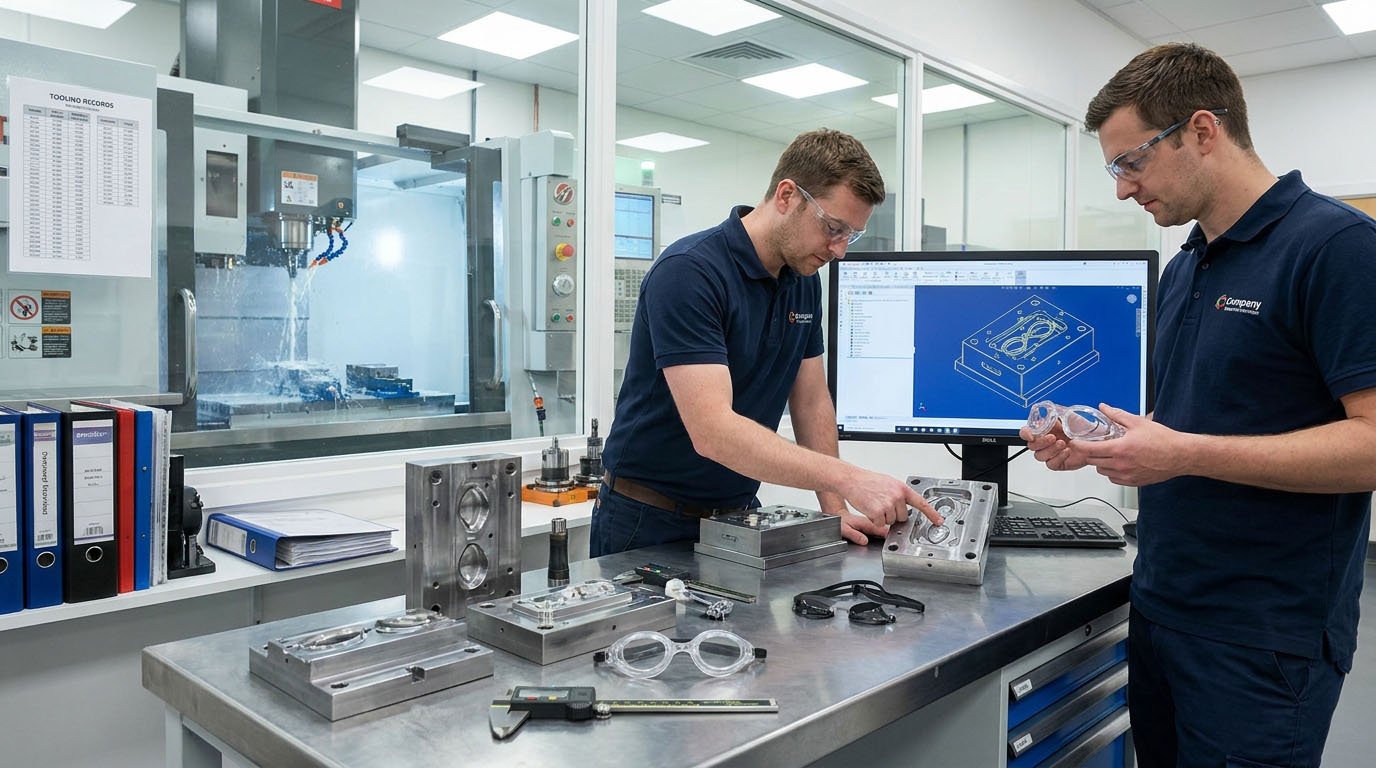
This guide provides six practical verification steps for swimming goggle brands, importers, and OEM/ODM sourcing teams evaluating a manufacturer’s mold-making capabilities.
Quick Answer: How Do You Verify In-House Mold Making?
The most reliable approach is to examine a connected evidence chain from one actual mold-development project—not isolated photographs or equipment lists.
| Verification Area | What Buyers Should Confirm |
|---|---|
| Manufacturing scope | Which mold-making operations are performed internally |
| Engineering | CAD/DFM files and responsible engineers |
| Machining | CAM setups, CNC/EDM work orders, and machining records |
| Workshop | Physical molds, equipment, and personnel match the records |
| Mold trials | Trial samples correspond to documented tooling revisions |
| Engineering changes | Defects, modifications, and approvals are traceable |
Key principle: Equipment ownership does not automatically prove manufacturing capability. A credible factory should demonstrate control over the mold-development work it claims to perform.
In-house mold making is also different from in-house injection molding.
- Mold making concerns the design, machining, assembly, and modification of tooling.
- Injection molding concerns using completed tooling to manufacture plastic or other molded components.
For the separate production-stage verification process, see our guide on how to verify in-house injection molding at a swimming goggle factory.
Step 1: Define What the Factory Actually Makes In-House
Before reviewing machinery or engineering files, establish the supplier’s exact mold-making scope.
The term "in-house mold making" can describe different levels of capability.
One manufacturer may design, machine, assemble, and modify molds internally. Another may perform design and assembly but subcontract precision cavity machining or surface finishing.
Both arrangements can be commercially workable when responsibilities are disclosed and controlled.
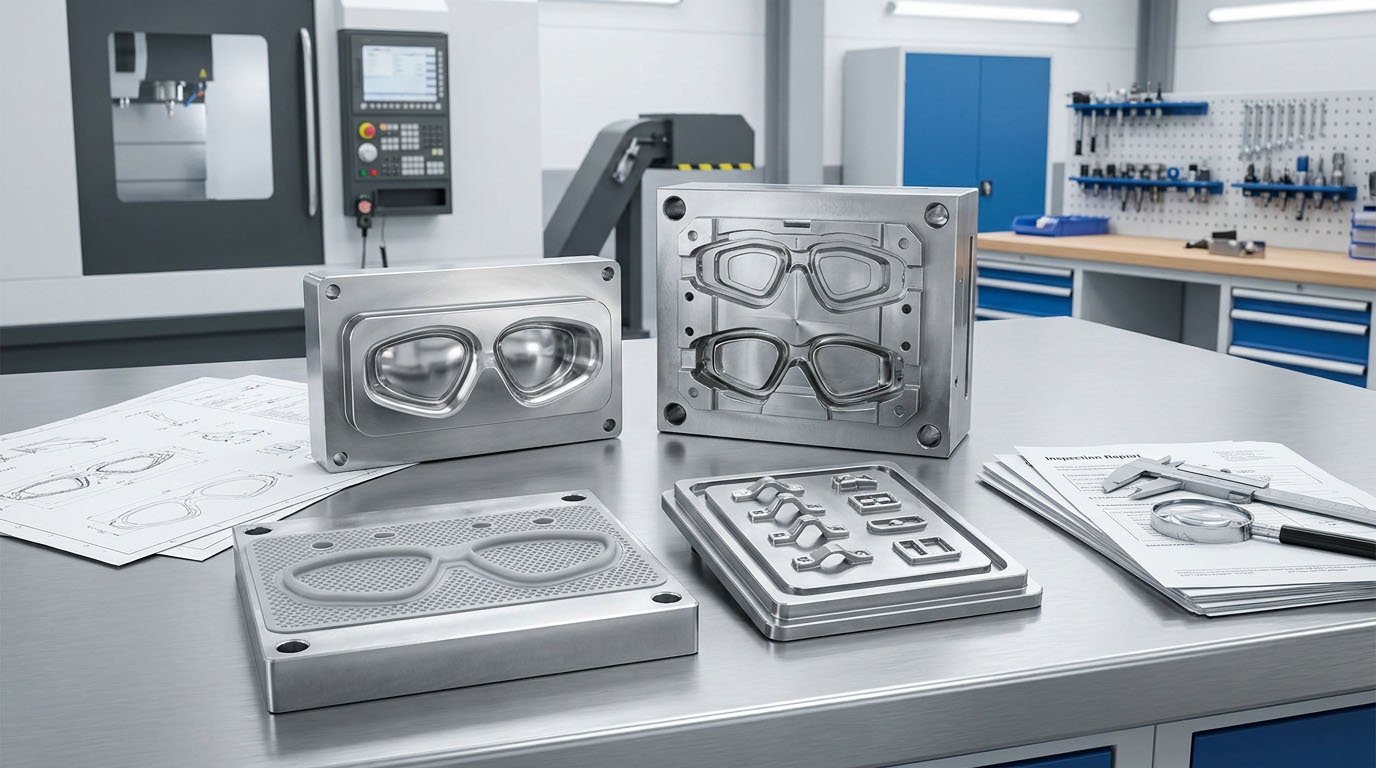
Check Each Mold-Making Stage
Ask the supplier to identify who performs the following operations:
| Mold-Making Stage | Evidence to Request |
|---|---|
| Mold design and DFM | Engineering drawings and design review records |
| CAM programming | Setup sheets and machining programs |
| CNC/EDM machining | Equipment records and machining work orders |
| Mold assembly and fitting | Assembly records and responsible technicians |
| Specialized finishing | Internal records or subcontractor documentation |
| Trial and correction | Trial reports and modification records |
Specialized processes, such as heat treatment or certain optical finishing operations, may legitimately be outsourced.
The important question is whether the supplier can identify the responsible party, explain the handoff, and maintain traceability.
Verify Capabilities for Swimming Goggle Components
Different goggle components can require different tooling expertise.
| Component | Tooling Consideration | Verification Focus |
|---|---|---|
| PC lens | Optical cavity geometry and surface finish | Cavity machining and finishing records |
| Frame / eye cup | Geometry and assembly interfaces | CAD/CAM and mold correction records |
| Silicone gasket | Sealing geometry and material-specific tooling | Tool design, fabrication, and trial evidence |
| Nose bridge / buckle | Small precision features | Tool drawings and machining records |
For example, a supplier capable of machining basic plastic frame molds may still depend on a specialist for high-quality optical lens inserts.
That does not automatically disqualify the supplier. However, buyers should know who performs the critical work before approving tooling development.
Buyer takeaway: Verify the manufacturing stages and component types relevant to your actual product, rather than accepting a general claim of "full in-house tooling."
Step 2: Verify CAD, CAM, and Machining Evidence
This is the most important technical verification step.
A supplier may show impressive mold drawings and machinery without proving that the same workshop manufactured the tooling.
The solution is to select one completed or recently modified goggle mold and follow its engineering records.
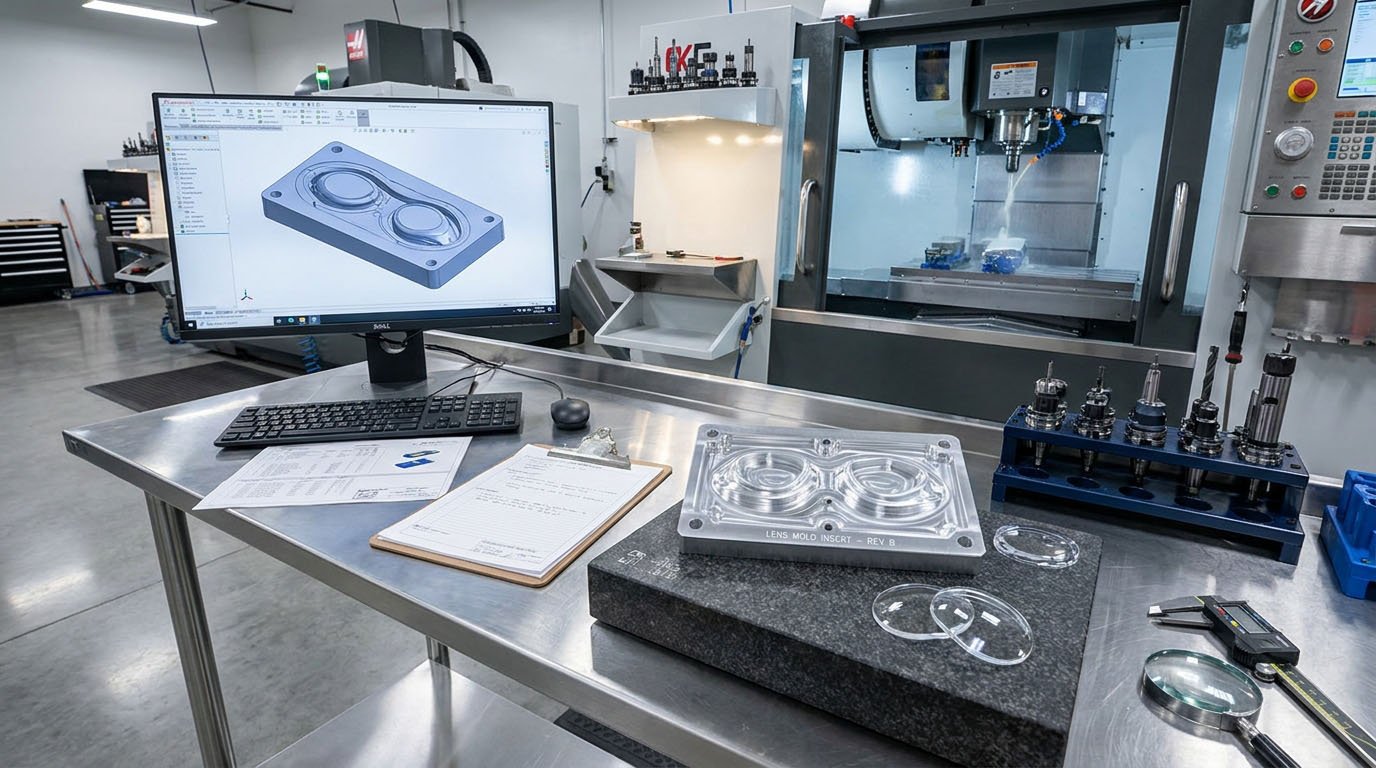
Follow One Project-Level Evidence Chain
A useful mold-making evidence chain is:
DFM / CAD Design → CAM Programming → Machining Work Order → Mold Assembly → Trial Samples → Engineering Modification
Each stage should connect to the same mold or project identifier.
Check the Core Engineering Documents
| Document | What to Verify | Warning Signal |
|---|---|---|
| CAD / DFM | Relevant component, design version, and responsible team | Files cannot be linked to the reviewed mold |
| CAM setup | Matching cavity or insert, tools, and work order | No connection to actual machining |
| Machining record | Equipment, job identification, and processing dates | Records relate to unrelated tooling |
| Assembly record | Tool identification and assembly responsibility | No identifiable assembly history |
| Modification log | Design change linked to the tool revision | Changes cannot be explained |
Not every factory uses the same documentation system. Some maintain digital manufacturing records, while others use controlled paper work orders.
The objective is consistency and traceability—not requiring every supplier to operate the same software.
Example: Verifying a PC Lens Mold
Suppose a supplier claims to have manufactured a custom swimming goggle lens mold internally.
Ask for evidence connecting:
- The approved lens geometry and mold design.
- The CAM setup for the relevant lens cavity or insert.
- The machining work order and responsible equipment.
- The completed mold or insert identification.
- A corresponding trial sample and inspection record.
Project identifiers and revision histories should agree, while dates should follow a reasonable sequence.
A mismatch does not automatically prove outsourcing. It may result from documentation errors, parallel operations, or legitimate external processing.
However, unresolved discrepancies should be investigated before accepting the claim.
Protect Confidential Engineering Information
Factories may reasonably restrict access to proprietary CAD models, customer designs, or complete machining programs.
Buyers can request:
- Redacted work orders.
- Screen-shared engineering records.
- Relevant drawings with sensitive features hidden.
- An authorized engineering review under confidentiality arrangements.
Buyer takeaway: You do not need unrestricted access to confidential design files. You need sufficient consistent evidence to establish who designed, machined, and controlled the tooling.
Step 3: Match Workshop Equipment, Personnel, and Physical Molds
Once the engineering records are reviewed, verify that they correspond to actual workshop operations.
A factory tour provides context, but photographs of CNC machines or EDM equipment cannot establish whether a specific mold was manufactured there.
Conduct a Mold Traceability Check
With the factory’s permission, select a recent mold-making project for which records are available.
Ask the technical team to demonstrate:
- The physical mold or a representative machined insert.
- Its controlled mold identification number.
- The corresponding machining or assembly work order.
- The equipment or process used to manufacture it.
- The technician responsible for the relevant operation.
Where practical, compare the engineering drawing with identifiable physical features.
For example, the mold maker may demonstrate how a modified nose bridge feature corresponds to an updated cavity drawing.
Ask the Technicians Practical Questions
Useful questions include:
- Who prepared the machining program?
- Which machining operations were performed internally?
- How are machined inserts inspected before assembly?
- Who approves mold corrections after trial samples?
- Where are the latest approved tooling revisions stored?
The technician’s explanation should be reasonably consistent with the project records.
However, an operator may specialize in only one stage. They should not be expected to explain every aspect of mold design, engineering, or customer ownership.
Evaluate Workshop Evidence
| Audit Check | Positive Evidence | Follow-Up Required |
|---|---|---|
| Physical mold | Matches controlled tool identification | Tool cannot be identified |
| Engineering records | Correspond to the inspected tool | Records concern another project |
| Responsible staff | Can explain their assigned work | Responsibilities remain unclear |
| Machining capability | Relevant operations demonstrated or documented | Equipment is unrelated to the claimed process |
Do not rely solely on machine counts or the appearance of the workshop.
A smaller, well-managed tooling department may demonstrate stronger project control than a larger facility with incomplete records.
Buyer takeaway: Match the physical mold to its engineering history. Machinery and staff provide supporting evidence, not standalone proof.
Step 4: Check Mold Trials and Engineering Modifications
A manufacturer may be capable of cutting a mold but lack the ability to manage engineering corrections.
For custom swimming goggles, mold correction is particularly important because small geometry changes can affect component fit, assembly, and sealing interfaces.
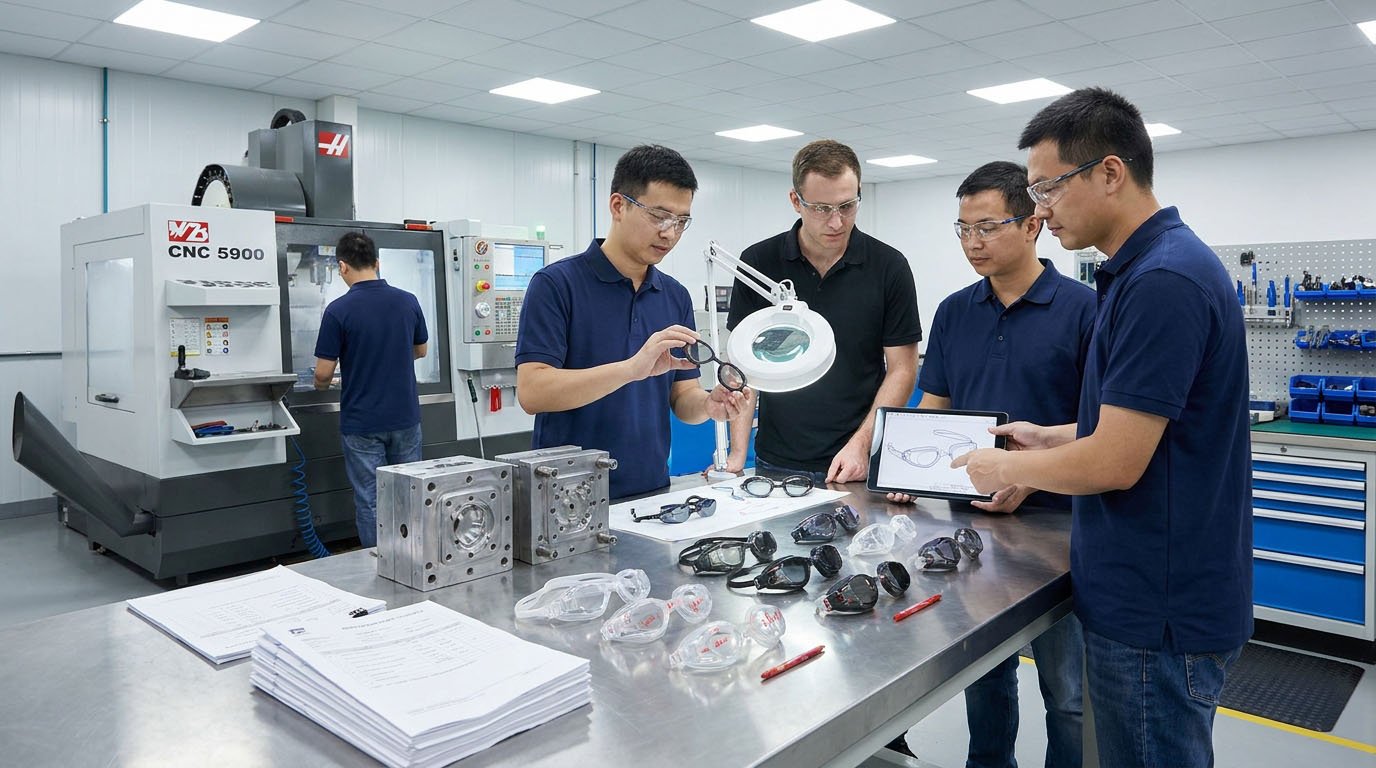
Trace a Real Tooling Revision
Select one recent tooling defect or design modification and ask the factory to demonstrate how it was resolved.
A useful record should connect:
Trial Finding → Engineering Review → Approved Modification → Tooling Work → Follow-Up Trial
For example, a trial sample may reveal that a frame’s gasket connection dimension does not match the approved drawing.
The factory should be able to identify:
- The affected mold component.
- The trial sample or inspection record.
- The engineering change instruction.
- The person or department performing the correction.
- The updated drawing or tooling revision.
- The result of the subsequent trial.
Review T0/T1 Trial Evidence
Factories may label mold trials T0, T1, T2, or use a different numbering system.
For verification purposes, focus on the records rather than the labels.
| Trial Evidence | What Buyers Should Check |
|---|---|
| Initial trial report | Mold ID, part revision, and observed defects |
| Sample inspection | Relevant dimensions and visible tooling-related issues |
| Correction record | Approved modification and responsible team |
| Follow-up trial | Evidence that the revised tool produced the intended result |
An important distinction is that a mold trial may be physically performed in the injection molding department, while the tool correction is handled by the mold-making department.
A shared trial report does not prove that both activities occurred in-house.
For a broader explanation of product development, prototypes, and tooling stages, read how a swim goggle manufacturer develops new goggles.
Buyer takeaway: A well-documented correction is often more informative than a perfect-looking sample. It reveals whether the supplier can identify problems, authorize changes, and control the tooling revision.
Step 5: Verify In-House Mold Making Remotely
Not every swimming goggle buyer can visit a factory before approving a new mold project.
A focused remote verification session can help establish preliminary confidence in the supplier’s tooling capabilities.
The objective is not to inspect the entire factory. It is to follow one real mold-making project through its engineering and workshop records.
Request a Buyer-Directed Live Review
Ask the factory to arrange a video session with an engineering or tooling representative.
During the review:
- Start with a project record. Request a recent mold ID, approved drawing, and associated machining work order.
- Cross-check workshop evidence. Ask to see the corresponding mold, relevant equipment, or available machining records through live video or screen sharing.
- Review one modification. Examine a trial finding and its linked engineering change or correction record.
Where appropriate, request redacted supporting documents after the session.
Understand the Limits of Remote Verification
A remote review can establish useful evidence of engineering and tooling control.
However, it may not independently establish where every historical machining operation occurred.
If critical questions remain unresolved, consider an on-site technical audit or an independent inspection with appropriate access.
For the complete supplier-level assessment process, refer to our remote swimming goggle factory audit checklist.
Buyer takeaway: A focused live review supported by cross-referenced records is more useful than a prerecorded workshop video, but significant unresolved claims still require further verification.
Step 6: Identify Red Flags and Confirm Outsourcing Scope
The final step is to evaluate whether the evidence supports the factory’s claimed capabilities.
A supplier should not automatically fail because it uses outside specialists. The concern is undisclosed work, missing accountability, or a tooling history that cannot be reasonably explained.
Common Mold-Making Verification Red Flags
| Red Flag | Why It Matters | Recommended Action |
|---|---|---|
| Only workshop photos are provided | No project-level evidence | Request a specific mold record |
| CAD files have no linked machining history | Actual toolmaker remains unclear | Cross-check work orders |
| Tooling revisions cannot be traced | Correction control is uncertain | Request a completed change example |
| Key operations are outsourced without disclosure | Accountability may be unclear | Identify subcontracted stages |
| Physical tools cannot be matched to records | Tool identification is weak | Review mold IDs and documentation |
| Staff and records provide conflicting explanations | Manufacturing responsibility is unclear | Investigate discrepancies |
These are reasons for further investigation, not automatic proof of dishonesty.
Use a Practical Verification Decision
After reviewing the evidence, classify the supplier’s mold-making capability.
| Result | Evidence Status | Buyer Decision |
|---|---|---|
| Verified for reviewed scope | Records, personnel, tools, and modifications align | Proceed with agreed controls |
| Partially verified | Core capability demonstrated, some stages unresolved | Clarify scope before tooling approval |
| Not established | Critical evidence unavailable or contradictory | Require further verification |
Verification should also distinguish a factory’s general capability from its confirmed responsibility for your particular tooling project.
Reviewing an existing mold can demonstrate relevant experience, but your contract and project plan should specify where your new mold will be designed, manufactured, assembled, and modified.
Keep Mold Capability and Ownership Separate
Verifying who manufactures a mold does not determine who legally owns it.
Before paying a tooling deposit, confirm the agreed ownership, exclusive-use rights, custody, maintenance responsibilities, and transfer conditions in writing.
Paying a tooling invoice does not, by itself, settle every ownership or exclusivity question.
Our swimming goggle mold cost guide covers tooling quotations, development costs, and ownership considerations in more detail.
Buyer takeaway: Choose a supplier based on demonstrated technical capability, transparent outsourcing, and clear contractual responsibilities—not the words "100% in-house" alone.
Frequently Asked Questions
Does owning CNC machines prove in-house mold making?
No. CNC equipment demonstrates potential machining capacity, but it does not establish that the factory designs, machines, assembles, and modifies the specific molds you need.
Verify actual engineering records, machining work orders, physical tooling, and responsible personnel.
Can a swimming goggle factory outsource certain mold-making operations?
Yes. Specialized finishing, heat treatment, or precision tooling operations may be performed by qualified external suppliers.
The important requirements are transparency, defined responsibility, and control over project records, quality, and revisions.
What is the strongest evidence of internal mold-making capability?
A connected project history is stronger than any individual photograph or document.
Look for matching design revisions, machining records, physical mold identification, trial samples, and engineering modifications associated with the same tooling project.
Can I verify mold-making capability before paying a tooling deposit?
Yes. You can review a comparable completed project, inspect available workshop capabilities, meet the engineering team, and confirm the proposed manufacturing scope.
However, the supplier’s performance on your specific mold can only be confirmed as that project progresses through manufacturing and trials.
Do I need the factory’s original CAD and CAM files?
Not necessarily.
For preliminary supplier verification, a screen-shared engineering review, controlled document extracts, or appropriately redacted records may be sufficient.
The evidence should still allow the buyer to connect the design, machining, and completed tooling without unnecessarily exposing another customer’s intellectual property.
Is in-house mold making the same as in-house injection molding?
No.
Mold making produces and maintains the tooling. Injection molding uses that tooling to manufacture components.
A factory may perform one operation internally while subcontracting the other. Each claim requires separate verification.
Conclusion: Verify Mold-Making Evidence, Not Factory Claims
Verifying in-house mold making is not about finding the factory with the most impressive equipment.
It is about establishing a reliable connection between engineering design, machining operations, physical tooling, trial results, and modifications.
For swimming goggle brands developing original lenses, frames, gaskets, or other custom components, this verification helps clarify manufacturing responsibility before significant tooling investments are made.
A practical assessment should answer three questions:
- Who actually designs, manufactures, and modifies the mold?
- Can the supplier demonstrate those activities through consistent project evidence?
- Are outsourced operations, tooling responsibilities, and ownership arrangements clearly defined?
At Jerry Goggles, our OEM & ODM swimming goggle manufacturing services support product engineering, mold development, sampling, and production for customized swimming goggle projects.
If you are evaluating a new custom mold, share your product drawings, intended components, tooling requirements, and expected production volume.
Contact our team to discuss your project requirements and the manufacturing and tooling documentation available for review.