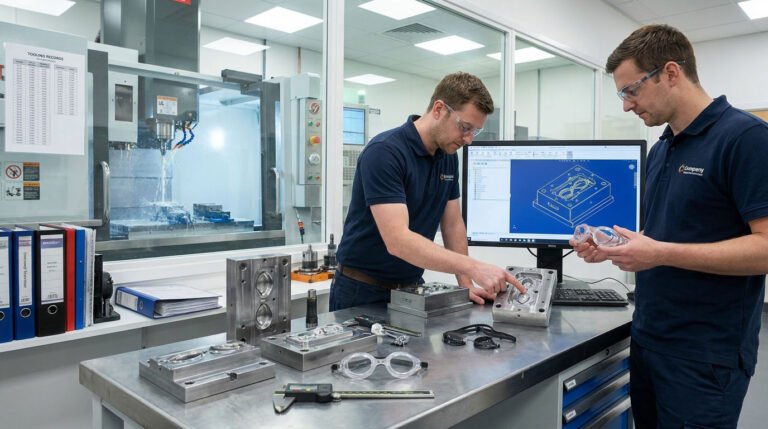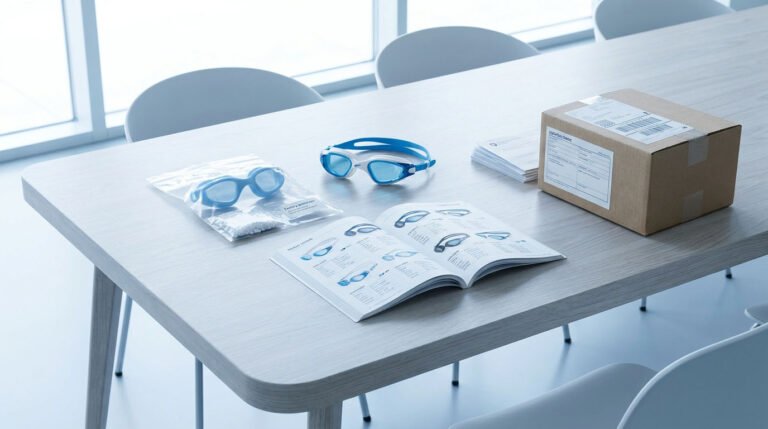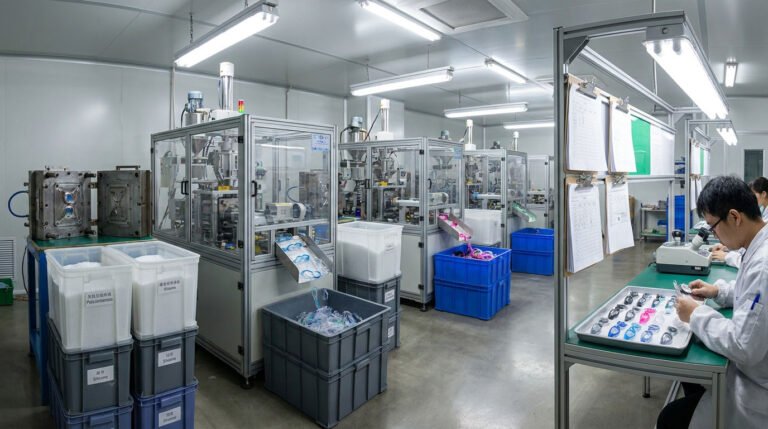
A swimming goggle factory may have professional product photos, impressive certificates, and excellent samples. But how can you verify its real manufacturing capabilities without visiting the facility?
A remote factory audit helps buyers examine production processes, quality controls, and supporting records through live video and document reviews.
To audit a swimming goggle factory remotely, request key documents before the meeting, conduct a buyer-directed live video walkthrough, check swimming goggle production controls, and cross-reference material records with actual production batches. Record any gaps and verify critical findings before placing a bulk order.
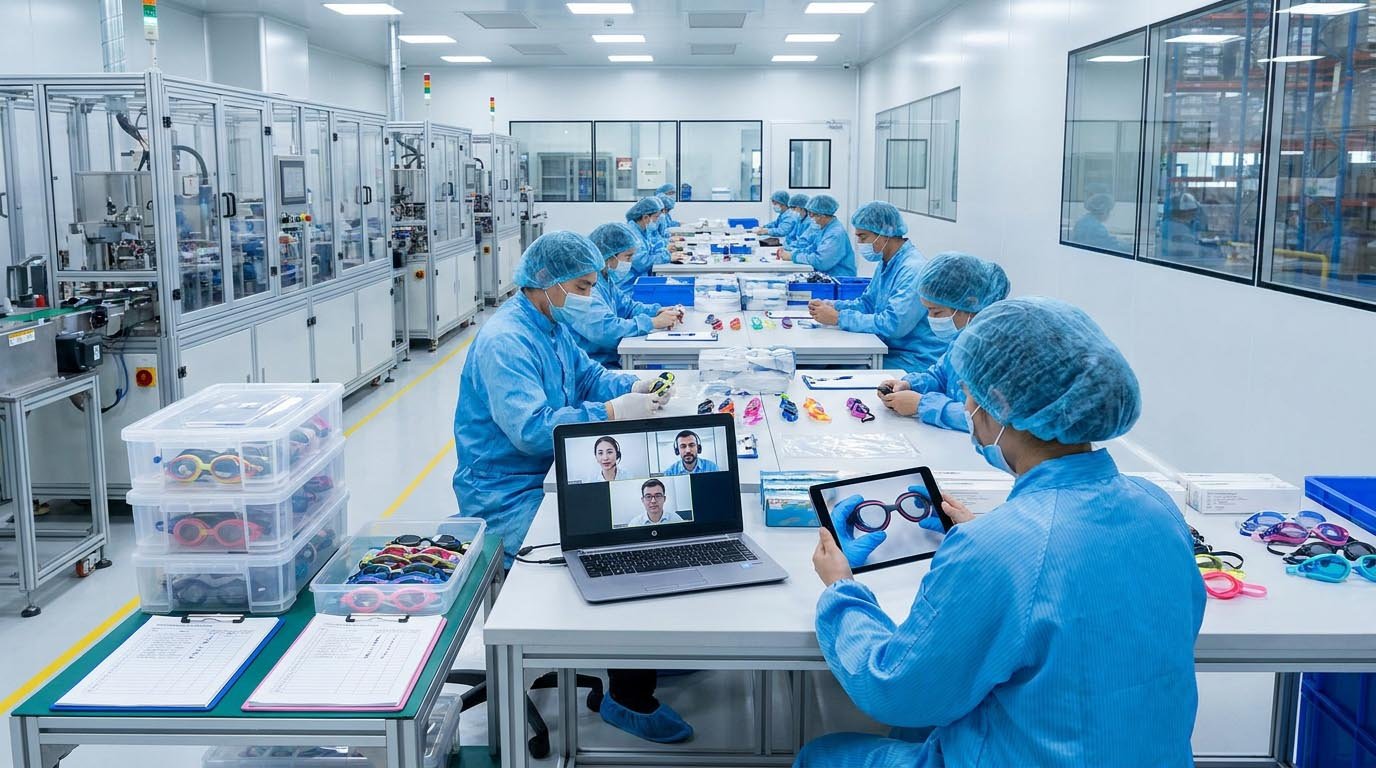
This guide provides a practical seven-step audit process for swimwear brands, importers, distributors, and sourcing teams.
Quick Answer: How Do You Audit a Swimming Goggle Factory Remotely?
A successful remote audit combines three types of evidence:
- Documents: Business information, manufacturing records, QC logs, and relevant test reports.
- Live video: Real production areas, equipment, materials, operators, and inspection activities.
- Independent verification: Physical samples, third-party inspections, or trial production when necessary.
A useful remote audit follows seven steps:
| Step | Main Objective |
|---|---|
| 1. Prepare | Define audit scope and request documents |
| 2. Verify | Match factory identity and documentation |
| 3. Inspect | Conduct a live video walkthrough |
| 4. Evaluate | Check swimming goggle production controls |
| 5. Cross-check | Verify traceability, capacity, and outsourcing |
| 6. Record | Document findings and unresolved risks |
| 7. Confirm | Validate critical findings before bulk production |
Important: A remote audit is a supplier evaluation tool. It does not automatically replace an on-site audit, independent laboratory testing, or pre-shipment inspection.
Step 1: Prepare Your Remote Swimming Goggle Factory Audit
A productive remote audit starts before the video call.
Instead of asking the factory to show everything, define which production capabilities and quality risks matter most to your order.
Define the Audit Scope
For swimming goggles, prioritize:
- Lens materials and molding
- Anti-fog coating application
- Silicone gasket and strap production
- Mold maintenance and engineering changes
- Assembly and functional inspection
- Material traceability and final QC records
The scope should reflect your product.
For example, a private-label order using existing molds may require more attention to component consistency and branding execution. A custom OEM project may also require tooling, engineering, and revision-control checks.
If you are still comparing suppliers based on product capabilities, MOQ, and lead times, start with our swimming goggles manufacturer selection guide.
Request Documents Before the Meeting
Ask the supplier to prepare:
| Document | Purpose |
|---|---|
| Business license and factory details | Confirm the operating entity |
| Relevant factory audit reports | Review existing audit findings |
| Production process overview | Identify manufacturing and outsourced stages |
| Recent production records | Check operational consistency |
| Material and QC records | Assess traceability |
| Relevant product test reports | Confirm available testing evidence |
| Mold maintenance records, if applicable | Review tooling control |
Use recent, relevant records whenever possible. Confidential customer information can be redacted.
Before the meeting, agree on the departments to visit, employees who should attend, areas with filming restrictions, and how audit evidence will be shared.
Step 2: Verify Factory Identity and Documents
Certificates and company profiles are useful starting points, but they must correspond to the actual production operation.
Confirm the Facility Being Audited
At the beginning of the video call, ask the factory representative to show the entrance or another identifiable location where permitted.
Cross-check:
- Factory name and address
- Business registration information
- Supplier or contracting entity
- Actual manufacturing location
- Names of responsible production and QC personnel
Different legal entities may operate within the same group. If names differ, request an explanation rather than assuming misrepresentation.
Check Document Relevance
A genuine certificate does not automatically prove that a particular swimming goggle model meets your requirements.
Ask whether the document covers:
- The factory or organization being evaluated
- The relevant product or process
- The applicable audit or test scope
- The period being reviewed
For product-specific testing, confirm that the model, materials, and configuration match your intended order.
Detailed interpretation of test scope and laboratory results is covered separately in our guide to reading swimming goggle test reports.
The remote audit should focus on whether the documents are relevant and can be connected to actual production.
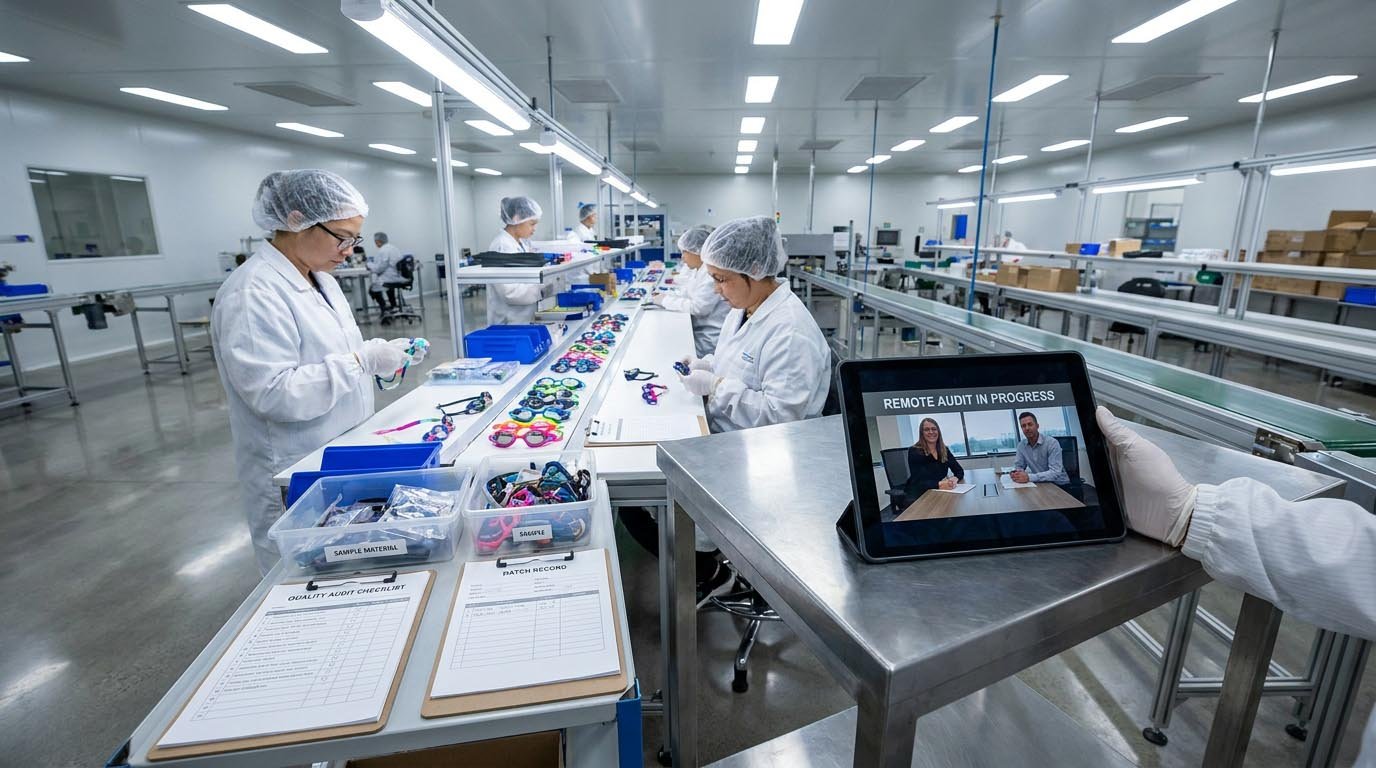
Step 3: Conduct a Live Video Factory Walkthrough
Pre-recorded factory tours can demonstrate equipment and facilities, but they provide limited evidence of current operations.
A live walkthrough allows buyers to request additional views, ask questions, and compare production activities with documents.
Follow a Practical Video Audit Route
Use the following route as a starting point.
| Location | What to Request |
|---|---|
| Factory entrance | Building identity and location |
| Raw material warehouse | Material labels, storage, and inventory control |
| Lens production | Active equipment and production records |
| Anti-fog processing | Application area and process monitoring |
| Gasket and strap production | Manufacturing or incoming inspection controls |
| Assembly line | Work instructions and in-process checks |
| QC area | Inspection equipment and records |
| Finished goods warehouse | Batch identification and packing controls |
The sequence can be adjusted to the factory layout and production schedule.
If a critical process is outsourced, document the supplier’s controls and arrange additional verification where necessary.
Use Buyer-Directed Video Requests
During the walkthrough, ask the camera operator to:
- Show a wider view of the production area.
- Zoom in on a selected production order or equipment identification label.
- Display the inspection record for a currently running batch.
- Demonstrate how an operator records inspection results.
- Show where rejected or quarantined components are stored.
Ask for reasonable changes to the planned route rather than relying entirely on the factory’s presentation.
However, safety requirements, customer confidentiality, and restricted production areas should be respected. When filming is not permitted, request alternative evidence.
The goal is not to surprise factory workers. It is to confirm that documented procedures match actual manufacturing activities.
Step 4: Evaluate Critical Swimming Goggle Production Controls
Swimming goggles combine optical components, soft sealing materials, coatings, and mechanical assemblies.
During a remote audit, concentrate on how the factory controls these processes rather than asking for a complete explanation of every manufacturing technique.
Check Key Production Stages
| Production Stage | Live Audit Question | Evidence to Request |
|---|---|---|
| Lens molding | How are molding defects controlled? | Process and inspection records |
| Anti-fog coating | How is application consistency monitored? | Coating and batch QC records |
| Gasket production | How are material and sealing consistency checked? | Material and inspection records |
| Assembly | How are component errors prevented? | Work instructions and in-process checks |
| Final QC | How are defects identified and handled? | Inspection and corrective action records |
For example, during the anti-fog review, ask which parameters are monitored, how deviations are handled, and how inspection results connect to production batches.
There is no need to require a particular clean-room classification or curing temperature unless that requirement applies to the product and manufacturing process.
For injection molding, seeing machines on camera is not enough to confirm that a factory produces your actual components in-house. Buyers should also match mold IDs, machine assignments, material lots, and production records. Our guide to verifying in-house injection molding explains how to cross-check this evidence before approving a supplier.
Verify Tooling and Engineering Control
For custom swimming goggles, ask how the factory manages:
- Mold identification and maintenance
- Approved drawings and design revisions
- Mold adjustments and engineering changes
- T1/T2 sample approval records, where applicable
- Customer-owned tooling arrangements
A manufacturer does not necessarily need to perform every machining operation in-house. What matters is whether it can explain tooling responsibilities, control changes, and maintain appropriate records.
For custom development projects, Jerry’s OEM & ODM manufacturing services provide an overview of design, tooling, and production capabilities.
Observe the QC System in Action
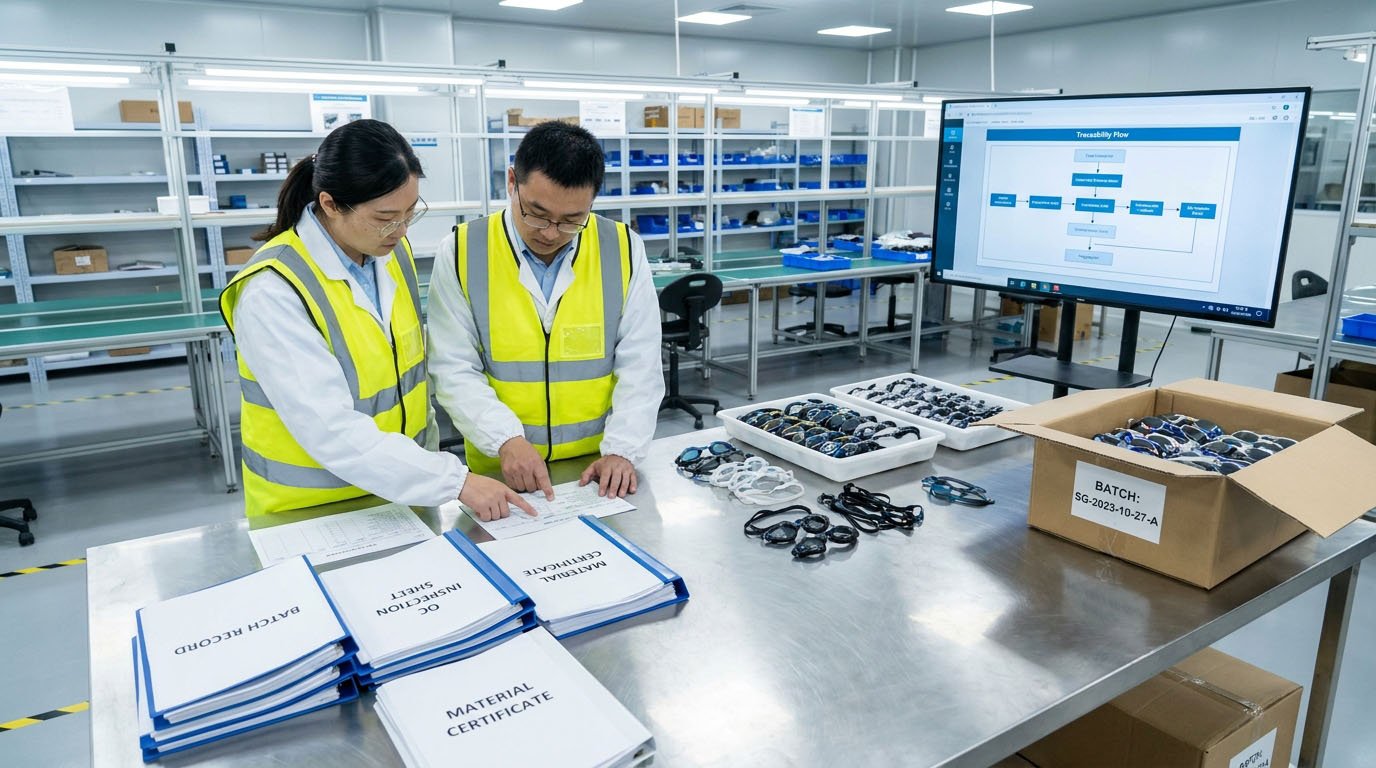
Ask the QC manager to demonstrate one actual inspection process.
Observe whether the operator:
- Uses an identified inspection method.
- Knows the applicable acceptance criteria.
- Records inspection results.
- Separates nonconforming products.
- Escalates defects when necessary.
Do not judge the factory only by equipment appearance. A simple but consistently applied inspection system may provide stronger evidence than advanced equipment without reliable records.
Our Quality Assurance overview explains how incoming, in-process, and final inspections fit into Jerry’s manufacturing operations.
Step 5: Verify Material Traceability, Production Capacity, and Outsourcing
A strong remote audit should connect what appears on camera with the factory’s production documentation.
Trace One Production Batch
Instead of accepting only prepared examples, select one available production batch and request its corresponding records.
A useful evidence chain is:
Incoming material lot → Production order → In-process inspection → Final QC record → Finished goods identification
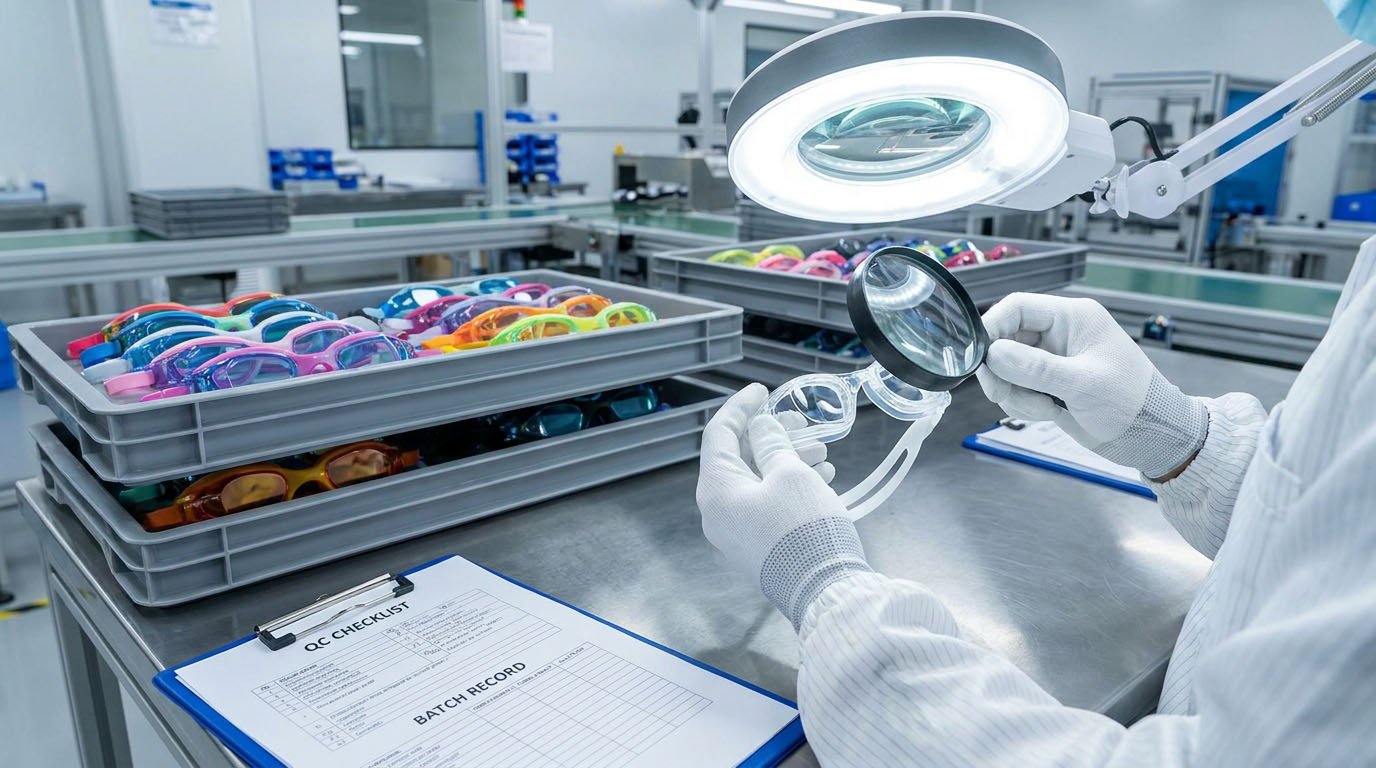
For example, when reviewing a lens production batch, ask the factory to show the relevant resin identification and production order, then locate the associated inspection results.
The exact traceability format depends on the factory’s system. Some suppliers use ERP software; others use controlled paper records.
The important question is whether the manufacturer can establish a reliable connection between materials, production, inspections, and finished products.
Cross-Check Production Capacity
Do not estimate an entire factory’s output from a few minutes of video.
Instead, compare:
- Active production lines and equipment
- Recent production output records
- Shift arrangements
- Current production schedules
- Previous orders of comparable complexity
If reported capacity and observed operations appear inconsistent, request clarification and additional records.
A live video snapshot cannot independently establish sustained monthly production capacity.
Identify Outsourced Manufacturing Processes
Outsourcing is not automatically a quality problem.
However, buyers should know whether critical activities such as lens coating, silicone molding, or component manufacturing are performed elsewhere.
Ask:
- Which processes are conducted in-house?
- Which processes are outsourced?
- How are subcontractors approved?
- Who inspects outsourced components?
- Who manages defects and corrective actions?
Undisclosed outsourcing or missing supplier-control records may require additional investigation.
Step 6: Record Audit Findings and Identify Red Flags
A remote audit becomes much more useful when observations are recorded systematically.
Without a written report, buyers may remember an impressive factory tour but overlook unresolved risks.
Remote Swimming Goggle Factory Audit Scorecard
Use this simplified worksheet during or immediately after the call.
| Audit Area | Status | Evidence / Follow-Up |
|---|---|---|
| Factory identity | Verified / Unclear | |
| Production capability | Verified / Unclear | |
| Material traceability | Verified / Unclear | |
| Process control | Verified / Unclear | |
| Quality records | Verified / Unclear | |
| Tooling control | Verified / Unclear | |
| Outsourcing transparency | Verified / Unclear |
For each unclear item, record the missing evidence, responsible contact, and agreed follow-up date.
Warning Signs Worth Investigating
Pay attention when a supplier:
- Repeatedly avoids showing relevant active production areas.
- Cannot reconcile important document discrepancies.
- Presents certificates unrelated to the audited operation.
- Cannot explain how critical process changes are controlled.
- Has incomplete traceability for important production batches.
- Cannot demonstrate how rejected products are handled.
- Refuses to disclose critical outsourced production stages.
A single problem does not necessarily mean the factory is unsuitable.
For example, an unavailable coating line may simply not be operating that day.
The more useful question is whether the factory provides a credible explanation and appropriate follow-up evidence.
Make an Audit Decision
Use three possible outcomes.
| Decision | When to Use It |
|---|---|
| Proceed | Relevant evidence has been reviewed and no significant unresolved issue remains |
| Hold for Evidence | Important information is incomplete or requires clarification |
| On-Site Audit Required | Critical risks cannot be adequately verified remotely |
Do not use an arbitrary numerical score to override significant safety, quality, or traceability concerns.
For high-risk findings, request corrective actions and verify their effectiveness before approving the supplier.
Step 7: Confirm Audit Findings Before Bulk Production
Even a well-conducted remote audit has limitations.
Video cannot fully establish material composition, product performance, long-term coating durability, or the condition of every finished unit.
Use Additional Verification When Necessary
Depending on order value and risk, consider:
Fresh production samples: Request samples from a representative production run and compare them with the approved specification.
Independent inspection: Arrange an appropriate third-party factory audit or product inspection when critical concerns remain.
Trial production: For a new product or complex custom design, consider a controlled initial production run before scaling.
If your project is still moving from prototype to approved production specification, our Sampling & Prototyping process explains how development and sample approval are managed.
Close Audit Findings Before Approval
Before releasing a significant order, confirm:
- [ ] Factory identity and manufacturing scope are understood.
- [ ] Important production processes have been reviewed.
- [ ] Critical QC records are available and relevant.
- [ ] Material and production traceability gaps are resolved.
- [ ] Outsourced processes and responsibilities are documented.
- [ ] Significant audit findings have been addressed.
- [ ] Required product testing and inspection plans are agreed.
A remote audit supports supplier approval, but it should remain part of a broader sourcing and quality-assurance process.
FAQ: Remote Swimming Goggle Factory Audits
Can a Remote Factory Audit Replace an On-Site Audit?
Not completely. Remote audits are useful for supplier screening, follow-up verification, and reviewing specific production controls.
For higher-risk orders, complex tooling projects, or unresolved findings, independent on-site verification may still be necessary.
How Long Does a Remote Swimming Goggle Factory Audit Take?
A focused live session may take approximately 60–120 minutes, depending on scope and factory size. Document preparation and follow-up reviews require additional time.
A complex multi-process audit may need more than one session.
What If the Factory Cannot Show a Process Live?
Ask why the process is unavailable and request relevant records or an additional live session during production.
An unavailable production line is not automatically a warning sign. An inability to provide credible supporting evidence is more concerning.
Must a Swimming Goggle Manufacturer Produce Every Component In-House?
No. Manufacturers may use qualified external suppliers for specific components or processing stages.
The key is transparency, defined responsibilities, supplier controls, and reliable inspection evidence.
How Can Buyers Protect Confidential Information During a Remote Audit?
Agree on confidentiality requirements before the meeting. The factory can redact customer names, commercial prices, and proprietary design information while preserving the batch identification and inspection evidence needed for verification.
Conclusion
A remote swimming goggle factory audit should verify evidence, not simply showcase facilities.
The most effective approach combines document preparation, buyer-directed live video, swimming goggle production checks, batch traceability, and structured audit findings.
Focus on whether the factory can demonstrate controlled, repeatable manufacturing rather than relying on attractive samples or certificates alone.
At Jerry Goggles, we support OEM and ODM buyers with manufacturing expertise, product development, and documented quality-control processes.
If you are evaluating a swimming goggle manufacturing partner, contact Jerry to discuss your product requirements, factory capabilities, and appropriate verification arrangements before placing your order.