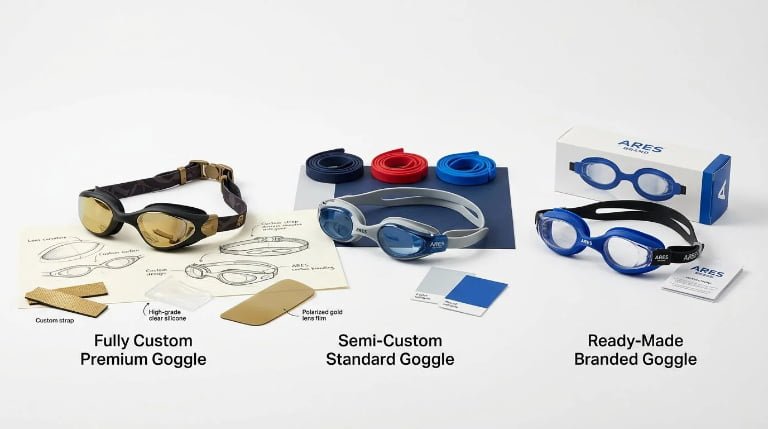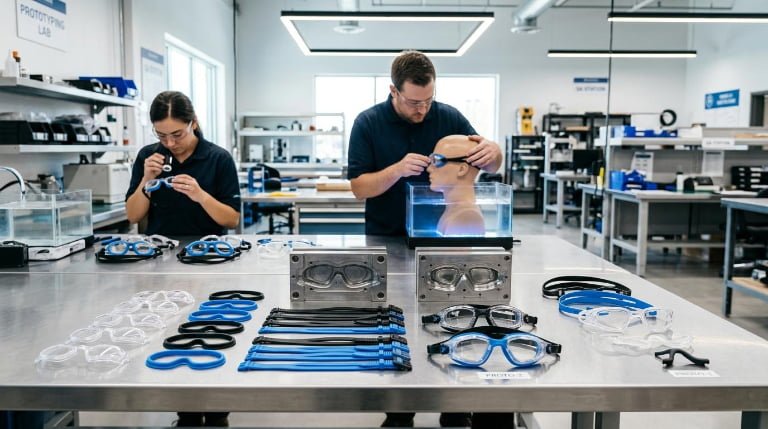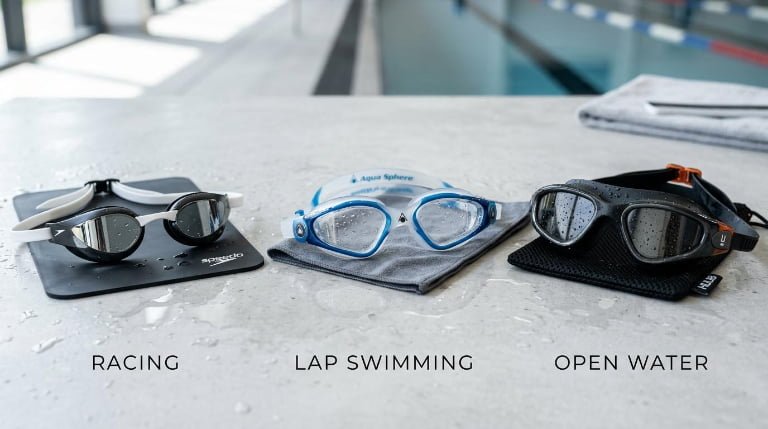
High-quality swimming goggles usually combine five essentials: clear lenses, reliable anti-fog performance, comfortable fit, durable straps, and materials matched to the swimmer’s usage frequency and environment. For brands and buyers, quality also includes lower return risk, market-appropriate certifications, and consistent manufacturing standards.
In practice, a product that looks good on a specification sheet can still fail in the market if the lens fogs too quickly, the gasket leaks, the strap loses tension, or the compliance documents do not match the destination country. That is why evaluating swimming goggles quality is not only about features. It is also about how those features perform in real use and whether they fit your target customer.
This guide explains what makes swimming goggles high quality, how to compare materials and performance claims, and which features matter most for different user segments.
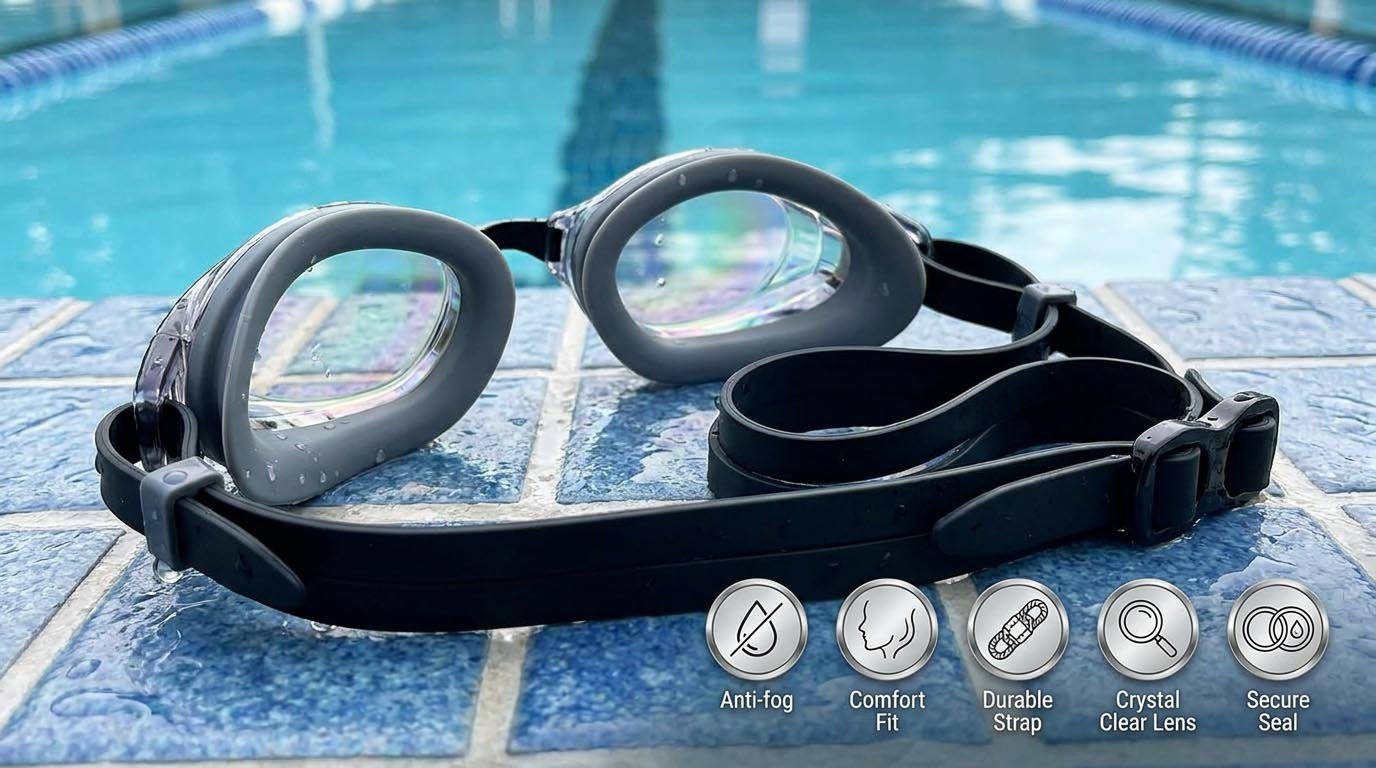
Quick Answers: What Makes Swimming Goggles High Quality?
Here are the questions buyers and brands usually ask first.
What makes swimming goggles high quality?
High-quality swimming goggles generally offer good lens clarity, anti-fog performance, comfortable sealing, durable strap adjustment, and materials suited to the intended use, such as training, racing, kids, or outdoor swimming.
Are anti-fog swimming goggles permanent?
No. Most anti-fog treatments gradually weaken over time. Actual lifespan depends on the coating method, lens material, usage frequency, and how the goggles are cleaned and stored.
Is silicone better than TPR for swimming goggles?
Not always. Silicone is usually better for durability and frequent swimming. TPR is often softer in feel and more cost-effective for casual or entry-level products.
Do all swimming goggles need UV400?
No. UV400 is most relevant for outdoor swimming, open water, and triathlon use. Indoor pool goggles usually do not need it.
Do certifications prove swimming goggles are premium quality?
Not necessarily. Some certifications are for market access or material safety, while others relate to factory audits or specific performance claims. Certification alone does not automatically mean premium quality.
Swimming Goggles Quality at a Glance
The table below shows the main features that usually determine whether swimming goggles are seen as high quality by customers and buyers.
| Feature | Why It Matters | Best For | Common Risk if Wrong |
|---|---|---|---|
| Lens clarity | Helps swimmers see clearly underwater | All users | Distortion, poor reviews |
| Anti-fog performance | Reduces fogging during use | Training, racing, fitness | Complaints and returns |
| Gasket material | Affects comfort and seal | All users | Leaks, red marks, discomfort |
| Strap durability | Keeps goggles secure over time | Frequent swimmers, kids, triathlon | Slipping or breakage |
| UV protection | Protects eyes in outdoor use | Open water, beach, outdoor pool | Unnecessary cost indoors or poor protection outdoors |
| Fit adjustability | Improves compatibility with different face shapes | Kids, multi-user markets, online retail | Higher return rate due to poor fit |
| Compliance support | Helps avoid clearance or retail issues | Importers, retailers, brand owners | Customs delay, order rejection |
1. Lens Quality and Optical Performance
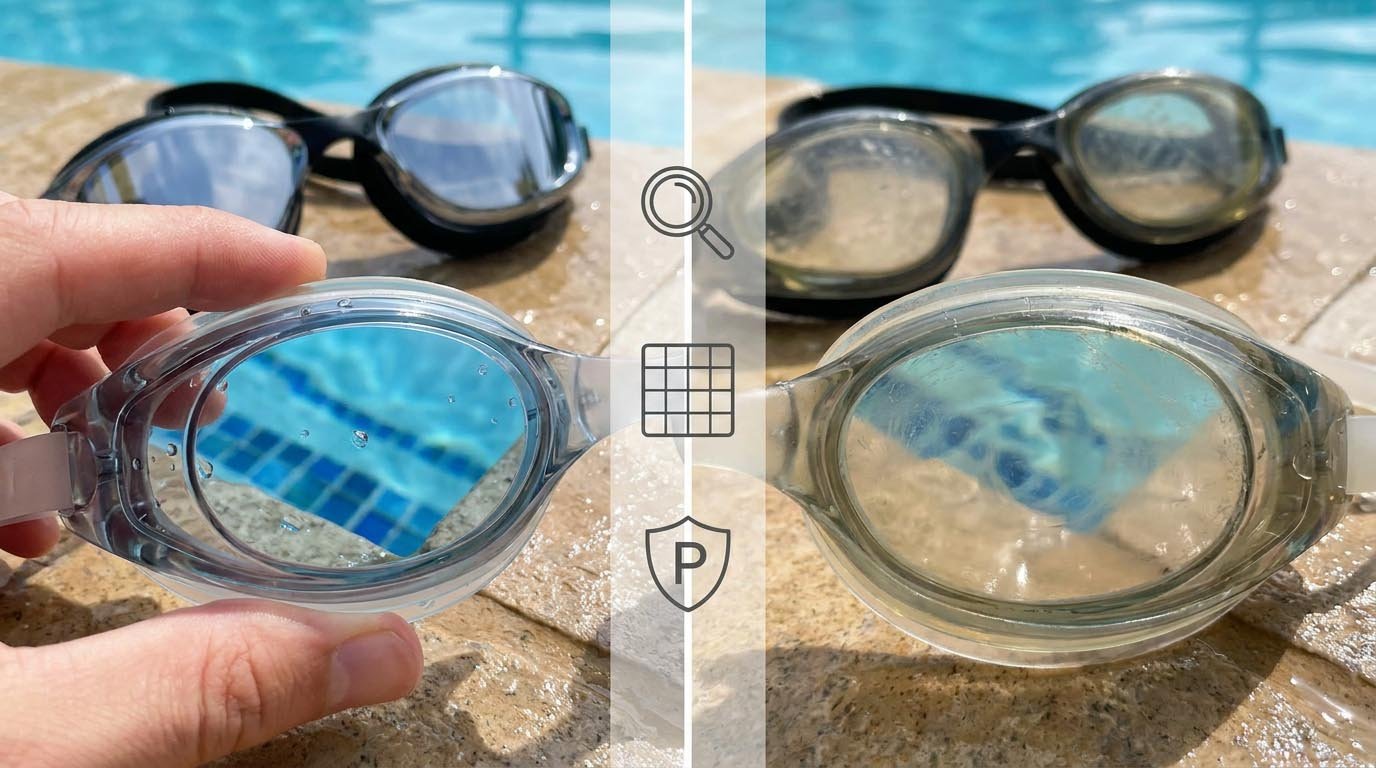
Lens quality is one of the first things swimmers notice. If the view looks cloudy, warped, or uneven, the product immediately feels low grade.
Why lens clarity matters
A high-quality lens should support:
- Clear forward vision
- Stable underwater visibility
- Minimal visual distortion
- Consistent appearance across batches
Low-grade lenses may show:
- Yellowing over time
- Uneven transparency
- Surface marks
- Faster scratching
- More visible distortion near the edges
For most products, buyers should confirm whether the lenses use quality polycarbonate material and whether the factory controls molding consistency and surface finish carefully.
What is optical distortion in swimming goggles?
Optical distortion happens when underwater objects appear bent, stretched, or wavy. This can be caused by:
- Lens geometry
- Low material quality
- Uneven molding
- Poor surface finish
- Inconsistent thickness
Distortion matters more for:
- Racing goggles
- Training goggles used frequently
- Products marketed as performance or premium
For recreational swimmers, minor edge distortion may be tolerated. For competitive users, it often leads directly to complaints.
Curved lens vs flat lens
Different lens shapes offer different trade-offs.
| Lens Type | Main Benefit | Main Limitation |
|---|---|---|
| Flat lens | Lower distortion, simpler optics | Narrower field of view |
| Curved lens | Wider peripheral vision | More difficult to control optics consistently |
A quality product matches the lens design to the user segment instead of trying to maximize every feature at once.
2. Anti-Fog Performance and Realistic Expectations
Anti-fog is one of the most important features in swimming goggles, but it is also one of the most misunderstood.
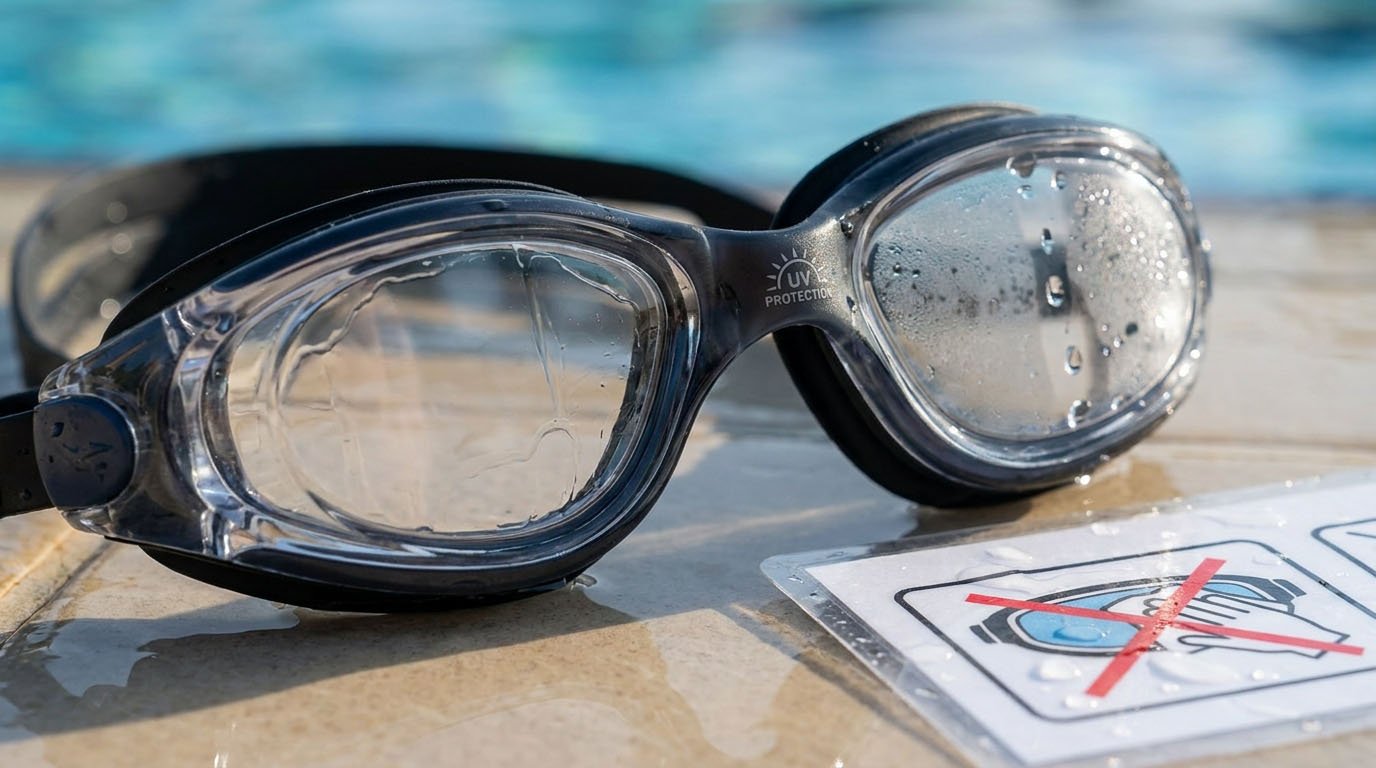
How anti-fog coating works
Most anti-fog systems help water spread into a thin transparent film rather than forming visible droplets. Performance depends on:
- Coating method
- Lens material
- Surface preparation
- Curing quality
- User handling
How long does anti-fog last?
Anti-fog is not permanent. The lifespan varies depending on product level and usage conditions.
In general:
- Basic anti-fog treatments may last for a limited number of swims
- Better coating systems usually last longer
- Harsh cleaning and rough wiping shorten performance life
- Finger contact on the inside of the lens often damages the coating faster
This is why high-quality swimming goggles should include not only anti-fog treatment, but also clear care instructions.
Why anti-fog causes so many complaints
Problems usually happen when the product claim and user expectation do not match.
Common causes include:
- The packaging suggests permanent anti-fog
- The brand gives no care instructions
- Users wipe the inner lens surface
- The lens coating is too weak for the target market
For example, a casual vacation product and a daily training product should not be sold with the same anti-fog expectation.
3. UV Protection: Important for Some Users, Unnecessary for Others
UV protection is useful, but only when it matches the swimming environment.
When UV400 matters
UV400 is most relevant for:
- Outdoor pools
- Open-water swimming
- Beach use
- Triathlon
- Long exposure to sunlight
For these users, UV protection helps reduce long-term exposure risk and improves positioning for outdoor use.
When UV400 may not be necessary
For indoor pools, UV400 is usually less important. In that case, adding the feature may increase cost without improving real user value.
Embedded UV protection vs surface treatment
When discussing UV options with a supplier, buyers should clarify whether protection comes from:
- Lens material formulation
- Surface coating
- A combined treatment approach
More durable protection usually depends on better material specification and process control.
4. Fit, Comfort and Seal Performance
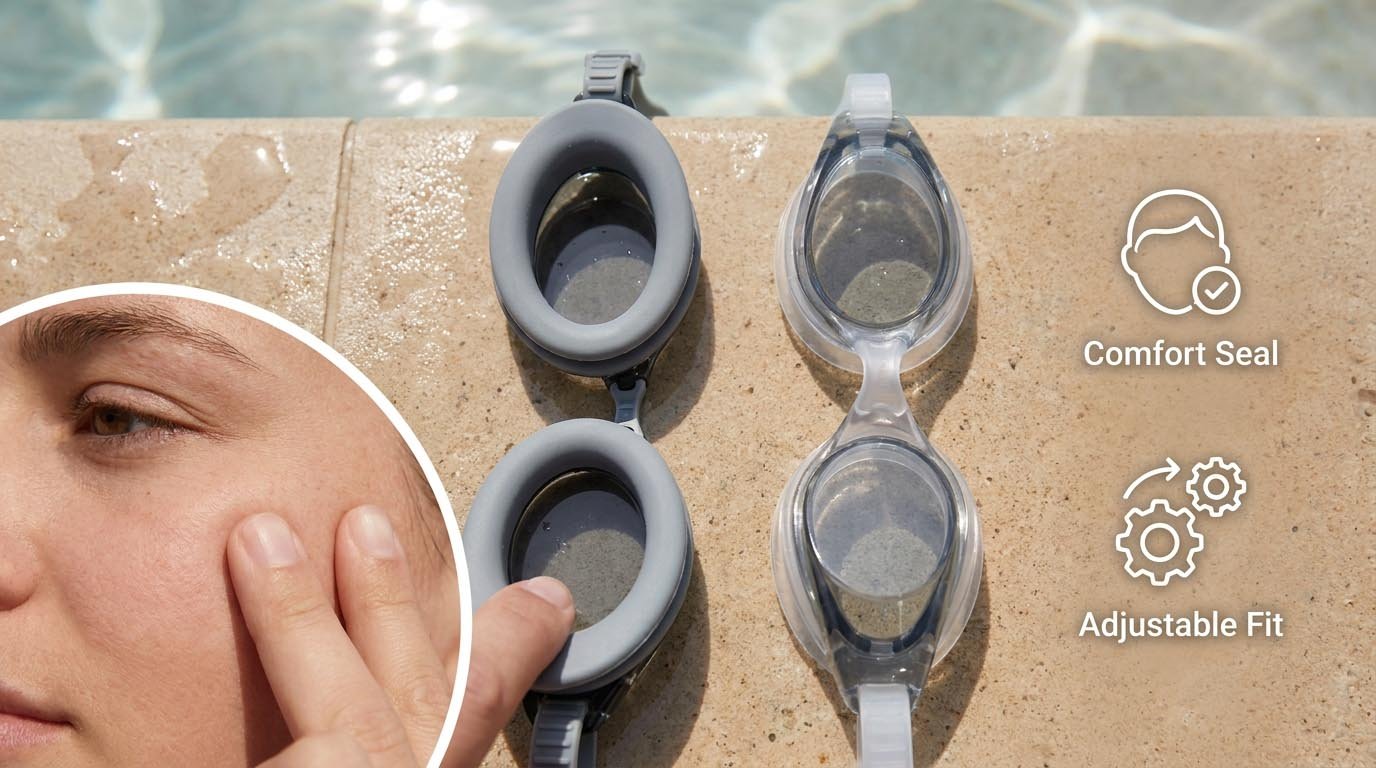
Many swim goggle returns come from one issue: poor fit. A lens can be clear and the strap can be strong, but if the goggles leak or create painful pressure, customers will still see them as low quality.
What affects comfort most?
The biggest factors are usually:
- Gasket material
- Gasket shape
- Seal geometry
- Nose bridge width
- Strap tension distribution
A quality goggle should create a stable seal without requiring excessive tightening.
Silicone vs TPR for gaskets
This is one of the most common sourcing questions.
| Material | Typical Advantage | Typical Limitation | Best For |
|---|---|---|---|
| Silicone | Better durability, strong chemical resistance, premium feel | Higher cost | Frequent swimmers, performance products |
| TPR | Lower cost, softer initial feel, suitable for value products | Shorter lifespan, less durable in heavy use | Casual swimmers, seasonal or entry-level products |
The key is not deciding which material is universally better. The key is choosing the one that fits the user profile.
Why seal geometry matters
Two goggles can use the same gasket material but perform very differently if the seal design is different.
Seal quality depends on:
- Contact area
- Pressure distribution
- Flexibility at the eye socket
- Stability during movement
A poor seal often causes:
- Water leakage
- Deep pressure marks
- Discomfort around the eyes
- Over-tightening by the user
Adjustable nose bridge vs fixed nose bridge
Nose bridge design strongly affects fit across different face shapes.
- Fixed nose bridge: simpler, lower cost, suitable when fit target is narrow
- Adjustable or interchangeable nose bridge: better for wider user variation, kids, team sales, and online retail
For brands selling to broad markets, adjustability often reduces fit-related returns.
5. Strap Quality and Adjustment Reliability
Straps are often overlooked in product evaluation, but they strongly affect long-term satisfaction.
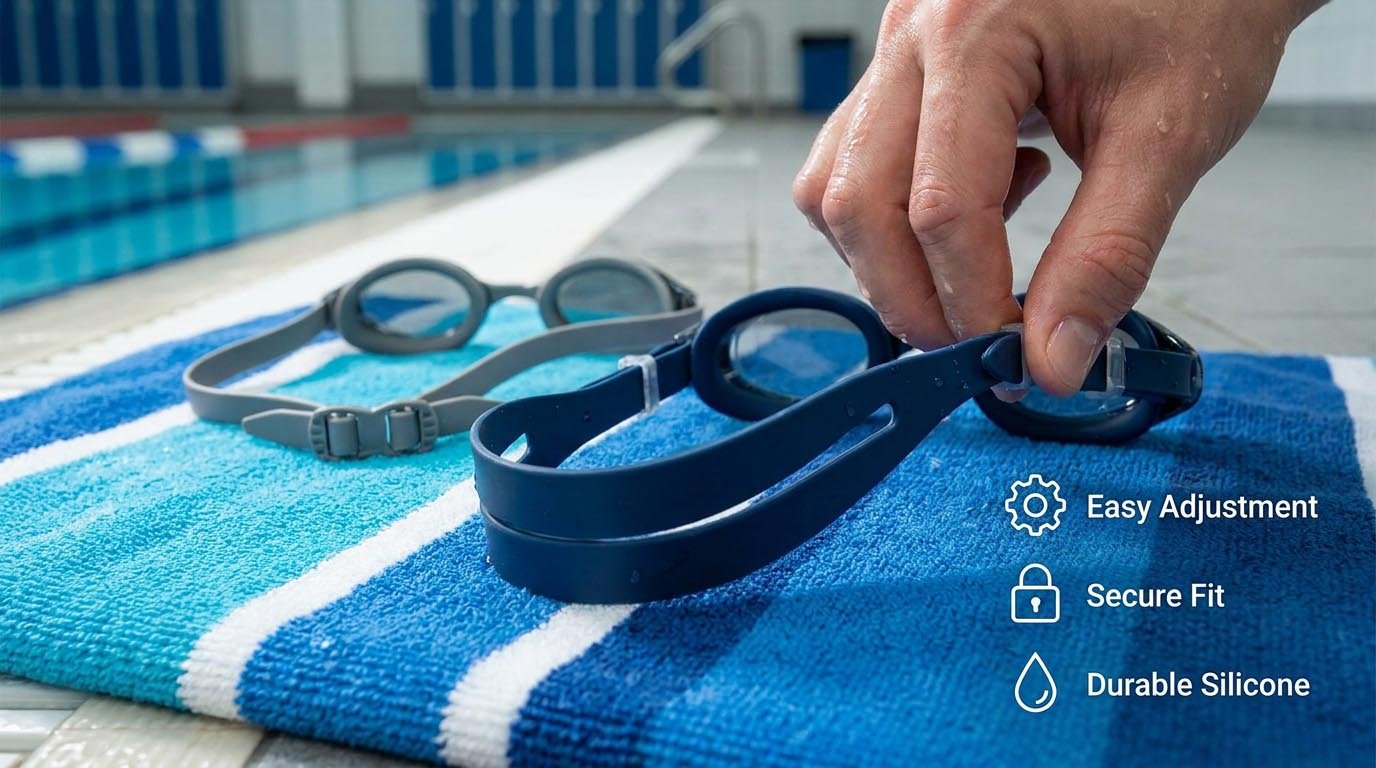
What makes a swimming goggle strap high quality?
A quality strap should:
- Hold tension during repeated use
- Resist chlorine and water exposure
- Adjust smoothly
- Stay secure during movement
- Avoid slipping on wet hair or swim caps
Strap material matters
Silicone straps are commonly preferred for:
- Better durability
- Better resistance to chlorine
- Better long-term elasticity
Lower-cost materials may still work for entry-level products, but they usually have shorter service life.
Single strap vs split strap
| Strap Type | Main Benefit | Best For |
|---|---|---|
| Single strap | Simple structure, lower cost | Recreational use |
| Split strap | Better tension distribution and stability | Training, racing, triathlon |
Why buckle design affects reviews
Adjustment systems that are hard to use often create unnecessary complaints, even if the lens and gasket are good.
Useful buckle features include:
- Easy wet-hand adjustment
- Secure lock
- Smooth tension control
- Low chance of accidental loosening
For kids, beginners, and transition sports like triathlon, user-friendly buckles can make a noticeable difference.
6. Durability and Material Stability
A product can look premium when new and still perform poorly after several weeks of actual use.
What durability means in swimming goggles
Durability usually includes:
- Lens resistance to scratching and yellowing
- Gasket resistance to hardening or deformation
- Strap elasticity over time
- Buckle strength
- Coating stability under chlorine exposure
- Assembly reliability
Why material grade matters
Material grade affects:
- How long the product keeps its original shape
- Whether the lens stays clear
- Whether the gasket becomes sticky or hard
- Whether the strap cracks or loses stretch
This is why high-quality swimming goggles should be evaluated not only by appearance, but also by expected use cycle.
Match durability to user frequency
Different users need different durability levels.
| User Type | Quality Priority |
|---|---|
| Competitive swimmer | Durable gasket, stable optics, secure strap, long-use performance |
| Fitness swimmer | Reliable anti-fog, comfort, moderate durability |
| Recreational swimmer | Comfort, value, basic clarity |
| Kids | Easy adjustment, soft fit, durability against rough handling |
| Outdoor swimmer | UV protection, stable coatings, secure seal |
A mismatch between durability level and usage frequency is one of the most common reasons for avoidable returns.
7. Certifications, Compliance and Market Requirements
Many buyers confuse product quality, factory audits, and market-entry documents. These are related, but they are not the same thing.

Do certifications mean the goggles are premium?
Not automatically. Some documents show that the product can legally enter a market. Others relate to material safety or social compliance. None of them alone guarantee premium user experience.
What types of documentation may matter?
Depending on the market and sales channel, buyers may need to confirm:
- Market-access documentation
- Material safety testing
- Retailer-required audit reports
- Packaging and labeling compliance
- Performance-related test reports when specific claims are made
Why compliance still matters for quality evaluation
Even if certification does not prove premium quality, it still affects the business outcome.
Missing or incorrect documents can lead to:
- Customs delays
- Marketplace listing issues
- Retailer rejection
- Extra testing costs
- Launch delays
For importers and brand owners, this makes compliance part of overall product quality management.
8. How to Evaluate High Quality Swimming Goggles for Different Markets
A good product for one market may be over-specified or under-specified for another.
For competitive and performance markets
Focus on:
- Better optics
- Durable anti-fog system
- Secure split strap
- Reliable gasket seal
- Adjustable fit options
- Premium material durability
For recreational retail markets
Focus on:
- Comfort
- Easy adjustment
- Clear lenses
- Good basic anti-fog
- Value-oriented material selection
- Attractive packaging
For kids’ swimming goggles
Focus on:
- Soft seal
- Easy buckle operation
- Fit adaptability
- Safe materials
- Better tolerance for rough handling
For outdoor or open-water products
Focus on:
- UV protection
- Stable coatings
- Secure fit under movement
- Clear visibility in changing light
The best quality decision is the one that fits the target user, not the one with the longest feature list.
Common Mistakes When Sourcing Swimming Goggles
1. Assuming all anti-fog claims mean the same thing
Different coating systems perform differently. A vague anti-fog claim often leads to inconsistent expectations.
2. Choosing material by price only
The lowest-cost gasket or strap may create higher after-sales cost later.
3. Treating all certifications as quality proof
Some documents are for compliance or audits, not performance.
4. Ignoring fit variation
A one-size product can still create a high return rate if the bridge and seal design are too limited.
5. Over-specifying features for the wrong market
Adding premium features where customers do not value them reduces competitiveness without improving sell-through.
6. Under-specifying durability for heavy-use products
This is especially risky for training, club, or competitive segments.
FAQ: High Quality Swimming Goggles
How long does anti-fog coating last on swimming goggles?
Anti-fog coating is not permanent. Its useful life depends on the treatment method, product level, frequency of use, and user care. Better systems usually last longer, but all coatings weaken over time.
Is silicone better than TPR for swimming goggles?
Silicone is usually better for durability and repeated use, while TPR is often more cost-effective and softer in feel for casual users. The better choice depends on the target market.
Do indoor swimming goggles need UV400?
Usually not. UV400 is most important for outdoor swimming, open water, beach use, and triathlon.
What makes swimming goggles comfortable?
Comfort mainly depends on gasket material, seal shape, nose bridge fit, and strap tension distribution. A quality goggle should seal well without needing excessive pressure.
Why do some swimming goggles leak even if the material is good?
Good material alone is not enough. Seal geometry, fit, nose bridge width, and strap adjustment all affect leak performance.
What documents do swimming goggles need for import or retail?
This depends on the target market, buyer type, and product claims. Common areas include market-access documents, material safety testing, retailer audit requirements, and packaging compliance.
Are expensive swimming goggles always higher quality?
Not always. A more expensive product may include features the user does not need. High quality means the right balance of performance, durability, fit, and compliance for the intended market.
Final Thoughts
High-quality swimming goggles are not defined by one feature alone. They result from the right combination of:
- Clear and stable lenses
- Realistic anti-fog performance
- Comfortable sealing
- Durable strap adjustment
- Material choices matched to user frequency
- Appropriate compliance support for the target market
For brands, importers, and buyers, the most important question is not simply whether a goggle looks premium. It is whether the product can deliver the right user experience with an acceptable return rate and reliable market readiness.
A lower unit cost can still become a higher total cost if the product creates complaints, replacement orders, or compliance delays. That is why the best way to judge swimming goggles quality is to compare features against actual user needs, sales channel requirements, and expected product lifecycle.
Need to Compare Swimming Goggle Quality Across Suppliers?
When reviewing suppliers, ask them to explain:
- Lens material and lens type
- Anti-fog treatment method
- Gasket material and seal design
- Strap material and buckle structure
- Fit options for different face shapes
- Expected product lifecycle
- Relevant compliance support for your market
A reliable supplier should be able to explain not only what features the goggles have, but also why those features match your target customer and sales channel.