Anti-fog performance can look excellent on a brand-new swimming goggle lens and still deteriorate after repeated use.
That is why buyers should not approve mass production based only on a fresh-sample steam test.
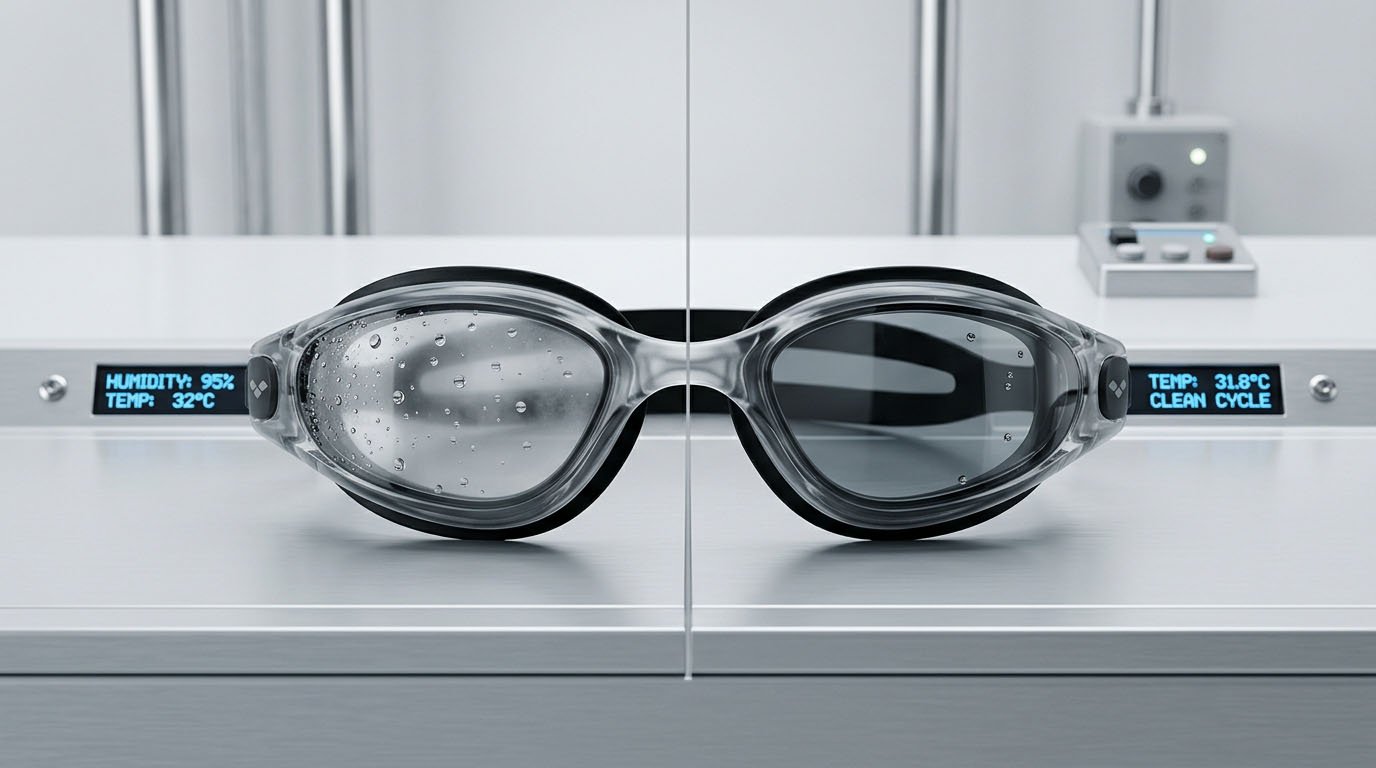
Anti-fog durability testing evaluates whether a lens can maintain acceptable anti-fog performance after controlled exposure to water, humidity, temperature changes, cleaning, and mechanical wear. A reliable pre-production program compares baseline performance with post-stress results across multiple samples and then confirms consistency again during pilot production.
For swimming goggle brands, the key question is not simply:
Does this prototype resist fogging?
It is:
Can the anti-fog performance remain stable after controlled stress and still be reproduced during production?
Quick Answer: How Is Anti-Fog Durability Tested?
A practical anti-fog durability validation process usually follows six stages:
- Establish baseline anti-fog performance
- Apply controlled durability stress
- Re-test anti-fog and optical performance
- Compare results with defined acceptance criteria
- Repeat testing across multiple samples
- Confirm performance during pilot production
The principle is simple:
A fresh anti-fog result shows initial performance. Durability testing shows whether that performance survives repeated stress.
A useful test record should state:
- what method was used,
- what conditions were applied,
- how samples were stressed,
- how many samples were tested,
- what pass/fail criteria were used,
- and whether pilot-run lenses were also verified.
Why Is a Fresh Anti-Fog Test Not Enough?
A new anti-fog lens often performs better than the same lens after repeated swimming, rinsing, cleaning, storage, and handling.
A simple warm-water or steam demonstration may confirm that anti-fog treatment is present, but it does not prove durability.
Initial Performance vs Durability
| Test Type | What It Tells You |
|---|---|
| Fresh-lens anti-fog test | Whether the lens initially resists fogging |
| Repeated stress testing | Whether performance survives controlled degradation |
| Multiple-sample testing | Whether results are repeatable |
| Pilot-run verification | Whether production can reproduce the result |
For buyers, the second and fourth rows matter most before bulk approval.
What Factors Can Reduce Anti-Fog Performance?
Anti-fog performance may change as lenses are exposed to:
- repeated water contact,
- humidity,
- temperature changes,
- rinsing and cleaning,
- rubbing or wiping,
- pool chemicals,
- skin oils,
- handling,
- and storage conditions.
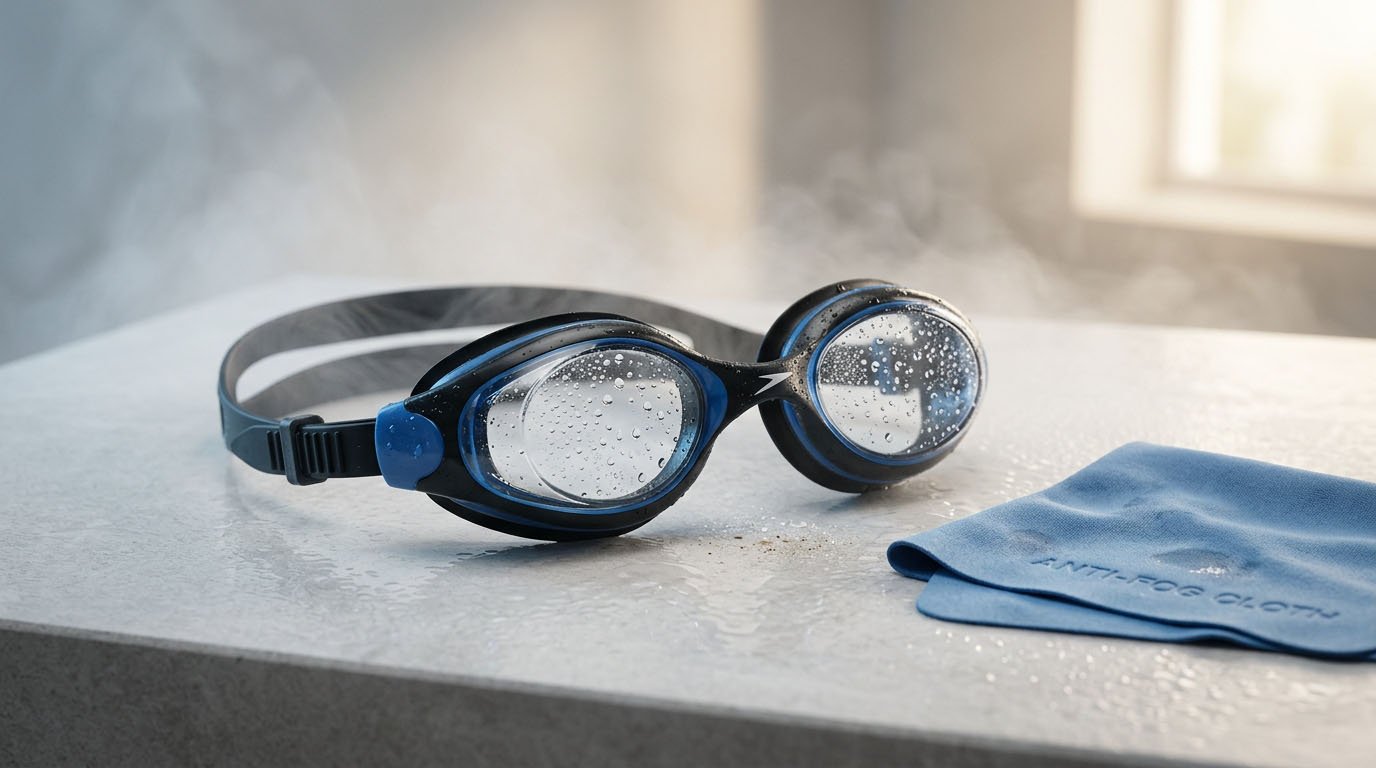
Different coating systems react differently, so testing conditions should be defined for the actual product instead of assumed from a generic claim.
Step 1: Establish Baseline Anti-Fog Performance
Before durability stress begins, the factory or laboratory needs a baseline.
This may include observations or measurements related to:
- fog formation,
- condensation,
- optical clarity,
- haze,
- and other agreed performance indicators.
What Should Be Recorded?
| Baseline Item | Buyer Should Confirm |
|---|---|
| Sample identity | Exact lens or goggle configuration |
| Test method | Defined procedure |
| Test conditions | Controlled and documented |
| Initial result | Recorded before stress |
| Acceptance criteria | Agreed before approval |
Without this baseline, it is difficult to judge how much performance changed after durability testing.
If you first need to establish initial anti-fog performance, see our guide on how to test anti-fog performance on swimming goggles.
Step 2: Apply Controlled Durability Stress
This is the core of anti-fog durability testing.
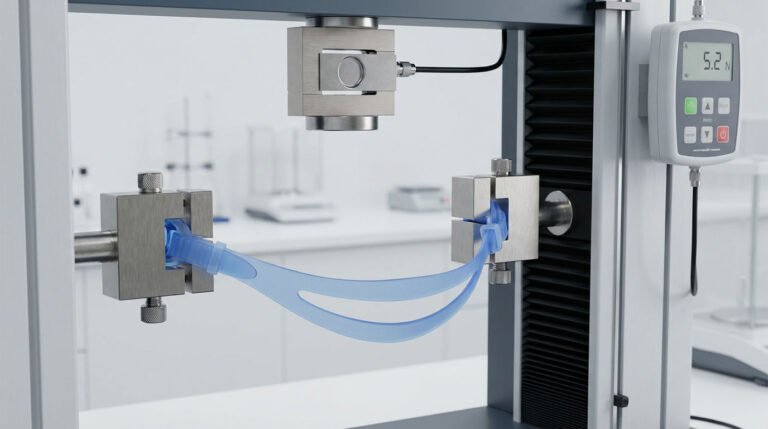
Instead of waiting months for natural field use, manufacturers can expose lenses to controlled stresses that simulate repeated handling and environmental exposure.
Water Exposure
Repeated immersion, rinsing, soaking, or wet-dry cycles can help evaluate whether anti-fog performance changes after repeated water contact.
Humidity and Temperature
Humidity and controlled temperature changes can help identify whether environmental conditions affect coating stability or condensation behavior.
Cleaning and Wiping
Because users may rinse, touch, or wipe the inside of goggle lenses, controlled cleaning or rubbing may be included where relevant.
Mechanical Abrasion
Controlled abrasion can also help identify whether repeated surface contact reduces anti-fog performance or damages the coating.
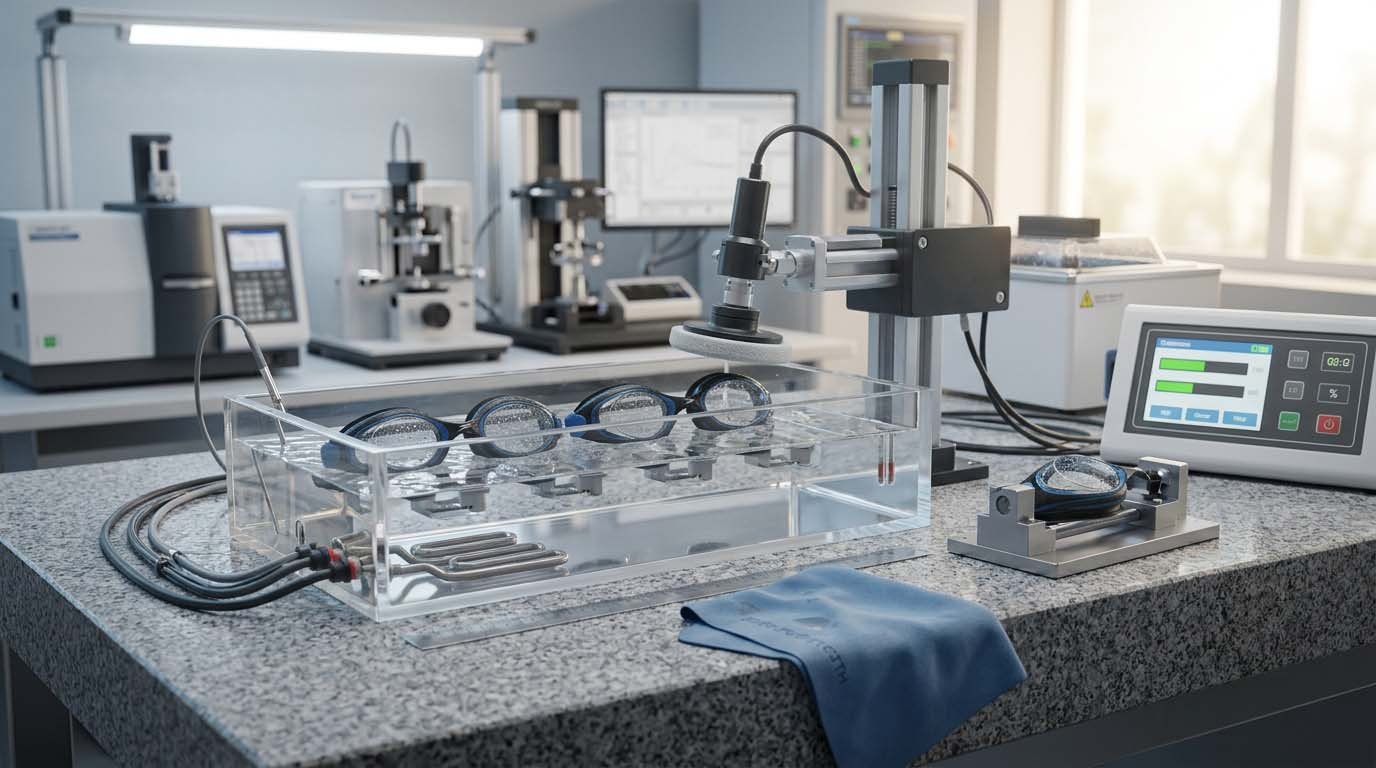
The exact method should come from the agreed test protocol.
A credible procedure should document:
- exposure conditions,
- cycle definition,
- sample preparation,
- cleaning method,
- drying conditions,
- and evaluation procedure.
The goal is repeatability, not a vague “PASS.”
Step 3: Re-Test Anti-Fog Performance After Stress
After durability cycles are completed, the samples should be evaluated again.
The comparison is straightforward:
Before Stress → After Stress
Depending on the specification and available equipment, evaluation may include:
- visible fogging,
- condensation behavior,
- optical clarity,
- haze,
- coating failure,
- scratching,
- peeling,
- or clouding.
The same evaluation method should be used consistently before and after stress whenever possible.
Step 4: Compare Results With Defined Acceptance Criteria
Claims such as:
“Excellent anti-fog”
or:
“Long-lasting anti-fog”
mean little unless the test method and acceptance requirements are known.
A stronger specification answers four questions:
| Question | What Should Be Defined? |
|---|---|
| What is being tested? | Lens and anti-fog configuration |
| How is it stressed? | Defined durability cycles |
| How is it evaluated? | Agreed inspection or measurement method |
| What counts as a pass? | Predefined acceptance criteria |
Avoid Unsupported Lifetime Claims
Durability testing should not automatically become claims such as:
- “permanent anti-fog,”
- “never fogs,”
- “lasts exactly X months,”
- or “guaranteed for X uses.”
Real-world performance can vary with:
- water chemistry,
- cleaning habits,
- storage,
- skin oils,
- use frequency,
- and handling.
Controlled, defensible claims are more useful than exaggerated promises.
Step 5: Test Multiple Samples
One successful sample proves only that good performance is possible.
It does not prove manufacturing consistency.
Variation may come from:
- lens molding,
- surface preparation,
- coating application,
- curing,
- handling,
- or production conditions.
Testing multiple samples helps answer:
Is the result repeatable?
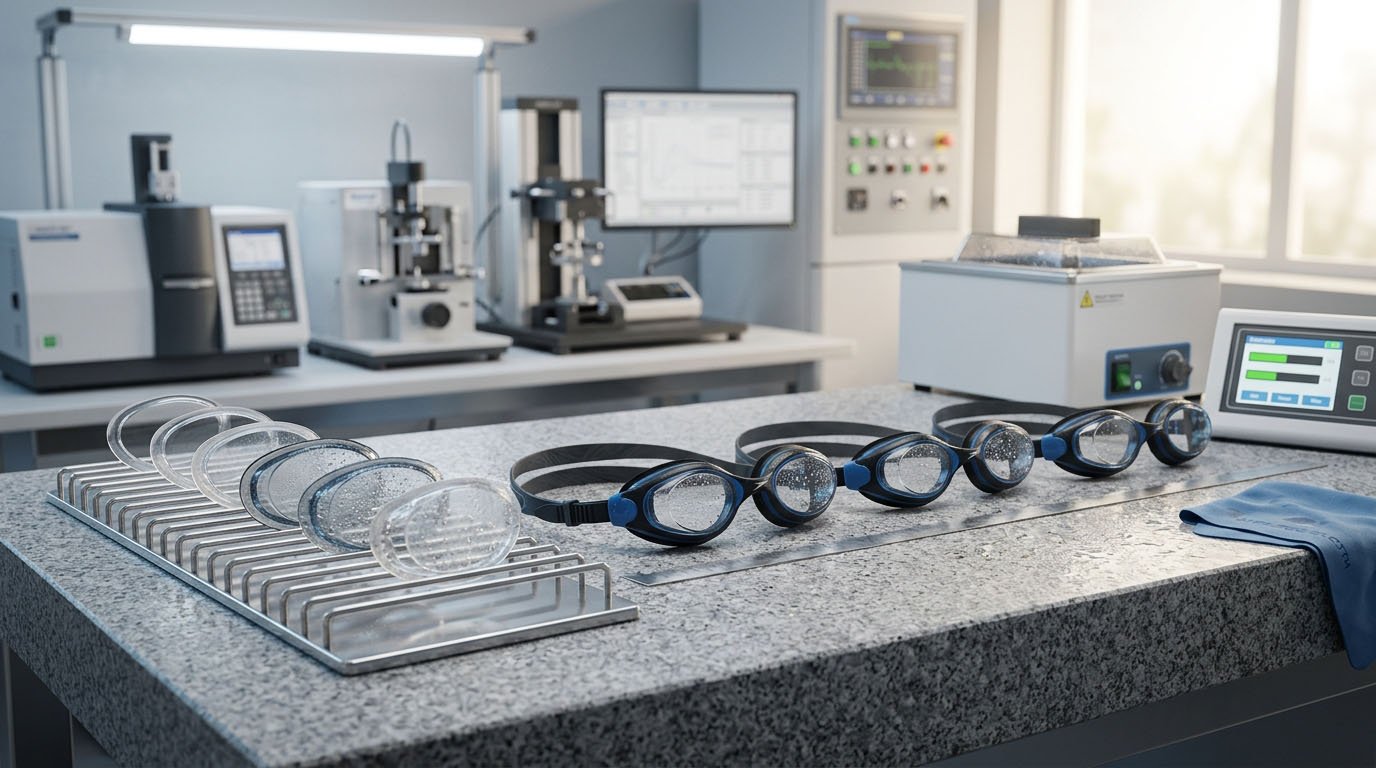
The appropriate sample quantity should be defined by the project, production stage, quality agreement, and risk level rather than by an arbitrary universal number.
Step 6: Confirm Performance During Pilot Production
This is one of the most important stages before mass production.
A development sample may perform well under carefully controlled conditions, but production introduces more variability.
Depending on the coating process, important variables may include:
- lens surface preparation,
- coating consistency,
- application conditions,
- drying or curing,
- equipment stability,
- contamination control,
- operator handling,
- and production-line conditions.
A Practical Validation Flow
Development Sample → Durability Stress Test → Pilot Run → Batch Sampling → Re-Test → Mass Production Approval
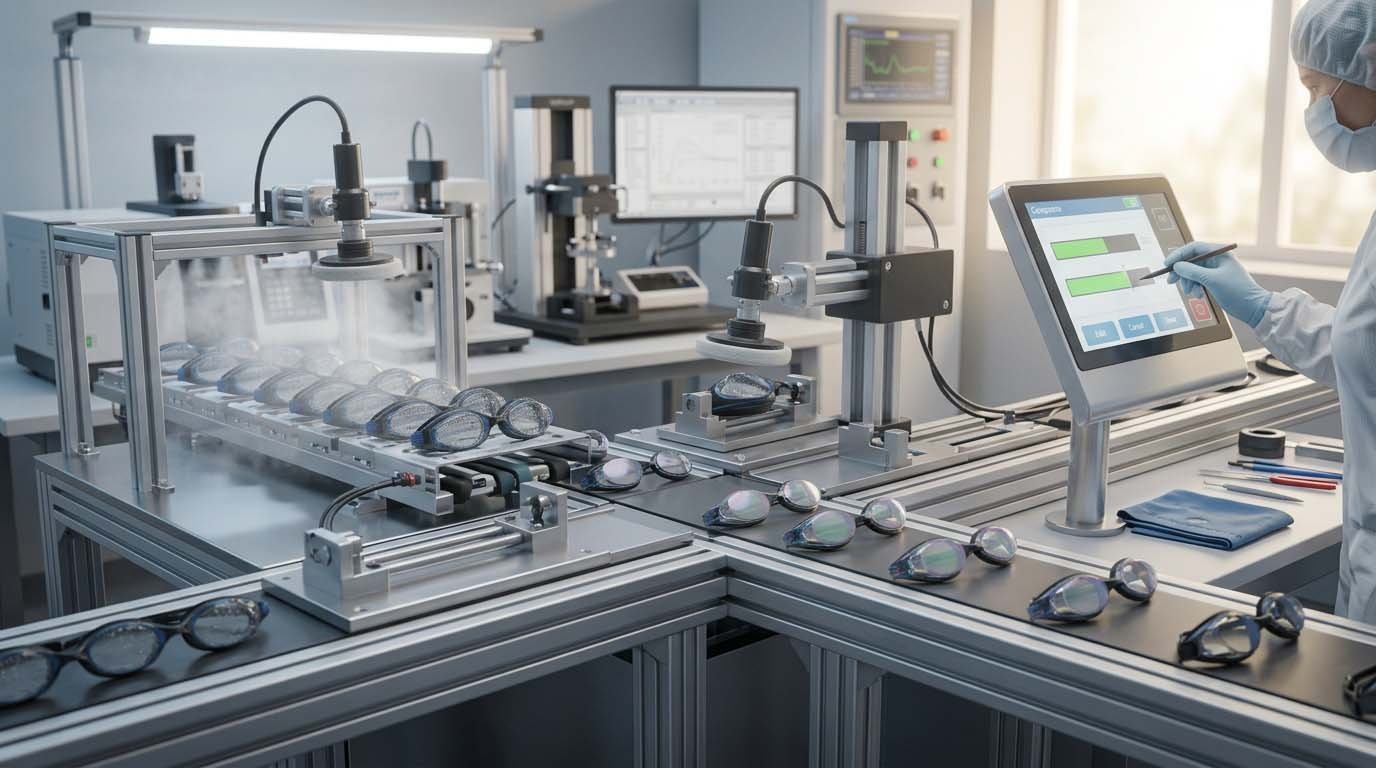
Pilot-run lenses should be evaluated against the same approved criteria used during development.
This helps answer:
Can the approved anti-fog performance be reproduced under real manufacturing conditions?
For custom projects, this should form part of the overall sampling and prototyping process.
Pilot production is also where scale-up problems often become visible. For the manufacturing causes behind sample-to-bulk inconsistency, see why anti-fog samples pass but bulk orders fail.
What Should an Anti-Fog Test Record Show?
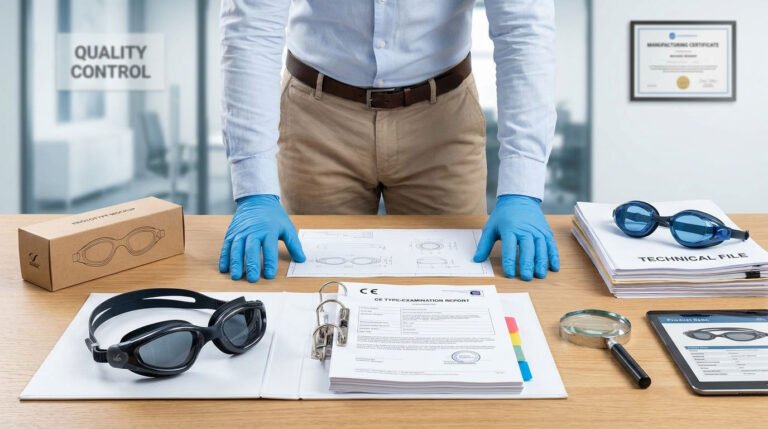
A credible anti-fog result should be traceable to the actual configuration being approved.
| Test Record Item | What Buyer Should See |
|---|---|
| Sample ID | Model, lens, and anti-fog configuration |
| Test Method | Internal or external method reference |
| Baseline Result | Performance before stress |
| Stress Condition | Defined exposure cycles |
| Post-Stress Result | Performance after stress |
| Test Date | Traceability to development stage |
| Approval Status | Pass, revise, or retest |
The key point is traceability.
A report should connect the result to the actual lens configuration being approved for production, not to an unrelated or generic sample.
What Does ISO 18527-3 Mean for Anti-Fog Testing?
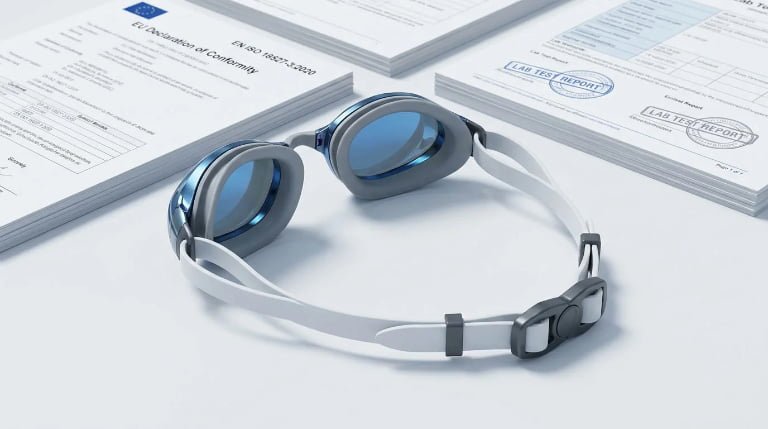
ISO 18527-3 covers eyewear intended for surface swimming and includes requirements and test methods relevant to swimming goggles.
For buyers, the important distinction is:
Standards testing and product-specific durability validation are related, but they are not automatically the same thing.
A standard may be used to evaluate a defined anti-fog requirement.
A brand may still want additional durability validation after:
- water exposure,
- cleaning,
- environmental stress,
- or production processing.
In practical terms:
Standards testing asks whether the product meets a defined requirement. Durability validation asks whether performance remains stable after controlled stress and whether production can reproduce it consistently.
Buyers should confirm which method, product configuration, sample condition, and acceptance criteria were used.
A full compliance discussion belongs in a separate testing or regulatory guide.
What Evidence Should Buyers Review Before Mass Production?
Before final approval, buyers should review the following:
| Check | Confirm Before Approval |
|---|---|
| Baseline test | Initial performance documented |
| Test conditions | Method and environment defined |
| Durability stress | Water, cleaning, abrasion, or other relevant stress |
| Post-stress test | Performance checked again |
| Multiple samples | Repeatability verified |
| Acceptance criteria | Defined before release |
| Traceability | Linked to actual product configuration |
| Pilot-run samples | Production process verified |
| Documentation | Records connected to the project |
If several of these items are missing, buyers should understand why before releasing the project to volume manufacturing.
For broader factory-level testing and inspection, see Jerry’s swimming goggle quality assurance process.
Development Sample vs Pilot Run vs Mass Production
| Stage | Main Question |
|---|---|
| Development sample | Can the target anti-fog performance be achieved? |
| Durability validation | Can that performance survive defined stress? |
| Pilot production | Can the manufacturing process reproduce it? |
| Bulk QC | Does production remain within specification? |
A stronger approval sequence is:
Develop → Test → Stress → Re-Test → Pilot → Confirm → Release
This is especially important for OEM and ODM swimming goggle development where lens, coating, color, mold design, or configuration may differ from an existing model.
Common Anti-Fog Testing Mistakes
Approving From One Steam Demonstration
A visual demonstration is useful for screening but weak as standalone durability evidence.
Confusing Initial Performance With Durability
A new coating can perform well before repeated stress.
Durability requires re-testing after controlled exposure.
Testing Only Development Samples
Where production consistency matters, pilot-run units should also be checked.
Ignoring Traceability
A test result is much less useful if it cannot be linked to the actual:
- model,
- lens,
- coating,
- development stage,
- and production configuration.
FAQ About Anti-Fog Durability Testing
Does Passing an Anti-Fog Test Guarantee How Long Goggles Will Stay Fog-Free?
No.
Laboratory testing provides evidence under defined conditions.
Real-world service life can vary with swimmer behavior, pool conditions, cleaning, storage, and handling.
Is ISO Anti-Fog Testing the Same as Durability Testing?
Not necessarily.
A standard may define anti-fog requirements or methods, while product-specific durability testing may add repeated stress cycles and pilot-production verification.
They can support each other but should not be treated as identical.
Should Anti-Fog Be Tested Again After Pilot Production?
For projects where anti-fog performance is an important specification, this is highly advisable.
Pilot-run verification helps confirm that the production line can reproduce the approved development result.
How Jerry Approaches Pre-Production Quality Validation
Anti-fog testing should not operate as an isolated final inspection.
It should connect with:
- lens and material selection,
- sampling,
- surface treatment validation,
- production process control,
- pilot-run review,
- and final quality assurance.
Jerry supports swimming goggle projects from OEM and ODM development through sampling and prototyping and production-level quality assurance.
You can also review Jerry’s swimming goggles manufacturing capabilities when comparing lens, gasket, color, anti-fog, and packaging configurations.
Conclusion
Anti-fog durability testing should prove more than whether a brand-new lens stays clear during one demonstration.
A reliable pre-production process should evaluate:
Baseline Performance → Controlled Stress → Post-Stress Testing → Multiple Samples → Pilot Production → Mass Production Approval
For buyers, the strongest evidence is a:
documented, repeatable, and traceable testing process that connects sample performance with the actual product configuration and production process.
Before approving bulk production, confirm:
- the test method,
- stress conditions,
- sample quantity,
- acceptance criteria,
- traceability,
- and pilot-run results.
If you are developing a private label or OEM swimming goggle and want to review lens treatment, anti-fog requirements, samples, or production validation with a manufacturer, contact Jerry to discuss your project.