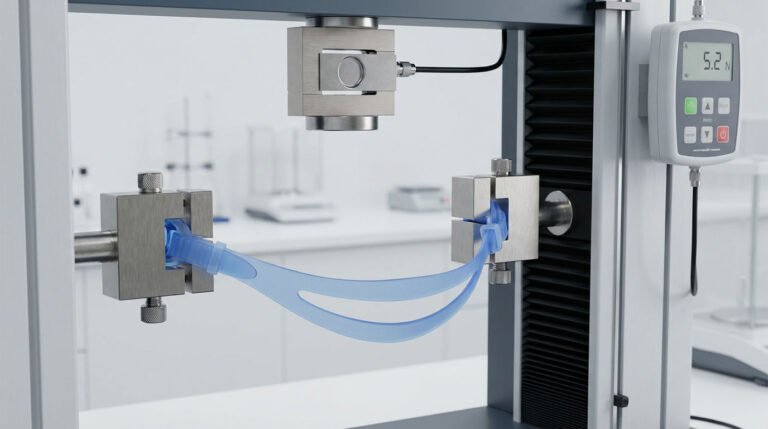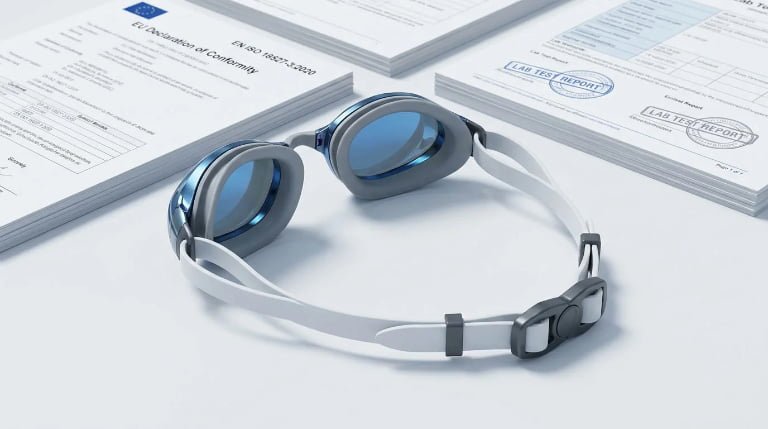
If you are launching private label swimming goggles in Europe, your manufacturer may already have CE-related test reports for an existing model. Can you use those reports for your own branded product, or do you need new testing?
Yes, existing factory test reports may support your private label swimming goggles, but they cannot be reused automatically. You must confirm that the tested model matches your actual product, assess any customization changes, and ensure the evidence supports the conformity documentation issued by the responsible legal manufacturer.
A new logo does not necessarily require a new laboratory test. However, changing lens materials, coatings, gaskets, or product construction may affect whether the original report remains applicable.
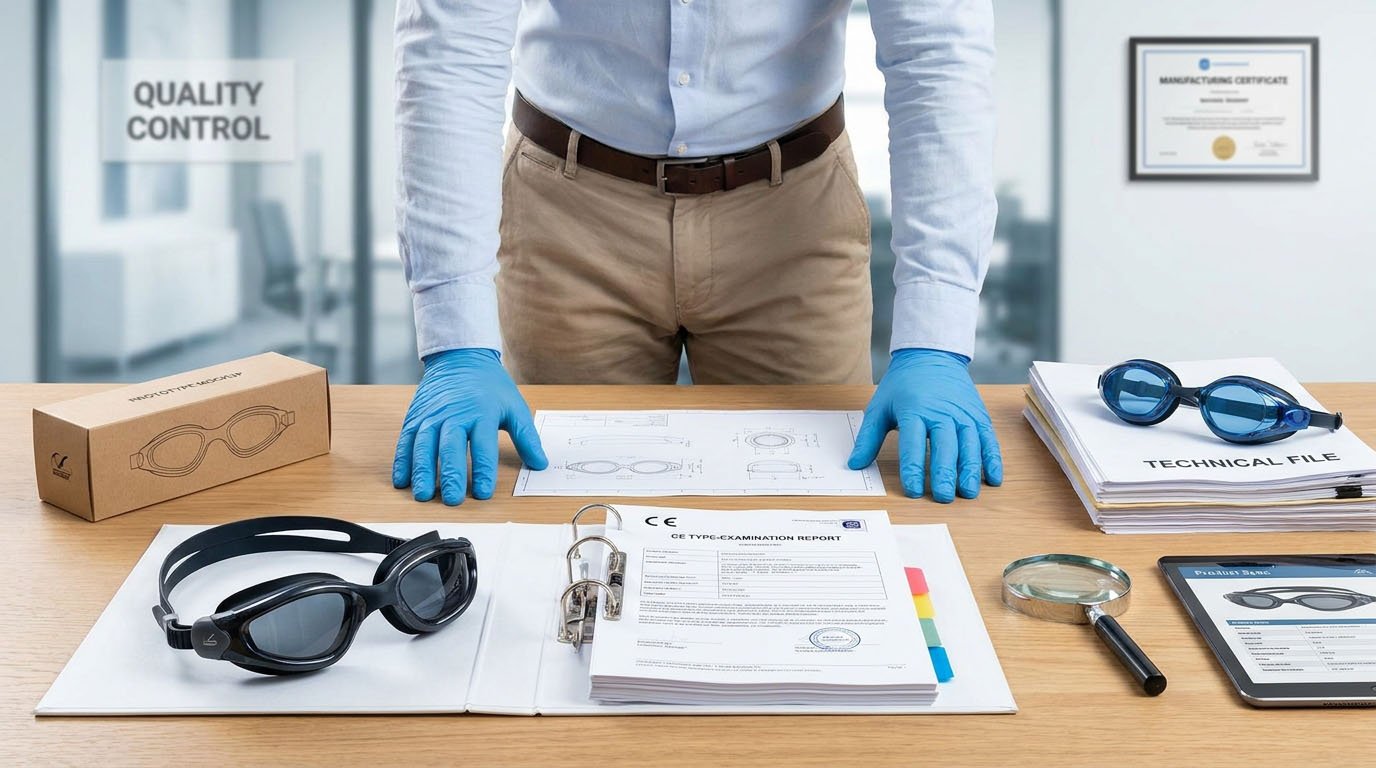
This guide explains how brand owners can evaluate existing factory reports, identify documentation gaps, and determine when additional testing may be necessary before mass production.
Quick Answer: Can You Reuse a Factory’s CE Test Reports?
The answer depends on the relationship between the tested product and your branded version.
| Private Label Scenario | Can Existing Reports Support Compliance? | Recommended Action |
|---|---|---|
| Logo added to an unchanged model | Often possible | Verify model identity and legal documentation |
| New packaging only | Often possible for product testing | Review branding, labeling, and instructions |
| New strap color | Depends on the pigment and materials | Assess chemical and material differences |
| Different lens tint | Requires evaluation | Check optical performance and test coverage |
| New mirrored coating | Requires evaluation | Review optical and coating-related evidence |
| Modified gasket or frame | May require further testing | Assess fit, construction, and performance changes |
| Entirely new mold | Existing reports are unlikely to cover the full design | Establish a new conformity assessment plan |
The key principle: Existing laboratory evidence can sometimes be reused, but the legal manufacturer’s responsibility for the finished product cannot simply be transferred through a supplier’s report.
For conventional surface swimming goggles, the applicable EU PPE route is generally Category I under Regulation (EU) 2016/425, using Module A — Internal Production Control. This does not normally require a Notified Body to perform EU type-examination, but appropriate supporting evidence and conformity documentation remain necessary.
For the general CE requirements and classification process, see our Do Swimming Goggles Need CE Certification? guide.
This article focuses specifically on reusing existing test evidence in private label and OEM manufacturing projects.
Step 1: Confirm Who Is Legally Responsible for Your Branded Goggles
Before reviewing factory documents, establish who is legally responsible for the product placed on the EU market.
A common misunderstanding is that the Chinese OEM factory automatically remains the legal manufacturer because it physically produces the goggles.
Under Regulation (EU) 2016/425, an entity that has PPE manufactured and markets it under its own name or trademark may be considered the manufacturer. Article 12 also applies manufacturer obligations to importers or distributors that place PPE on the market under their own name or trademark, or make changes affecting conformity.
Factory Manufacturer vs. Legal Manufacturer
| Responsibility | OEM Factory | Private Label Brand as Legal Manufacturer |
|---|---|---|
| Physical production | Manufactures the goggles | Defines and approves requirements |
| Product specifications | Provides component and production information | Confirms the marketed configuration |
| Existing test evidence | Supplies available test reports | Evaluates whether evidence supports its product |
| Technical documentation | Provides relevant production evidence | Ensures the required documentation is established and available |
| EU Declaration of Conformity | Provides supporting information | Takes responsibility for the applicable declaration |
| Production consistency | Controls manufacturing operations | Ensures appropriate supplier controls are in place |
The exact division depends on the commercial arrangement and each party’s legal role.
Can You Use a CE Declaration Issued Under the Factory’s Name?
Do not assume that an existing factory Declaration of Conformity automatically covers a product marketed under your own brand.
The responsible manufacturer must ensure the EU Declaration of Conformity identifies the relevant PPE model and correctly reflects the legal manufacturer.
If your company is the legal manufacturer, it must meet the applicable manufacturer obligations. An authorized representative may perform certain delegated tasks under a proper written mandate, but the manufacturer retains responsibility.
For detailed explanations of manufacturer obligations, technical documentation, and importer responsibilities, refer to our EU PPE Regulation 2016/425 for Swimming Goggles guide.
Step 2: Match the Factory Test Report to Your Private Label Model
The next step is to establish whether the existing laboratory report represents the product you intend to sell.
A factory may have a valid report for one swimming goggle model, but that report does not automatically cover every similar design or color option.
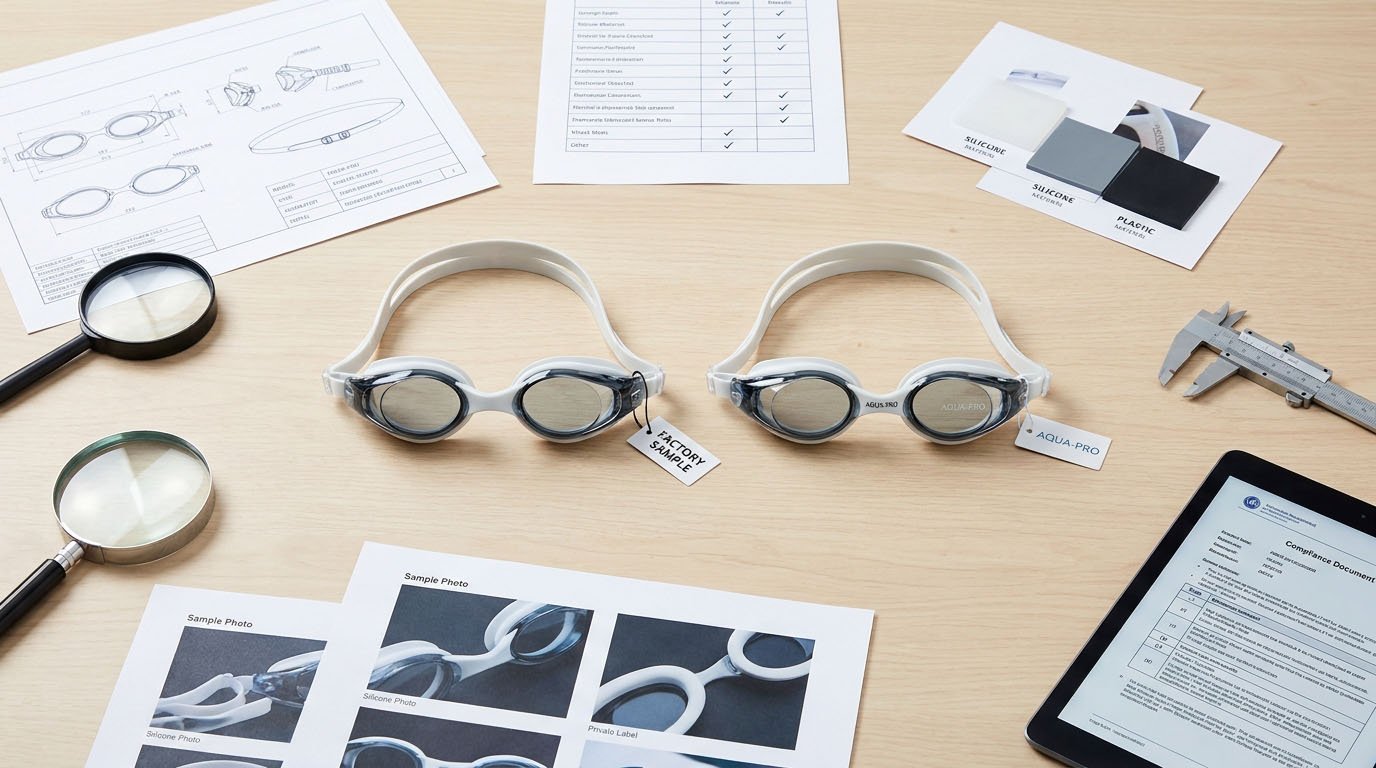
Check the Model Identity
Start by comparing the following:
- Factory model number
- Brand model number or SKU
- Tested product photographs
- Lens configuration
- Frame and gasket construction
- Strap and buckle design
- Material specifications
- Applicable test scope
For example, imagine the factory tested:
Factory Model SG-208
- Clear polycarbonate lens
- Silicone gasket
- Silicone strap
- Standard anti-fog coating
Your retail product is:
Brand Model Aqua-Pro 100
- Same lens and frame construction
- Same materials and coating
- Custom logo
- Branded packaging
In this illustrative example, the original testing evidence may remain relevant if the product is technically unchanged and the documentation establishes a reliable connection between the two model identities.
Build a Model Equivalence Record
A practical approach is to create a model comparison record.
| Verification Item | Factory Model SG-208 | Brand Model Aqua-Pro 100 |
|---|---|---|
| Frame tooling | Original mold | Same mold |
| Lens material | Polycarbonate | Same specification |
| Gasket | Silicone | Same specification |
| Strap | Silicone | Same specification |
| Anti-fog coating | Standard formulation | Same formulation |
| Branding | Factory identification | Custom logo |
| Packaging | Factory box | Brand retail box |
This record is an example, not proof of conformity by itself.
The record should identify any differences, reference supporting specifications, and document why existing evidence remains applicable.
What If the Report Lists Only the Factory’s Name?
A test report naming the original factory is not automatically unusable.
The important questions are whether the report is authentic, whether its scope is relevant, and whether the tested product can be reliably linked to your branded configuration.
Depending on the project, supporting documents may include model equivalence records, technical drawings, material specifications, sample photographs, and controlled BOM revisions.
If the connection remains unclear, ask the laboratory or a qualified compliance specialist whether additional evidence or testing is required.
For help examining test methods, results, and laboratory information, see our How to Read a Swimming Goggle Test Report guide.
Step 3: Assess Whether Customization Changes Affect Existing Test Evidence
Not all customization changes carry the same compliance implications.
Adding a logo to an unchanged product differs significantly from modifying its optical properties or structural components.
The better question is not simply:
"Does customization require a new CE test?"
Instead, ask:
Could this specific change affect a safety requirement, tested characteristic, or product claim?
Customization Impact Assessment
| Customization | Potential Impact | What to Check |
|---|---|---|
| Logo printing | Ink composition, marking, or surface application | Materials and application method |
| Packaging redesign | Legal information and traceability | Required identification, instructions, and claims |
| Strap color | Pigments or formulation | Chemical and material specifications |
| Lens color | Light transmission and optical characteristics | Existing optical test coverage |
| Mirrored lens | Optical transmission and coating characteristics | Relevant testing evidence |
| Anti-fog formula | Coating composition and performance | Test scope and formulation consistency |
| Gasket material | Skin-contact properties, fit, and sealing performance | Material and functional evidence |
| Frame or mold modification | Structural and dimensional performance | Product-level reassessment |
These are screening considerations, not automatic retesting rules.
When May Existing Evidence Be Sufficient?
Existing reports may continue to support conformity when:
- The underlying product design is unchanged.
- Material specifications remain equivalent.
- The relevant test scope covers the configuration.
- Supporting records establish the model relationship.
- The responsible manufacturer documents its assessment.
When Might Additional Testing Be Needed?
Further evaluation may be necessary when:
- A new lens material replaces the tested material.
- A different tint or mirror treatment changes optical characteristics.
- A silicone formulation changes.
- The frame or gasket geometry is modified.
- New performance claims are introduced.
- The original report covers only part of the applicable requirements.
For example, if a clear-lens goggle has been tested but your brand adds a mirrored option, the clear-lens report may not provide sufficient evidence for the new optical configuration.
That does not automatically mean the entire product must be retested. A targeted evaluation may be appropriate if existing evidence covers the unaffected requirements.
Do You Need Separate Reports for Every Color?
Not necessarily.
Different colors or variants may be supported by a combination of existing testing, material evidence, representative configurations, and documented technical assessments.
However, brands should not assume that every color variation is equivalent, especially where pigments, coatings, or light transmission are involved.
The objective is to establish appropriate evidence for each marketed configuration, not to collect unnecessary duplicate reports.
Step 4: Connect Factory Reports to Your Brand’s Compliance Documentation
Once the model and customization assessment are complete, the next challenge is ensuring the evidence supports the product placed on the market.
An existing test report is one part of that evidence.
It is not, by itself, an EU Declaration of Conformity.
The Evidence Chain
A practical sequence is:
Factory Tested Model → Product Equivalence Review → Customization Assessment → Brand Product Specification → Technical Documentation → EU Declaration of Conformity
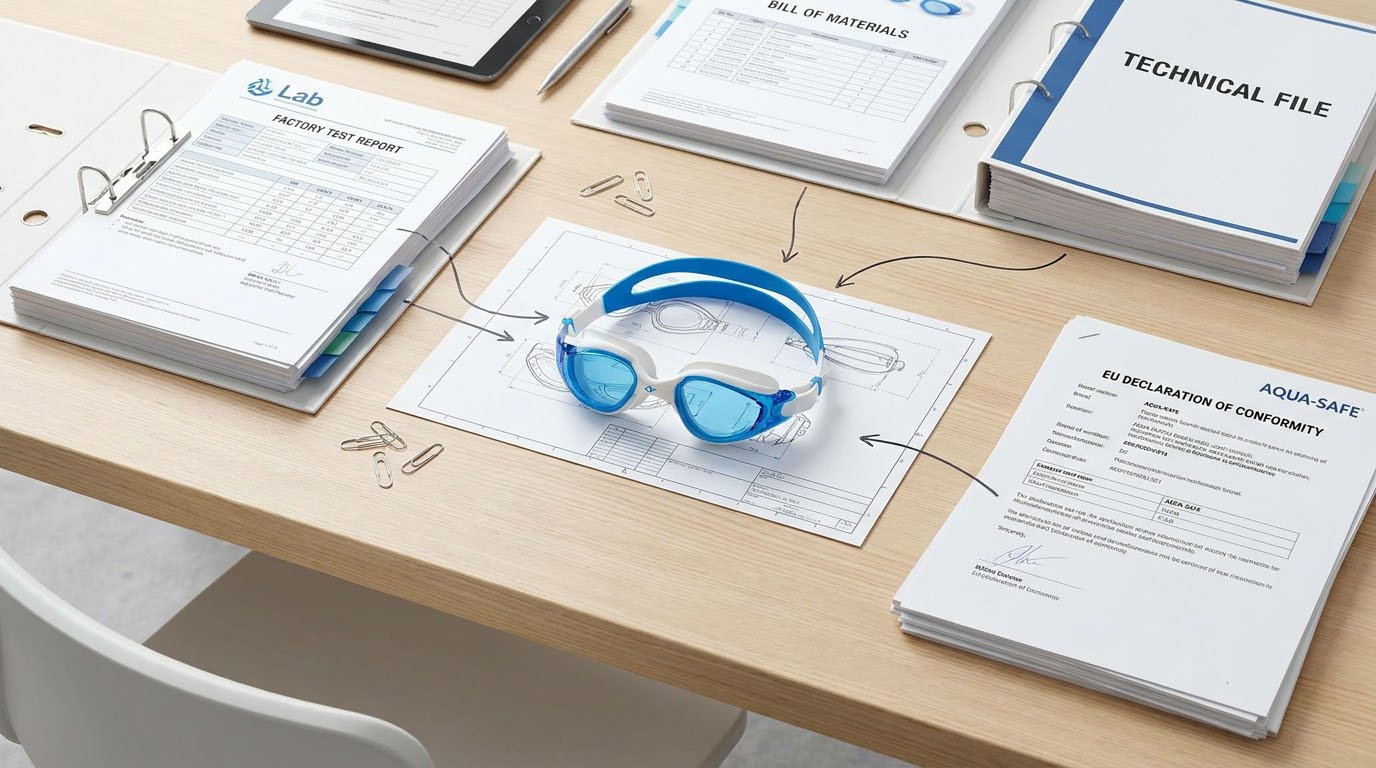
The relevant documentation should connect each stage without unexplained differences.
Documents to Request From Your Factory
Before approving production, ask for the documents relevant to your project:
| Document | Purpose |
|---|---|
| Original laboratory test report | Shows which sample and requirements were evaluated |
| Product drawings and specifications | Identifies the tested construction |
| Bill of Materials (BOM) | Documents relevant materials and components |
| Model equivalence statement | Connects factory and branded model identities |
| Customization change record | Identifies differences from the tested configuration |
| Material and coating evidence | Supports relevant component-level requirements |
| Production specification | Establishes the approved configuration for manufacturing |
The legal manufacturer then needs to ensure that the required technical documentation and EU Declaration of Conformity are properly established.
For Category I PPE, the manufacturer generally uses Module A and is responsible for demonstrating conformity. Under the PPE Regulation, the technical documentation and Declaration of Conformity must be retained for ten years after the PPE has been placed on the market.
Does a Laboratory Report Automatically Provide CE Approval?
No.
A report shows the results of specified testing on identified samples.
It does not automatically establish that the final product satisfies every applicable EU requirement or that the correct legal documentation has been issued.
The manufacturer must assess whether the entire body of evidence supports the product’s conformity.
Step 5: Verify Evidence Before Approving Mass Production
Even when existing factory test reports can be used, changes during manufacturing may create a new gap between the documentation and finished goggles.
This is why report verification should happen before mass production, not only before shipment.
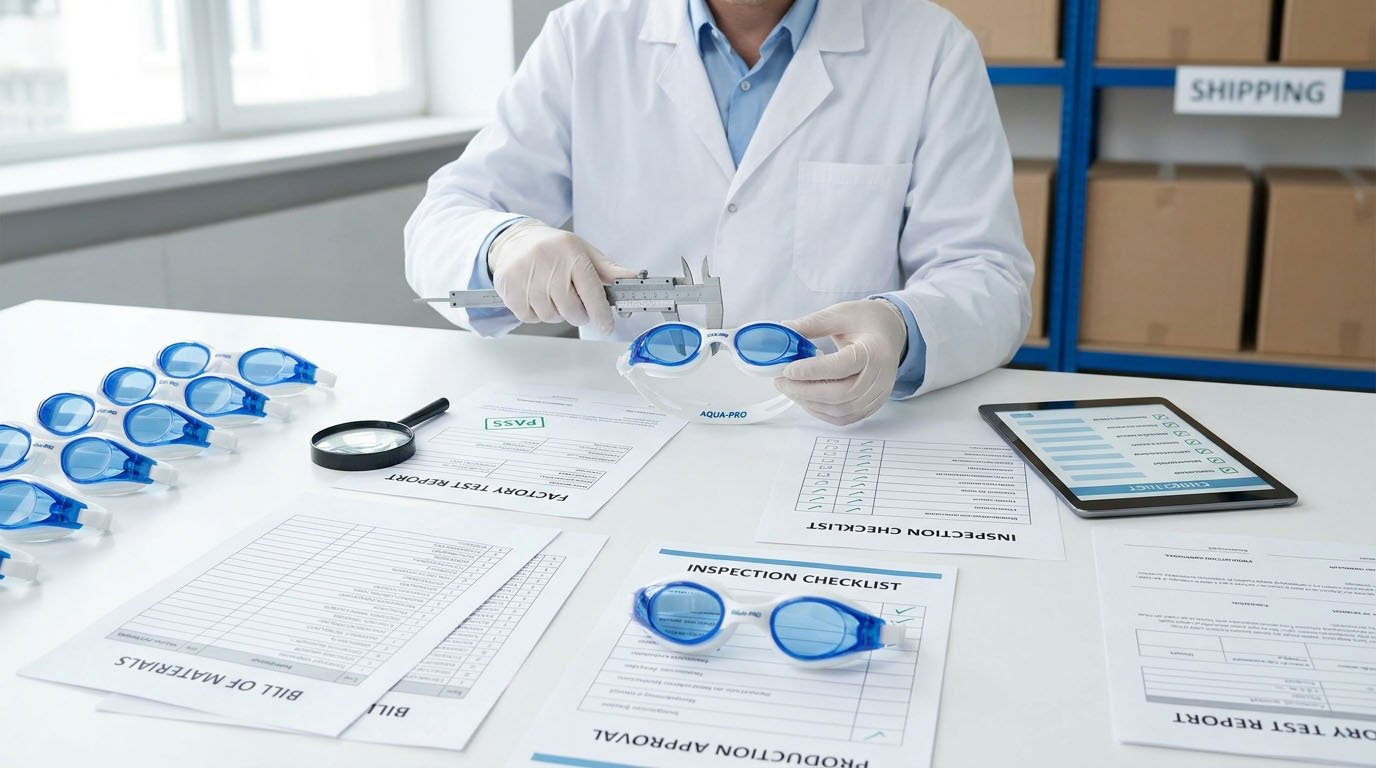
Checkpoint 1: Initial Product Selection
Ask whether the factory already has relevant test evidence for the model you are considering.
Identify any restrictions on the configurations covered.
Checkpoint 2: Sampling and Customization
Compare the branded sample with the tested model.
Record changes to materials, lenses, coatings, or construction.
Where product modifications require new verification, complete the necessary assessment before approving the final sample.
Jerry’s Sampling & Prototyping process can help brands establish and review their product specifications before mass production.
Checkpoint 3: Pre-Production Approval
Confirm that the following documents are consistent:
- Factory test model
- Branded product specification
- Final approved sample
- BOM revision
- Customization assessment
- Relevant testing evidence
Do not begin production while important conformity questions remain unresolved.
Checkpoint 4: Bulk Production and Shipment
Verify that manufactured goggles continue to match the approved configuration.
Pay particular attention to material substitutions, lens coatings, labeling, and traceability.
A supplier’s Quality Assurance procedures can support this consistency through incoming material checks, in-process inspection, and finished-product verification.
However, factory QC does not replace the legal manufacturer’s conformity responsibilities.
Common Mistakes When Reusing Factory CE Test Reports
Mistake 1: Treating a Test Report as a Transferable CE Certificate
A report is technical evidence, not a transferable authorization covering every brand or model.
Better approach: Verify its scope and establish documented links to the branded product.
Mistake 2: Assuming Logo-Only Customization Removes Legal Responsibilities
Even where the product is physically unchanged, selling under your trademark may create manufacturer obligations.
Better approach: Confirm the legal manufacturer and issue the required conformity documentation accordingly.
Mistake 3: Assuming Every Product Change Invalidates the Original Report
Some changes may affect only selected requirements. Others may not affect the relevant tested properties.
Better approach: Document a change-impact assessment and determine whether existing evidence is adequate.
Mistake 4: Using Reports Without Confirming the Test Scope
A factory may provide a valid report that covers only selected requirements or an earlier product configuration.
Better approach: Check the tested sample, standard edition, applicable amendments, test items, and results.
Mistake 5: Changing Materials After Final Sample Approval
A supplier may substitute materials or coatings during production without realizing that the change affects the original conformity assessment.
Better approach: Establish material-change controls and require approval before significant substitutions.
FAQ: Private Label Swimming Goggles and CE Test Report Reuse
Can I Put My Logo on CE-Tested Swimming Goggles Without Retesting?
Possibly. If the product is technically unchanged and existing testing adequately supports the branded configuration, new testing may not be necessary. The legal manufacturer must still meet the applicable conformity and documentation obligations.
Can My Brand Use a Test Report Issued to a Chinese Factory?
Potentially. The report may be usable as supporting evidence if the tested model, relevant specifications, and test scope can be reliably linked to your product. The report’s original applicant name alone does not determine its suitability.
Do Different Lens Colors Require Separate CE Testing?
Not automatically. Different lens colors may affect optical performance or material compliance, so the differences should be evaluated. Additional testing depends on the existing evidence and applicable requirements.
Does Every Private Label Swimming Goggle Need a Notified Body Certificate?
No. Conventional surface swimming goggles are generally Category I PPE under Regulation (EU) 2016/425 and typically follow Module A, which does not require Notified Body EU type-examination. Unusual products or different protective claims require their own classification assessment.
Can One Factory Test Report Support Multiple Brand Models?
Sometimes. A shared report may support multiple brand identities or product variants where technical equivalence and test coverage are adequately documented. Distinct configurations must not be assumed to be covered without assessment.
What Should I Do If the Factory Refuses to Share Its Full Technical Files?
Ask what supporting evidence, controlled documentation, or technical information can be made available to the responsible legal manufacturer and relevant authorities.
Confidentiality arrangements may help protect proprietary information, but they must not prevent the legal manufacturer from fulfilling its compliance obligations.
If the required evidence cannot be established or accessed appropriately, resolve that gap before placing the product on the market.
Conclusion: Reuse Evidence, Not Assumptions
For private label swimming goggles, existing factory CE-related test reports may reduce duplicated testing and support a more efficient product launch.
However, report reuse is appropriate only when the evidence genuinely applies to the finished branded product.
Before placing your order, confirm three essentials:
- Product identity: Does the tested model match your branded configuration?
- Customization impact: Do material, lens, coating, or structural changes affect the existing evidence?
- Legal responsibility: Does the responsible manufacturer have the documentation necessary to demonstrate conformity?
The goal is not to obtain more certificates than necessary. It is to establish the right evidence for the actual product being sold.
At Jerry Goggles, we support private label and OEM customers with product specifications, sampling, manufacturing records, and production quality control. Our team can help identify available product documentation and coordinate technical information for your project.
If you are developing branded swimming goggles for the European market, contact Jerry Goggles to discuss your product configuration, customization requirements, and available factory documentation.
Disclaimer: This article provides general product manufacturing and compliance information, not legal or certification advice. The responsible manufacturer should confirm the applicable requirements for each product and destination market.