If you are sourcing kids swimming goggles for the U.S. market, asking a supplier for a “CPSIA certificate” is not enough.
CPSIA compliance for kids swimming goggles is a compliance chain: determine whether the product is legally classified as a children’s product, identify the applicable safety rules, complete required third-party testing, prepare a Children’s Product Certificate (CPC), establish tracking information, and control changes between the tested sample and mass production.
For imported products subject to CPSC certification requirements, importers must also consider the electronic certificate filing requirements that took effect on July 8, 2026.
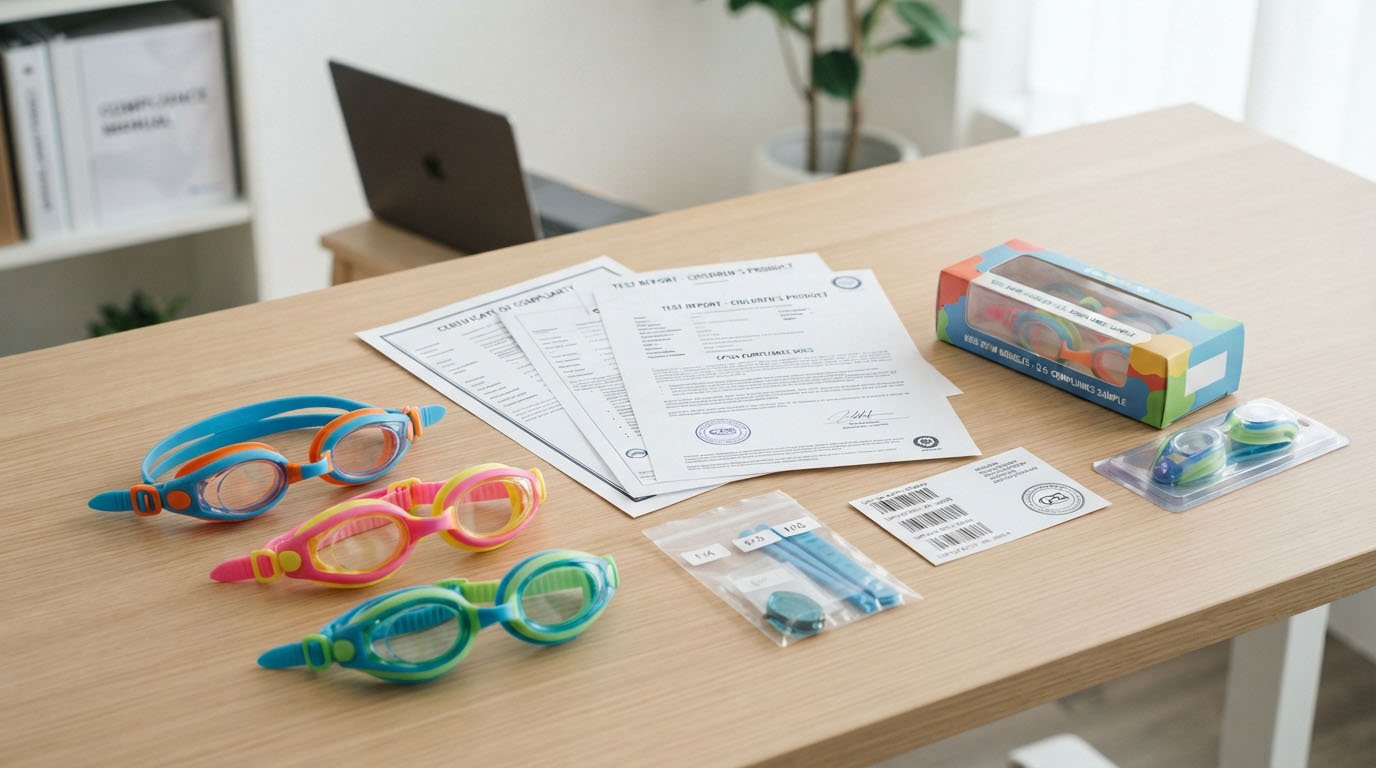
Important: This guide explains CPSIA from a swimming-goggle sourcing and manufacturing perspective. Confirm the exact requirements for your product with current CPSC guidance, a CPSC-accepted laboratory, or a qualified compliance professional.
Quick Answer: What Do Buyers Need for CPSIA Compliance?
For swimming goggles designed or intended primarily for children 12 years old or younger, buyers should normally work through the following areas:
| Compliance Step | What Buyers Should Confirm |
|---|---|
| Product classification | Is the goggle legally considered a children’s product? |
| Applicable requirements | Which federal children’s product safety rules apply? |
| Materials | Which accessible plastics, coatings and components need review? |
| Third-party testing | Is testing required through a CPSC-accepted laboratory? |
| CPC | Has the responsible manufacturer or importer prepared the certificate? |
| Tracking information | Can the product be traced to its production source and batch? |
| Production consistency | Does bulk production match the tested specification? |
| eFiling | Has applicable certificate data been electronically filed? |
The key point is simple:
CPSIA compliance is not one test report or one factory certificate.
Testing, certification, traceability and production control need to work together.
Step 1: Is the Swimming Goggle a Children’s Product?
This comes before testing.
A children’s product is generally a consumer product designed or intended primarily for children 12 years of age or younger.
Classification depends on several factors, including:
- manufacturer statements;
- age claims;
- packaging;
- advertising;
- physical sizing and design;
- how consumers are likely to use the product;
- features that may appeal primarily to children.
For example, a small-frame goggle marketed as a “Kids 6–10 Swimming Goggle” is much more clearly a children’s product than an adult fitness goggle that may also fit some teenagers.
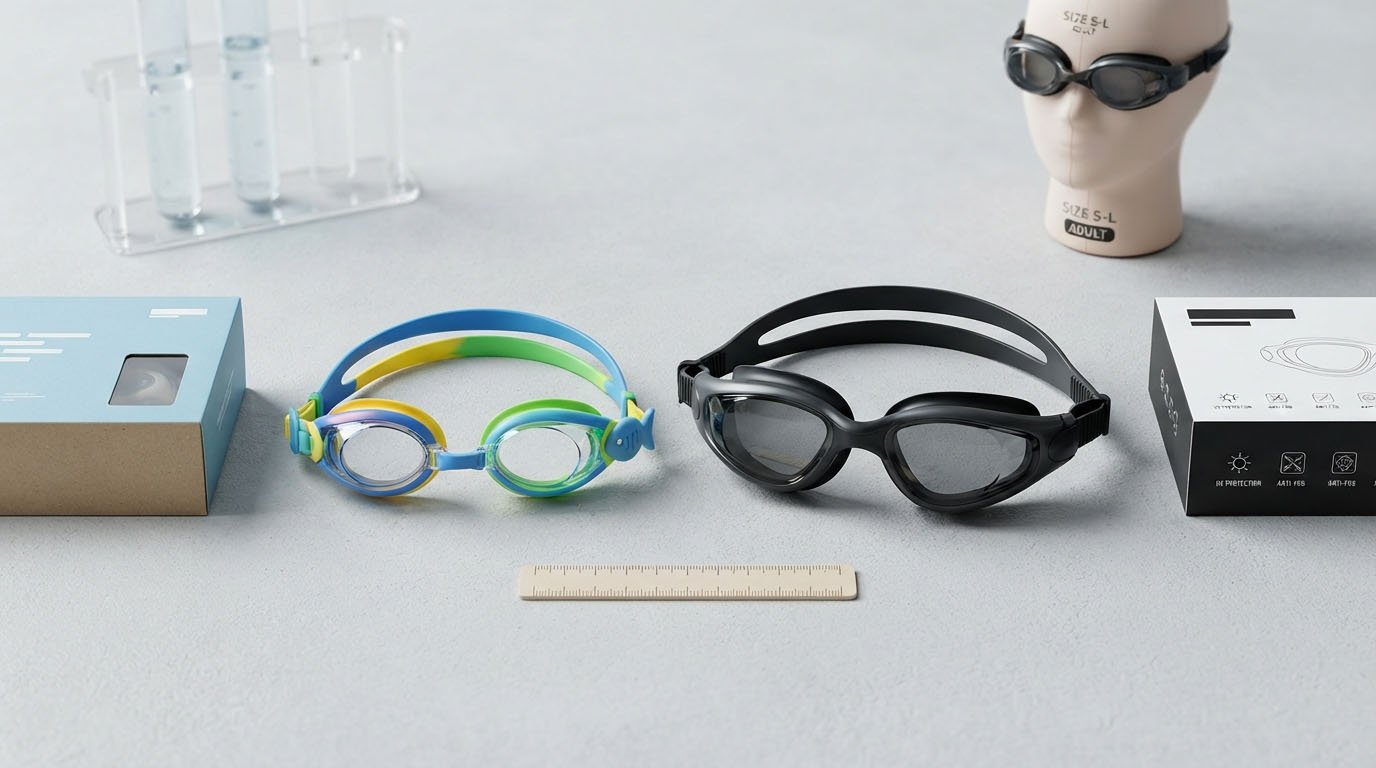
Do Not Rely on Labeling Alone
Removing the word “kids” from packaging does not automatically make a children’s product a general-use product.
The product’s design, intended user, marketing and presentation all matter.
For buyers developing several age ranges, classification should therefore be confirmed during product development rather than after packaging is finished.
Jerry’s Swimming Goggles programs can be developed for different age groups, materials and customization requirements, but the intended market should be defined before compliance testing begins.
Step 2: Which CPSIA Requirements Apply?
A common mistake is assuming that every children’s product follows exactly the same laboratory checklist.
It does not.
Children’s products must comply with the applicable children’s product safety requirements, which depend on the product, age group, materials, construction and intended use.
Lead Content
Accessible component parts of children’s products are generally subject to a total lead content limit of:
100 ppm
Possible swimming-goggle components for review may include:
- frames;
- nose bridges;
- buckles;
- strap adjusters;
- decorative components;
- other accessible substrates.
Lead in Surface Coatings
Paint and similar surface coatings are generally limited to:
90 ppm lead
For swimming goggles, buyers should pay attention to:
- painted graphics;
- printed decorations;
- coated logos;
- decorative finishes.
A substrate and its surface coating may need to be considered separately.
What About Phthalates?
Phthalate requirements need more careful treatment.
Federal phthalate restrictions specifically apply to defined children’s toys and child care articles. They do not automatically apply to every product simply because it is intended for children.
Therefore, buyers should not assume that every children’s swimming goggle requires the same phthalate test scope.
Instead, confirm the applicable scope with the testing laboratory based on the actual product design and classification.
Step 3: Which Goggle Components Should Buyers Review?
Swimming goggles combine multiple materials and components.
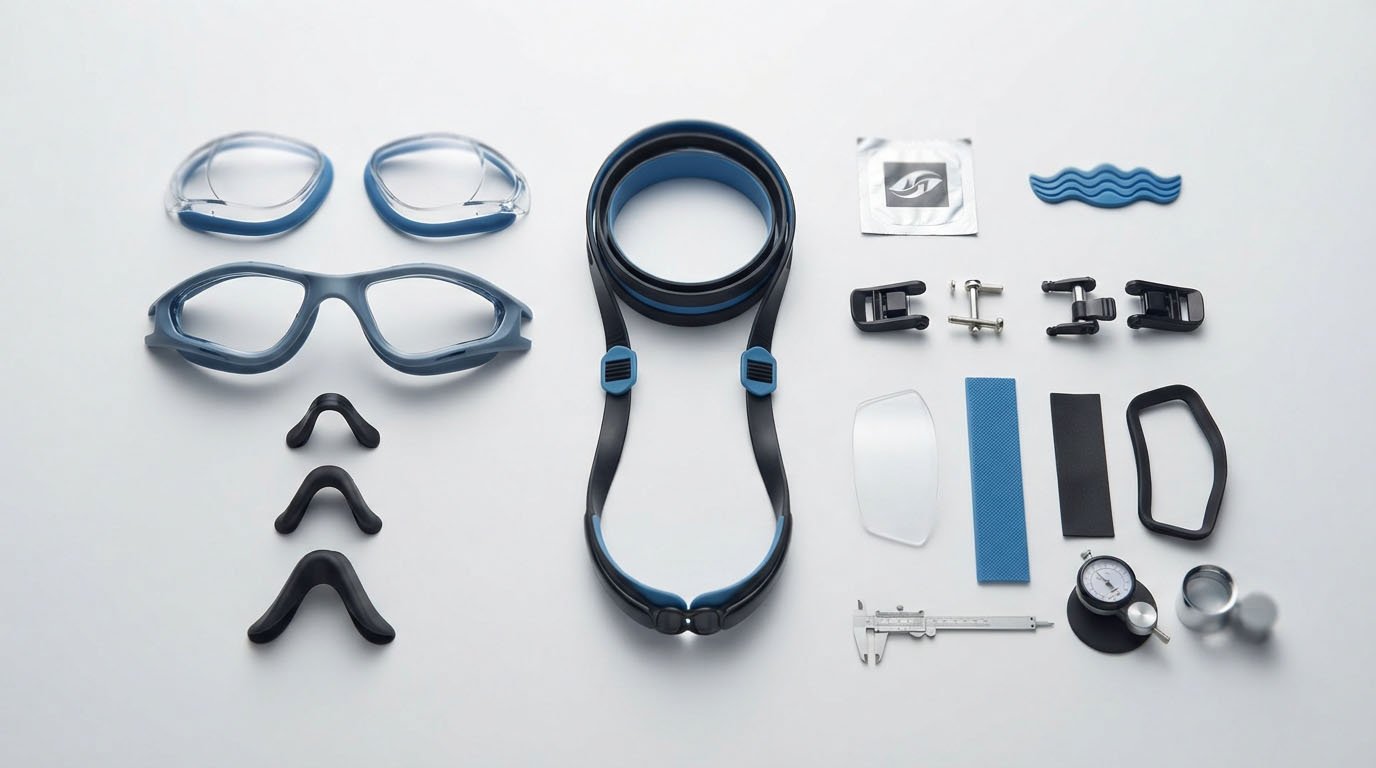
A basic component review may include:
| Component | Main Compliance Question |
|---|---|
| Lens | What resin and surface treatments are used? |
| Gasket | What material and color compounds are used? |
| Strap | Is the elastomer specification controlled? |
| Frame | Are accessible plastics and coatings identified? |
| Nose bridge | Could age-specific requirements apply? |
| Buckle | Is material and attachment controlled? |
| Printed logo | Is the ink or coating part of the test scope? |
| Decoration | Does it introduce another material or coating? |
The goal is to build a clear:
Component → Material → Applicable Requirement → Test Method
review before production.
This is more useful than testing every part blindly.
Step 4: Does a Kids Swimming Goggle Need Third-Party Testing?
Where a children’s product is subject to an applicable CPSC children’s product safety rule, certification must generally be supported by testing from a CPSC-accepted third-party laboratory.
This is different from simply asking:
“Does your factory have CPSIA?”
A factory may have experience with compliant products, but the test evidence must support the actual product being imported.
Before relying on a report, compare the tested sample with your:
- model or SKU;
- materials;
- color or masterbatch where relevant;
- coatings and printed decorations;
- construction;
- component suppliers;
- intended age group.
A report for another goggle model does not automatically cover your new product.
Step 5: What Is the Difference Between a Test Report and a CPC?
A laboratory report and a Children’s Product Certificate are not the same document.
The laboratory tests the product against applicable requirements.
The responsible manufacturer or importer then uses passing results to support the CPC. For products manufactured overseas, the U.S. importer is generally responsible for issuing the certificate.
A simplified evidence chain looks like this:
Product Classification
↓
Material & Component Review
↓
Applicable Requirements
↓
Third-Party Testing
↓
Test Reports
↓
Children’s Product Certificate
↓
Tracking & Import Documentation
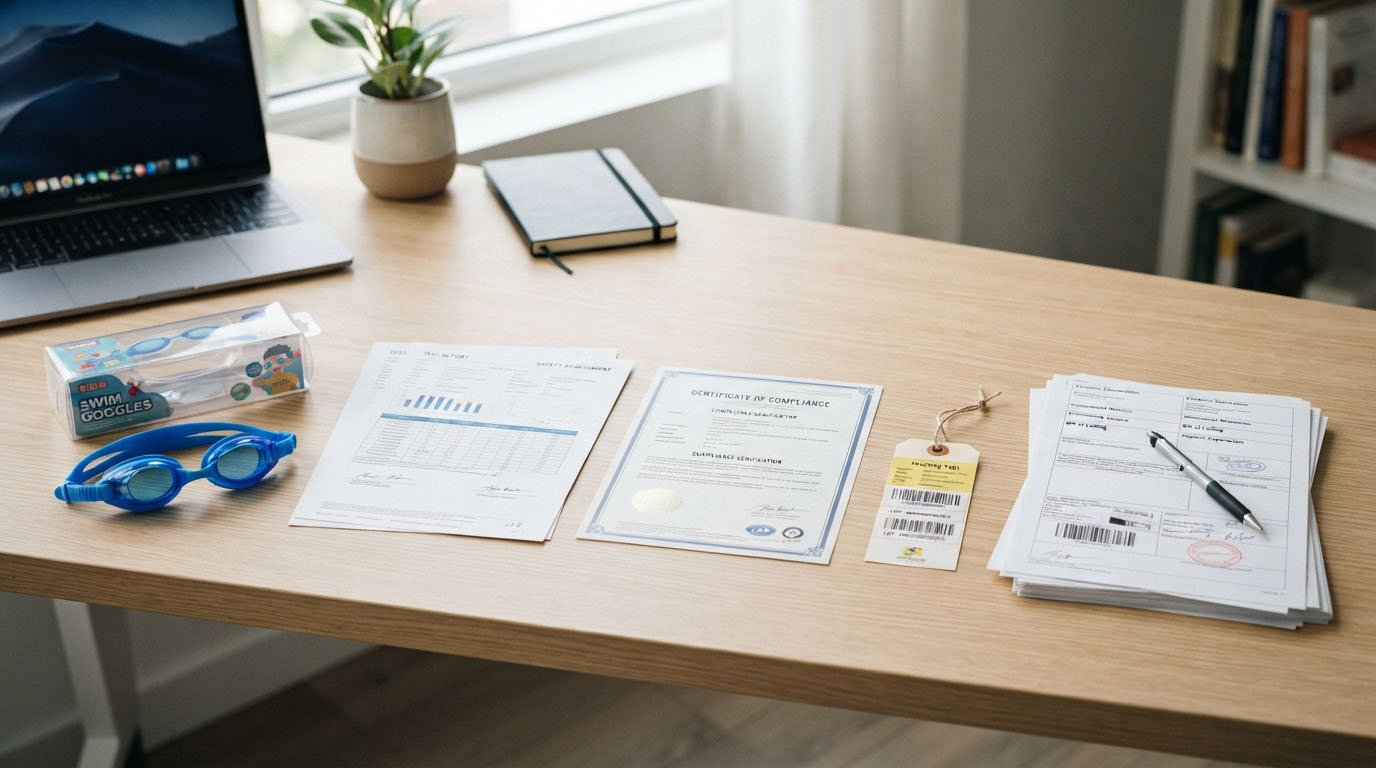
What Information Does a CPC Include?
A CPC generally identifies:
- Product identification
- Applicable safety rules
- Manufacturer or importer certifying the product
- Person maintaining test records
- Date and place of manufacture
- Date and place of testing
- CPSC-accepted third-party laboratory information
A supplier declaration or laboratory report alone should not be treated as a substitute for the CPC.
Step 6: What Are the CPSIA Tracking Label Requirements?
Children’s products generally require permanent distinguishing marks on the product and packaging, to the extent practicable.
Tracking information should allow relevant production details to be identified, including:
- manufacturer, importer or private-labeler;
- production location;
- production date;
- batch or run;
- other information needed to trace the product.
Why Does This Matter for Swimming Goggles?
Space can be limited on straps, frames, buckles and gaskets.
Tracking requirements should therefore be considered during tooling and packaging development, not immediately before shipment.
Otherwise, buyers may need to revise:
- mold markings;
- strap printing;
- packaging artwork;
- batch-code locations.
Step 7: How Does CPSC eFiling Affect Importers?
CPSC eFiling is now a current compliance requirement rather than a future change.
For most imported regulated consumer products subject to CPSC certification requirements, electronic certificate filing requirements took effect on July 8, 2026.
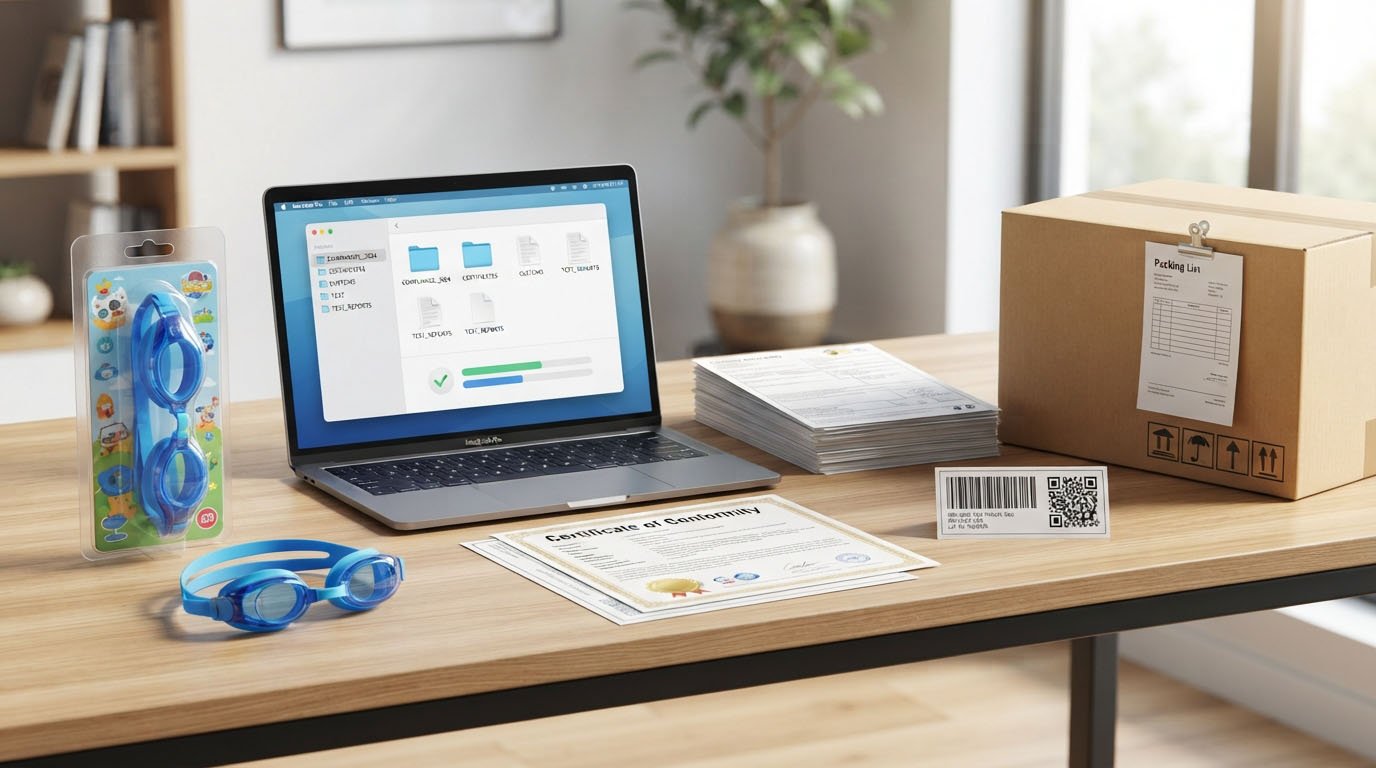
Importers therefore need to think about three separate layers:
Testing → Certification → Electronic Filing
eFiling does not replace product testing or the CPC.
It affects how required certificate information is electronically transmitted for applicable imported products.
Importers should confirm the correct filing procedure with their customs broker, compliance team and current CPSC guidance before shipment.
Step 8: What Happens If Materials Change After Testing?
Passing samples do not guarantee compliant bulk production if materials or suppliers later change.
Relevant changes may include:
- plastic resin;
- silicone compound;
- pigment or masterbatch;
- printing ink;
- coating;
- component supplier;
- manufacturing process.
If a change could affect compliance with an applicable requirement, the product should be reviewed to determine whether additional testing and recertification are required.
This is why tested specifications should be controlled before bulk production.
Jerry’s Sampling & Prototyping process can help establish the approved construction before production, while Quality Assurance supports consistency between approved samples and bulk orders.
Does Every Batch Need a New CPSIA Test?
Not necessarily.
Continuing production is subject to ongoing compliance obligations, including periodic testing where applicable, while material changes may trigger additional testing.
The practical goal is to maintain:
- approved product specifications;
- controlled materials;
- approved suppliers;
- testing records;
- production traceability;
- documented changes.
The factory should not substitute compliance-relevant materials without review.
Step 9: What Should Buyers Confirm Before Mass Production?
Use this checklist before releasing a children’s swimming-goggle order for bulk production.
CPSIA Buyer Checklist
- [ ] Intended age group is defined
- [ ] Children’s-product classification has been reviewed
- [ ] Applicable CPSC requirements have been identified
- [ ] Components and materials are documented
- [ ] Lead requirements have been evaluated
- [ ] Phthalate applicability has been confirmed rather than assumed
- [ ] Product-specific mechanical requirements have been reviewed where applicable
- [ ] Required testing uses a CPSC-accepted laboratory
- [ ] Test reports match the approved product
- [ ] CPC responsibility is defined
- [ ] Tracking information is planned
- [ ] Packaging artwork has been reviewed
- [ ] Tested materials are controlled before bulk production
- [ ] Material changes trigger compliance review
- [ ] Periodic testing obligations have been considered
- [ ] Applicable eFiling requirements are prepared
For buyers selling across several markets, CPSIA should also be separated from other compliance systems. See our Swimming Goggles Compliance Guide for the relationship between CPSIA, ISO 18527-3, CE, REACH and GPSR.
What Should a Swimming Goggle Manufacturer Provide?
The importer carries important legal responsibilities, but the factory should support the compliance process with reliable product and production data.
A capable manufacturer should be able to provide:
- product specifications and material information;
- representative testing samples;
- production location and batch information;
- support for independent laboratory testing;
- control over approved materials and suppliers;
- notification when changes could affect compliance.
Most importantly, bulk production should remain consistent with the configuration that supported the test results and certification.
For deeper customization, Jerry’s OEM & ODM process can coordinate product development, materials, sampling and production preparation before mass manufacturing.
Frequently Asked Questions
Does CPSIA Apply to Every Swimming Goggle?
No.
Children’s-product requirements are particularly relevant when goggles are designed or intended primarily for children 12 years old or younger.
Adult and general-use goggles follow a different compliance path.
Do All Kids Swimming Goggles Require Phthalate Testing?
Not automatically.
Federal phthalate restrictions apply to defined children’s toys and child care articles. Applicability should be confirmed based on the actual product rather than assumed simply because it is marketed to children.
Can a Factory’s Existing CPSIA Report Cover My New Goggle?
Not automatically.
Compare the tested product with your actual model, materials, coatings, components, construction and age positioning.
Material differences may mean that new testing is needed.
Who Issues the Children’s Product Certificate?
For imported products manufactured outside the United States, the U.S. importer is generally responsible for issuing the CPC based on passing results from a CPSC-accepted third-party laboratory.
The factory can provide samples, material records and production information, but the laboratory report itself is not the CPC.
Does CPSC eFiling Replace Third-Party Testing?
No.
eFiling concerns electronic transmission of certificate information.
It does not replace the underlying product testing, certification or compliance requirements.
Conclusion: Treat CPSIA as a Compliance System, Not a Certificate
The most important thing to understand about CPSIA requirements for kids swimming goggles is that there is no single universal “CPSIA certificate” that solves the entire compliance process.
A stronger approach is:
Classification → Applicable Requirements → Materials → Testing → CPC → Tracking → eFiling → Production Control
Start by confirming whether the goggles are primarily intended for children 12 years old or younger.
Then identify the requirements that actually apply to the specific product instead of copying a generic laboratory test list.
Finally, make sure the product tested by the laboratory remains consistent with the product manufactured and shipped.
For children’s swimming goggles, compliance should begin during product development—not after bulk production has already started.
If you are preparing a new children’s swimming goggle project for the U.S. market, contact Jerry to discuss product design, customization, sampling and manufacturing requirements before mass production.