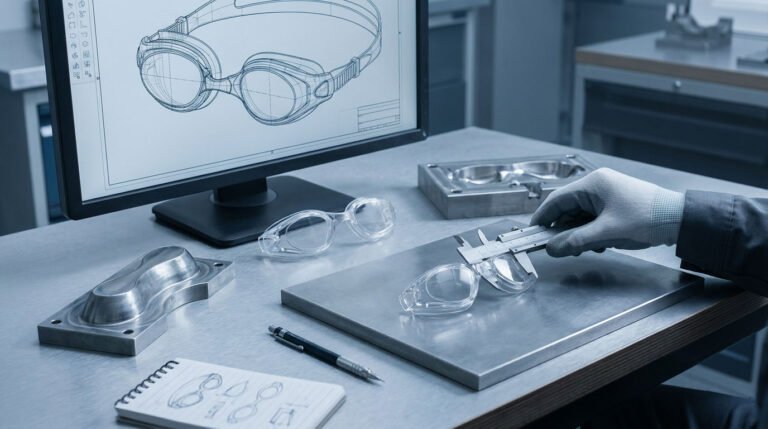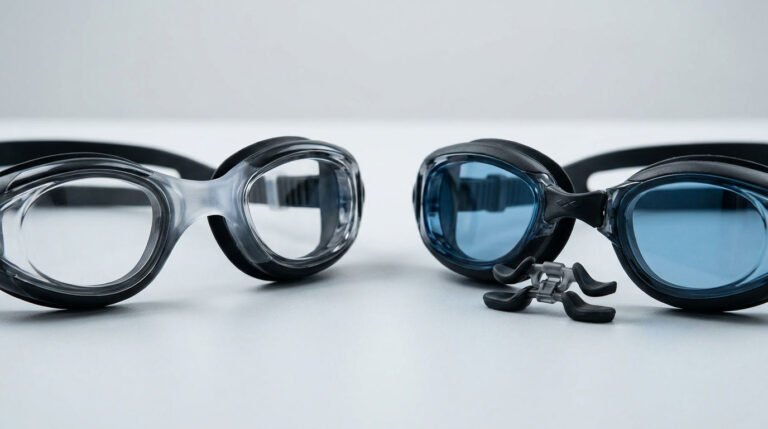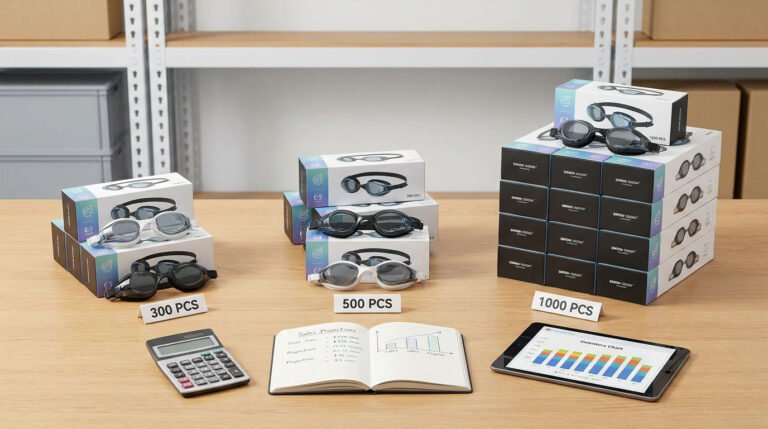
Choosing between an existing mold and a custom mold is one of the most important decisions when developing a swimming goggle brand.
An existing factory mold can reduce upfront investment and shorten development time. A custom mold offers greater control over product structure and differentiation but requires more engineering, testing, and financial commitment.
Quick Answer: An existing mold is usually the better choice for brands testing a new market or launching quickly. A custom mold becomes more appropriate when unique geometry, specialized fit, or exclusive design is essential. A modified existing platform may offer a practical middle ground.
The right choice depends on your product requirements, target customers, budget, expected sales volume, and launch schedule—not simply which option costs less.
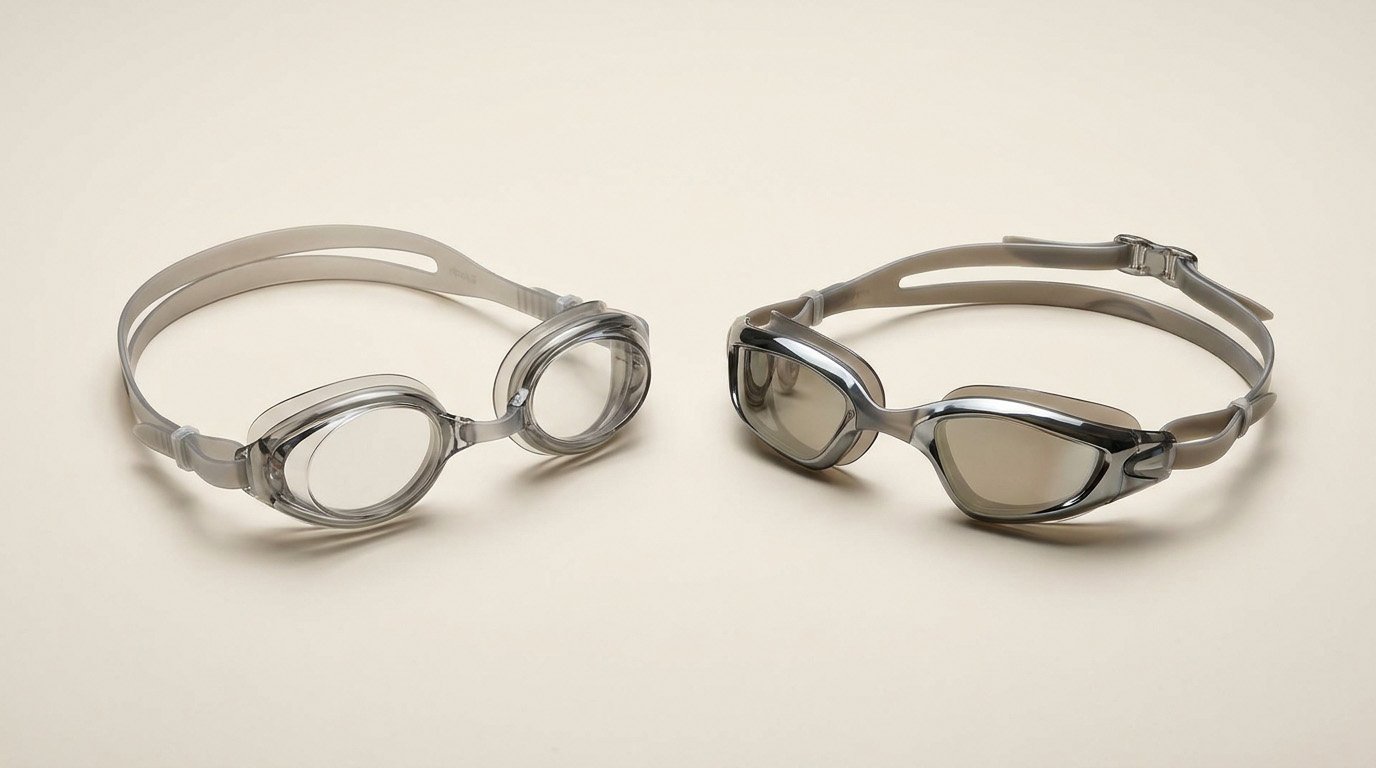
Quick Comparison: Existing Mold vs Custom Mold Swimming Goggles
Before selecting a manufacturing route, compare the three main options.
| Factor | Existing Mold | Modified Existing Platform | Custom Mold |
|---|---|---|---|
| Upfront tooling cost | Usually lowest | Depends on modifications | Usually highest |
| Development time | Shortest | Moderate | Longest |
| Product structure | Existing design | Selected components modified | Original design |
| Branding options | Logo, colors, eligible lens options, packaging | Branding plus structural changes | Extensive design control |
| MOQ commitment | Generally lower | Project-dependent | Project-dependent |
| Product differentiation | Primarily visual | Visual and selected functional changes | Unique structure and appearance |
| Development risk | Lower, but not zero | Moderate | Higher |
| Best suited for | Startups and market testing | Growing brands | Established brands and original product programs |
Key takeaway: Choose the least complex tooling route that can meet your product and commercial requirements.
A completely new mold is unnecessary if an existing design already provides the fit, performance, and differentiation your customers need.
Step 1: Understand the Three Swimming Goggle Mold Options
Existing Mold: Start With a Proven Product Platform
An existing mold is tooling that a manufacturer has already developed for a swimming goggle model.
Instead of designing every component from scratch, buyers select an existing product and customize approved features.
Depending on the model, these may include:
- Frame and strap colors
- Lens tint or mirror finish
- Logo printing
- Packaging and accessories
The core lens, frame, and gasket geometry generally remains unchanged.
This route is useful for startups, e-commerce brands, distributors, and retailers introducing a new product line.
An existing design can also simplify the initial engineering review because the factory already has manufacturing experience with that platform. However, buyers should still evaluate current samples and production quality.
For brands primarily changing product appearance, private label swimming goggles may be more practical than starting a completely new tooling project.
Modified Existing Platform: Change Selected Components
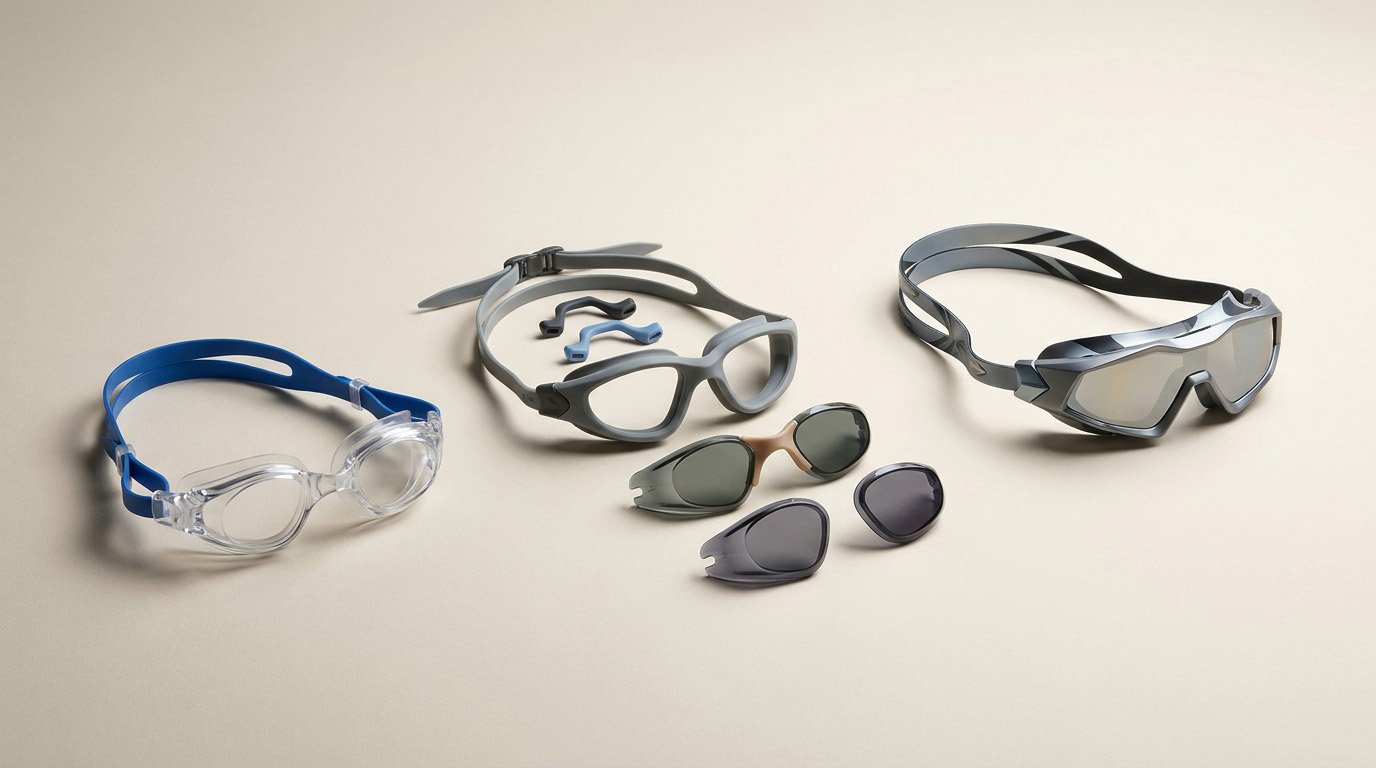
A modified platform uses an established swimming goggle design but changes specific components to meet new requirements.
For example, a brand may want a different gasket profile while retaining an existing lens and frame structure.
Depending on the original construction, this may require new tooling for the gasket without replacing every mold.
However, modifying one component can affect others. The manufacturer must confirm whether the existing parts remain compatible.
Custom Mold: Develop an Original Structure
A custom mold is developed for a specific product design rather than selected from an existing factory platform.
It may involve original:
- Lens geometry
- Frame architecture
- Gasket shape
- Nose bridge configuration
- Strap connection or adjustment system
Custom tooling is appropriate when product differentiation depends on geometry that existing models cannot provide.
However, paying for new tooling does not automatically establish ownership or exclusivity. Those rights must be defined in the manufacturing agreement.
Step 2: Compare Cost, MOQ, and Lead Time
Tooling strategy affects more than the mold invoice. It also changes the amount of development work, inventory commitment, and time required before market launch.
Upfront Investment
Existing molds usually require less initial investment because the primary tooling is already available.
Buyers may still pay for:
- Customization setup
- Samples
- Specialized materials or finishes
- Testing
- Custom packaging
Custom mold development adds engineering, prototype evaluation, tooling manufacture, mold trials, and possible design revisions.
A modified platform falls somewhere between these approaches, depending on the number and complexity of components being changed.
For a detailed breakdown of tooling expenses, see our Swimming Goggle Mold Cost Guide.
Production MOQ
Existing-model customization generally provides more accessible order quantities than a completely new development project.
At Jerry, suitable logo-customization projects can start from 300 pieces, while custom-color projects can start from 600 pieces. New-mold projects are evaluated individually.
These are starting references, not guaranteed quantities for every model or configuration.
The MOQ may apply per model, color, or product configuration. For specific quantity requirements, refer to our Swimming Goggle MOQ Guide.
Importantly, tooling investment and production MOQ are separate commercial decisions.
Development and Launch Time
Existing molds typically offer a faster route because there is no need to manufacture a completely new set of production tools.
Custom molds require additional time for design confirmation, prototype evaluation, tooling, trials, and approvals.
However, even an existing-mold project can experience delays when special materials, lens treatments, custom colors, or packaging require additional preparation.
Avoid relying on a fixed timeline without confirming the complete specification and production schedule.
Step 3: Decide How Much Product Differentiation You Really Need
One concern among new brand owners is that existing-mold goggles may look too similar to competing products.
However, a recognizable brand does not always require a unique product structure.
How Existing Molds Can Support Strong Branding
Depending on the factory model, brands can differentiate goggles through coordinated colors, lens appearance, strap branding, retail packaging, and accessories.
For example, a training-goggle brand could combine:
- A distinctive frame and strap color combination
- An approved mirrored or tinted lens option
- Consistent logo placement
- Branded protective cases
- Packaging designed around its target customers
These changes can create a coherent product identity without requiring original lens or frame molds.
Availability and technical compatibility should always be confirmed with the manufacturer.
When a New Mold Creates Meaningful Value
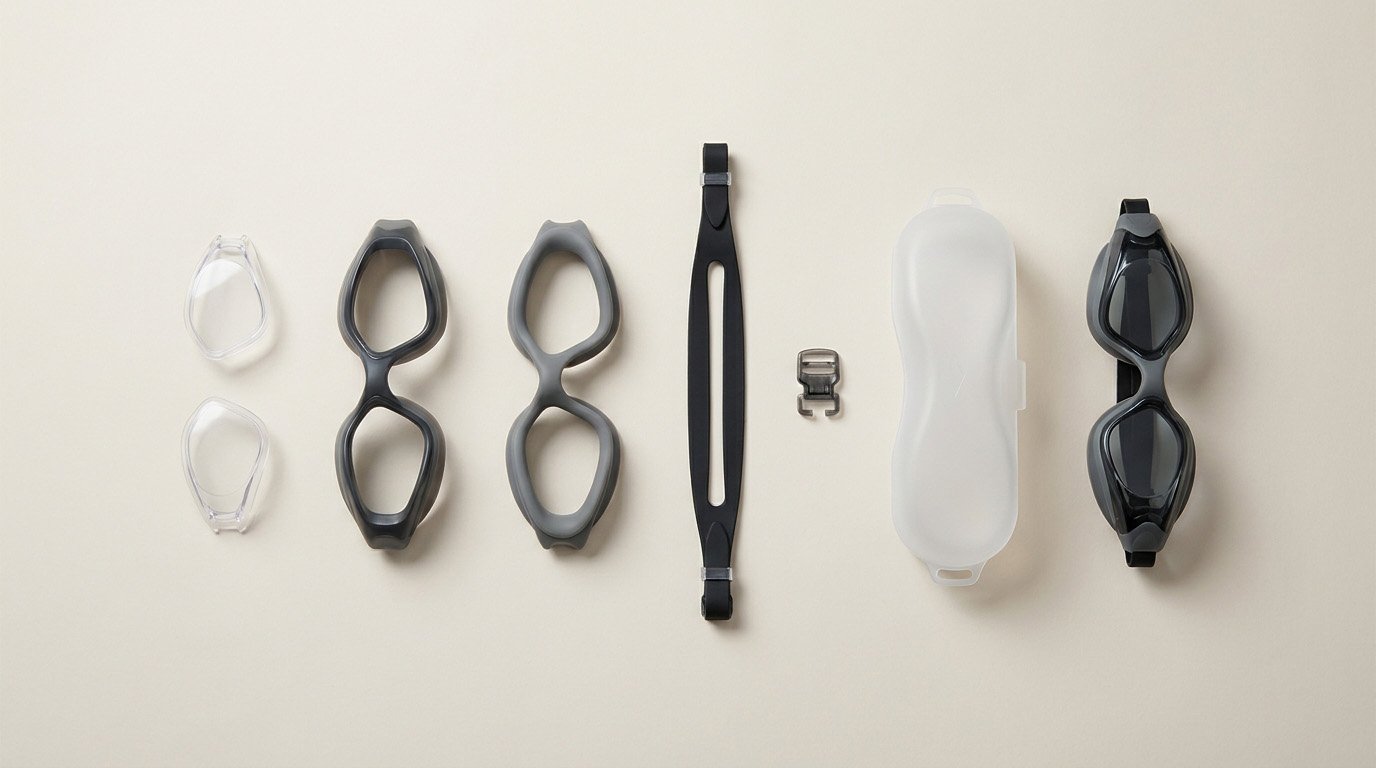
Custom tooling becomes more relevant when the required difference is structural rather than cosmetic.
Consider these situations:
| Product Requirement | Likely Tooling Direction |
|---|---|
| New logo and packaging | Existing mold |
| Different frame and strap colors | Existing mold, subject to model capability |
| Unique gasket profile | Modified platform or custom mold |
| Original lens geometry | Custom tooling may be required |
| New strap-adjustment mechanism | Modified platform or custom mold |
| Completely original product architecture | Custom mold |
The most important question is:
Does your differentiation require a new physical structure, or can it be achieved through existing components and branding?
A new mold should solve an identifiable product or business requirement, not simply make the development project appear more premium.
Step 4: Evaluate Fit, Quality, and Development Risk
A custom mold does not automatically produce higher-quality swimming goggles.
Quality depends on the combination of product design, materials, manufacturing consistency, component compatibility, and inspection.
Existing Molds Still Require Validation
An established factory model may have a manufacturing history, but that does not guarantee its suitability for every target customer.
Before selecting an existing mold, buyers should evaluate:
- Facial comfort and gasket pressure
- Water sealing during intended use
- Lens clarity and visual distortion
- Strap adjustment and stability
- Anti-fog performance
- Component and assembly consistency
A design that works for adult recreational swimmers may not provide the same fit for competitive athletes or younger users.
Custom Molds Introduce Additional Engineering Risk
Custom tooling provides greater design flexibility, but a new structure must prove that it works.
For example, changing the gasket contour could improve contact with one facial profile while creating pressure or leakage problems for another.
Similarly, changing lens geometry can influence both optical characteristics and the surrounding frame structure.
This is why custom development requires careful prototype and performance evaluation before final tooling approval.
The objective is not merely to produce an attractive sample. It is to confirm that the design can meet the agreed requirements consistently.
Both routes benefit from a structured sampling and prototyping process before bulk production.
Step 5: Consider Partial Tooling Before Developing a Completely New Mold
Brands sometimes assume there are only two options: use the factory’s existing mold or develop an entirely new product.
In practice, partial tooling may offer a third route.
Example: Modifying the Gasket Without Replacing the Entire Goggle
Imagine a brand testing an existing training goggle.
Its customers like the lens visibility and strap adjustment, but some users experience uncomfortable pressure around the eye sockets.
The brand may consider redesigning the gasket while keeping the existing lens and frame.
Before approving the change, the manufacturer should review:
- Whether the new gasket geometry fits the existing frame.
- Whether the seal remains stable under strap tension.
- Whether the selected material is compatible with the design.
- Whether new tooling is needed for that component.
- Whether the revised assembly can be produced consistently.
If the modification is feasible, the brand may achieve better differentiation without replacing every production tool.
However, a partial modification is not always economical. Sometimes component changes affect so many interfaces that a new product architecture becomes the better engineering choice.
This is why a technical feasibility review should happen before committing to tooling.
Step 6: Follow the Swimming Goggle Mold Selection Flowchart
The following decision tree helps brands identify the most practical starting point.
Decision 1: Does an Existing Model Meet Your Requirements?
Start by evaluating available products against your target market.
Consider fit, performance, branding, retail positioning, and any requirements for a distinctive physical design.
If an existing model meets these requirements, begin with that platform.
There is little benefit in investing in new tooling solely to recreate an already suitable product.
Decision 2: Can Limited Component Changes Solve the Problem?
If existing models are not suitable, identify what specifically needs to change.
Could the problem be solved by modifying one or two components while preserving the remaining platform?
If so, ask the manufacturer to review partial tooling feasibility.
If the required changes affect the entire product architecture, full custom development may be more appropriate.
Decision 3: Can the Business Support the Investment?
Before approving any route, evaluate:
- Expected demand and repeat-order potential
- Available development budget
- Target launch date
- Product testing requirements
- Inventory exposure
- Tooling ownership and use rights
A technically possible custom mold is not necessarily a commercially sensible investment.
Example Recommendations by Business Situation
| Brand Situation | Recommended Starting Point |
|---|---|
| Startup testing its first goggle collection | Existing mold |
| E-commerce brand seeking distinctive colors | Existing mold |
| Growing brand needing improved fit | Evaluate modified platform |
| Established brand developing original geometry | Custom mold |
| Retailer requiring a distinctive product shape | Evaluate custom mold |
| Brand with a strict upcoming launch deadline | Existing mold, if specifications fit |
These are starting recommendations, not automatic rules. The final choice should follow sample evaluation and a review of project requirements.
Step 7: Confirm These Details Before Committing to a Mold
Once you have identified a preferred tooling route, ask the manufacturer to confirm the commercial and technical conditions.
1. Existing Tooling Availability
For existing molds, confirm whether the tooling is active, maintained, and suitable for repeat production.
Ask whether your selected model can support the required colors, lens finishes, branding, and packaging.
2. Component Compatibility
For modified platforms, identify exactly which components will change.
Confirm whether the modifications require new molds, adjustment to existing tools, or changes to assembly and testing.
3. Tooling Ownership and Exclusivity
For custom projects, the written agreement should address:
- Who owns the tooling
- Whether other customers may use it
- Who is responsible for maintenance and repairs
- Whether the tooling can be transferred
- What happens if the manufacturing relationship ends
Tool ownership, exclusivity, and intellectual property rights should not be assumed to be identical.
4. Sample Approval and Performance Requirements
Agree on the evaluation criteria before production begins.
These should reflect the intended use and may include fit, sealing, lens quality, strap performance, appearance, and relevant market requirements.
5. Quotation and Schedule
Request a quotation that identifies tooling charges separately from product manufacturing costs.
Also confirm the expected approval stages and which events could change the quoted schedule.
6. Repeat-Order Consistency
Ask whether future orders will use the same approved materials, tooling, component specifications, and quality requirements.
Consistency matters regardless of whether the tooling is existing or custom.
For brands considering original structures, Jerry’s OEM & ODM swimming goggle manufacturing capabilities can support a project-specific engineering and tooling evaluation.
Frequently Asked Questions
Is an Existing Mold Better for a New Swimming Goggle Brand?
Usually, yes, if an available model meets the brand’s product requirements.
An existing mold helps reduce initial tooling investment and allows the business to validate customer demand before committing to original development.
However, brands with genuinely unique structural requirements may need custom tooling from the beginning.
Does a Custom Mold Guarantee Better Swimming Goggle Quality?
No.
Custom molds provide greater design control, but performance still depends on engineering, materials, testing, and manufacturing consistency.
An established existing model may outperform a poorly developed custom design.
Can I Use an Existing Mold and Still Create a Premium Brand?
Yes.
Product positioning can be supported through fit, materials, lens options, visual identity, packaging, quality consistency, and the overall customer experience.
A unique frame shape is not the only way to differentiate a swimming goggle.
Who Owns a Custom Swimming Goggle Mold?
Ownership depends on the contractual agreement.
A buyer who pays a tooling charge does not necessarily receive unrestricted ownership or exclusive manufacturing rights.
Confirm the ownership, permitted use, maintenance, storage, and transfer provisions before paying for tooling.
Can I Start With an Existing Mold and Develop a Custom Mold Later?
Yes.
Brands can launch with an existing platform, collect customer feedback, and later evaluate whether a proprietary structure is commercially justified.
However, custom tooling is normally a separate development project, not an automatic conversion of the original mold.
Conclusion: Which Swimming Goggle Mold Strategy Should You Choose?
Neither existing molds nor custom molds are automatically better.
Choose an existing mold when your priority is market validation, lower initial development commitment, and faster product launch.
Consider a modified existing platform when selected components need improvement but the remaining structure meets your requirements.
Invest in a custom mold when unique product geometry, fit, performance, or strategic differentiation justifies the additional development commitment.
The best manufacturing decision is the one that meets your customers’ needs while controlling unnecessary cost, delays, and engineering risk.
At Jerry, we support swimming goggle brands through existing-model customization, component development, and OEM/ODM manufacturing.
If you are comparing tooling options for your next product, contact Jerry with your target market, design requirements, expected order quantity, and launch timeline. Our team can help evaluate which manufacturing route is most suitable for your project.