Choosing the right nose bridge is an important decision when developing a swimming goggle line. A design that works for one group of swimmers may cause pressure, poor sealing, or fit complaints for another.
For swimming goggle brands, the decision also affects tooling, assembly, packaging, and after-sales support.
Fixed nose bridges offer simplicity and consistent geometry, while adjustable and interchangeable nose bridges provide more fitting options. Neither design is universally better. The right choice depends on your target swimmers, product positioning, and manufacturing requirements.
This guide compares the three common nose bridge structures and explains how OEM/ODM buyers can select and validate them before mass production.
Quick Answer: Fixed vs Adjustable Nose Bridges
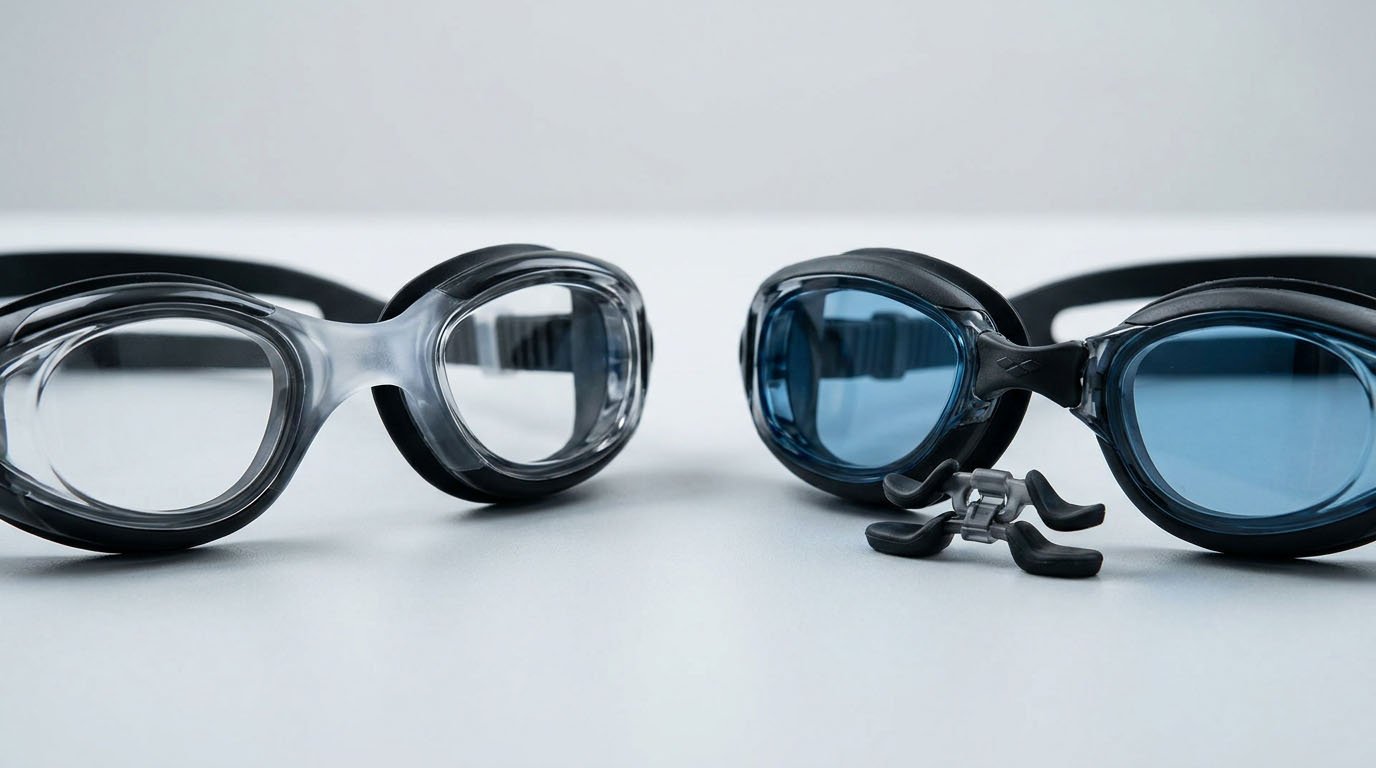
A fixed nose bridge maintains a predetermined connection between the two eye cups. It may be rigid or flexible, depending on the design.
An adjustable nose bridge allows the spacing or position to be changed. Interchangeable bridges achieve this by replacing one bridge with another size.
| Feature | Fixed Nose Bridge | Adjustable / Interchangeable |
|---|---|---|
| Fit range | Defined by geometry and flexibility | Multiple settings or sizes |
| User adjustment | None | Required for optimal fit |
| Components | Usually fewer separate parts | May require additional parts |
| Fit consistency | Consistent geometry | Depends on selected setting |
| Packaging | Usually simpler | May need instructions or spare bridges |
| Main risk | Limited fit coverage | Incorrect adjustment or connection failure |
| Best application | Validated target user group | Products needing individual fit adjustment |
The key distinction is fit coverage versus simplicity—not which structure is automatically more comfortable or more waterproof.
For OEM/ODM buyers, the most reliable approach is to define the target user first, compare available structures, and approve a production-representative sample before committing to tooling or bulk orders.
Step 1: Understand Fixed, Adjustable, and Interchangeable Nose Bridges
Although the industry commonly discusses fixed versus adjustable nose bridges, several different constructions exist within these categories.
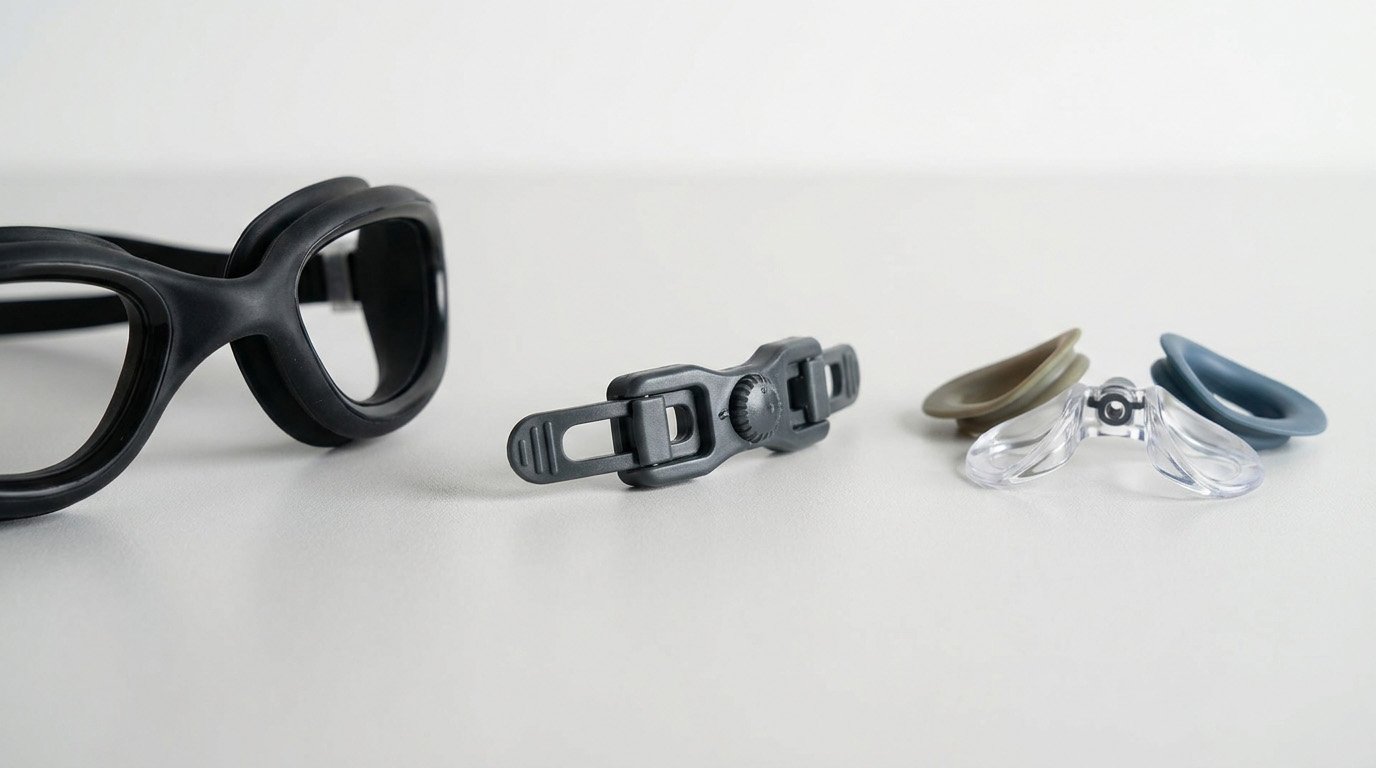
1.1 Fixed Nose Bridges
A fixed bridge connects the eye cups without a user-operated width adjustment.
Common constructions include:
- Flexible integrated bridges made from suitable elastomeric materials.
- Rigid or semi-rigid bridges with predetermined geometry.
- Integrated frame-and-bridge structures designed around a specific fit profile.
A flexible fixed bridge can accommodate some facial variation through material deformation. However, its nominal spacing cannot be deliberately changed by the swimmer.
Main advantage: Simple operation with no detachable bridge accessory.
Main limitation: The effective fit range is determined during product development.
1.2 Adjustable Nose Bridges
An adjustable bridge allows the user to change the distance or relative positioning between the eye cups.
Possible designs include:
- Stepped adjustment mechanisms.
- Sliding or ratcheting bridge systems.
- Other integrated adjustment structures.
These mechanisms can accommodate different facial dimensions without necessarily requiring replacement components.
However, their performance depends on secure locking, suitable adjustment range, and correct use.
1.3 Interchangeable Nose Bridges
Interchangeable bridges use separate components in different lengths or configurations.
A swimmer removes the installed bridge and replaces it with another size.
This approach is common in performance-oriented swimming goggles because it allows precise fit selection while maintaining a compact design.
However, it introduces additional considerations:
- Bridge attachment strength.
- Compatibility between parts.
- Repeated installation and removal.
- Spare-part packaging and replacement.
Important: Interchangeable bridges are adjustable in function, but their mechanical construction differs from sliding or stepped adjustable systems.
Brands can explore different product configurations through Jerry’s Swimming Goggles range before deciding whether an existing structure meets their requirements.
Step 2: Compare Fit, Comfort, Durability, and Leakage Risks
The nose bridge affects how the eye cups are positioned against the face. However, it does not determine overall goggle performance independently.
2.1 Fit and Facial Compatibility
A fixed bridge maintains predetermined eye-cup spacing. When the geometry matches the intended users, this can provide straightforward and repeatable positioning.
An adjustable or interchangeable bridge offers additional fitting options.
For example, a swimmer may experience uneven gasket contact when the eye cups sit too far apart. A correctly selected bridge size may improve alignment.
However, a wider adjustment range does not guarantee a better fit.
Gasket geometry, eye-socket shape, frame flexibility, and strap tension must work together.
2.2 Comfort and Pressure Distribution
Poor bridge geometry may contribute to:
- Pressure against the nose.
- Uneven gasket compression.
- Discomfort during longer sessions.
- Excessive strap tightening to compensate for poor fit.
A flexible fixed bridge may distribute movement differently from a rigid interchangeable bridge.
Neither is automatically more comfortable. Comfort should be verified through wear testing with representative users.
2.3 Durability and Water Leakage
Fixed bridges generally eliminate the risk of losing a separate nose bridge component. However, integrated structures can still experience fatigue, cracking, or material deterioration.
Adjustable designs introduce additional interfaces that may wear or loosen if poorly engineered.
For both designs, water leakage may result from incorrect eye-cup positioning, but the bridge is only one potential cause.
If you need a detailed investigation procedure, see our Swimming Goggle Leak Test Guide.
For brand owners, the goal is not to select the bridge with the fewest theoretical failure points. It is to select a complete goggle structure that performs consistently for its intended users.
Step 3: Choose the Right Nose Bridge for Your Target Swimmers
Different swimming goggle categories have different fit and usability priorities.
| Goggle Category | Recommended Starting Point | Main Consideration |
|---|---|---|
| Competitive racing | Interchangeable or validated fixed | Precise fit and secure positioning |
| Fitness and lap training | Flexible fixed or adjustable | Comfort and repeatable sealing |
| Children’s goggles | Soft integrated or child-appropriate adjustable | Fit, safety, and ease of use |
| General retail | Flexible fixed or adjustable | Accommodation of diverse users |
| Specialized performance | Application-specific design | Precise geometry and validation |
These are starting recommendations, not universal rules.
Racing Goggles: Precision Matters More Than Simplicity
Competitive swimmers often prefer compact goggles that remain stable during starts and turns.
Interchangeable bridges are particularly useful when a performance-oriented design needs precise eye-cup positioning.
A fixed bridge can also work if the intended fit range has been validated.
Brands should evaluate the complete profile rather than assuming one bridge architecture automatically produces lower drag or better retention.
Training Goggles: Balance Comfort and Usability
Training goggles may be worn repeatedly or for extended sessions.
Flexible fixed bridges can simplify everyday use, while adjustable bridges can help users achieve a more personalized fit.
The decision should reflect the intended users and actual wear-test results.
Children’s Goggles: Evaluate Fit and Component Safety
Children’s goggles require careful consideration of facial fit, comfort, usability, and age-appropriate product safety.
An integrated bridge avoids loose replaceable bridge pieces, but this does not automatically make every fixed design safer.
If an adjustable design includes detachable parts, assess retention, foreseeable misuse, and applicable product safety requirements.
Mass-Market Retail: Prioritize Fit Coverage
Retail brands often serve customers who cannot try multiple sizes before purchasing.
Adjustable bridges may increase fitting options within one model. Flexible fixed designs may also work across a broad user group when the overall geometry is suitable.
The better choice is the one that achieves acceptable fit coverage without creating unnecessary product or after-sales complexity.
Step 4: Compare Tooling, Assembly, Packaging, and After-Sales Costs
For OEM/ODM brands, nose bridge selection affects more than the visible product design.
4.1 Tooling and Component Requirements
Fixed bridges may simplify the component structure, but manufacturing complexity depends on how the frame, lens housing, gasket, and bridge are constructed.
A flexible integrated bridge may require specialized molding or bonding considerations.
Adjustable and interchangeable designs may introduce:
- Separate bridge components.
- Locking or retention features.
- Additional dimensional control requirements.
- Extra molding, assembly, or inspection operations.
Not every additional bridge size requires a completely separate mold. Tooling arrangements depend on the component design and mold layout.
For a detailed explanation of tooling scope and development investment, refer to Jerry’s Swimming Goggle Mold Cost Guide.
4.2 Assembly and Packaging
Separate bridge components can affect production and retail packaging.
Brands may need to include:
- Multiple bridge sizes.
- Correct installation instructions.
- Accessory storage or packaging.
- Additional component-count verification during inspection.
Integrated adjustable designs may require fewer packaged accessories but still need clear adjustment instructions.
4.3 After-Sales Considerations
Potential complaints differ by structure.
| Fixed Bridge | Adjustable / Interchangeable Bridge |
|---|---|
| Nose pressure or unsuitable width | Incorrect bridge setting |
| Poor fit for some users | Lost replacement bridges |
| Limited adjustment options | Worn or damaged locking features |
| Possible integrated material fatigue | Incorrect installation or detachment |
A fixed design is not necessarily cheaper across the entire product lifecycle.
Likewise, an adjustable structure is not always more expensive once fit coverage, packaging, and customer support are considered.
Compare the total product requirements—not just the bridge component price.
Step 5: Validate Nose Bridge Designs Before Bulk Production
Selecting a structure from drawings or product photographs is not enough.
A nose bridge should be evaluated as part of the complete swimming goggle assembly before production approval.

5.1 Build a Representative Fit Panel
Choose testers who reflect the intended customer group.
Consider relevant variations in:
- Eye spacing.
- Nasal bridge width and projection.
- Eye-socket contour.
- Head size.
- Intended swimming activity.
Avoid assuming that one demographic label represents a consistent facial shape.
For each tester, record the selected bridge configuration, comfort feedback, and seal performance.
5.2 Check Critical Performance Points
Use a structured review rather than relying only on general comments such as "comfortable" or "fits well."
| Checkpoint | What to Verify |
|---|---|
| Eye-cup alignment | Both gaskets contact the intended sealing areas |
| Nose clearance | No unacceptable pressure or interference |
| Fit stability | Goggles remain suitably positioned during intended use |
| Adjustment security | Selected settings remain engaged |
| Attachment durability | Replaceable bridges remain secure during normal use |
| Repeated adjustment | No unacceptable wear, damage, or loosening |
| Water exposure | Functional performance remains acceptable after relevant exposure |
| Packaging completeness | Correct bridge accessories and instructions are included |
Acceptance limits and test conditions should be agreed upon for the specific product. Do not treat a generic test duration or pull-force value as a universal industry requirement.
5.3 Approve Production-Representative Samples
Early prototypes can reveal geometric problems, but printed or substitute-material components may not reproduce final flexibility, retention strength, or wear behavior.
Before bulk production, confirm the final materials, bridge dimensions, attachment interfaces, and functional performance using production-representative parts.
Jerry’s Sampling & Prototyping service supports brands developing and reviewing custom swimming goggle designs.
5.4 Create a Nose Bridge Approval Record
For OEM/ODM orders, keep a short documented approval record.
| Approval Item | Buyer / Factory Record |
|---|---|
| Selected bridge type | Fixed / Adjustable / Interchangeable |
| Approved model | Product code and revision |
| Material | Confirmed specification |
| Dimensions | Approved drawing and tolerances |
| Fit evaluation | Tester results and observations |
| Functional checks | Results against agreed criteria |
| Packaging | Required accessories and instructions |
| Final approval | Approved sample and revision date |
This record helps prevent a common manufacturing problem: the sample is approved, but the exact approved bridge configuration is not clearly communicated to the production team.
Step 6: Make the Final OEM/ODM Selection
The final choice should reflect your product positioning, existing manufacturing options, and acceptable commercial risks.
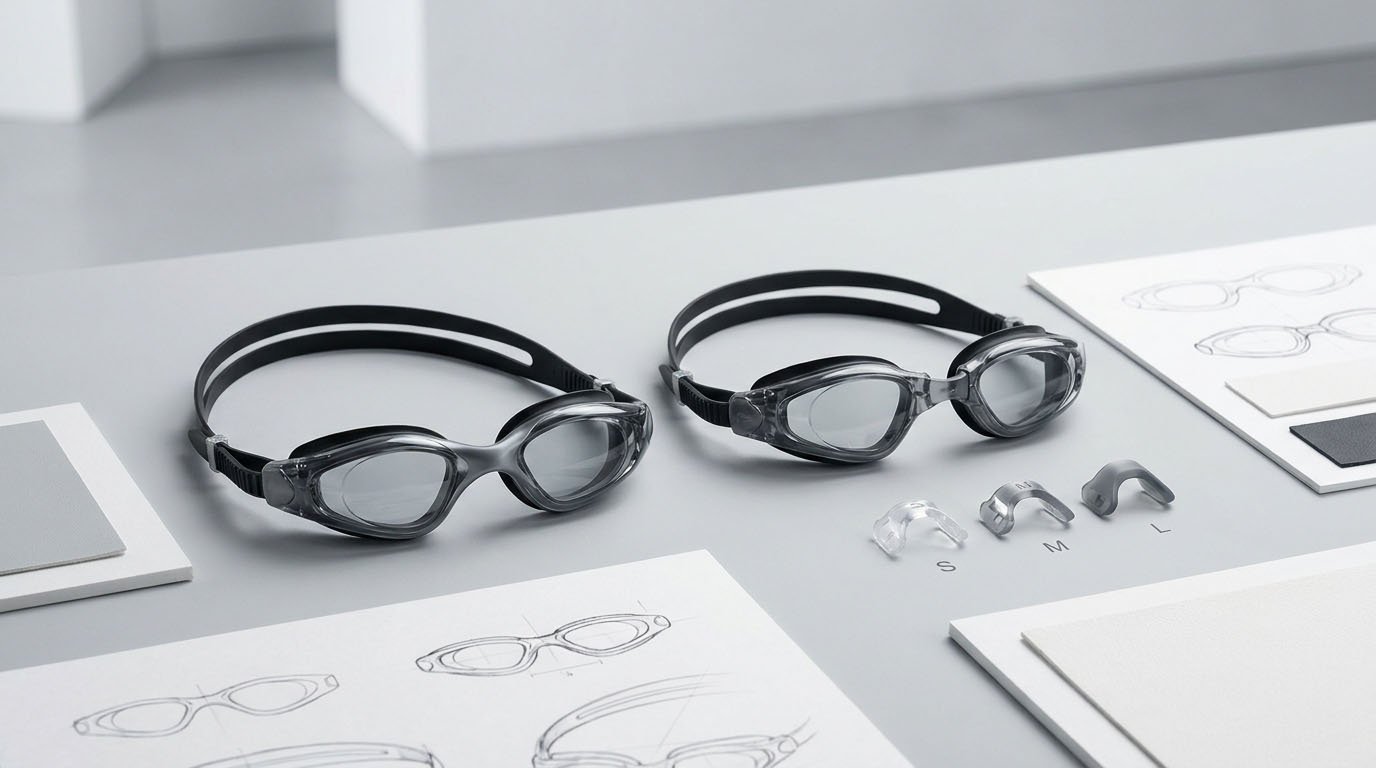
Nose Bridge Selection Matrix
| Your Brand Priority | Recommended Direction |
|---|---|
| Simple everyday use | Evaluate flexible fixed designs |
| Precise competition fit | Evaluate interchangeable designs |
| Multiple fitting options | Consider adjustable or interchangeable designs |
| Fewer packaged accessories | Prefer integrated structures where fit is validated |
| Broad retail audience | Compare fit coverage through user testing |
| Existing-mold private label | Review and validate available factory structures |
| Proprietary product development | Evaluate customized geometry and tooling |
What Should You Send Your Manufacturer?
Before requesting a final quotation, provide:
- Target market and intended swimmers.
- Product category and expected fit range.
- Preferred bridge type, if known.
- Reference products or design drawings.
- Requirements for bridge sizes and materials.
- Intended order quantity and packaging.
- Functional testing and approval expectations.
For brands using existing factory models, the first step is to determine whether the available bridge structure already meets the product requirements.
A custom bridge design becomes more relevant when existing options cannot achieve the intended fit or product differentiation.
Jerry’s OEM & ODM Swimming Goggle Manufacturing services can support the evaluation of existing configurations and new development requirements.
Frequently Asked Questions
Are Adjustable Nose Bridges Better Than Fixed Nose Bridges?
Not necessarily. Adjustable bridges offer additional fit options, while fixed bridges simplify operation. The better choice depends on the target users and the complete goggle design.
Do Competitive Swimming Goggles Need Adjustable Nose Bridges?
Not always. Many competitive goggles use interchangeable bridges for precise fitting, but well-designed fixed configurations can also be suitable. Product testing is more important than the category label.
Which Nose Bridge Is Less Likely to Leak?
Neither structure guarantees a waterproof seal. Bridge geometry affects eye-cup positioning, while gasket design, facial compatibility, and strap tension also influence leakage.
Are Fixed Nose Bridges Cheaper to Manufacture?
They may reduce component and assembly requirements, but overall cost depends on tooling construction, materials, manufacturing processes, and expected order volume.
Can a Brand Customize the Nose Bridge Without Developing a New Mold?
It depends on the existing product architecture. Some platforms offer compatible bridge options, while changes to the frame interface or integrated geometry may require tooling modifications or new molds.
Conclusion: Choose the Bridge That Fits Your Product Strategy
Fixed, adjustable, and interchangeable nose bridges each offer different advantages.
Fixed bridges prioritize simplicity and predetermined geometry. Adjustable and interchangeable bridges provide additional fitting options but require careful attention to their mechanisms and user experience.
For swimming goggle brands, the best decision follows a practical sequence:
Define the Target User → Compare Bridge Structures → Review Manufacturing Requirements → Test Representative Samples → Approve Production Specifications
At Jerry Goggles, we help brands evaluate product structures, develop custom swimming goggles, and prepare designs for manufacturing.
Whether you are sourcing an existing model or developing a proprietary goggle line, contact Jerry to discuss your nose bridge requirements, target users, and OEM/ODM project specifications.