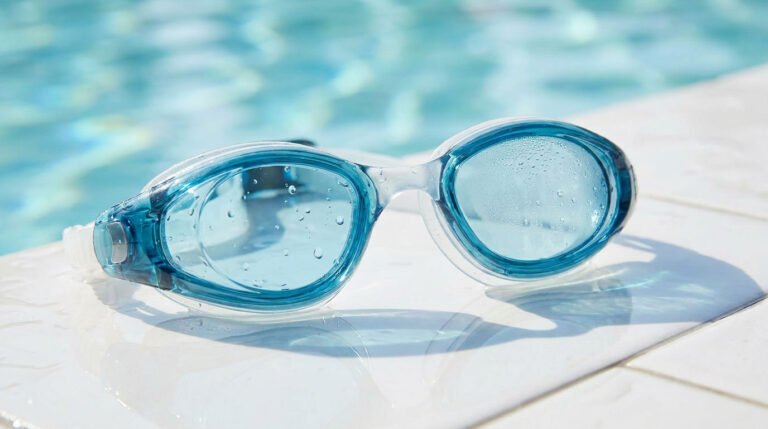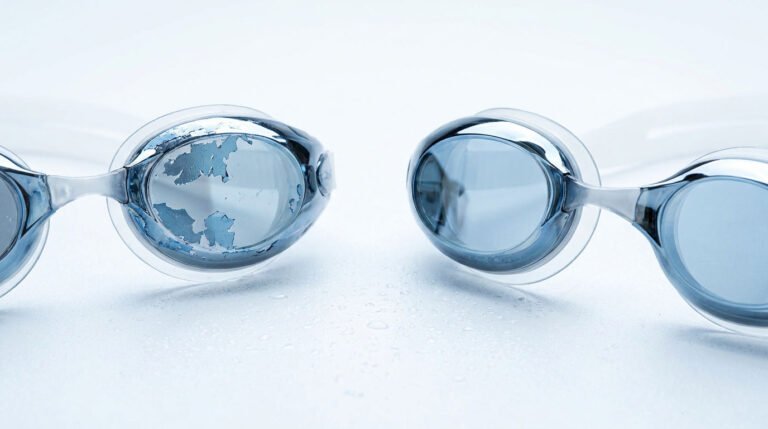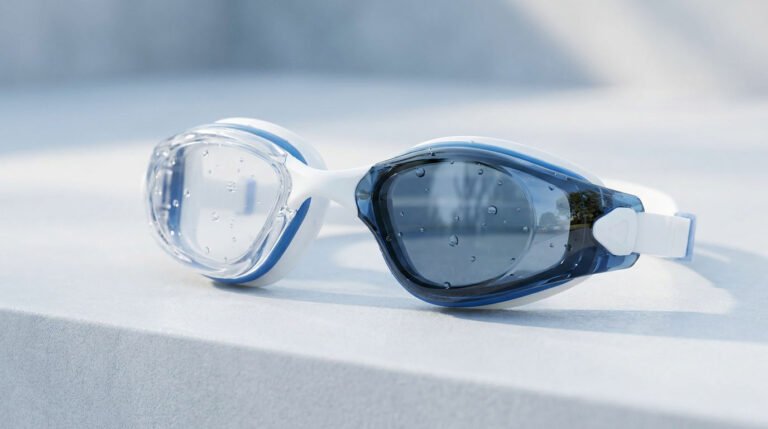
Choosing between mirrored and polarized swimming goggles can be confusing. Both are commonly marketed for bright swimming conditions, but they control light differently.
Mirrored swimming goggles use a reflective coating to reduce overall brightness, while polarized swimming goggles use a specialized filter to reduce reflected glare from water. Mirrored lenses often suit sunny outdoor pools, whereas polarized lenses are particularly useful for open-water swimming and triathlons.
For swimming goggle brands, understanding these differences also helps ensure accurate product specifications and marketing claims.
This guide explains how both technologies work, where they perform best, and how buyers can verify lens features before ordering.
Quick Answer: Mirrored vs Polarized Swimming Goggles
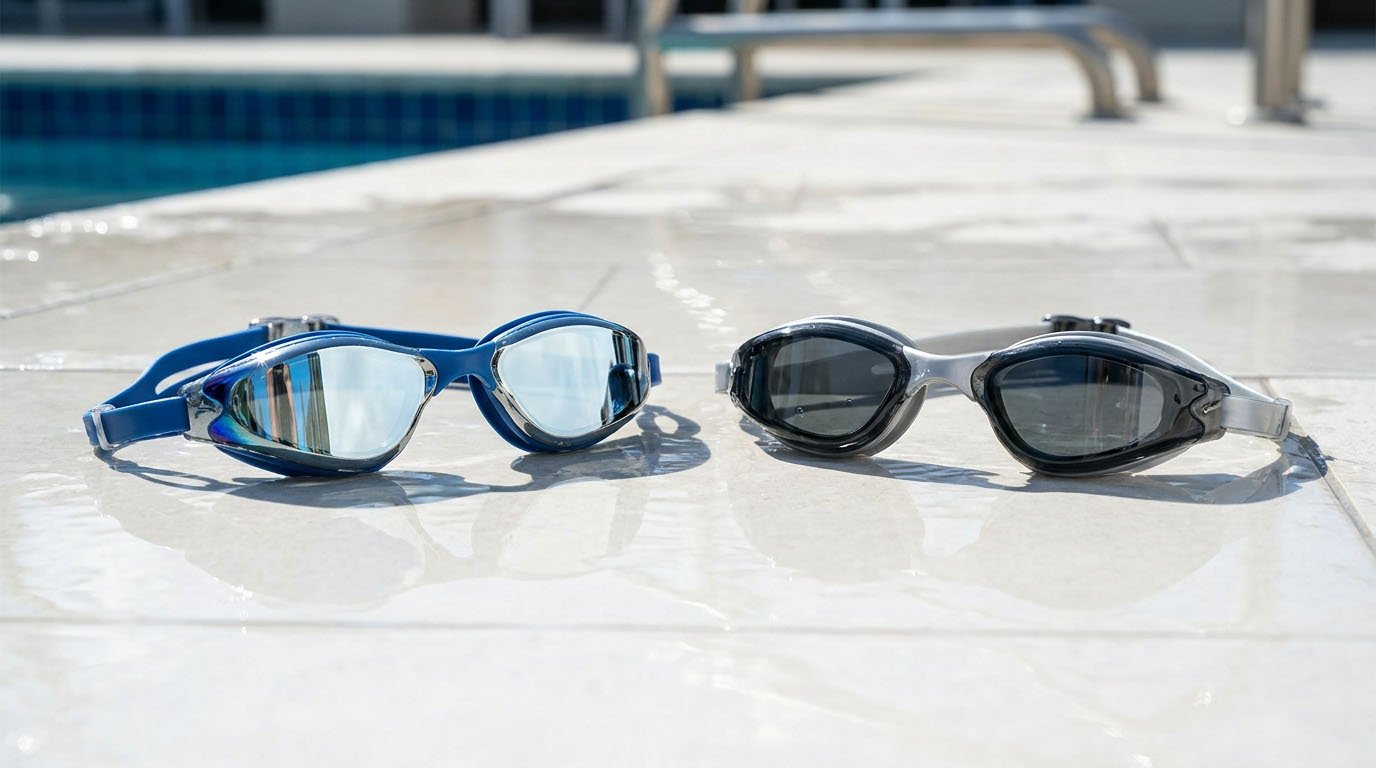
The main difference is overall brightness reduction versus selective glare reduction.
- Mirrored goggles: Reflect incoming light to reduce brightness. Suitable for sunny outdoor pools and racing.
- Polarized goggles: Filter much of the horizontally polarized glare reflected from water. Particularly useful for open-water swimming.
- Mirrored does not mean polarized: A shiny lens does not automatically contain a polarizing filter.
- Both features can be combined: Some lenses incorporate a mirror coating and polarization.
Mirrored vs Polarized Goggles: Comparison Table
| Feature | Mirrored Goggles | Polarized Goggles |
|---|---|---|
| Primary function | Reduce overall brightness | Reduce reflected glare |
| Technology | Reflective coating | Polarizing filter |
| Appearance | Shiny, reflective finish | May look non-reflective |
| Best environment | Sunny outdoor pools | Open water, triathlon |
| Surface glare | Reduces overall intensity | Selectively filters polarized glare |
| Indoor swimming | Depends on lens darkness | Usually unnecessary |
| Relative cost | Often lower | Often higher |
| Can combine both? | Yes | Yes |
Which is better? Choose mirrored goggles when strong sunlight is the main concern. Choose polarized goggles when reflections from the water surface interfere with visibility.
Key 1: How Do Mirrored and Polarized Swimming Goggles Work?
Although both technologies help manage light, their optical mechanisms differ.
Mirrored Swimming Goggle Lenses
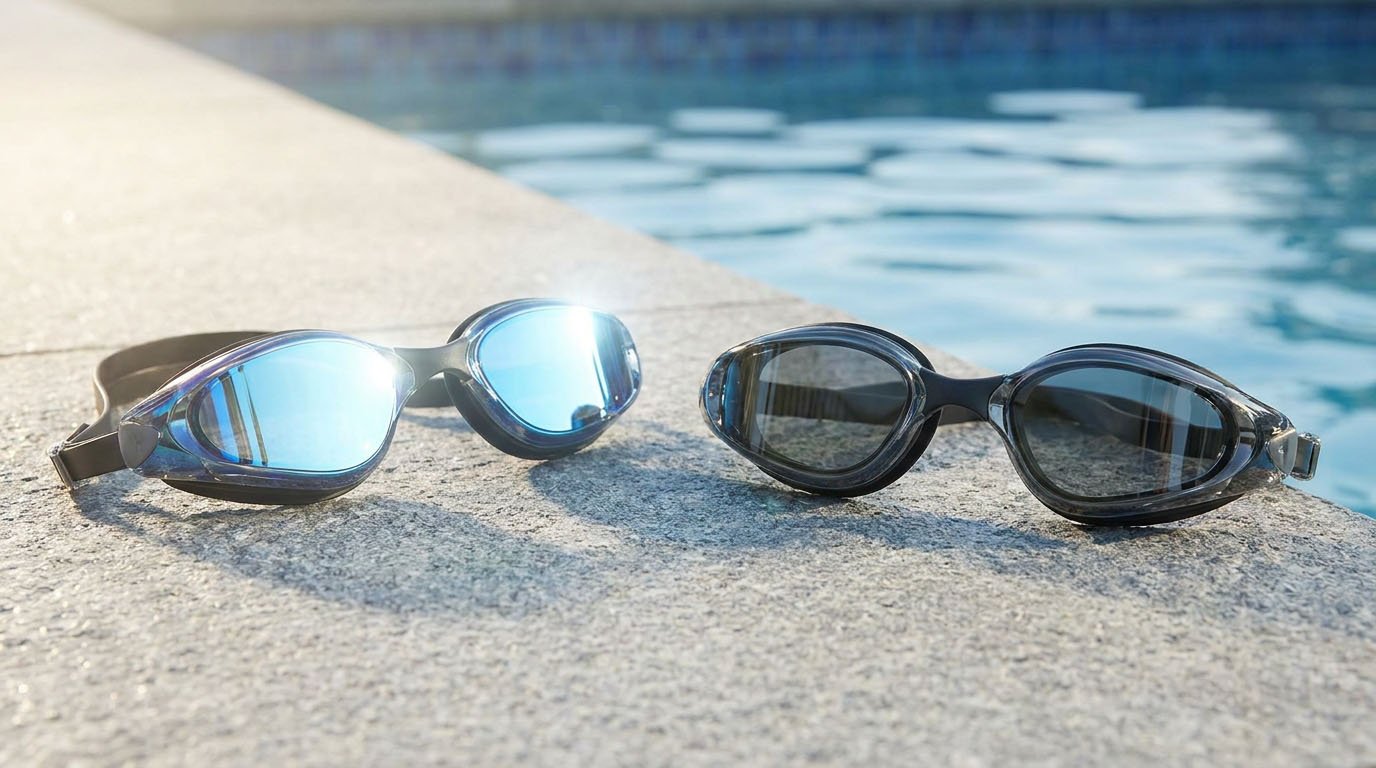
Mirrored lenses have a thin reflective coating that reflects part of the incoming light away from the eyes.
Depending on the coating design, the lens may have a silver, gold, blue, or rainbow finish.
Common benefits include:
- Reduced overall brightness
- Improved comfort under strong sunlight
- Distinctive appearance for racing goggles
- Attractive styling for retail collections
However, mirrored coatings do not selectively filter polarized water reflections in the same way as polarizing filters.
Their performance also depends on the underlying lens tint and visible light transmission.
Polarized Swimming Goggle Lenses
Polarized lenses contain a filter that reduces light vibrating in a particular direction.
Sunlight reflecting from water can become partially horizontally polarized, producing intense glare when swimmers look across the surface.
A properly oriented polarizing filter reduces much of this glare, which can improve visual comfort during open-water swimming.
However, polarization does not eliminate every reflection. Its effectiveness varies with viewing angle and water conditions.
Lens Tint Is a Separate Feature
Lens tint, mirror coating, and polarization are different optical properties.
A dark lens is not necessarily polarized, and a polarized lens does not need a reflective finish.
Lens materials also affect optical clarity, durability, and coating compatibility. For further details, see our Swim Goggle Lens Materials Guide.
Key 2: What Are the Main Performance Differences?
The most important differences involve glare control, light transmission, appearance, and cost.
Brightness Reduction vs Glare Reduction
Mirrored lenses lower the overall amount of light entering the eyes, making bright swimming conditions more comfortable.
Polarized lenses selectively reduce certain reflected light, particularly glare from water surfaces.
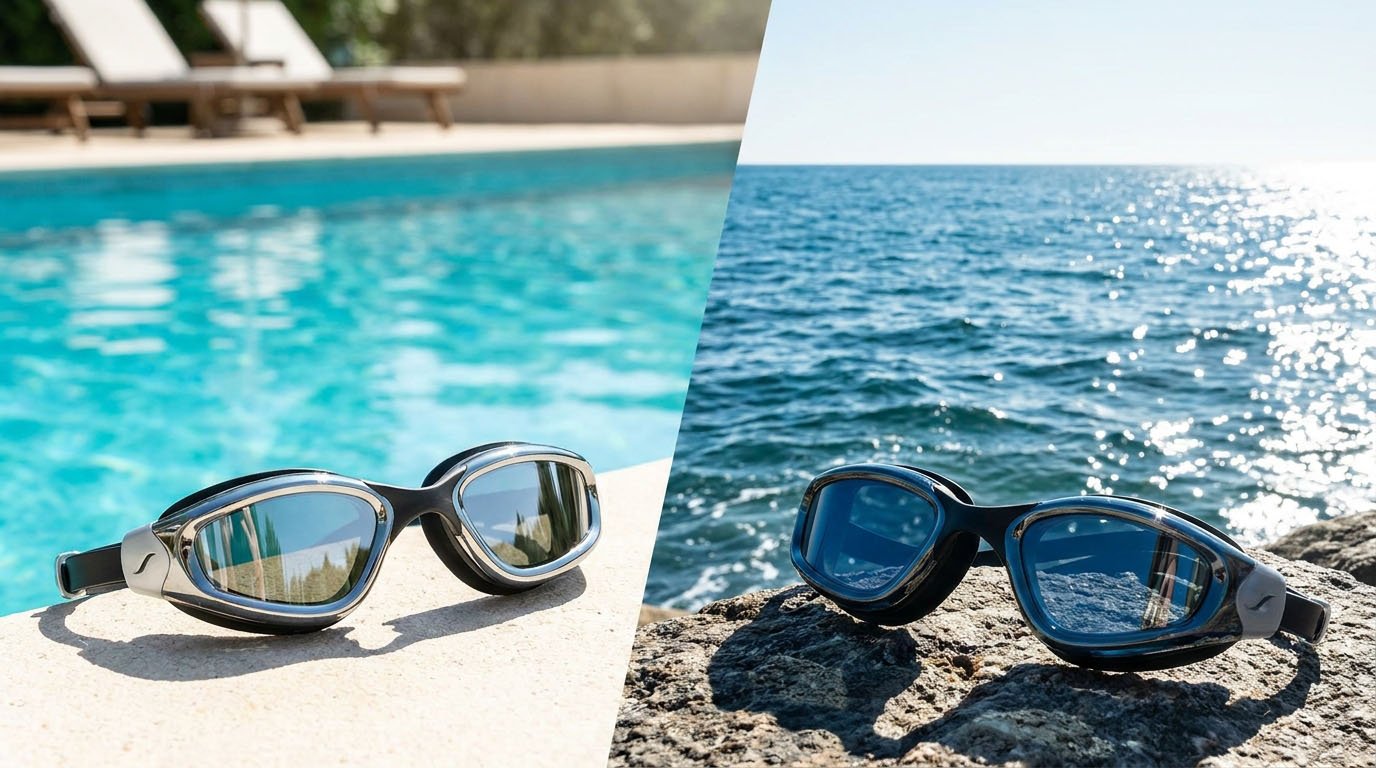
For example, a swimmer training in a sunny outdoor pool may prefer mirrored goggles. A triathlete looking across a reflective lake may benefit more from polarization.
Neither technology is universally better.
Visible Light Transmission (VLT)
Visible Light Transmission describes the percentage of visible light passing through a lens.
A lower VLT generally means less light reaches the eyes.
Both mirrored and polarized goggles can have different VLT levels depending on their tint, coating, and construction.
Polarization alone does not guarantee better overall optical clarity. Lens geometry, material quality, and manufacturing consistency also matter.
Appearance and Cost
Mirrored lenses are popular for their reflective appearance, especially in competitive swimming collections.
Polarized lenses may look similar to ordinary tinted lenses, even though their optical function differs.
Polarized constructions often cost more because of additional manufacturing requirements. However, actual pricing depends on lens design, production quantity, and specifications.
For buyers, appearance alone is not reliable evidence of performance.
Key 3: Which Lens Is Better for Different Swimming Environments?
The best lens depends primarily on lighting conditions and how swimmers use their goggles.
| Swimming Environment | Recommended Lens | Main Reason |
|---|---|---|
| Indoor pool | Clear or light tint | Preserves visibility |
| Bright indoor competition | Suitable tint or light mirror | Controls intense lighting |
| Sunny outdoor pool | Mirrored | Reduces brightness |
| Open water with strong glare | Polarized | Reduces surface reflections |
| Triathlon in bright sunlight | Polarized or combined | Manages glare and brightness |
| Dawn or cloudy conditions | Clear or lighter tint | Preserves available light |
Indoor Swimming Pools
Most indoor swimmers do not need strong mirror finishes or polarization.
Clear or lightly tinted lenses usually provide sufficient visibility.
However, brighter competition venues may benefit from suitable mirrored or tinted lenses.
Outdoor Swimming Pools
Mirrored goggles are often a practical choice for sunny outdoor pools.
Their reflective coating reduces overall brightness, making them suitable for daytime training and competition.
Polarized lenses can also work outdoors, but their additional glare reduction may provide less benefit when swimmers spend most of their time looking underwater.
Open-Water Swimming and Triathlons
Open-water environments expose swimmers to reflections from lakes, oceans, and other large water surfaces.
These reflections can interfere with sighting, particularly when swimmers look toward the horizon.
Polarized goggles can reduce much of this glare, making them particularly useful for:
- Open-water training
- Triathlon swimming
- Lake and ocean swimming
- Surface navigation toward course markers
For very bright conditions, a combined mirrored and polarized lens may also be suitable if its light transmission remains appropriate.
For a broader comparison of lens colors, fit, and swimming conditions, read our Guide to Choosing the Right Swimming Goggles.
Key 4: Can Swimming Goggles Be Both Mirrored and Polarized?
Yes. Some swimming goggles combine a reflective mirror coating with a polarizing filter.
Each feature serves a different purpose:
- Mirror coating: Reduces overall brightness.
- Polarizing filter: Reduces much of the reflected surface glare.
This combination can be useful for swimming in strong sunlight with significant water reflections.
However, it does not automatically make a lens suitable for every environment. Visible light transmission and optical quality still need evaluation.
Does Mirrored or Polarized Mean UV Protection?
No. UV protection, mirror coatings, and polarization are separate performance characteristics.
A mirrored appearance does not establish a particular level of UV protection. Similarly, polarization alone does not prove a specific UV rating.
Brands should verify UV protection through appropriate lens specifications and supporting test evidence.
The same principle applies to anti-fog performance: neither mirroring nor polarization automatically establishes an anti-fog claim.
Each advertised feature should match the finished product’s verified specifications.
Key 5: How Can Buyers Verify Mirrored and Polarized Lens Claims?
For swimming goggle brands and importers, verifying lens features before approving production helps prevent incorrect specifications and misleading claims.
Step 1: Check Polarization With a Reference Filter
A known polarizing filter provides a simple preliminary screening method.
- Place the sample lens in front of the reference filter.
- Look through both toward a suitable light source.
- Slowly rotate one filter relative to the other.
- Observe whether the transmitted light becomes significantly darker.
A functioning linear polarizing lens should show a noticeable brightness change as the filter axes rotate.
This is a screening check, not a complete optical performance test.
Step 2: Perform a Preliminary Screen Test
A compatible LCD screen may also demonstrate polarization.
When the lens rotates relative to the polarized screen light, the image may become darker.
However, results depend on display technology and orientation. Some screens are unsuitable for this method.
Therefore, a screen test should not be the sole evidence supporting a polarized lens claim.
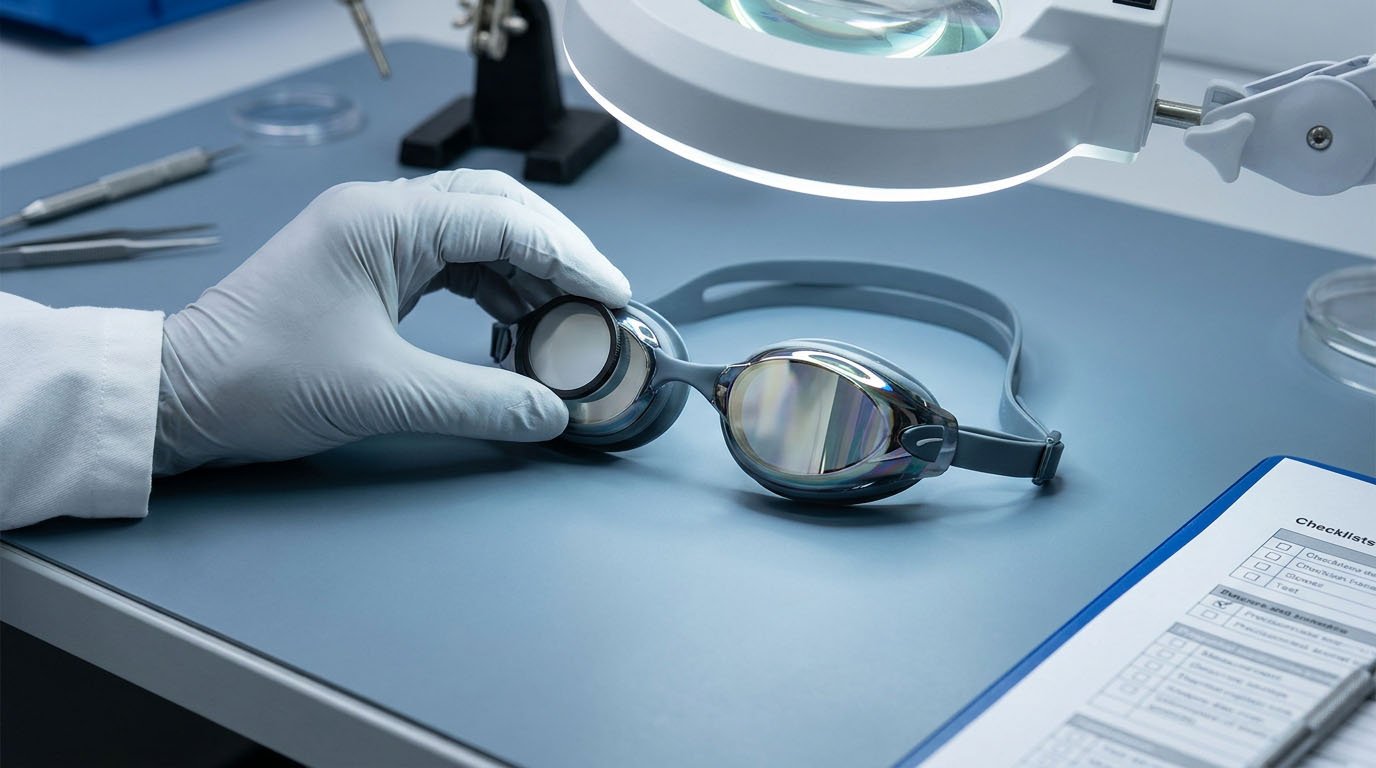
Step 3: Inspect Mirrored Coating Quality
For mirrored goggles, inspect production-representative samples for:
- Uneven coating or discoloration
- Scratches, pinholes, or surface defects
- Differences between left and right lenses
- Unacceptable optical distortion
- Inconsistent tint or brightness
Where durability claims are important, request suitable coating evaluation.
Step 4: Confirm Specifications and Supporting Evidence
Before production approval, ask the manufacturer to confirm the following:
| Verification Item | What Buyers Should Check |
|---|---|
| Lens configuration | Mirrored, polarized, or both |
| Lens tint | Approved color and appearance |
| VLT | Specified transmission range |
| Polarization | Filter performance |
| UV protection | Evidence supporting the claim |
| Approved sample | Matches the ordered configuration |
| Bulk consistency | No unauthorized lens changes |
For detailed instructions on verifying sample identities and technical documents, see How to Read a Swimming Goggle Test Report.
The key principle is to verify the actual lens configuration, rather than relying on appearance or marketing descriptions.
Key 6: Which Lens Option Should Your Swimming Goggle Brand Choose?
For brands, wholesalers, and private-label sellers, the right lens depends on the intended customer and product positioning.
Match Lens Features to Your Market
Competitive Swimming Collection
Mirrored lenses can be suitable for outdoor racing and brightly illuminated training environments.
Open-Water and Triathlon Collection
Polarized lenses offer useful differentiation for swimmers dealing with reflected surface glare.
General Training Collection
Clear and lightly tinted options may be more practical than including premium lens treatments across every model.
Premium Outdoor Collection
Combined mirrored and polarized lenses may suit products intended for both strong sunlight and reflective water conditions.
Confirm Manufacturing Requirements
Before requesting a quotation, ask:
- Is the lens option available on an existing goggle model?
- Can the manufacturer provide representative samples?
- Which optical and coating specifications can be verified?
- Does the lens option affect MOQ, unit price, or development time?
- Are customization and testing charges included?
Different lens configurations may influence production costs. Our Custom Swimming Goggles Cost Guide explains the main pricing factors.
Jerry provides OEM & ODM Swimming Goggle Manufacturing services for brands developing customized collections. Available lens options and performance requirements can be reviewed during product selection and sampling.
For buyers, the most important goal is to select features that match customer needs and verify them before making retail claims.
Frequently Asked Questions
Are Mirrored Swimming Goggles Polarized?
Not necessarily. Mirrored goggles use a reflective coating, while polarized goggles contain a directional light filter. Some lenses combine both features.
Are Polarized Goggles Better for Open Water?
Often, yes, when reflected surface glare is the main concern. However, the best choice also depends on lighting conditions, lens tint, and personal preferences.
Are Mirrored Goggles Good for Indoor Swimming?
They can work in brightly illuminated pools, but darker mirrored lenses may reduce visibility indoors. Clear or lightly tinted goggles are often more practical.
Do Polarized Swimming Goggles Provide UV Protection?
Polarization does not establish a specific UV protection rating. UV performance should be verified separately using appropriate supporting evidence.
How Can Buyers Tell Whether Goggles Are Polarized?
A known polarizing reference filter can provide an initial screening check. For commercial orders, buyers should also confirm lens specifications and appropriate optical test evidence.
Conclusion
Mirrored and polarized swimming goggles serve different purposes.
Mirrored lenses primarily reduce overall brightness, while polarized lenses selectively reduce reflected water-surface glare. Mirrored goggles often suit sunny outdoor pools, whereas polarized goggles offer advantages in open-water swimming and triathlons.
For swimming goggle brands, choosing the right technology requires considering the target market, light transmission, optical quality, and manufacturing requirements.
Before launching a product, verify the lens specifications and ensure marketing claims reflect actual performance.
Looking for custom mirrored or polarized swimming goggles?
Contact Jerry to discuss available lens options, sample development, private-label customization, and OEM/ODM manufacturing requirements.