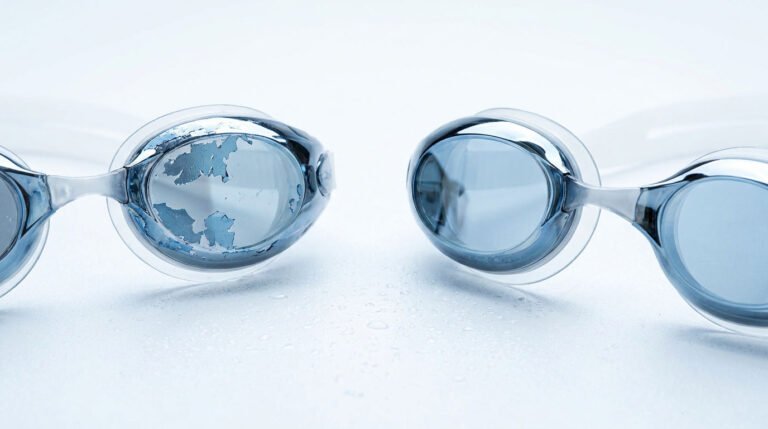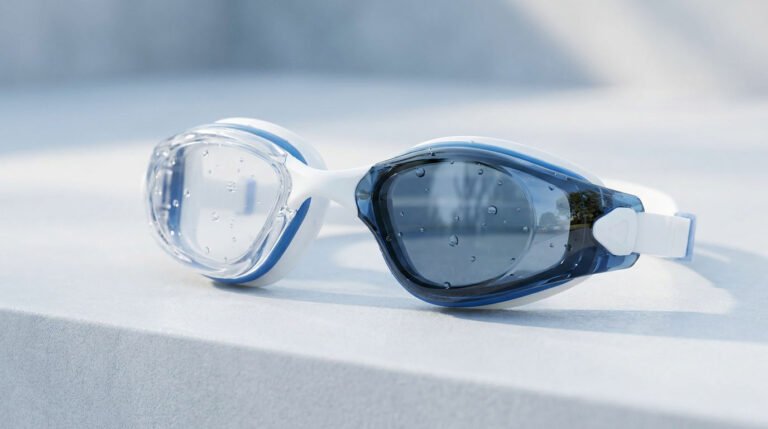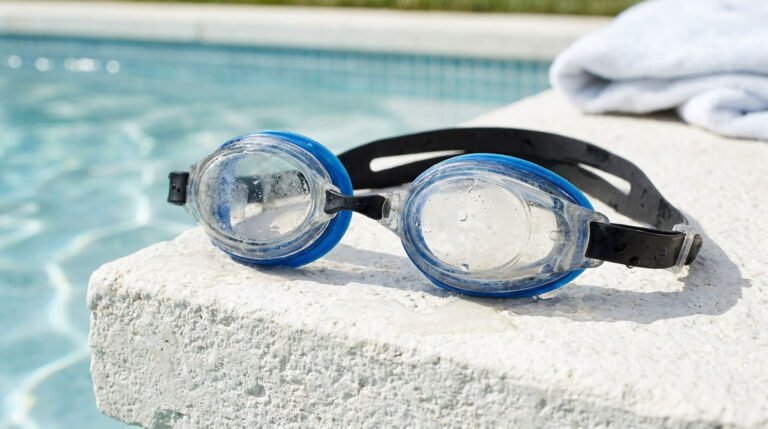
Swimming goggles can provide clear vision when new, yet gradually begin fogging after repeated use. For swimmers, this raises a simple question: How long should swimming goggle anti-fog actually last?
For swimming goggle brands, the question is more important. Anti-fog performance affects customer satisfaction, product reviews, warranty claims, and repeat purchases.
There is no universal anti-fog lifespan measured in a fixed number of swimming sessions or months. Longevity depends on the coating technology, swimming conditions, handling, and maintenance. Brands should evaluate performance against a defined use profile rather than relying on unsupported lifetime promises.
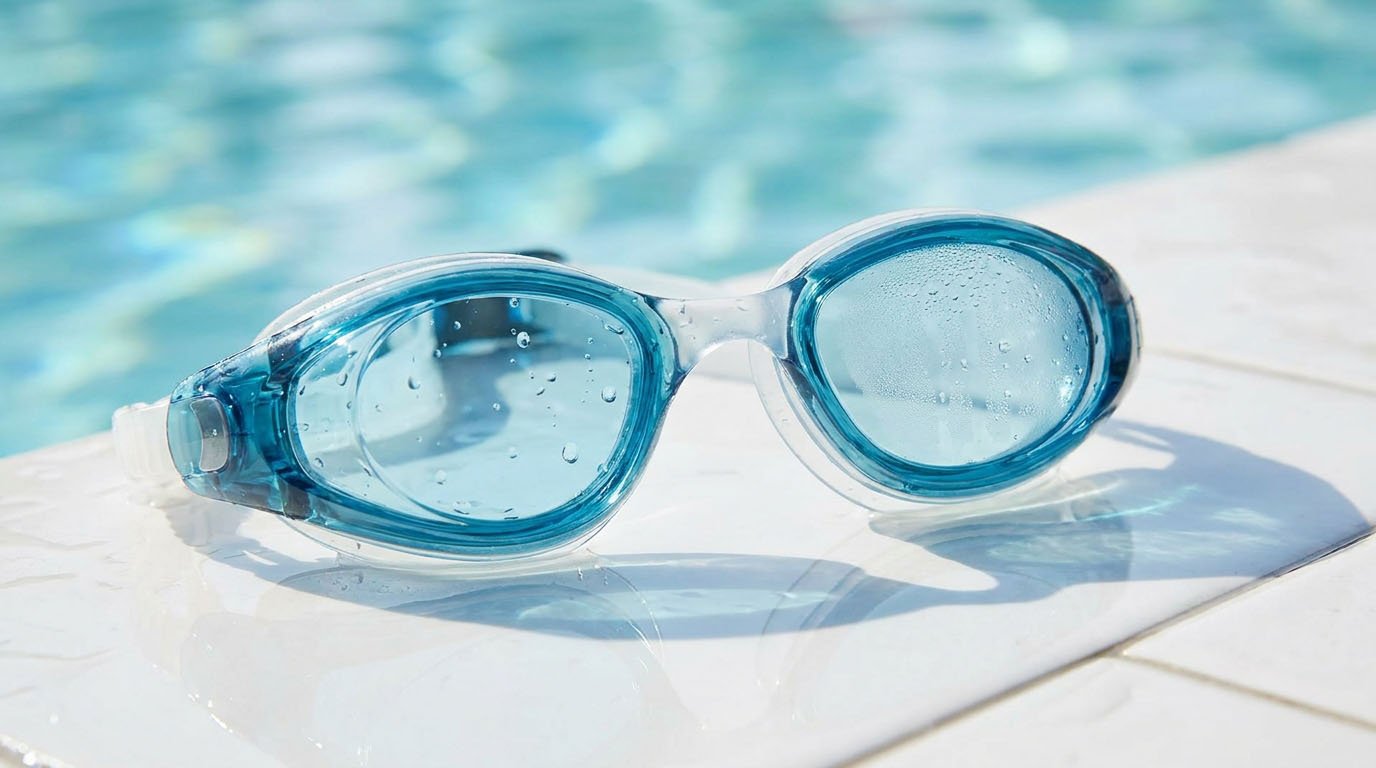
Quick Answer: How Long Does Swimming Goggle Anti-Fog Last?
Factory-applied anti-fog treatments are generally designed to reduce condensation on the inner lens, but their performance may decline with use.
The actual lifespan varies according to:
- Coating technology: Different formulations offer different durability characteristics.
- Swimming frequency: Frequent use can increase cumulative exposure and handling.
- Pool conditions: Direct contact with treated pool water may affect some coatings.
- Cleaning habits: Rubbing or unsuitable cleaning products can damage conventional treatments.
- Storage: Heat, moisture, and friction can accelerate deterioration.
A swimmer using goggles occasionally may experience a different lifespan from someone training regularly, even with the same model.
For brands developing custom swimming goggles, the more useful question is:
Can the selected anti-fog system maintain acceptable visibility under the intended conditions of use?
That question should guide product selection, testing, and customer-facing claims.
Key 1. How Long Should Anti-Fog Last Under Normal Swimming Conditions?
Buyers often request a guarantee such as "six months of anti-fog protection." However, calendar time alone does not describe how extensively the goggles will be used.
A pair used occasionally may experience fewer exposure and handling events than one used for daily training.
Anti-Fog Lifespan Depends on the Use Profile
| Swimming Use | Typical Exposure Pattern | What Brands Should Consider |
|---|---|---|
| Occasional recreational swimming | Infrequent sessions | Storage conditions and elapsed time between uses |
| Regular fitness swimming | Repeated weekly use | Consistent performance across recurring sessions |
| Frequent swim training | High use frequency | Cumulative wear, handling, and maintenance |
These categories describe different usage conditions, not guaranteed coating lifespans.
Why Swim Sessions Are More Useful Than Calendar Months
A claim based on swimming sessions can be more meaningful than a calendar-based claim, provided the session conditions are defined.
For example, two swimmers may both own their goggles for three months, but one may have used them substantially more often.
However, a swimming session is not a standardized durability unit. Session duration, water exposure, removal frequency, and lens handling can vary considerably.
A defensible longevity claim therefore needs supporting product-specific evidence.
Key 2. What Factors Affect Swimming Goggle Anti-Fog Lifespan?
Several factors influence how long anti-fog protection remains effective.
1. Anti-Fog Coating Technology
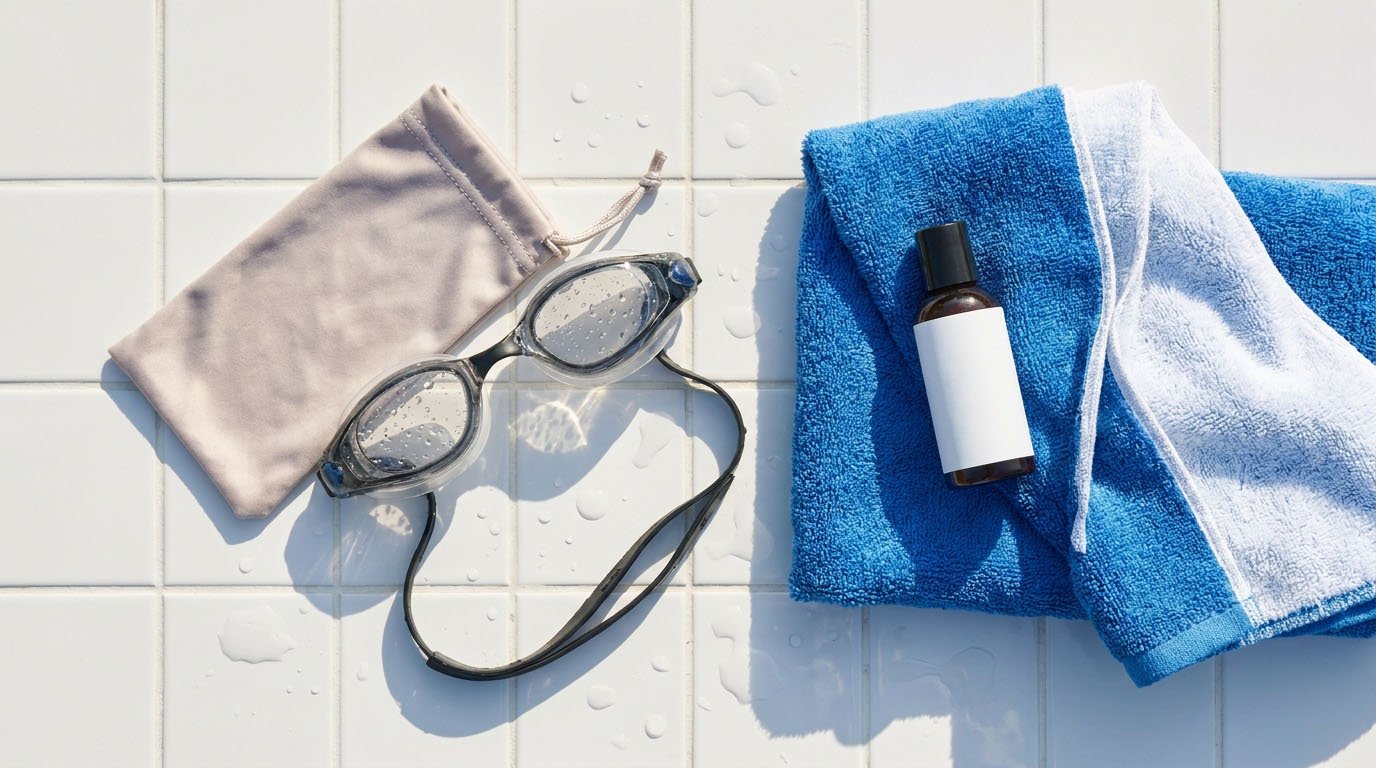
Many swimming goggles use hydrophilic treatments that encourage condensation to spread into a relatively uniform film instead of forming vision-obscuring droplets.
Different systems may use surface-applied treatments, more durable coating formulations, or specialized anti-fog technologies.
Their performance depends on coating composition, compatibility with the lens, application quality, and intended use.
A premium label alone does not prove longer service life. Brands should compare documented performance for the actual lens configuration.
2. Swimming Frequency and Exposure Conditions
Frequent swimming may increase the opportunities for coating wear, handling damage, and environmental exposure.
Chlorinated pool water can also contribute to deterioration of susceptible formulations over time.
However, the inner lens is not continuously exposed to pool water when the goggles seal properly. Direct exposure depends on leakage, rinsing, handling, and other conditions.
For a detailed explanation, read our guide on how chlorine affects swimming goggle anti-fog coating.
3. Inner-Lens Rubbing and Improper Cleaning
Conventional anti-fog treatments can be sensitive to mechanical contact.
Touching or wiping the inner lens with fingers, towels, or clothing may damage the coating or create uneven performance.
Aggressive cleaners can also interfere with some anti-fog treatments.
Certain specialized systems have manufacturer-approved reactivation procedures involving lens contact, so care instructions must match the actual technology.
4. Storage and Environmental Conditions
Excessive heat, prolonged sunlight, surface contamination, and contact with other equipment can contribute to coating damage.
Keeping goggles in a damp, tightly packed swim bag may also leave moisture and residue in prolonged contact with the lens.
Good storage reduces avoidable damage, although it cannot make anti-fog performance permanent.
Key 3. Why Do Swimming Goggles Lose Anti-Fog Performance Early?
When goggles begin fogging, the coating may be deteriorating. But premature fogging does not automatically mean the treatment has failed.
Condensation conditions, contamination, improper handling, and manufacturing variation can produce similar symptoms.
Normal Wear vs. Premature Anti-Fog Failure
| Symptom | Possible Explanation | Recommended Check |
|---|---|---|
| Gradually increasing fogging | Coating wear or accumulated contamination | Review usage and care history |
| Fogging from first use | Initial performance issue or unsuitable conditions | Compare with an unused reference pair |
| Uneven fogging patches | Local contamination, wiping damage, or coating variation | Inspect the affected areas |
| Cloudiness after swimming | Water residue or surface deposits | Follow manufacturer-approved rinsing instructions |
| Persistent fogging after proper care | Possible coating deterioration | Request further product evaluation |
These symptoms are diagnostic clues, not proof of a particular defect.
Does Initial Clarity Guarantee Long Anti-Fog Life?
No.
A new lens may perform well during an initial condensation test but lose effectiveness after repeated use.
Initial performance and long-term durability are different characteristics.
For practical methods of evaluating initial lens clarity, see How to Test Anti-Fog Performance on Swimming Goggles.
For consumers, unusually early fogging should prompt a review of cleaning instructions and, where appropriate, consultation with the seller.
For brands, repeated complaints across the same product configuration may justify a more detailed quality investigation.
Key 4. How Can Swimmers Extend Anti-Fog Lifespan?
Correct maintenance helps protect the anti-fog treatment and reduce preventable damage.
For most conventionally coated swimming goggles, the following routine is a useful starting point.
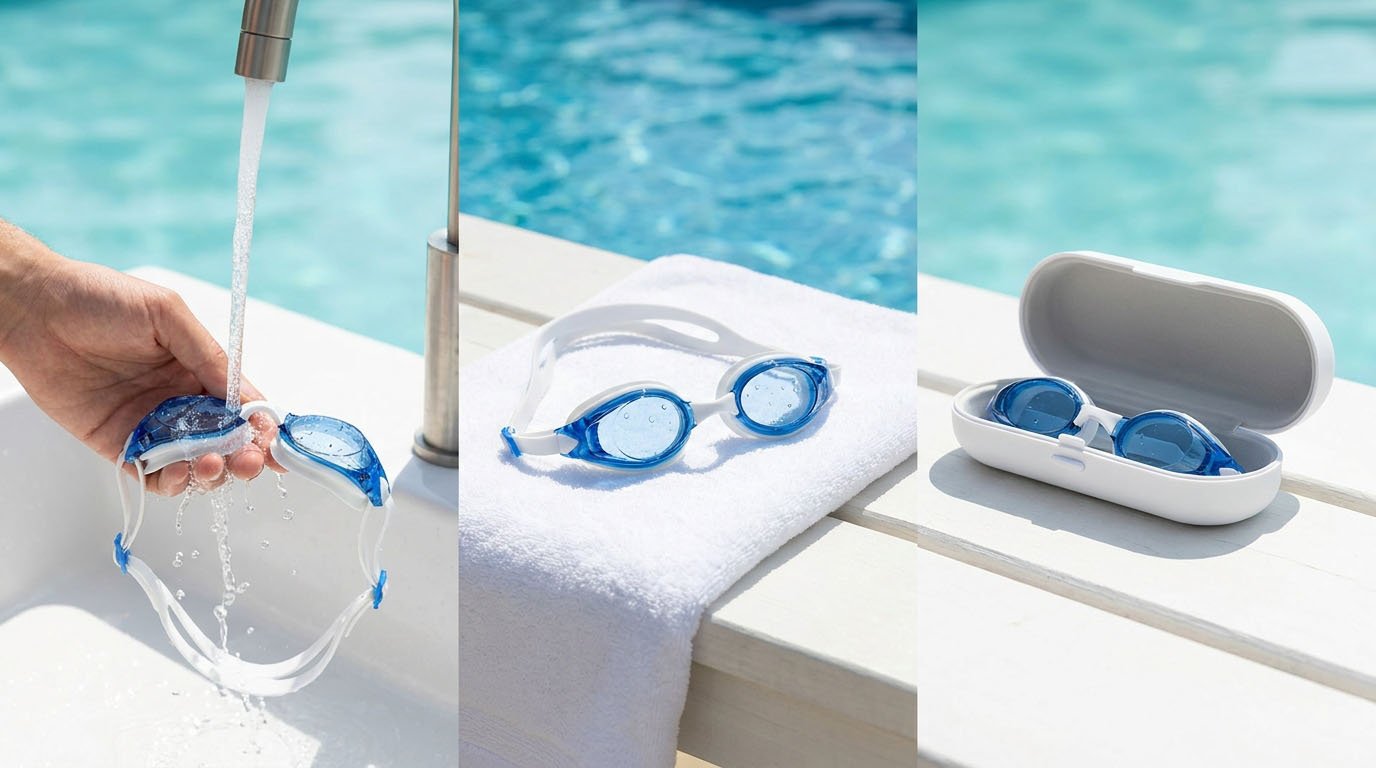
Step 1: Rinse Gently After Swimming
Use clean, cool or lukewarm freshwater to remove pool-water residue, following the product’s instructions.
Avoid very hot water or aggressive washing.
Step 2: Avoid Rubbing the Inner Lens
For conventional coatings, do not wipe the inner surface with fingers, towels, or clothing.
Gently shake off excess water instead.
Follow the manufacturer’s specific instructions if the goggles use a specialized reactivatable anti-fog system.
Step 3: Allow the Goggles to Air-Dry
Dry the goggles in a clean, shaded, ventilated location.
Avoid heaters, hot cars, and prolonged direct sunlight.
Step 4: Store the Goggles in a Protective Case
Once dry, store them where the inner lens will not rub against straps, keys, or other equipment.
Avoid unapproved soaps, detergents, alcohol, or abrasive cleaning products.
Important: These practices help reduce avoidable damage. They do not guarantee a particular number of fog-free swimming sessions.
Can Anti-Fog Sprays Restore Lost Performance?
Compatible anti-fog sprays or drops may temporarily improve fog resistance when the original treatment has weakened.
However, aftermarket products do not necessarily restore the original factory coating.
Swimmers should confirm compatibility with their goggles and follow the product’s usage and eye-safety instructions.
Key 5. How Should Brands Specify Anti-Fog Lifespan?
For OEM and private label swimming goggles, phrases such as "long-lasting anti-fog" are too vague to serve as technical acceptance criteria.
Brands should define the intended use conditions and determine how performance will be evaluated.
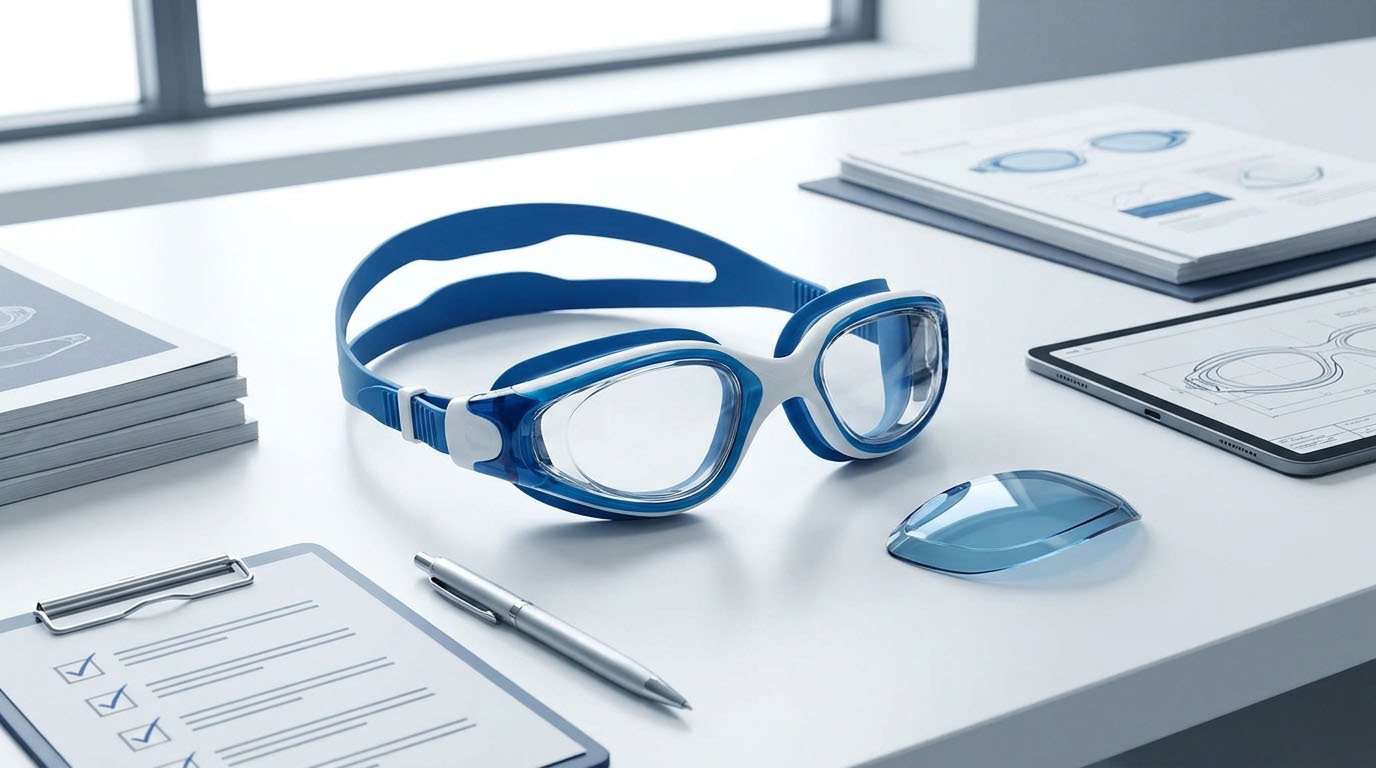
Anti-Fog Lifespan Specification Checklist
| Specification Item | What Brands Should Define |
|---|---|
| Target user | Recreational swimmer, fitness swimmer, or regular trainee |
| Use profile | Swimming frequency, session duration, and handling assumptions |
| Lens configuration | Lens material, coating system, and approved product model |
| Exposure conditions | Relevant water, humidity, and environmental conditions |
| Performance requirement | Acceptable fogging and visibility criteria |
| Durability evaluation | Agreed conditioning and repeat-use assessment |
| Acceptance criteria | Defined pass/fail rules |
| Documentation | Sample identity, method, results, and approval records |
These requirements should be established during product development and confirmed before making longevity claims.
Example: Writing a More Defensible Anti-Fog Requirement
Weak specification:
"Premium anti-fog coating that lasts for six months."
Better specification:
"The approved lens and anti-fog configuration shall maintain the agreed visibility performance after the project-defined repeated-use conditioning procedure, using documented acceptance criteria."
The second version gives the manufacturer and buyer a measurable target.
However, a laboratory conditioning cycle should not automatically be translated into a number of real swimming sessions. That relationship requires separate validation.
What Evidence Should Support a Lifespan Claim?
Brands should request relevant documentation showing:
- Which product and coating configuration was evaluated
- How samples were conditioned
- Which performance criteria were used
- What results were recorded
- Whether the evidence supports the proposed marketing claim
The detailed testing procedures belong in a separate validation plan.
For more information, see our guide to anti-fog durability testing before mass production.
Key 6. What Should Brands Ask a Swimming Goggle Manufacturer?
When comparing suppliers, buyers should look beyond the statement that goggles have anti-fog protection.
The following questions help determine whether longevity expectations are supported by appropriate evidence.
Essential Anti-Fog Sourcing Questions
- Which anti-fog technology is used? Is it the same configuration used in the samples and the proposed production order?
- What durability evidence is available? Are the results relevant to the intended swimming conditions?
- How is acceptable performance defined? Are the criteria measurable and agreed upon?
- Can the supplier provide representative test records? Do the documents identify the samples and test conditions?
- How is product consistency verified? Is anti-fog performance included in the agreed quality control plan?
- What care instructions are recommended? Do they match the actual coating technology?
- Which longevity claims can the brand reasonably make? Are they supported by the evidence rather than general marketing language?
A reliable supplier should be able to explain what has been tested, what the results demonstrate, and where performance uncertainty remains.
Jerry supports product development and manufacturing through its OEM & ODM services. Buyers can also review Jerry’s Quality Assurance capabilities when discussing anti-fog performance requirements and production verification.
Frequently Asked Questions
Do Swimming Goggle Anti-Fog Coatings Eventually Wear Out?
Many factory-applied anti-fog treatments gradually lose effectiveness through use, environmental exposure, or handling. The rate depends on the coating system and actual use conditions.
No universal lifespan applies to every swimming goggle.
How Many Months Should Swimming Goggle Anti-Fog Last?
There is no reliable industry-wide number of months suitable for all models.
A calendar-based expectation needs to account for swimming frequency, exposure conditions, maintenance, and product-specific durability evidence.
Why Do My Swimming Goggles Fog After Only a Few Uses?
Possible explanations include surface contamination, improper cleaning, coating damage, unsuitable condensation conditions, or a product quality issue.
Follow the recommended care instructions and compare the results with an unused reference pair when possible.
Can I Permanently Restore a Worn Anti-Fog Coating?
An aftermarket anti-fog product may provide temporary fog resistance, but it generally does not rebuild a damaged factory-applied coating.
Use only products compatible with the goggles and follow the manufacturer’s instructions.
Should Swimming Goggle Brands Guarantee a Fixed Anti-Fog Lifespan?
Brands should avoid making fixed lifespan promises without evidence that supports the specific product and stated conditions.
A better approach is to establish measurable requirements, validate them, and communicate limitations clearly.
Conclusion: Anti-Fog Lifespan Should Be Based on Performance, Not Promises
Swimming goggle anti-fog does not have one universal lifespan.
Actual performance depends on coating technology, usage, exposure, handling, and maintenance.
For swimmers, gentle cleaning and proper storage help reduce preventable wear.
For swimming goggle brands, the priority is to define realistic performance expectations and support them with product-specific evidence.
An effective approach is:
Define Intended Use → Select Anti-Fog System → Agree on Performance Criteria → Verify Durability → Support Customer Claims
If you are developing OEM, ODM, or private label swimming goggles, Jerry can help review your product requirements, anti-fog options, and manufacturing considerations.
Contact Jerry to discuss your swimming goggle project.