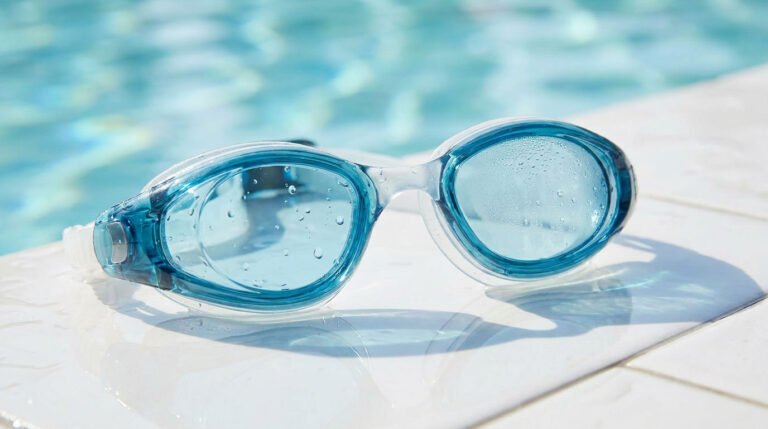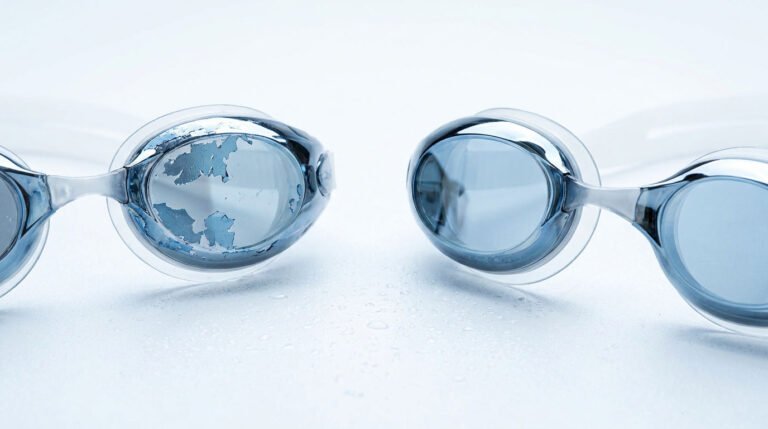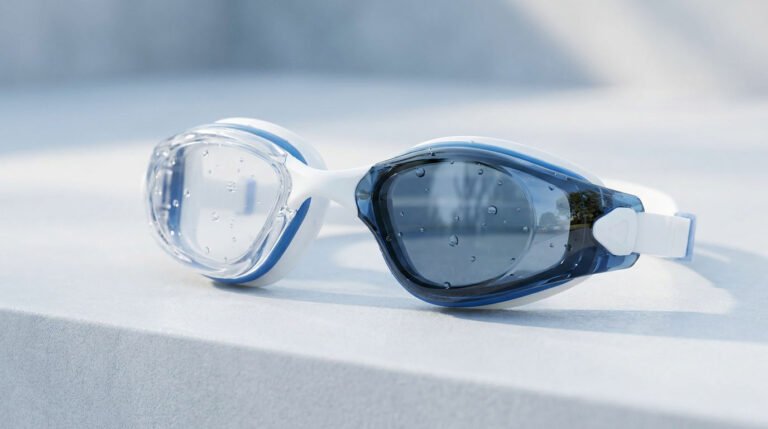
Swimming goggles may look perfect when new, yet develop stiff straps, uncomfortable seals, or cloudy lenses after repeated pool use. Chlorine is often blamed, but not every problem comes from chemical exposure alone.
Chlorine can contribute to the deterioration of swimming goggle materials over time, depending on the material formulation, pool-water chemistry, temperature, and exposure duration. Silicone seals, TPE straps, polycarbonate (PC) lenses, and anti-fog coatings respond differently. Heat, UV radiation, mechanical stress, and improper cleaning can also accelerate wear.
For swimming goggle brands and OEM buyers, understanding these differences helps improve material selection, product durability, and quality verification before mass production.
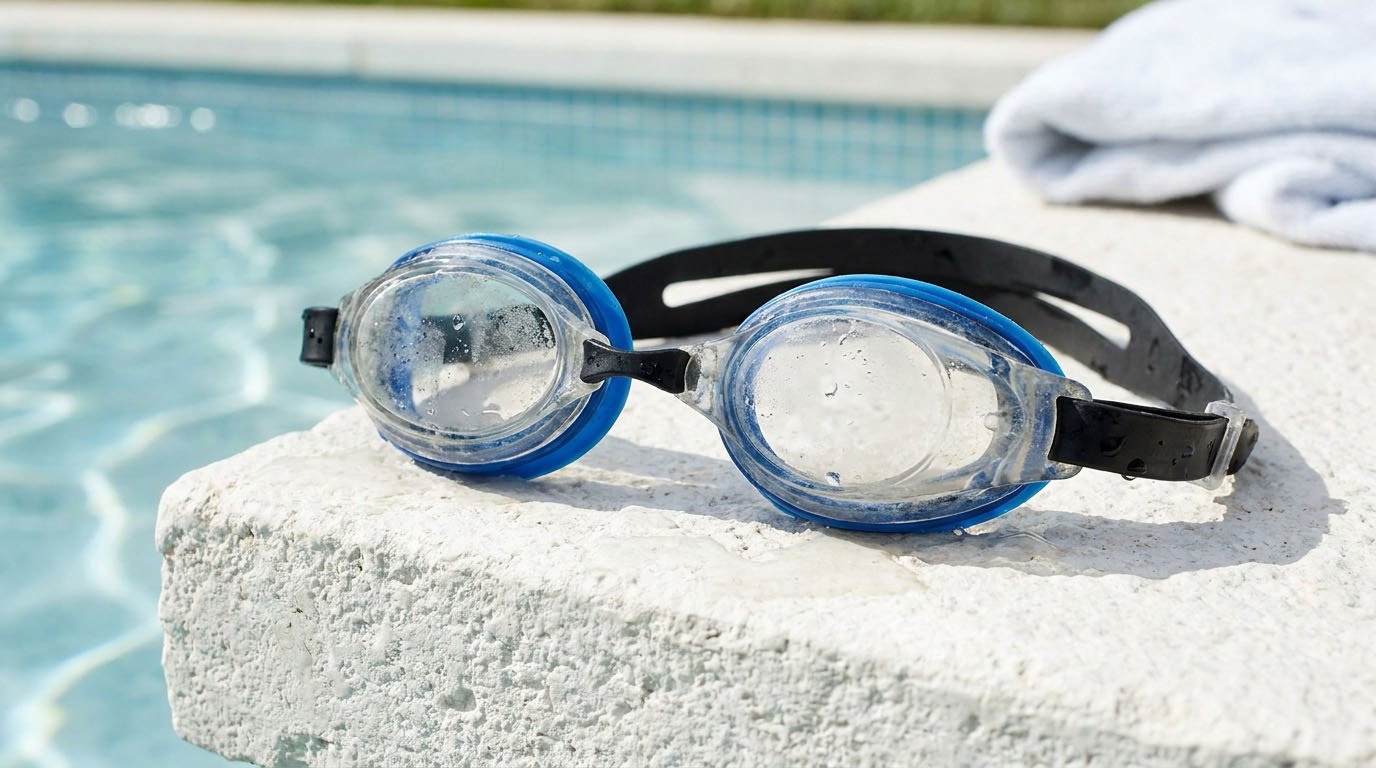
Quick Answer: How Does Chlorine Affect Swimming Goggle Materials?
Chlorinated pool water can affect both flexible components and optical surfaces, but the type and severity of damage vary.
| Goggle Component | Potential Effect of Chlorine Exposure | What Buyers Should Check |
|---|---|---|
| Silicone seals | Changes in flexibility, appearance, or surface condition | Hardness, deformation, sealing performance |
| TPE seals and straps | Grade-dependent stiffness, cracking, or elasticity loss | Flexibility, stretch recovery |
| Polycarbonate lenses | Possible surface or coating changes under certain conditions | Haze, clarity, surface condition |
| Anti-fog coatings | Performance deterioration in susceptible formulations | Fogging performance, coating integrity |
| Buckles and connectors | Wear influenced by chemicals and mechanical stress | Cracking, retention, adjustment function |
No swimming goggle material should be described as permanently chlorine-proof without defined supporting evidence.
For OEM projects, the objective is not simply to select a material labeled "chlorine-resistant." It is to verify that the finished product maintains acceptable performance under relevant swimming conditions.
Step 1. How Does Chlorine Affect Different Goggle Components?
A swimming goggle combines several materials with different functions. Understanding each component’s exposure risk is essential when investigating premature product failure.
Polycarbonate (PC) Lenses
Polycarbonate is widely used in swimming goggles because of its impact resistance, optical clarity, and lightweight structure.
Under ordinary swimming-pool conditions, suitable PC lenses can provide reliable performance. However, prolonged exposure, aggressive chemical conditions, elevated temperatures, or internal manufacturing stresses may contribute to material or surface deterioration.
Possible observations include:
- Surface haze or reduced optical clarity
- Changes in coating appearance
- Discoloration under combined environmental exposure
- Cracking associated with chemical and mechanical stress
Importantly, lens cloudiness does not necessarily mean chlorine has damaged the PC substrate. Scratches, deposits, coatings, and UV aging may produce similar symptoms.
For a detailed diagnosis of discoloration, see our guide to why clear PC swimming goggle lenses turn yellow.
Silicone Seals and Gaskets
Silicone is commonly selected for swimming goggle seals because it offers flexibility, softness, and relatively good resistance to many environmental conditions.
However, performance depends on the silicone formulation, processing quality, and exposure conditions.
Over time, certain products may develop:
- Changes in hardness or flexibility
- Surface discoloration
- Permanent deformation
- Reduced contact with the swimmer’s face
A seal that becomes excessively stiff or distorted may no longer conform comfortably to facial contours.
Nevertheless, leakage alone does not prove chemical degradation. Gasket geometry, fit, and assembly quality must also be considered.
TPE Seals and Head Straps
Thermoplastic elastomers (TPE) cover a broad range of material formulations.
Some grades offer satisfactory resistance to swimming-pool conditions, while others may be more sensitive to oxidation, repeated stretching, or heat.
Potential problems include:
- Reduced elastic recovery
- Surface tackiness or stiffness
- Small cracks around stressed areas
- Permanent strap elongation
Head straps are particularly vulnerable to combined chemical and mechanical loading because swimmers repeatedly stretch and adjust them.
Material grade and finished-part testing are therefore more useful than comparing broad material names alone.
Anti-Fog Coatings
Anti-fog coatings are another potential point of vulnerability.
Certain formulations may gradually lose performance after repeated direct contact with chlorinated water. However, cleaning methods, physical rubbing, and manufacturing consistency also influence durability.
One important distinction: the inner anti-fog surface is not continuously immersed in pool water when the goggles seal properly.
Therefore, swimming frequency alone cannot establish actual chlorine exposure.
For coating-specific mechanisms and maintenance, read how chlorine affects swimming goggle anti-fog coating.
Step 2. Which Swimming Goggle Materials Offer Better Chlorine Resistance?
There is no universal material ranking suitable for every swimming goggle design.
Material selection should consider the intended application, performance requirements, and verified behavior of the specific formulation.
Silicone vs. TPE: Which Should OEM Buyers Choose?
| Selection Factor | Silicone | TPE |
|---|---|---|
| Typical applications | Seals, straps, flexible components | Seals, frames, straps |
| Chlorine resistance | Often suitable for repeated pool use; formulation-dependent | Varies considerably by polymer grade |
| Flexibility | Good flexibility with suitable formulation | Adjustable across different hardness grades |
| Manufacturing | Commonly molded and cured | Commonly processed by thermoplastic molding |
| Cost | Depends on grade and processing | Depends on material and production requirements |
| Main verification | Hardness, deformation, aging, sealing | Aging, elastic recovery, cracking, sealing |
Silicone is often a practical choice for products designed for frequent swimming. However, it should not automatically be assumed that every silicone formulation outperforms every TPE grade.
Similarly, liquid silicone rubber (LSR) and compression-molded silicone should not be ranked solely by their molding processes. Formulation and processing quality matter.
Match the Material to Its Function
For example:
- Competition goggles: Prioritize secure sealing, consistent strap recovery, and low-profile comfort.
- Recreational goggles: Balance softness, durability, appearance, and cost.
- Children’s goggles: Prioritize comfortable contact materials, reliable adjustment, and appropriate product safety requirements.
- High-frequency training goggles: Pay particular attention to repeated stretching, sealing consistency, and long-term material performance.
The correct material is the one that meets the approved product requirements—not necessarily the most expensive option.
For an overview of material processing and assembly, see how swimming goggles are made.
Step 3. How Can You Identify Chlorine-Related Material Damage?
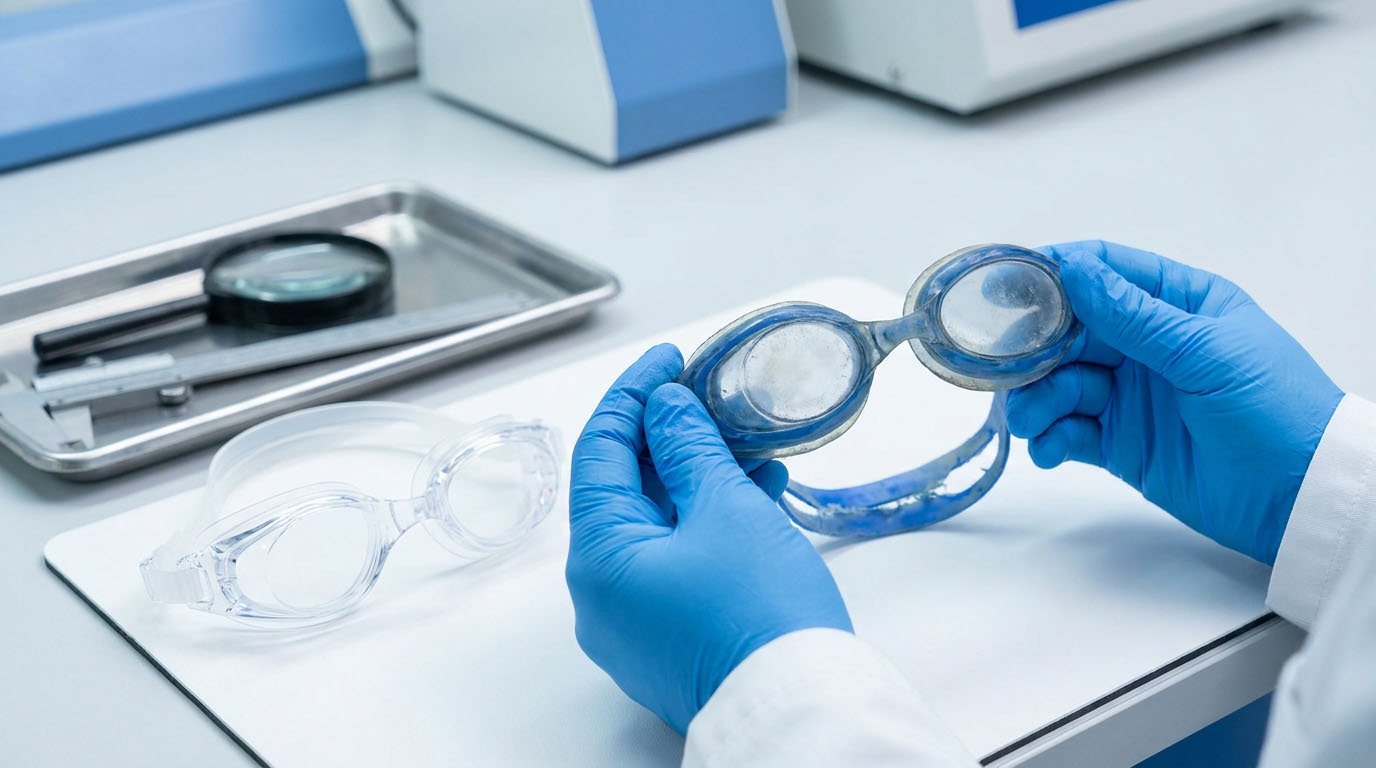
A stiff strap or cloudy lens does not automatically prove chlorine damage.
Manufacturers should examine the affected component, compare it with an unused reference, and investigate other environmental or mechanical factors.
Common Symptoms and Possible Causes
| Observed Problem | Possible Contributing Factors | Initial Investigation |
|---|---|---|
| Hardened gasket | Material aging, heat, chemical exposure | Compare hardness and shape |
| Sticky strap | Formulation, contamination, environmental aging | Inspect surface and material records |
| Strap loses elasticity | Repeated stretching, aging, unsuitable grade | Compare stretch recovery |
| Cloudy lens | Deposits, abrasion, coating changes | Inspect surface and optical condition |
| Yellowed components | UV, heat, material formulation, chemical exposure | Compare exposed and reference samples |
| Goggles begin leaking | Seal deformation, fit, assembly problems | Inspect gasket and sealing behavior |
These observations are diagnostic clues rather than definitive proof of a specific chemical reaction.
Chlorine vs. UV, Heat, and Mechanical Wear
Different aging mechanisms can produce similar symptoms.
Chlorine exposure: May affect susceptible materials during repeated or prolonged contact, depending on water chemistry and exposure conditions.
UV radiation: Can contribute to discoloration and changes in material properties, particularly in susceptible formulations.
Excessive heat: May accelerate aging, affect coatings, or cause deformation.
Mechanical fatigue: Repeated stretching, bending, and adjustment can damage straps or connectors independently of chemical exposure.
Multiple factors can operate simultaneously.
When Should Brands Investigate Further?
A more detailed investigation is appropriate when:
- Complaints appear unusually early.
- Multiple units from the same batch show similar problems.
- Material performance differs from approved samples.
- Product failures occur under the intended use conditions.
- The manufacturer cannot explain an unexpected material change.
If gasket deterioration appears to be causing leakage, component condition should be assessed separately from facial fit. Our swimming goggle leak test guide explains that distinction.
Step 4. How Should Manufacturers Evaluate Chlorine Resistance?
Claims such as "chlorine-resistant" have limited value unless the supplier explains how that performance was evaluated.
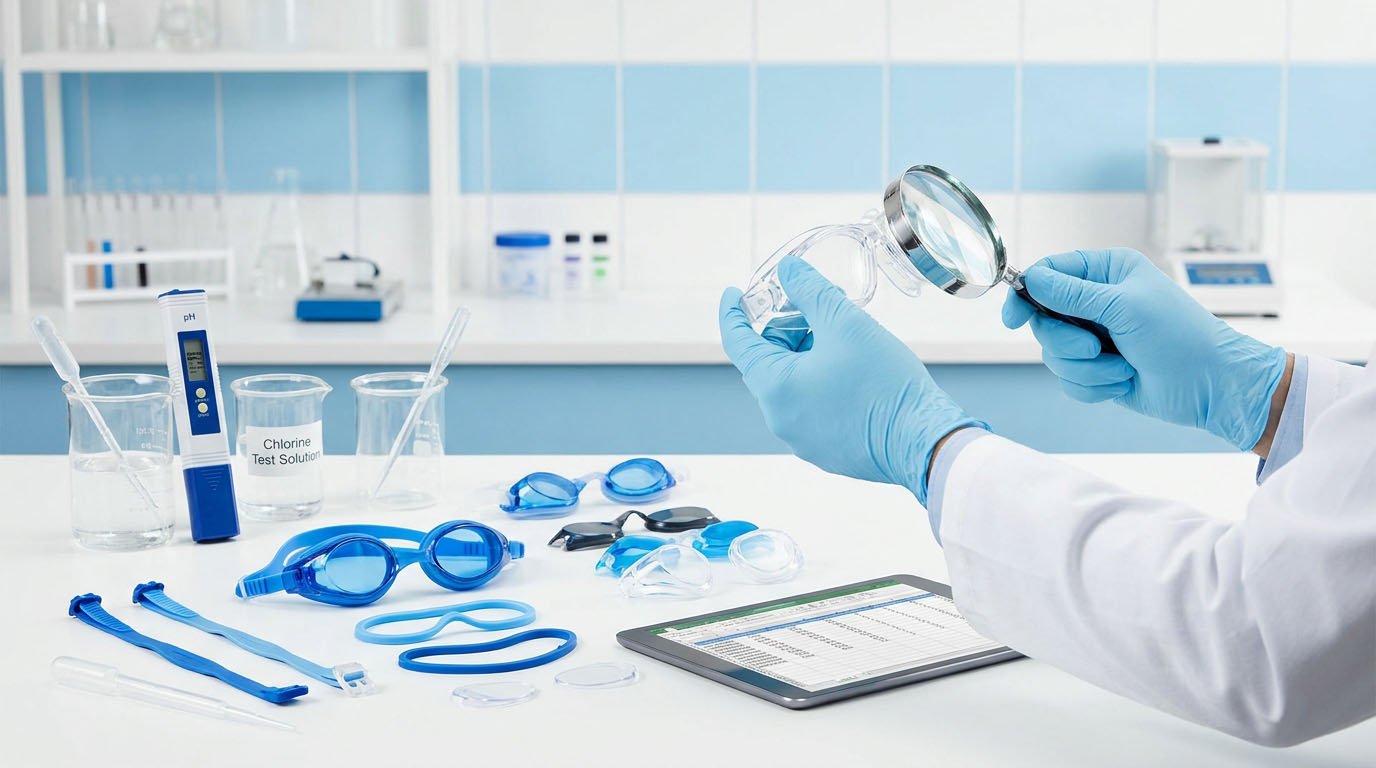
A practical verification process should assess both material properties and finished-product functionality.
1. Define Relevant Exposure Conditions
Before testing, agree on the intended product use and exposure conditions.
Relevant parameters may include:
- Free chlorine concentration
- Pool-water pH
- Water temperature
- Exposure duration and frequency
- Continuous immersion or repeated wet/dry cycles
- Cleaning and conditioning procedures
Accelerated testing may be useful for comparing formulations, but higher concentrations or temperatures do not automatically represent a specific number of months of pool use.
Any accelerated-aging claim requires suitable supporting evidence.
2. Record Baseline Material Properties
Before exposure, manufacturers should measure properties relevant to each component.
| Component | Suggested Evaluation |
|---|---|
| Silicone gasket | Hardness, dimensions, visible deformation |
| TPE component | Flexibility, surface condition, dimensional changes |
| Head strap | Tensile behavior, elongation, elastic recovery |
| PC lens | Optical clarity, haze, visible defects |
| Finished goggles | Sealing and adjustment functionality |
Testing should include suitable unexposed control samples from the same approved material configuration.
3. Evaluate Changes After Exposure
After controlled exposure and appropriate conditioning, compare the tested specimens against their original measurements and approved references.
For example, tensile strength retention can be calculated as:
Retention (%) = Post-Exposure Tensile Strength / Initial Tensile Strength × 100
This calculation describes a measured change. It does not establish a universal acceptable retention percentage.
Acceptance criteria should be agreed before testing and matched to the component’s intended function.
4. Verify Finished-Product Performance
Material specimens alone cannot prove that assembled goggles will function correctly.
A gasket may retain reasonable material properties but fail to seal because of permanent deformation. Similarly, a strap may pass a tensile test while providing poor adjustment stability.
Where relevant, finished goggles should undergo:
- Visual and dimensional inspection
- Strap adjustment and recovery checks
- Seal and fit evaluation
- Lens clarity assessment
- Appropriate functional testing
Testing should be documented and connected to the approved product configuration.
For new OEM developments, Jerry’s sampling and prototyping process supports component selection, sample evaluation, and approval before production.
Step 5. What Should OEM Buyers Verify Before Mass Production?
For brands sourcing custom swimming goggles, the most useful question is not simply:
"Are these goggles chlorine-resistant?"
A better question is:
"What evidence shows that the approved materials and finished goggles meet our durability requirements?"
OEM Chlorine Resistance Verification Checklist
| Verification Item | What Buyers Should Request |
|---|---|
| Material specification | Approved material type, grade, and relevant formulation controls |
| Intended application | Pool-use conditions and target customer group |
| Test method | Documented procedure and defined exposure conditions |
| Baseline measurements | Results recorded before exposure |
| Post-exposure evaluation | Material and functional changes |
| Acceptance criteria | Project-specific requirements agreed in advance |
| Sample traceability | Model, component, sample ID, and relevant batch details |
| Production consistency | Confirmation that bulk materials match approved samples |
Why Approved Samples Matter
Even when a prototype performs well, production variation can affect durability.
Changes in raw material grades, processing conditions, or component suppliers may alter the finished product’s performance.
Therefore, brands should confirm that:
- Materials used in production match approved specifications.
- Relevant production samples are compared with retained references.
- Significant material or process changes trigger appropriate review.
- Quality records identify affected production batches.
This approach helps reduce disputes when problems appear after delivery.
At Jerry, material inspection, production monitoring, functional evaluation, and final inspection form part of the broader quality assurance process.
The objective is measurable consistency—not an unsupported promise of unlimited durability.
Step 6. How Can Swimmers Reduce Chlorine-Related Goggle Wear?
Appropriate care helps reduce unnecessary chemical residue, surface damage, and environmental stress.
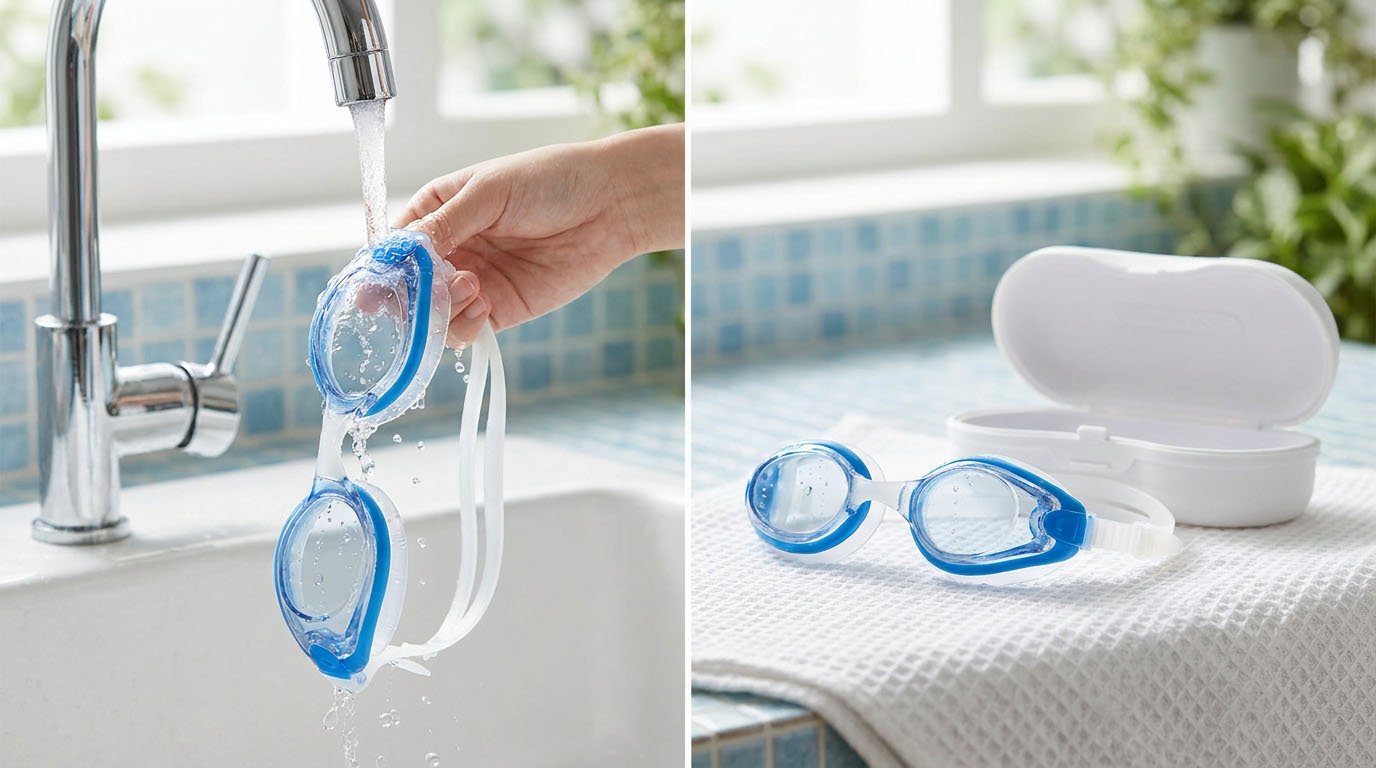
For most swimming goggles, subject to the manufacturer’s specific care instructions:
- Rinse gently after swimming. Use clean, cool or lukewarm freshwater to remove pool-water residue.
- Avoid rubbing the inner lens. This can damage sensitive anti-fog treatments.
- Air-dry in the shade. Avoid heaters, hot vehicles, and prolonged direct sunlight.
- Store in a protective case. Prevent unnecessary pressure, scratching, and strap deformation.
- Avoid unapproved cleaners. Strong detergents, solvents, and abrasive products may damage materials or coatings.
These practices can reduce avoidable wear, but they cannot prevent every form of material aging.
For private label brands, clear care instructions are a practical addition to packaging and product documentation.
Frequently Asked Questions
Does Chlorine Damage Silicone Swimming Goggles?
Chlorine exposure may contribute to changes in certain silicone formulations over time. However, suitable silicone materials generally perform well in many swimming-pool applications. Actual durability depends on material grade, processing, temperature, exposure conditions, and care.
Is Silicone More Chlorine-Resistant Than TPE?
Silicone is often preferred for frequently used swimming goggle seals, but resistance varies across formulations. Some TPE grades are specifically designed for demanding applications. Buyers should compare tested materials rather than rely only on material names.
Does Chlorine Make Swimming Goggle Straps Lose Elasticity?
It can contribute to aging in susceptible strap materials. However, repeated stretching, heat, material formulation, and mechanical fatigue may also cause reduced elastic recovery.
Can Chlorine Cause Swimming Goggle Lenses to Become Cloudy?
Chlorinated pool water may contribute to deposits or changes in susceptible coatings. Scratches, surface contamination, and other aging factors can also cause cloudiness. Visual symptoms alone cannot establish the root cause.
How Long Do Swimming Goggles Last in Chlorinated Water?
There is no universal service life. Durability depends on product design, material quality, swimming frequency, exposure conditions, and maintenance. Manufacturers should avoid fixed lifetime claims without supporting evidence.
Can Swimming Goggles Be Completely Chlorine-Proof?
No manufacturer should promise indefinite resistance under every exposure condition. Chlorine resistance should be treated as a measurable, condition-dependent performance characteristic.
Conclusion: Choose Materials Based on Verified Durability
Chlorine affects swimming goggle materials differently. Silicone seals, TPE straps, polycarbonate lenses, and anti-fog coatings each have distinct performance requirements and potential aging mechanisms.
For swimmers, appropriate rinsing, drying, and storage can help reduce avoidable wear.
For swimming goggle brands, the more important task is to select suitable materials, define relevant exposure conditions, compare test results, and verify finished-product performance before mass production.
Reliable swimming goggles depend on the combination of material selection, product design, manufacturing consistency, and realistic durability evaluation.
At Jerry Goggles, we support OEM and ODM swimming goggle development, including material selection, prototyping, customization, and quality verification.
If you are developing a new swimming goggle collection or reviewing material durability requirements, contact Jerry Goggles to discuss your project specifications and sample evaluation needs.